

Carney is a journalist and founder of The Civic Circle, which uses the arts to empower young students to understand and participate in democracy.
From omicron infections to climate disasters, gun deaths to economic uncertainty, congressional stalemate to ongoing threats to democracy, Americans arguably have more to worry about than to celebrate this holiday season.
Yet bad times also have a way of bringing out the best in people, and nowhere is this more evident than in the charitable sector. Charitable giving in the United States reached a record $471.4 billion in 2020, a 5.1 percent increase over the previous year, driven by Americans’ concerns over the pandemic, economic hardship and racial justice.
“Giving is an important metric of civic participation, a way to build the kind of society we want to live in,” Asha Curran, co-founder and CEO of GivingTuesday, told The Chronicle of Philanthropy.
GivingTuesday, the global day of giving launched in 2012, netted $2.7 billion from Americans this year, a 9 percent increase over last year. Said Curran of the increase: “Our hope is that this boost of generosity is an inspiration for continued giving, kindness, and recognition of our shared humanity each day of the year.”
The picture is not all rosy for charities, of course. More than half of the nation’s approximately 1.8 million nonprofits (57 percent) decreased overall expenses in 2020, according to Independent Sector, and the nonprofit workforce lost 1.6 million jobs.
Giving went up for nonprofits focused on human needs, racial inequity, and environmental and animal organizations, but dropped for arts, culture and humanities groups. Close to half (47 percent) of nonprofits reported serving fewer people by the end of 2020.
Still, charities continue to demonstrate the power of individual Americans, through both charitable donations and volunteer hours, to help tackle massive problems the government can only do so much to fix.
From the public health and poverty crises triggered by the pandemic, to global warming and disaster relief, social justice, animal welfare and the arts, Americans are donating millions of dollars and billions of volunteer hours to help one another, often neighbor-to-neighbor. On GivingTuesday, volunteering also rose by 11 percent over 2020, and gifts of food, clothing and other goods spiked 8 percent.
For Americans wondering where their charitable dollars might go furthest, there’s no shortage of guides, lists and rankings. The nation’s top three charities, according to Forbes, are United Way Worldwide, Feeding America and the Salvation Army. But there are literally millions of local neighborhood and civic groups, hundreds of them with tiny budgets, working to help their communities.
One “how to help” guide offered by CNN gives a snapshot of the nation’s diverse nonprofit universe, listing among other groups Broadway Cares and the Actors Fund, which offer financial relief to struggling performers. The New York Times Holiday Giving Guide 2021 offers a series of articles from Opinion writers on their favorite charities. For those who want to research individual charities on their own, Candid collects and distributes exhaustive data about the nonprofit sector.
Here are just a few nonprofit success stories that demonstrate the civic power of charities in 2021.
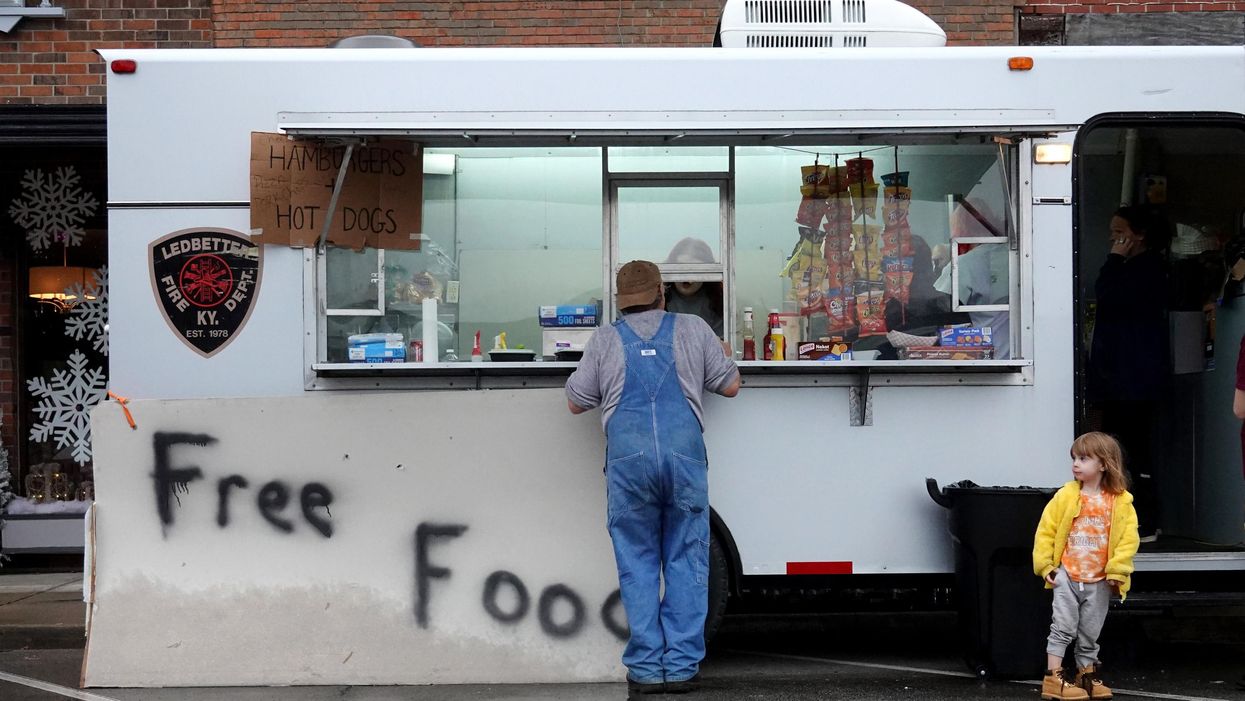
• After tornadoes killed 90 people and displaced hundreds in the South and Midwest last month, Jim Finch of Clarksville, Tenn., drove with his meat smoker to the hard-hit down of Mayfield, Ky., to feed hurricane victims barbecue chicken, burgers and soy patties. Said Karen Smith, a Kentucky coordinator for Southern Baptist Disaster Relief, which rounded up volunteers for brush cleanup and meal deliveries: “We want to give people hope. You look at all of that, and it feels hopeless. I think if they have hope, then they can begin to heal.”
• Amid food shortages caused by the pandemic, WhyHunger created a crowd-sourced map that identified free meal sites throughout the U.S., and in some parts of the world. The World Central Kitchen has distributed more than 300 million meals in some 400 cities around the country, according to CNN. Collecting, preparing and distributing food is a leading volunteer activity in the United States.
• A 68-year-old Colorado retired nurse, Teresa Dilka, used to donate money to the Food Bank of the Rockies but now that her income has dwindled she is volunteering there instead. “Sometimes it seems like it’s helping me more than I’m helping them,” Dilka told The Chronicle of Philanthropy. “It just feels good to be able to help.” About one out of four of Americans volunteers, according to the Bureau of Labor Statistics, donating hours of service into the billions.
National leaders have long appreciated the charitable sector’s essential social role, which is both civic and monetary. Nonprofits contributed $1.2 trillion to the economy in 2020, according to Independent Sector. As President George H.W. Bush put it when first awarding more than 1,000 volunteers “points of light” in 1990, the government’s capacity is limited, “but the potential of the American people knows no limits.”









Eric Trump, the newly appointed ALT5 board director of World Liberty Financial, walks outside of the NASDAQ in Times Square as they mark the $1.5- billion partnership between World Liberty Financial and ALT5 Sigma with the ringing of the NASDAQ opening bell, on Aug. 13, 2025, in New York City.
Why does the Trump family always get a pass?
Deputy Attorney General Todd Blanche joined ABC’s “This Week” on Sunday to defend or explain a lot of controversies for the Trump administration: the Epstein files release, the events in Minneapolis, etc. He was also asked about possible conflicts of interest between President Trump’s family business and his job. Specifically, Blanche was asked about a very sketchy deal Trump’s son Eric signed with the UAE’s national security adviser, Sheikh Tahnoon.
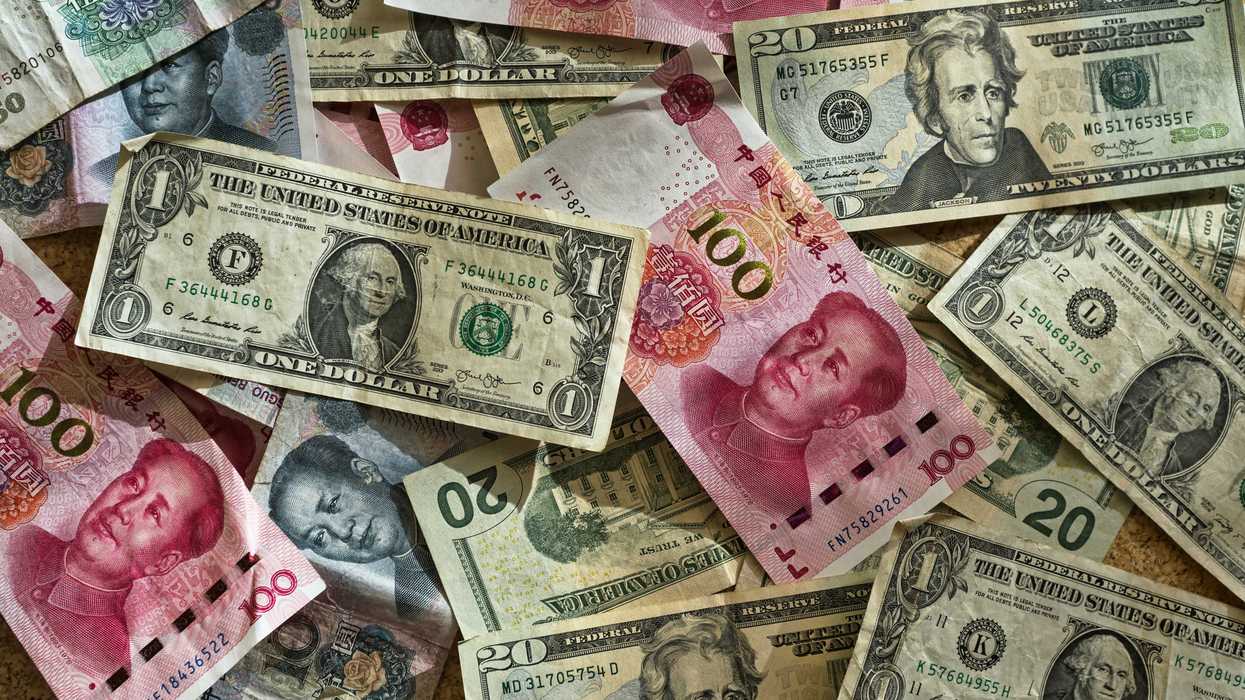
Shortly before Trump was inaugurated in early 2025, Tahnoon invested $500 million in the Trump-owned World Liberty, a then newly launched cryptocurrency outfit. A few months later, UAE was granted permission to purchase sensitive American AI chips. According to the Wall Street Journal, which broke the story, “the deal marks something unprecedented in American politics: a foreign government official taking a major ownership stake in an incoming U.S. president’s company.”
“How do you respond to those who say this is a serious conflict of interest?” ABC host George Stephanopoulos asked.
“I love it when these papers talk about something being unprecedented or never happening before,” Blanche replied, “as if the Biden family and the Biden administration didn’t do exactly the same thing, and they were just in office.”
Blanche went on to boast about how the president is utterly transparent regarding his questionable business practices: “I don’t have a comment on it beyond Trump has been completely transparent when his family travels for business reasons. They don’t do so in secret. We don’t learn about it when we find a laptop a few years later. We learn about it when it’s happening.”
Sadly, Stephanopoulos didn’t offer the obvious response, which may have gone something like this: “OK, but the president and countless leading Republicans insisted that President Biden was the head of what they dubbed ‘the Biden Crime family’ and insisted his business dealings were corrupt, and indeed that his corruption merited impeachment. So how is being ‘transparent’ about similar corruption a defense?”
Now, I should be clear that I do think the Biden family’s business dealings were corrupt, whether or not laws were broken. Others disagree. I also think Trump’s business dealings appear to be worse in many ways than even what Biden was alleged to have done. But none of that is relevant. The standard set by Trump and Republicans is the relevant political standard, and by the deputy attorney general’s own account, the Trump administration is doing “exactly the same thing,” just more openly.
Since when is being more transparent about wrongdoing a defense? Try telling a cop or judge, “Yes, I robbed that bank. I’ve been completely transparent about that. So, what’s the big deal?”
This is just a small example of the broader dysfunction in the way we talk about politics.
Americans have a special hatred for hypocrisy. I think it goes back to the founding era. As Alexis de Tocqueville observed in “Democracy In America,” the old world had a different way of dealing with the moral shortcomings of leaders. Rank had its privileges. Nobles, never mind kings, were entitled to behave in ways that were forbidden to the little people.
In America, titles of nobility were banned in the Constitution and in our democratic culture. In a society built on notions of equality (the obvious exceptions of Black people, women, Native Americans notwithstanding) no one has access to special carve-outs or exemptions as to what is right and wrong. Claiming them, particularly in secret, feels like a betrayal against the whole idea of equality.
The problem in the modern era is that elites — of all ideological stripes — have violated that bargain. The result isn’t that we’ve abandoned any notion of right and wrong. Instead, by elevating hypocrisy to the greatest of sins, we end up weaponizing the principles, using them as a cudgel against the other side but not against our own.
Pick an issue: violent rhetoric by politicians, sexual misconduct, corruption and so on. With every revelation, almost immediately the debate becomes a riot of whataboutism. Team A says that Team B has no right to criticize because they did the same thing. Team B points out that Team A has switched positions. Everyone has a point. And everyone is missing the point.
Sure, hypocrisy is a moral failing, and partisan inconsistency is an intellectual one. But neither changes the objective facts. This is something you’re supposed to learn as a child: It doesn’t matter what everyone else is doing or saying, wrong is wrong. It’s also something lawyers like Mr. Blanche are supposed to know. Telling a judge that the hypocrisy of the prosecutor — or your client’s transparency — means your client did nothing wrong would earn you nothing but a laugh.
Jonah Goldberg is editor-in-chief of The Dispatch and the host of The Remnant podcast. His Twitter handle is @JonahDispatch.