


Skip to content
Search

Latest Stories

Follow Us:
Top Stories

Your Essential Guide to How Trump Will Handle Literally Any Foreign Crisis

Opinion

Donald J. Trump

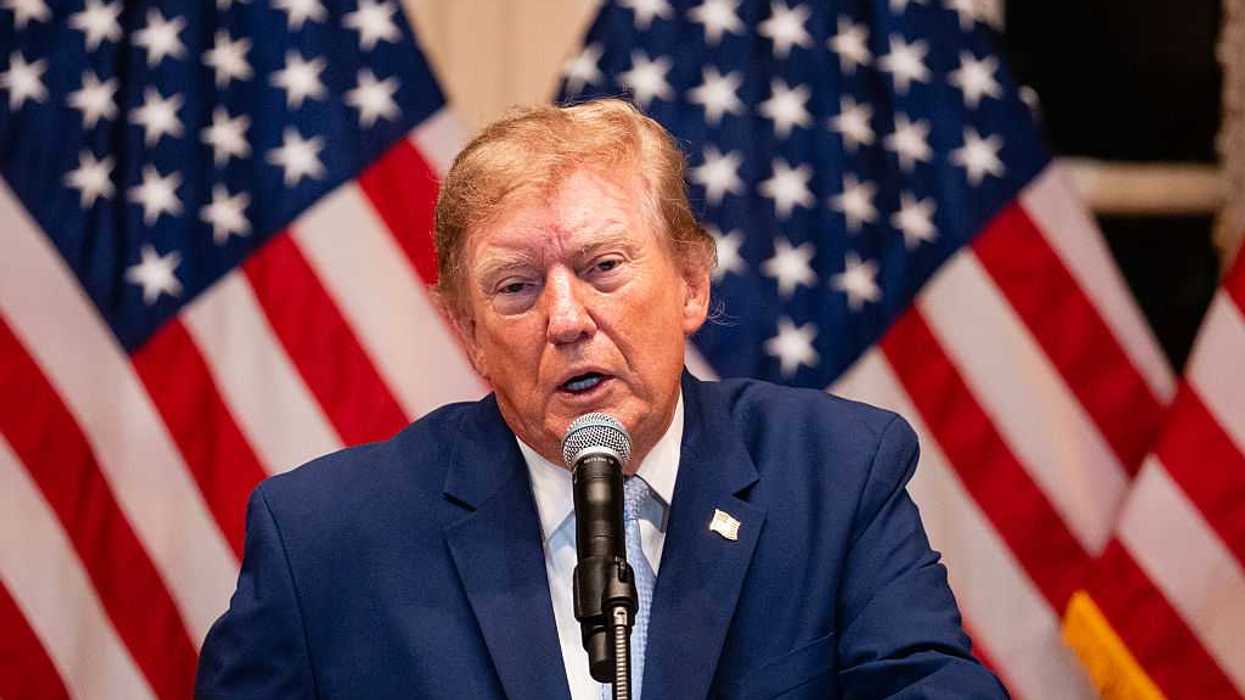
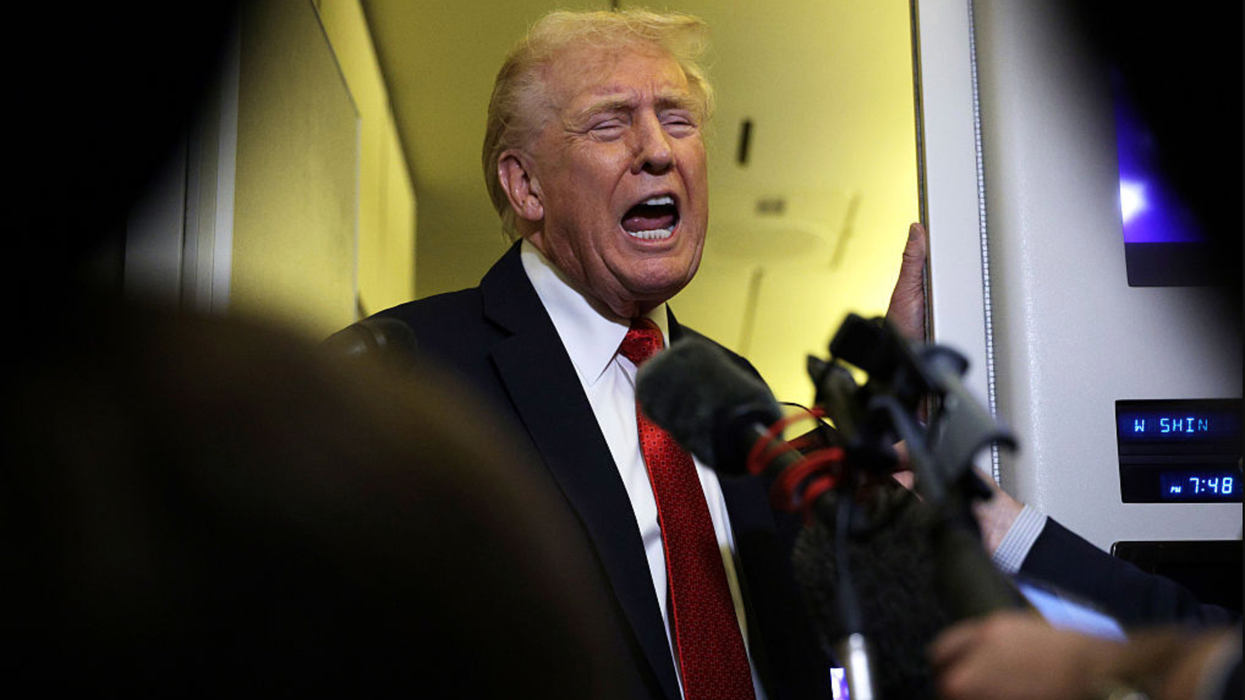
IN FLIGHT - OCTOBER 19: U.S. President Donald Trump speaks to members of the press on October 19, 2025 aboard Air Force One. The President is returning to Washington, DC, after spending his weekend at Mar-a-Lago resort in Palm Beach, Florida.

Getty Images, Alex Wong

VANCOUVER, British Columbia — Every American president has a foreign policy doctrine. But no president has ever had one quite like Donald Trump’s.

With President George W. Bush, it was to invade resource-rich countries under the pretext that there are terrorists there, preferably preemptively. Bomb them to spread freedom and democracy, but leave the Middle Eastern monarchy in Saudi Arabia that’s backing them alone, because, well, they already run a country that sells oil to the U.S.


President Barack Obama ran the show like a party van. Pile in as many allies as possible for the trip down regime-change highway. And if some of them insist on driving — like France and the UK did en route to overthrowing Libya — then all the better for when the crash inevitably occurs.

Trump has been nothing short of a gravitational force that has bent global conflicts to his will — for better or worse — like Bush. But he also likes having allies around, like Obama. The difference? No president has ever been so overt in factoring in the cash benefit for America. And one American, in particular: himself. Arguably, the Trump Doctrine could be described as overtly monetized hegemony.

The transatlantic relationship under Trump looks like a subscription renewal scam, with Trump telling Europeans that their 2 percent NATO defense spending commitments just randomly got upped to 5 percent.

Trump also recently went over to Israel to celebrate the peace deal he says he worked out between Gaza and Israel. In his speech to Israeli parliament, he singled out from the audience Israeli-American megadonor Miriam Adelson, whom he suggested loves Israel more than America. He conveniently left out the fact that his campaign benefited from about $100 million of her largesse, according to Forbes.

Of course, peace talks under the Trump Doctrine come with a side of commerce. In September, the Trump administration also proposed selling Israel $6 billion more in weapons, the Associated Press noted. “We make the best weapons in the world, and we’ve got a lot of them. And we’ve given a lot to Israel, frankly,” Trump said in his speech, turning alleged war crimes into a showcase opportunity. “I mean, Bibi would call me so many times, ‘Can you get me this weapon, that weapon, that weapon?’ Some of them I never heard of… But we’d get them here… And they are the best.”

Trump also talked about how rich the surrounding Arab countries are, and how they’re going to pay to rebuild Gaza now. So here comes “Trump Gaza,” the resort, probably — if the AI-generated video that Trump posted on Truth Social earlier this year is any indication.

Trump’s son-in-law, real estate mogul Jared Kushner, was front and center during Trump’s Israel trip as a negotiator without any public mandate, and has already publicly salivated over the “valuable” Gaza oceanfront property.

Sounds very American profits first. War is milked for weapons sales as long as possible, and then things wrap up with a connected few well-positioned to get first dibs.

Similarly, Trump had been talking up the notion of giving long-range Tomahawk missiles to Ukraine capable of striking Moscow — something that Europe wasn’t even yet willing to do with its German Taurus missiles despite all their anti-Russian tough talk. Why not? Because any plausible deniability would go out the window. Tough to argue against the idea of the West being directly at war with Russia when its own personnel would be needed to operate the guidance systems for these long-range strikes.

But we’re not talking about Trump giving Ukraine a gift here. Rather, it would mean him selling them to European countries for Kyiv. Suddenly the guy who keeps talking about how much he wants the Nobel Peace Prize sounded like he was on the verge of the kind of recklessness that could launch a third world war, and the only thing standing in the way was the notoriously janky common sense of European leaders.

It was after a phone call with Russian President Vladimir Putin that Trump’s mind refocused back on peace, at least temporarily. Trump said that the U.S. needed to keep its Tomahawk supply and that “a lot of bad things could happen” if they were to be used. Surely his change of heart has absolutely nothing to do with the fact that, by his own admission, he and Putin talked about future trade deals between the U.S. and Russia for when the bombings wrap up.

See the pattern? Peace first. Unless there are easy profits to be made for America from war. At least until there’s an even better opportunity for private profiteering.


Rachel Marsden is a columnist, political strategist and host of independently produced talk shows in French and English. Her website can be found at http://www.rachelmarsden.com.

Your Essential Guide to How Trump Will Handle Literally Any Foreign Crisis was originally published by the Tribune Content Agency and is republished with permission.


Read More

The interview that could change history

White House Chief of Staff Susie Wiles looks on during a bilateral meeting between U.S. President Donald Trump and Polish President Karol Nawrocki in the Oval Office at the White House on Sept. 3, 2025 in Washington, D.C.

Alex Wong/Getty Images/TCA

The interview that could change history

Susie Wiles has a reputation. Ask anyone in Washington and words like “strategic,” “disciplined,” and “skilled” come up. She’s widely held to be one of the most effective tacticians in modern politics.

She’s also known for her low-key, low-drama energy, preferring to remain behind-the-scenes as opposed to preening for cameras like so many other figures in President Trump’s orbit.

Keep ReadingShow less
After the Ceasefire, the Violence Continues – and Cries for New Words

An Israeli army vehicle moves on the Israeli side, near the border with the Gaza Strip on November 18, 2025 in Southern Israel, Israel.

(Photo by Amir Levy/Getty Images)

After the Ceasefire, the Violence Continues – and Cries for New Words

Since October 10, 2025, the day when the US-brokered ceasefire between Israel and Hamas was announced, Israel has killed at least 401 civilians, including at least 148 children. This has led Palestinian scholar Saree Makdisi to decry a “continuing genocide, albeit one that has shifted gears and has—for now—moved into the slow lane. Rather than hundreds at a time, it is killing by twos and threes” or by twenties and thirties as on November 19 and November 23 – “an obscenity that has coalesced into a new normal.” The Guardian columnist Nesrine Malik describes the post-ceasefire period as nothing more than a “reducefire,” quoting the warning issued by Amnesty International’s secretary general Agnès Callamard that the ”world must not be fooled” into believing that Israel’s genocide is over.

A visual analysis of satellite images conducted by the BBC has established that since the declared ceasefire, “the destruction of buildings in Gaza by the Israeli military has been continuing on a huge scale,” entire neighborhoods “levelled” through “demolitions,” including large swaths of farmland and orchards. The Guardian reported already in March of 2024, that satellite imagery proved the “destruction of about 38-48% of tree cover and farmland” and 23% of Gaza’s greenhouses “completely destroyed.” Writing about the “colossal violence” Israel has wrought on Gaza, Palestinian legal scholar Rabea Eghbariah lists “several variations” on the term “genocide” which researchers found the need to introduce, such as “urbicide” (the systematic destruction of cities), “domicide” (systematic destruction of housing), “sociocide,” “politicide,” and “memoricide.” Others have added the concepts “ecocide,” “scholasticide” (the systematic destruction of Gaza’s schools, universities, libraries), and “medicide” (the deliberate attacks on all aspects of Gaza’s healthcare with the intent to “wipe out” all medical care). It is only the combination of all these “-cides,” all amounting to massive war crimes, that adequately manages to describe the Palestinian condition. Constantine Zurayk introduced the term “Nakba” (“catastrophe” in Arabic) in 1948 to name the unparalleled “magnitude and ramifications of the Zionist conquest of Palestine” and its historical “rupture.” When Eghbariah argues for “Nakba” as a “new legal concept,” he underlines, however, that to understand its magnitude, one needs to go back to the 1917 Balfour Declaration, in which the British colonial power promised “a national home for the Jewish people” in Palestine, even though just 6 % of its population were Jewish. From Nakba as the “constitutive violence of 1948,” we need today to conceptualize “Nakba as a structure,” an “overarching frame.”

Keep ReadingShow less
Ukraine, Russia, and the Dangerous Metaphor of Holding the Cards
a hand holding a deck of cards in front of a christmas tree
Photo by Luca Volpe on Unsplash

Ukraine, Russia, and the Dangerous Metaphor of Holding the Cards

Donald Trump has repeatedly used the phrase “holding the cards” during his tenure as President to signal that he, or sometimes an opponent, has the upper hand. The metaphor projects bravado, leverage, and the inevitability of success or failure, depending on who claims control.

Unfortunately, Trump’s repeated invocation of “holding the cards” embodies a worldview where leverage, bluff, and dominance matter more than duty, morality, or responsibility. In contrast, leadership grounded in duty emphasizes ethical obligations to allies, citizens, and democratic principles—elements strikingly absent from this metaphor.

Keep ReadingShow less
Beyond Apologies: Corporate Contempt and the Call for Real Accountability
campbells chicken noodle soup can

Beyond Apologies: Corporate Contempt and the Call for Real Accountability

Most customers carry a particular image of Campbell's Soup: the red-and-white label stacked on a pantry shelf, a touch of nostalgia, and the promise of a dependable bargain. It's food for snow days, tight budgets, and the middle of the week. For generations, the brand has positioned itself as a companion to working families, offering "good food" for everyday people. The company cultivated that trust so thoroughly that it became almost cliché.

Campbell's episode, now the subject of national headlines and an ongoing high-profile legal complaint, is troubling not only for its blunt language but for what it reveals about the hidden injuries that erode the social contract linking institutions to citizens, workers to workplaces, and brands to buyers. If the response ends with the usual PR maneuvers—rapid firings and the well-rehearsed "this does not reflect our values" statement. Then both the lesson and the opportunity for genuine reform by a company or individual are lost. To grasp what this controversy means for the broader corporate landscape, we first have to examine how leadership reveals its actual beliefs.

Keep ReadingShow less