
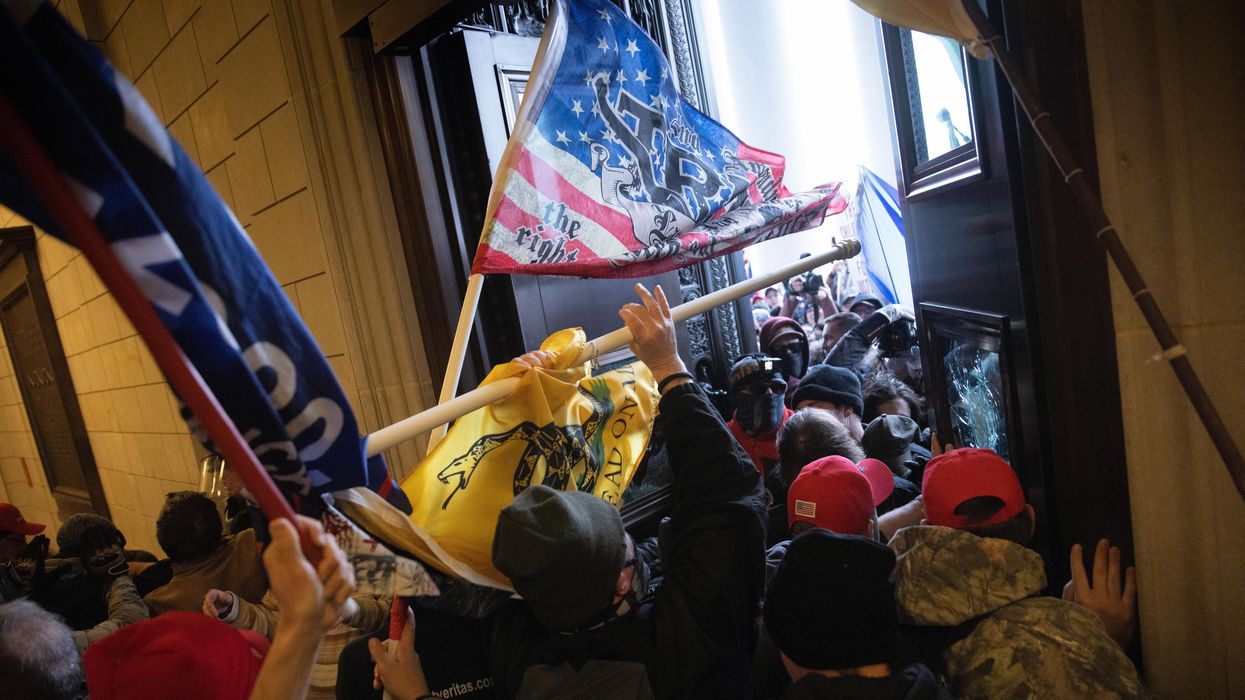

There were 14 Missourians, me among them, who were negatively impacted recently by President Donald Trump’s pardons to the approximately 1,500 individuals who stormed the Capitol on Jan. 6, 2021. We all saw a demonstration in real time about just what kind of people are part of that group that has now been set free to continue spreading fear on behalf of this president.
Trump granted “full, complete and unconditional” clemency to the Jan. 6 rioters. Among them was Henry "Enrique" Tarrio. From 2018 to 2021, Tarrio was the head of the Proud Boys, a far-right, neo-fascist organization which promotes political violence.
Tarrio had been convicted and sentenced to 22 years in federal prison for seditious conspiracy and other charges related to Jan. 6. That was until this past Jan. 20, when Trump, on his first day back in office, pardoned him.
This past weekend, I joined more than 1,150 patriots who traveled to Washington, D.C., for the all-volunteer, fifth annual Principles First Summit to listen, debate and learn how to communicate the Principles First’s set of 15 principles.
Principles First founder Heath Mayo describes the grassroots movement like this: “Principles define who we are, what we believe in, and the type of country we’ll become. That’s why we choose to put them first — before politicians and before party.”
Many call Principles First an “Anti-Trump” group. While many are “Never Trump” conservatives, many others have recently joined because they worry about the state of our democracy and the direction that the country is moving in. Principles First offers a positive way forward promoting principles that include honesty, integrity and respect for the supremacy of the Constitution and the rule of law.
Our meeting was interrupted twice — once on Saturday, and once, and more dangerously, on Sunday.
On Saturday, Tarrio turned up at the conference site and confronted former Metropolitan Police Department of the District of Columbia officer Michael Fanone and former U.S. Capitol Police Sgt. Harry Dunn, both of whom defended the Capitol during the Jan. 6 attack.
Tarrio called Fanone and Dunn “cowards” and told them to “keep walking,” as he and a group of his supporters filmed and followed them through the hotel.
Shortly after noon on Sunday, organizers of the Principles First Summit received an email from someone claiming to have planted two pipe bombs at the JW Marriott Hotel in D.C., as well as at the home of former national security adviser John Bolton and at Fanone’s mother’s house.
The email also threatened many of the summit’s speakers, saying they “all deserved to die.”
The threat was sent from an untraceable address with the signature “Enrique T.” It was presented as a way “To honor the J6 hostages recently released by Emperor Trump.”
Tarrio denies any involvement. There is an active and ongoing investigation by law enforcement into the bomb threat.
Yes, the terrorists succeeded in instilling fear, at least in me. As the brave men, women and dogs of the Metropolitan Police Department swept the hotel for the pipe bombs, all I could think of was wanting to see my family again.
But they did not win. Once we got the “All clear,” it was my honor and pleasure to welcome and introduce our next set of speakers.
For the record, I am a member of Principles First Board of Directors. As noted above, this is an all-volunteer organization. I do not receive any compensation for my involvement.
While you may or may not agree with the positions shared, it was our right under the First Amendment of the Constitution to gather and share freely. Every American has this privilege, and they should not be terrorized for exercising this right to free speech. There were attendees who traveled on their own dime to attend from 44 states across the country.
I am not naive enough to believe that the FBI, under the direction of Kash Patel and newly appointed Deputy FBI Director Dan Bongino, will adequately investigate the events that occurred.
Nor am I under any illusion that the Trump supporters among Missouri’s U.S. Congressional delegation will stand up for the 14 of us from their state and condemn the behavior aimed at their constituents.
I am deeply saddened to say that this is where and how we live now in America. Only when voters stand up and say, No, this is not who we are, will things change for the better.
From Trump’s pardoned fans, intimidation, and bomb threats was first published in The St. Louis Post-Dispatch and was republished with permission.
Lynn Schmidt is a Post-Dispatch columnist and Editorial Board member. SchmidtOpinions@gmail.com.
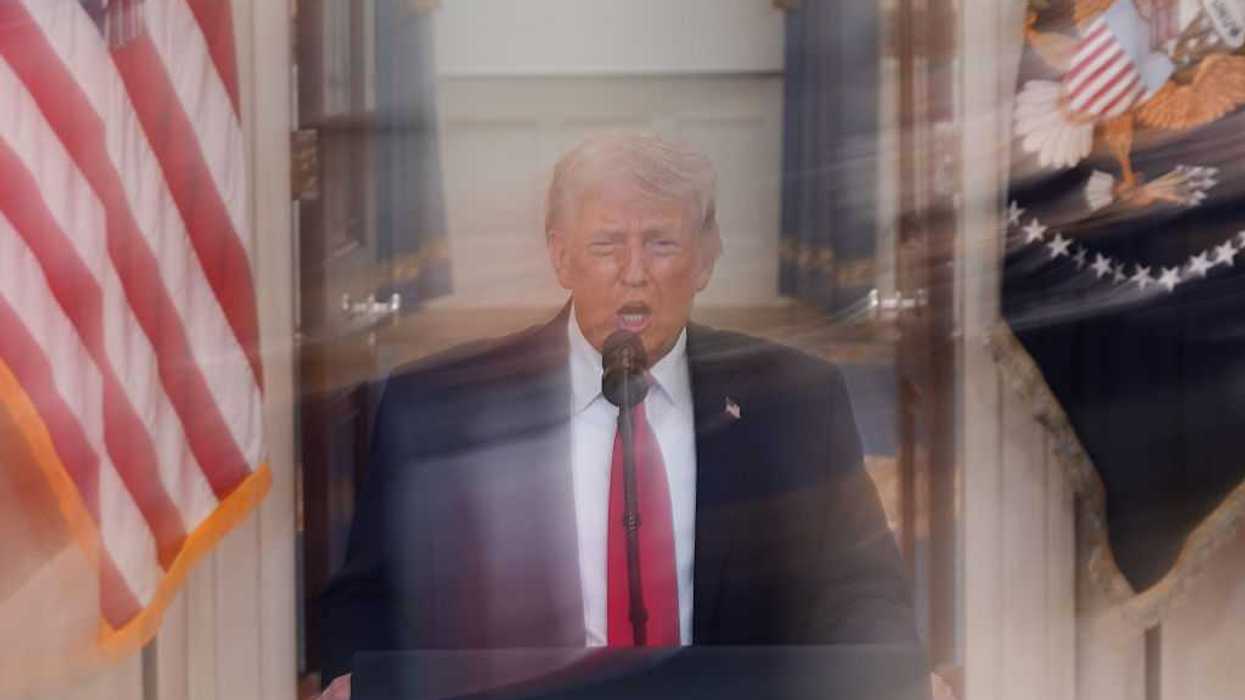





U.S. President Donald Trump speaks during a“ Steel Across America” event ahead of the 25th anniversary of the Sept. 11th attacks on the Ellipse near the White House on Sept. 8, 2026 in Washington, D.C. President Trump welcomed 9/ 11 first responders to the Tunnel to Towers Foundation’ s“ Steel Across America” event featuring a 16,900- pound, 21- foot steel beam recovered.
For Trump, even 9/11 is an opportunity
There was a reason organizers of the 9/11 ceremony in Manhattan told President Trump he could not speak at this year’s memorial service.
A good one, it turns out.
Because in a speech he gave on Tuesday in Washington, he did exactly what they were presumably worried about — he made it about himself.
According to The New York Times, Trump had wanted a speaking role at the service, but the National Sept. 11 Memorial and Museum, which oversees the site, said no, as they’ve maintained for the past decade-plus that the venue and event should be nonpartisan.
Trump has long used awful tragedies to either puff himself up, trash political opponents, or sell lies to the American people.
He blamed a deadly plane crash at Washington National Airport last year on diversity, equity and inclusion policies. He blamed Puerto Ricans for the devastation they endured after Hurricane Maria in 2017. He reportedly considered withholding disaster relief after the California wildfires based on the way affected regions voted. In an interview on Fox News meant to commemorate the 75th anniversary of D-Day in Normandy, he used the occasion to slam former House Speaker Nancy Pelosi…with graves of the dead behind him.
And now, as we approach the 25th anniversary of what many New Yorkers consider the darkest day in modern history, Trump has done it again.
He told a rambling, nonsensical story — one he’s told before — about going to Ground Zero just after terrorists flew two commercial jets into the twin towers. In the story, which no one has been able to verify, despite multiple attempts, he says firefighters had to carry him out of One Liberty Plaza, also known as the U.S. Steel Building, because they thought it was about to collapse.
As CNN fact checker Daniel Dale notes, there’s no evidence Trump went into this building, especially at a time when NYPD and NYFD had locked down the area. There’s no evidence that building was collapsing — in fact, it was deemed structurally sound and reopened within two months of the attacks. There’s no evidence he was carried out of it by firefighters.
But the lie isn’t even the worst part. Pretend it was all true — why would the leader of our country, and a New Yorker, decide to make that tragic day about himself?
Because that’s who Donald Trump is. He’s a malignant narcissist.
He’s also, incidentally, a terrible and ineffectual president, who’s made ill-fated decisions that he has to keep defending, and there’s nothing he won’t do to make himself look and feel better.
Within the first two minutes of his speech, he was cravenly using 9/11 to justify and promote his dumb war in Iran — two events separated by 25 years and 6,000 miles.
“And I will tell you, we’re right now fighting because we have a certain nation that wanted a nuclear weapon, they were very close to getting it, and now they have no chance at getting it. They will never have a nuclear weapon. Iran will not have a nuclear weapon. And they’ve been punished greatly. As you know, we’ve really taken it to them.”
As a New Yorker who lived through 9/11, still one of the worst days of my life, I’m utterly sickened by Trump’s crass, political, and self-promotional framing of that awful day.
And I’m relieved he won’t be given a platform to do it again on Friday’s anniversary in lower Manhattan.
Because for Trump, everything is his for the taking, and absolutely nothing is sacred.
S.E. Cupp is the host of "S.E. Cupp Unfiltered" on CNN.