
Skip to content
Search

Latest Stories

Follow Us:
Top Stories

Grassley steps up to Trump with new bill protecting inspectors general

Inspectors General

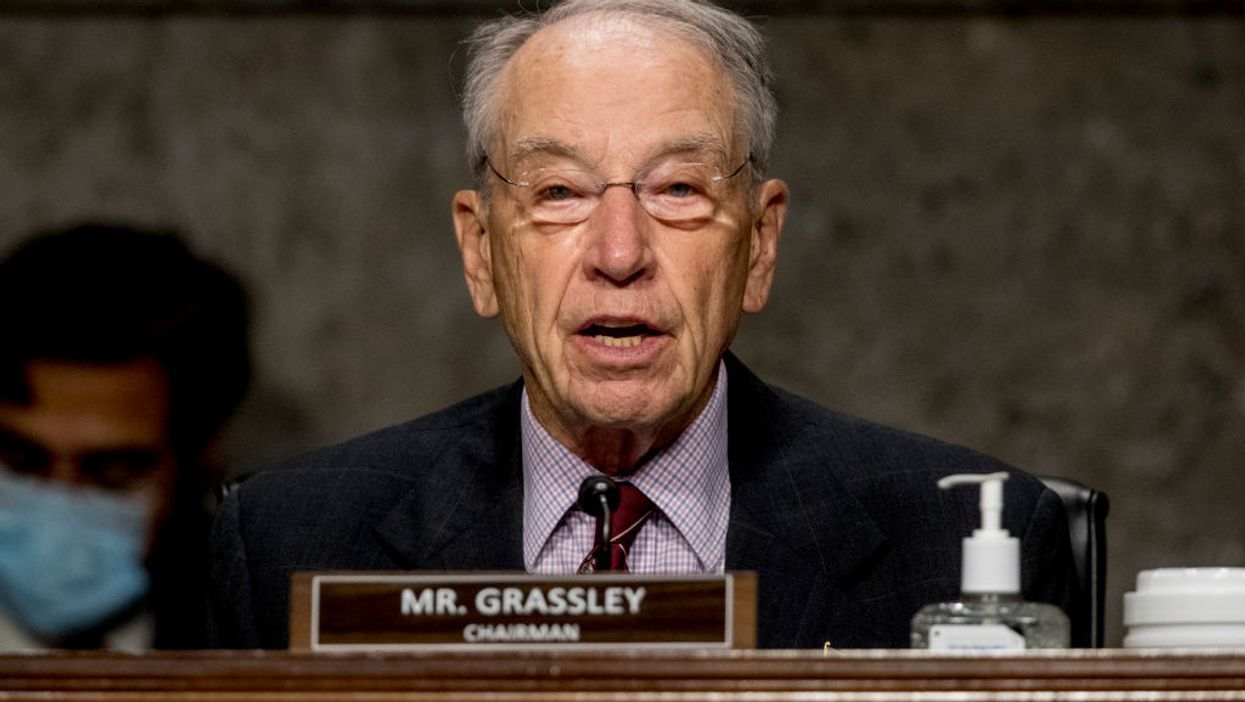
Sen. Chuck Grassley, an Iowa Republican, announced that he will introduce legislation on Thursday to boost protections for the network of inspectors general which identify wrongdoing within federal agencies.

Pool/Getty Images

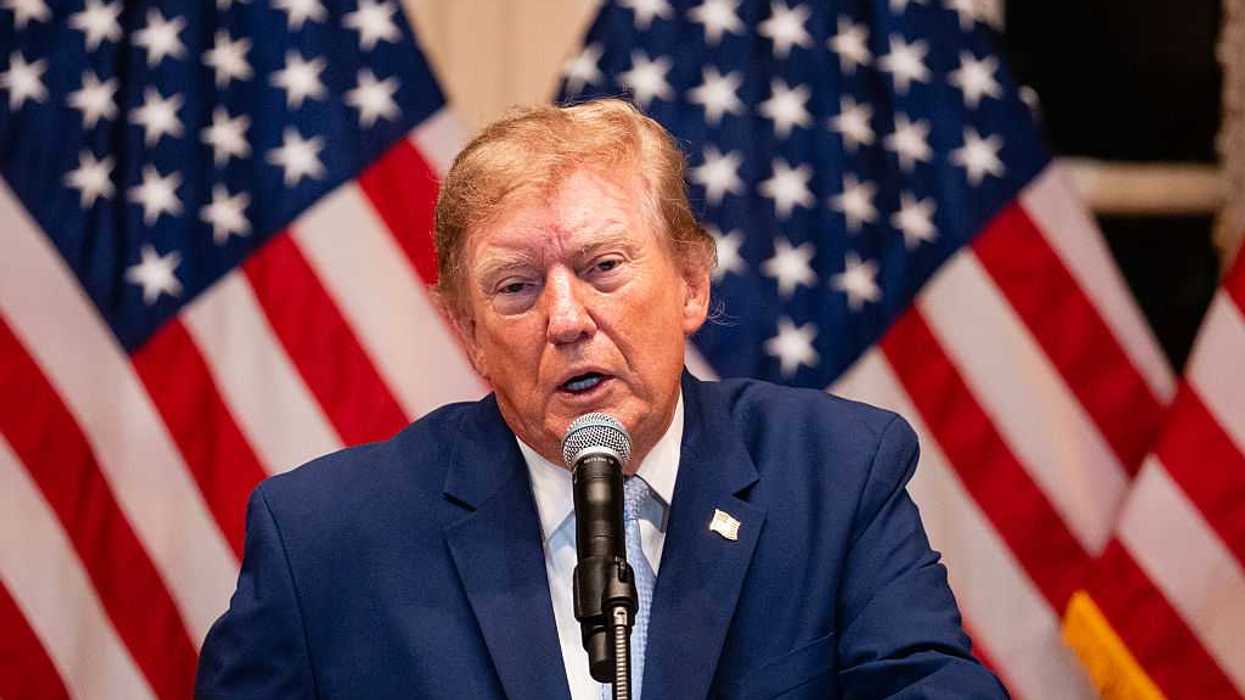
Republican Sen. Chuck Grassley, a longtime champion of government oversight, plans to introduce legislation Thursday to strengthen the inspectors general system in the wake of several firings by President Trump.

While Grassley is usually supportive of Trump's positions, he had become increasingly dissatisfied with the president's removal of IGs, putting a hold on several presidential nominations to force the administration to provide more detailed explanations for the dismissals.


Congress in 1978 created the inspectors general system, in which each federal agency has an internal watchdog looking for wasteful spending and employee misconduct. It has gradually grown to more than 70 IGs.

Grassley, who announced his plans in a Washington Post op-ed, noted that the most recent update to the law governing inspectors general was approved in 2008 and requires the president to provide Congress with advance notice of the firing of an inspector general along with reasoning for the dismissal.

Trump has fired several IGs in recent months, criticized others and attempted to undermine the oversight components included in massive spending legislation passed to help offset the economic damage caused by the coronavirus pandemic.

Two of the most notable firings occurred in April and May. First Trump fired Michael Atkinson, the inspector general for the intelligence community, because he forwarded the whistleblower's complaint that led to Trump's impeachment earlier this year.

Then Steve Linick, the State Department's IG, was fired while investigating the conduct of Secretary of State Mike Pompeo.

President Barack Obama also violated removal requirements, Grassley wrote, in his firing of the AmeriCorp inspector general without providing an explanation.

Grassley said his new legislation will beef up the mandate that the notification of firing by the president include a "substantive rationale, including detailed and case-specific reasons."

His legislation also attempts to address concerns that Trump has named unqualified candidates as temporary inspectors general by requiring that acting IGs be selected from the senior ranks within the watchdog community.

Grassley also hopes to safeguard ongoing investigations during the transition in inspectors general.

"It's really this simple: If inspectors general are doing good work, they should stay; if not, they should go. If the president is going to remove an inspector general, there'd better be a good reason," Grassley wrote.

Grassley has served in the Senate since 1981. He represents Iowa, where recent polling shows Trump in a dead heat with former Vice President Joe Biden.


Read More

After the Ceasefire, the Violence Continues – and Cries for New Words

An Israeli army vehicle moves on the Israeli side, near the border with the Gaza Strip on November 18, 2025 in Southern Israel, Israel.

(Photo by Amir Levy/Getty Images)

After the Ceasefire, the Violence Continues – and Cries for New Words

Since October 10, 2025, the day when the US-brokered ceasefire between Israel and Hamas was announced, Israel has killed at least 401 civilians, including at least 148 children. This has led Palestinian scholar Saree Makdisi to decry a “continuing genocide, albeit one that has shifted gears and has—for now—moved into the slow lane. Rather than hundreds at a time, it is killing by twos and threes” or by twenties and thirties as on November 19 and November 23 – “an obscenity that has coalesced into a new normal.” The Guardian columnist Nesrine Malik describes the post-ceasefire period as nothing more than a “reducefire,” quoting the warning issued by Amnesty International’s secretary general Agnès Callamard that the ”world must not be fooled” into believing that Israel’s genocide is over.

A visual analysis of satellite images conducted by the BBC has established that since the declared ceasefire, “the destruction of buildings in Gaza by the Israeli military has been continuing on a huge scale,” entire neighborhoods “levelled” through “demolitions,” including large swaths of farmland and orchards. The Guardian reported already in March of 2024, that satellite imagery proved the “destruction of about 38-48% of tree cover and farmland” and 23% of Gaza’s greenhouses “completely destroyed.” Writing about the “colossal violence” Israel has wrought on Gaza, Palestinian legal scholar Rabea Eghbariah lists “several variations” on the term “genocide” which researchers found the need to introduce, such as “urbicide” (the systematic destruction of cities), “domicide” (systematic destruction of housing), “sociocide,” “politicide,” and “memoricide.” Others have added the concepts “ecocide,” “scholasticide” (the systematic destruction of Gaza’s schools, universities, libraries), and “medicide” (the deliberate attacks on all aspects of Gaza’s healthcare with the intent to “wipe out” all medical care). It is only the combination of all these “-cides,” all amounting to massive war crimes, that adequately manages to describe the Palestinian condition. Constantine Zurayk introduced the term “Nakba” (“catastrophe” in Arabic) in 1948 to name the unparalleled “magnitude and ramifications of the Zionist conquest of Palestine” and its historical “rupture.” When Eghbariah argues for “Nakba” as a “new legal concept,” he underlines, however, that to understand its magnitude, one needs to go back to the 1917 Balfour Declaration, in which the British colonial power promised “a national home for the Jewish people” in Palestine, even though just 6 % of its population were Jewish. From Nakba as the “constitutive violence of 1948,” we need today to conceptualize “Nakba as a structure,” an “overarching frame.”

Keep ReadingShow less
Ukraine, Russia, and the Dangerous Metaphor of Holding the Cards
a hand holding a deck of cards in front of a christmas tree
Photo by Luca Volpe on Unsplash

Ukraine, Russia, and the Dangerous Metaphor of Holding the Cards

Donald Trump has repeatedly used the phrase “holding the cards” during his tenure as President to signal that he, or sometimes an opponent, has the upper hand. The metaphor projects bravado, leverage, and the inevitability of success or failure, depending on who claims control.

Unfortunately, Trump’s repeated invocation of “holding the cards” embodies a worldview where leverage, bluff, and dominance matter more than duty, morality, or responsibility. In contrast, leadership grounded in duty emphasizes ethical obligations to allies, citizens, and democratic principles—elements strikingly absent from this metaphor.

Keep ReadingShow less
Beyond Apologies: Corporate Contempt and the Call for Real Accountability
campbells chicken noodle soup can

Beyond Apologies: Corporate Contempt and the Call for Real Accountability

Most customers carry a particular image of Campbell's Soup: the red-and-white label stacked on a pantry shelf, a touch of nostalgia, and the promise of a dependable bargain. It's food for snow days, tight budgets, and the middle of the week. For generations, the brand has positioned itself as a companion to working families, offering "good food" for everyday people. The company cultivated that trust so thoroughly that it became almost cliché.

Campbell's episode, now the subject of national headlines and an ongoing high-profile legal complaint, is troubling not only for its blunt language but for what it reveals about the hidden injuries that erode the social contract linking institutions to citizens, workers to workplaces, and brands to buyers. If the response ends with the usual PR maneuvers—rapid firings and the well-rehearsed "this does not reflect our values" statement. Then both the lesson and the opportunity for genuine reform by a company or individual are lost. To grasp what this controversy means for the broader corporate landscape, we first have to examine how leadership reveals its actual beliefs.

Keep ReadingShow less