



Founded in 1991, the National Legal and Policy Center promotes ethics in public life through research, investigation, education and legal action. We recognize that the bigger the government, the more opportunities for corruption; and the more intervention in the economy, the more reason for special interests to seek influence. We believe that the best way to promote ethics is to reduce the size of government. We do not believe that ethics are advanced through more laws or "better guidelines," even as existing ones are ignored. We don't believe the problem is with too few laws, or with too much freedom, but with men and women. We believe the missing ingredients are character, morality and common sense.
Site Navigation
Search
Latest Stories
Join a growing community committed to civic renewal.
Subscribe to The Fulcrum and be part of the conversation.
Top Stories

Latest news


Read More

Woman talking with colleagues
Getty Images
To Protect Democracy, Philanthropy Must Invest in Leadership Not Just Crisis Response
Oct 27, 2026
Philanthropy is very good at responding to crises. It is less effective at preventing them.
If we want democracy to uphold, we must invest in the leaders who sustain it.
By democracy, we mean not only institutions and elections, but the everyday practice of civic engagement: people participating, organizing, speaking freely, and shaping public life without fear. And as the country approaches a consequential midterm election this November, the health of our democracy will be in the spotlight.
In recent years, when American democracy needed leadership most—when the rule of law was openly tested and fear became a common sentiment of civic life—many of the leaders we expected to hold the line did not. Across government, civil society, higher education, media and the private sector, institutions and individuals hesitated (or capitulated entirely) as authoritarian tactics moved from the fringes toward the governing center.
The consequences are visible far beyond Washington. Public life in the United States has become tense, conflict-charged, and, for many, unsafe. Neighbors arrive at school board meetings already convinced the other side is an enemy. Civil servants weigh whether doing their jobs will cost them their careers. Colleges discreetly change their language, course offerings, and priorities, lessening academic freedom to avoid scrutiny. Community organizations face harassment and intimidation. As immigration enforcement has intensified beyond our existing norms and due process has been abandoned, fear has increasingly become an everyday civic condition for many.
The approaching midterms will inevitably focus national attention on candidates, campaigns, polling, and who controls the levers of power in the government for the next two years. Those things have important ramifications. But elections alone cannot produce a healthy democracy. Democracy also depends on the people who lead between elections, those who work tirelessly in local government, school districts and university systems, non-profits, newsrooms, workplaces, and communities. When people are frightened and distrustful of the government bodies, they disengage. And when they disengage, democracy thins.
Recent research underscores both the depth of public distrust and the importance of civic action. In a September 2025 survey, the Pew Research Center found that only 17 percent of Americans trusted the federal government to do what is right always or most of the time—down from 73 percent in 1958, when the National Election Study first asked the question. That figure has not exceeded 30 percent since 2007. (pewresearch.org) The V-Dem Institute’s 2026 Democracy Report found that civil-society repression occurred in 68 percent of countries undergoing autocratization. The same report also identified active civil society, independent media, unified political opposition, and sustained nonviolent protest as the societal forces that drive democratic recovery. (v-dem.net) The lesson for philanthropy is clear: democracy cannot be defended by elected officials and formal institutions alone. It also requires leaders and networks capable of sustaining civic participation when those institutions come under pressure.
Philanthropy has responded to the fires, as it should. Legal defense, emergency aid, rapid-response organizing, and protection for targeted at-risk communities are urgent and necessary choices.
But philanthropy is structurally overinvested in crisis response and underinvested in the leadership that could prevent those crises and help reestablish democratic norms in their wake.
Philanthropy has an opportunity to do more. If we want a democratic future that is not permanently reactive, we cannot fund only what is immediately on fire. We cannot build resilient democracies through emergency funding cycles alone. We need to invest in the people who keep the governmental and civil society institutions essential to democratic life functioning, even under strain, and who can fortify them when they falter. This is the essence of true democratic leadership well beyond our current focus on elected officials, voting rights, etc.
Much democracy funding prioritizes immediate action and tangible results, leaving little room for sustained and longer-term investment in how people learn to lead. Yet leadership is learned. It requires skill to hold conflict without breaking, to work across deep differences without surrendering core values, to build trust, endure backlash, and to remain steady when incentives reward personal gain over responsibility.
The emergency funding pipeline for democracy mostly finds its way to institutions, but that approach misses a more basic question: who animates those institutions, and with what preparation? Courts, elections, watchdog groups, and journalism are essential, but they do not function on their own. They depend on people making daily decisions under pressure. Too often, those people are isolated, without peer networks, mentors, or spaces to steady themselves. Current events make clear that we have a shortage of support for capable people to equip them to lead at various levels of the systems that run democracy.
Philanthropy must treat leadership development as essential civic infrastructure. That means investing early in the people who will inherit today’s challenges: young organizers, public servants, technologists, and community leaders, many of whom are stepping up without the preparation or backing the moment requires.
It also means funding cohorts rather than lone heroes. Democracy does not survive through singular figures; it survives through networks of people across sectors and communities who share skills, commitments, and the courage that comes from not being alone. Leaders do their work with and through others, not in isolation.
The evidence increasingly suggests that leadership development is most effective when it builds relationships as well as individual skills. A 2017 peer-reviewed review in The Leadership Quarterly by Kristin Cullen-Lester, Cynthia Maupin, and Dorothy Carter made the case that leadership development should extend beyond individual knowledge and competencies to strengthen the social relationships that support both individual and collective leadership capacity. (sciencedirect.com) More recently, a 2026 study led by the Impact Fellowships Network and IREX examined 23 fellowship programs and gathered insights from 1,630 alumni and community partners across 141 countries. It found that peer learning was especially influential in supporting change at the individual and institutional levels, while access to networks and professional opportunities helped leaders overcome barriers such as limited resources and connections—and these were most strongly associated with change at the community and system levels. (irex.org) Together, these findings strengthen the case for investing in cohorts, mentoring, and the relationships through which leaders collaborate and sustain their work.
It requires investing in what is often overlooked: mentoring, coaching, relational skills, and the ability to navigate difficult conversations. These are not extras; they are what allow people to remain grounded when institutions are under strain.
And it requires measuring what matters over time. Leadership investments compound. Participants mentor others, build initiatives, enter public service, and carry democratic norms into spaces where they are most needed. The result is not just individuals with vital leadership skills, but stronger networks capable of responding to future challenges.
The future of American democracy will not be determined only by elections or court rulings. It will be shaped by whether we build a leadership bench that is deep enough, broad enough, and resilient enough to meet the years ahead.
Philanthropy can continue to fund the emergencies that arise from democratic erosion or it can rebalance its approach to also invest more boldly in the people who make democratic life possible in the first place.
Azadeh Khalili is the Executive Director of Humanity in Action, Inc.
Dr. Lisette Nieves is the President of Fund for the City of New York.
Keep ReadingShow less
Recommended






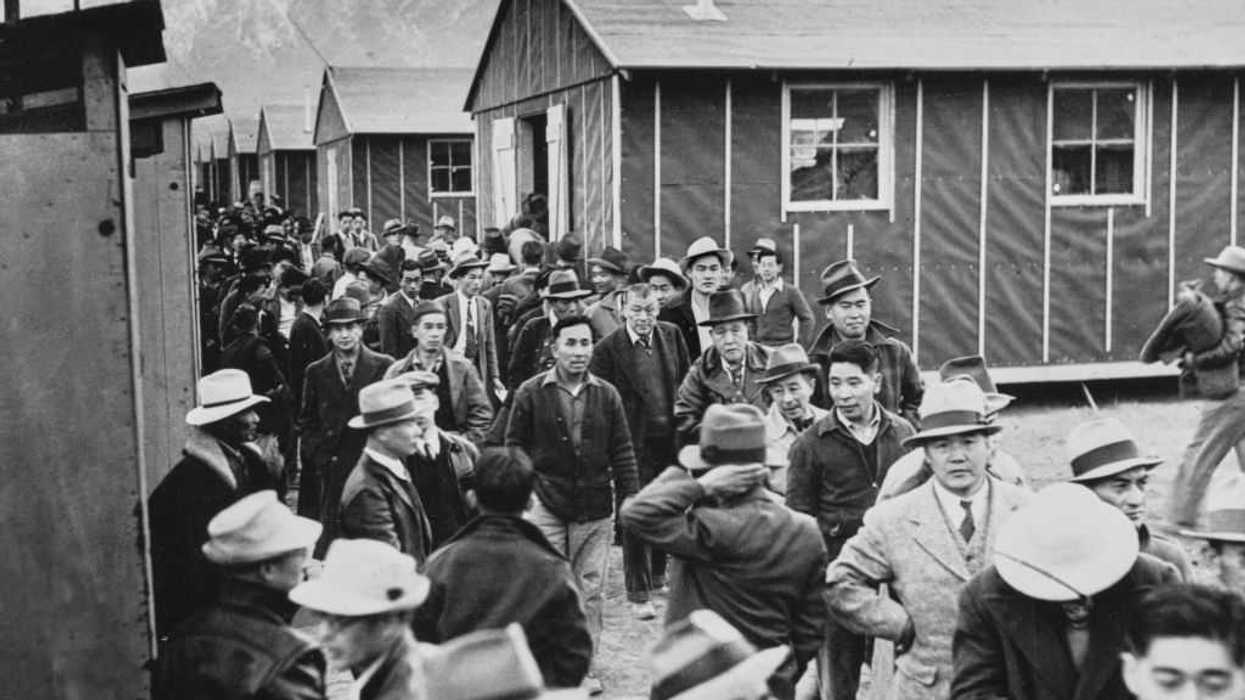
Manzanar War Relocation Center in Owens Valley, Inyo County, California, 23rd March 1942. Approximately 11,000 Japanese Americans were detained at Manzanar, one of ten American internment camps during World War II.
(Photo by UPI/Bettmann Archive/Getty Images)
Washington March Unites Japanese American Survivors and Latino Immigrant Advocates
Oct 27, 2026
Survivors of Japanese American incarceration during World War II joined Latino immigrant rights advocates, faith leaders and community organizers for a 48-mile pilgrimage across Washington state from October 7 to 10, drawing parallels between the forced imprisonment of Japanese Americans more than eight decades ago and the detention of immigrant families under the Trump administration.
The four-day march, titled From Remembrance to Resistance, was organized by Tsuru for Solidarity in partnership with La Resistencia and the Free Families Coalition. It connected historic sites of Japanese American incarceration with locations central to immigration enforcement today, culminating in a planned gathering outside the Northwest ICE Processing Center in Tacoma.
La Resistencia, a Washington-based grassroots organization led by undocumented immigrants and people directly affected by immigration enforcement, has spent more than a decade fighting to close the Tacoma detention center and advocating for people held inside.
Founded in 2014 during a hunger strike involving more than 1,200 detained immigrants, the organization has become a prominent voice in Washington’s immigrant rights movement. Its work includes supporting detained people and their families, documenting complaints about detention conditions and challenging deportations.
The pilgrimage brought that ongoing campaign together with survivors who experienced government incarceration during World War II.
“I am walking to show my outrage and to oppose immigrant detention,” Reverend Kenji Okohashi, a survivor of Japanese American incarceration during World War II, told Washington Latino News.
“As a Japanese American survivor of WWII concentration camps I know what it feels like to be imprisoned by a government violating its own constitution and laws. History is repeating itself. Having experienced this as a child I know the lifelong damage it can inflict,” Okohashi said.
The march began October 7 in Seattle’s Chinatown International District, where Japanese American families were forcibly removed from their homes in 1942. Participants followed a route through Tukwila, Auburn and Puyallup toward Tacoma, visiting locations connected to both historical incarceration and contemporary immigration enforcement.
Among the locations highlighted was King County International Airport, also known as Boeing Field, where immigrant rights organizations have campaigned against deportation flights.
Organizers called for an end to those flights, the closure of the Northwest ICE Processing Center and an end to what they describe as unauthorized holding rooms for immigrant children and families at a federal immigration facility in Tukwila. The allegations involving the Tukwila facility have not been independently verified by Washington Latino News.
The Tacoma facility, operated by private prison company GEO Group under contract with U.S. Immigration and Customs Enforcement, has long been a focus of demonstrations, hunger strikes and complaints about detention conditions.
For immigrant families in Washington, the campaign raises questions about detention practices, access to legal protections and the consequences of separation from relatives facing deportation.
La Resistencia’s involvement also reflects a broader effort to build solidarity between communities that have experienced detention, displacement and government enforcement policies across different generations.
The historical connection is central to the pilgrimage.
Following President Franklin D. Roosevelt’s Executive Order 9066 in 1942, more than 120,000 people of Japanese ancestry were incarcerated by the U.S. government, approximately two-thirds of them American citizens.
In Washington, more than 7,500 Japanese Americans were imprisoned at the Puyallup Assembly Center, commonly known as Camp Harmony, before being transferred to other incarceration camps.
The Puyallup fairgrounds became one of the pilgrimage’s most significant stops, with organizers scheduling a healing ceremony and a reading of the names of Japanese Americans imprisoned there during World War II.
On October 8, participants also focused attention on the federal immigration facility in Tukwila, where immigration advocates have raised concerns about arrests involving people attending immigration proceedings. U.S. Rep. Adam Smith was among the announced speakers at the gathering.
For participants, the walk offered a way to connect personal memories of injustice with a collective response to current immigration policies.
“I’m impressed by the power of the group, how much more confident and positive I feel, walking with everybody and being together,” Vince Schleitwiler, a Seattle member of Tsuru for Solidarity, told Washington Latino News.
The event was intended to bring attention to people detained inside the facility and the families affected by immigration detention, while renewing demands for the center’s closure.
The Washington pilgrimage was part of a broader national effort to oppose immigration detention and family separation, following a similar march in Texas earlier this year.
For Okohashi, the significance of the demonstration extended beyond remembering what happened to Japanese Americans during World War II.
“We must all now stand up and decide to oppose the cruelty and violence of this administration. We must demand closure of these cruel prisons and free the people inside, especially children,” he said.
Washington March Unites Japanese American Survivors and Latino Immigrant Advocates was first published by Washington Latino News and is republished with permission.Alex Segura is Managing Editor for Latino News Network West, overseeing California Latino News and Washington Latino News. He is a California-based journalist with more than a decade of experience covering U.S. politics, immigration, and Latino communities.
Keep ReadingShow less
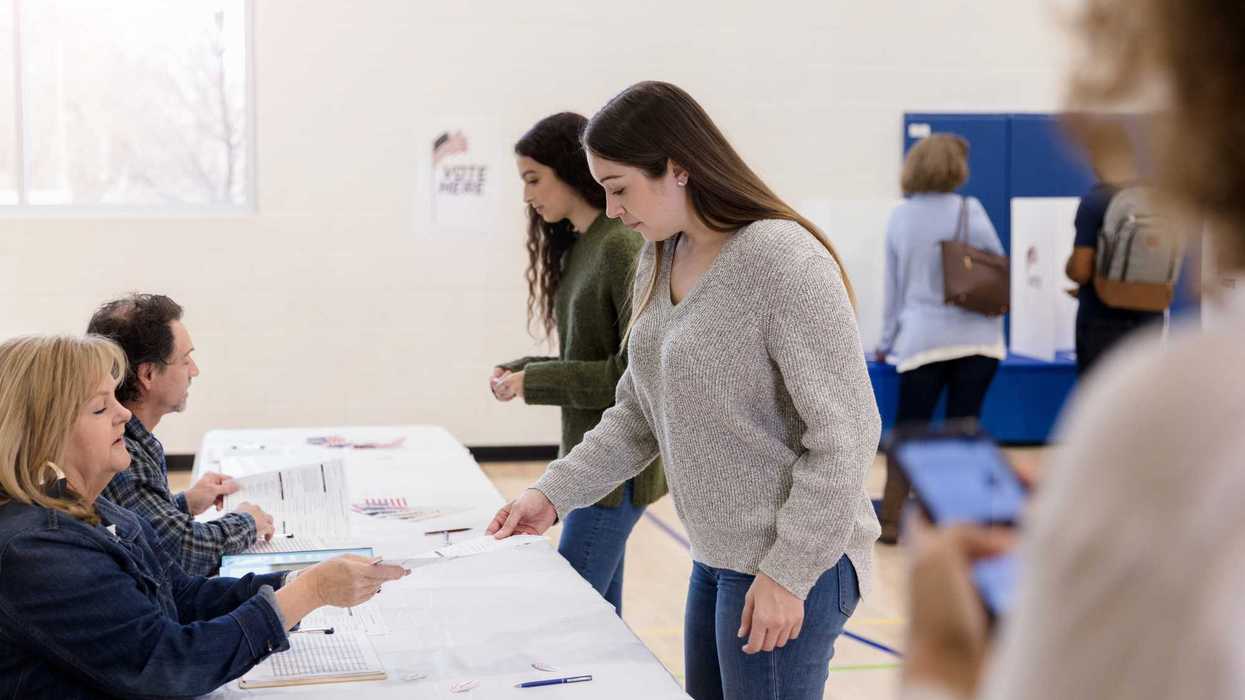
Nearly 50 million young adults can vote in 2026, but many doubt it matters. Why civic education, civic seals, and preregistration must start in high school.
SDI Productions/Getty Images
Welcoming Youth Voters Into Democracy
Oct 26, 2026
Nearly 50 million young people ages 18-29 will be eligible to vote this November, including an estimated eight million who have become newly eligible since the 2024 election. The conversation about this voting bloc tends to focus on two big questions: what will it take to get young people to the polls, and which party will capture their vote? But these are exactly the wrong questions to be asking about a generation of young people who view civic institutions with skepticism and distrust. At a time of deep political polarization and growing social isolation, we cannot narrow civic engagement down to the ballot box or let partisan divides distract us from the long-term work of building civic participation.
Despite persistent narratives about youth disengagement, Gen Z cares deeply about a range of issues and the country’s future. According to the Center for Information & Research on Civic Learning and Engagement (CIRCLE) at Tufts University, 89% of youth are willing to vote and a large majority are willing to talk to friends and family about the issues they care about. Yet 44% are unsure whether their vote matters or do not believe that it does, posing a risk for voter turnout. The disconnect reflects a gap between caring about political issues and believing their participation can make a difference.
That gap is part of a broader lack of trust in whether democracy is working for young people. Only 16% say democracy is working well for their generation, and many say they do not feel heard or represented. Economic concerns, which cut across demographics and political beliefs, further compound that sense of disempowerment. Building this trust cannot happen only at election time. Young people need meaningful opportunities to participate in civic life, develop their voices, and see that their participation can make a difference before, during, and after elections. That means more than a registration form and a reminder to get to the polls. They need the knowledge, confidence, agency, and experience to understand issues, evaluate choices, and see themselves as participants in democracy.
This kind of civic immersion can’t wait until college or career. Yet most voter engagement efforts focus on young people once they are eligible to vote, often once they reach college. This trend reinforces a transactional relationship with politics rather than cultivating lasting civic engagement. If we want lifelong participants in democracy, we cannot wait until young people are eligible to vote to engage them.
A thriving democracy needs quality, generationally relevant on-ramps to help young people get excited about and enter into the democratic habits of collective self-government. Accessible information and voter activation are important. But they can only go so far if we haven't built the civic foundation that helps young people engage in the first place.
The work starts earlier, in schools, which remain the local cornerstones of public life in many of America’s communities. High school is a critical period for developing civic identity, confidence, and agency. Research shows that feeling like your voice matters is connected to both voting and broader civic action. CIRCLE research found that 81% of students who strongly felt their voices and opinions mattered in high school said they were extremely likely to vote. The relationship also extended to broader civic action. Young people must see themselves as protagonists whose voices can shape the decisions and communities around them.
Sustainable, long-range policy planning can help make that journey possible and equitable. Civic seals in New York and California are excellent examples of policy activating youth civic engagement. In both states, over 22,000 graduating seniors receive diploma seals that recognize — and celebrate — their development of civic knowledge, identity, and skills that contribute to community-based problem solving.
The next step is making it easier for young people to become voters when they are ready. Public policies such as preregistration at 16 and expanding access to voter registration at 18 can help make meaningful civic learning and participation accessible to every young person.
When robust voting education and voting registration opportunities happen in a pre-college setting, research indicates the high potential for the habit to become stickier, rather than that work beginning in a postsecondary context. RISE Vote, a nonpartisan voter registration initiative led by Generation Citizen, New Voters, and The Civics Center, is an example of what earlier engagement looks like. The initiative provides high school students with the tools and resources to register, become informed, and participate in the election. With 200 high school voter registration events slated to take place through Spring 2027, what distinguishes RISE Vote from other youth voting initiatives is that it meets young people before college and treats voter engagement as part of broader civic development, rather than a one-time turnout effort.
Whether the opportunity is civic seals or nonpartisan voter pre-registration, sustainable policy prioritizes the engagement and entrance of young folks into America’s public life.
The 2026 midterms, in an important respect, transcend questions of party affiliation. From a civic leadership development standpoint, it offers an important opportunity to engage a new generation of voters in the political process. If we want young people to become lifelong participants in democracy, we need to cultivate their voice, agency, and civic knowledge long before we ask them to cast a ballot. That’s not just work facing young people. It’s up to all of us to drive it forward.
Andrew Wilkes serves as Generation Citizen’s Chief Policy & Advocacy Officer, where he leads GC’s thought leadership, coalition building, and policy initiatives as a part of the national leadership team.
Keep ReadingShow less
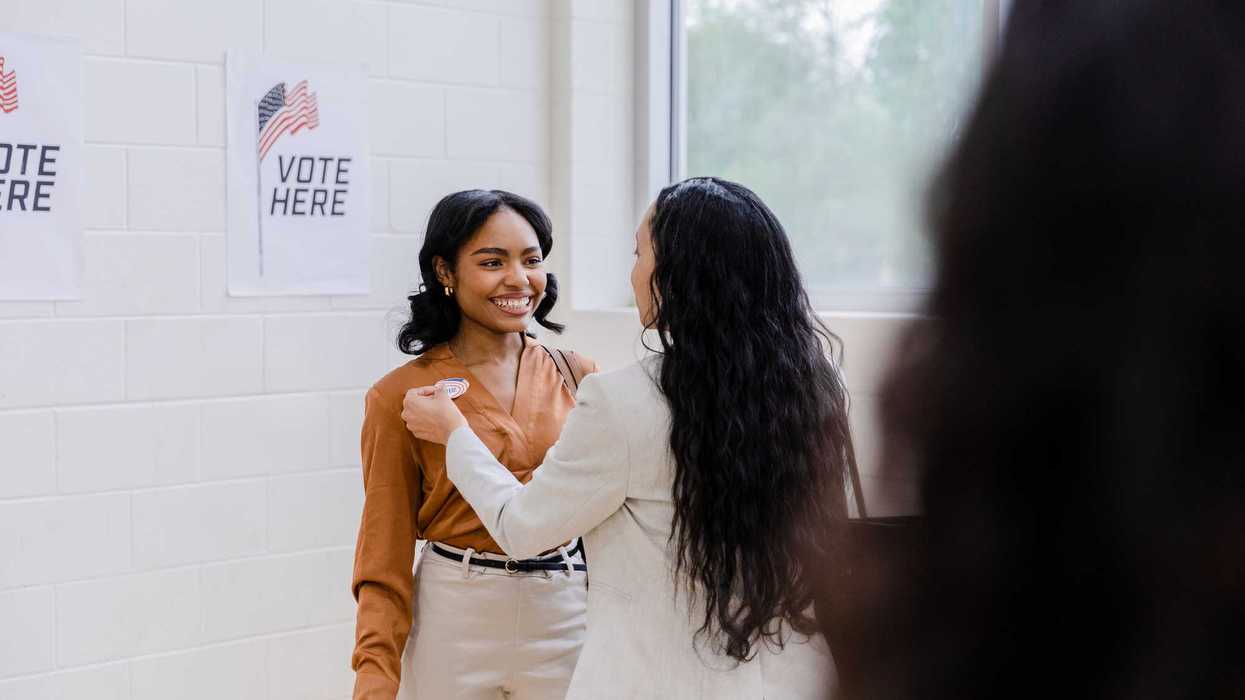
After voting for the first time, the proud mother puts an "I voted" sticker on her daughter.
Getty Images
The Surge of Independent Voters: Why Open Primaries Are Democratically Necessary
Oct 26, 2026
Across the United States, traditional political affiliations are shifting as a growing segment of the electorate steps away from major-party labels. Jeremy Gruber, senior vice president at Open Primaries, a national nonpartisan organization dedicated to expanding nonpartisan voter access, highlighted this dramatic evolution in voter registration and the structural hurdles these voters face in the latest episode of The Fulcrum Roundtable.
The decline in major-party allegiance is not temporary but a sustained movement that has been building over several decades.
"Until the 1980s, 90% of voters in this country were part of the Republican and Democratic parties," Gruber explained. "And ever since, the fastest-growing group of voters in this country has been independent voters. Now today, independent voters are 47% of the country in terms of identification."
- YouTube youtu.be
Gruber notes that independents now represent "the largest group of voters in 10 states by registration and the second largest group of voters in most others." States like Kentucky exemplify this trend, where "more Kentuckians registered as independents than as Republicans or Democrats combined" during recent registration periods.
According to Gruber, voters are leaving established parties, or not registering with them in the first place, because they're frustrated with polarization and a lack of progress.
"Voters are tired. They're tired of red meat partisan politics. They're tired of the partisanship and polarization that are driving both parties," Gruber said. "They're just tired of the parties not achieving what they are claiming that they're there to achieve, which is progress, right? Which is to make their lives better as voters and as Americans."
He adds that major party platforms have narrowed over time, driving voters to look elsewhere for solutions.
"Both parties had a much larger, more broadly outlooked platforms for a very long time, and both parties' platforms have tended to contract and become much more ideologically focused," Gruber noted. "That has pushed a lot of voters to say, 'Look, there are parts of this party's platform that may appeal to me, and there are parts of this other party's platform that may appeal to me, but one party or the other is not where I live politically anymore.'"
Instead of ideological purity, Gruber emphasizes that "what most Americans want is common sense. They want common-sense answers, common-sense solutions. And neither party is providing that for a lot of Americans, and that's why they're looking for something else."
Despite paying taxes that fund primary elections, millions of independent voters across the country remain barred from participating in closed primaries. However, Gruber argues that party leadership already possesses the legal authority to change those rules without legislative overhauls.
"The Supreme Court has ruled that the political parties have the unilateral right... We have a First Amendment right of association," Gruber pointed out. "Parties are private entities... and the Supreme Court has said either party, Democrat or Republican, can open their primary to independent voters in any state."
While state parties in several jurisdictions have opened their primaries, others remain closed due to internal party dynamics.
"In a lot of places, the leadership of the parties is oftentimes very distanced from the average voter who's a member of that party," Gruber said. "It's much more ideological, and it's much more focused on power and control rather than the simple issues of fundamental fairness... Party leadership has their own interests, and those interests don't necessarily align with opening the primary to voters who are not affiliated with that party."
To bridge that gap and advance election reform, Gruber stresses the importance of grassroots organizing and direct voter storytelling.
"Independent voters in particular in this country are so misunderstood in a widespread way, and everybody puts their fears of the 'other' onto independent voters," Gruber observed. "There's nothing strange about or unusual about them. They're just like everybody else in their community. They just don't want to join a party in order to participate in a public election."
Gruber concluded that achieving nonpartisan access depends on voters demanding equal representation.
"It's only when the voters, independents and party voters alike, put pressure on their party officials and their elected officials that change... is going to start to happen in even more effective ways."
The Fulcrum Roundtable is a program where columnists join for deeper, on‑the‑record discussions about issues shaping American governance and civic participation.
This episode is part of The Fulcrum's partnership with IVN and The Latino News Network to expand voter‑first journalism and strengthen public‑centered coverage of democracy.
Hugo Balta is the executive editor of The Fulcrum and the publisher of the Latino News Network,.
Keep ReadingShow less
Load More