

Skip to content
Search

Latest Stories

Follow Us:
Top Stories

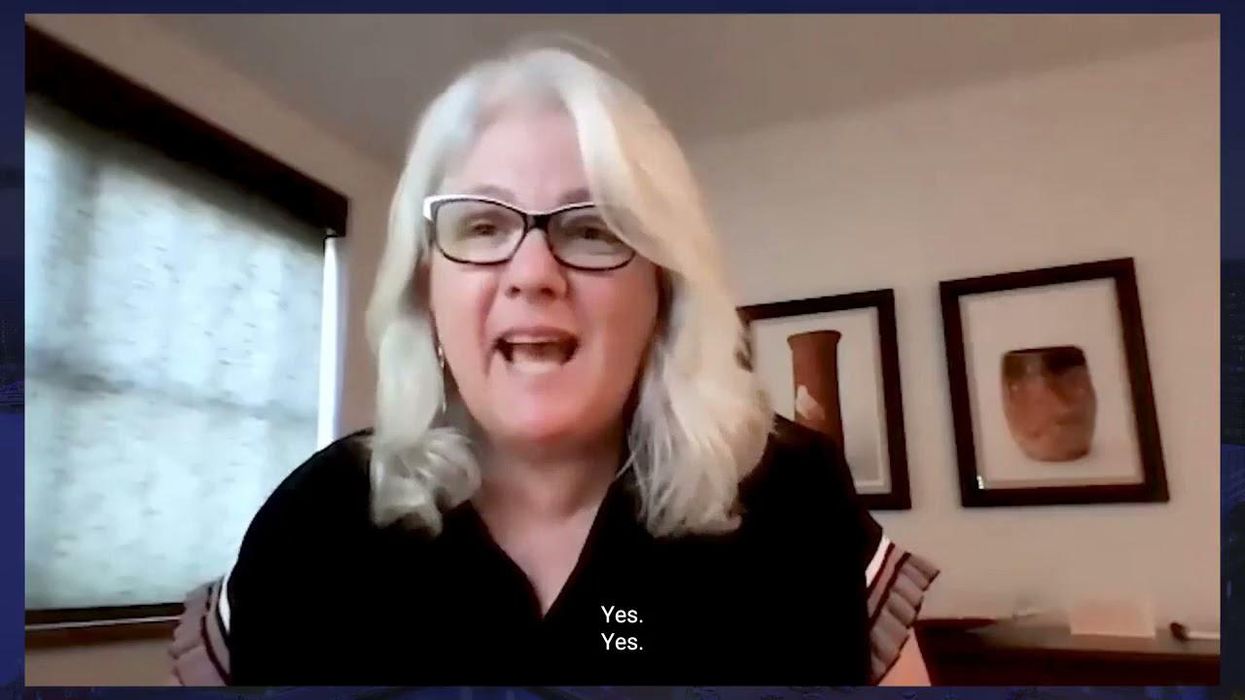
Video: Repairing America’s Broken Democracy Featuring Rachel Kaganoff Stern with Junior State of America

The Fulcrum Repairing America's Broken Democracy

Rachel Kaganoff Stern is CEO of Junior State of America. Rachel shares her thoughts on the mission and impact of Junior State of America in engaging young people in government and improving their communities.

The interview is part of a collaboration between Bridge Alliance and CityBiz entitled Repairing America's Broken Democracy.


Watch Now.


Read More

I’m a Former Immigration Lawyer Turned Public School Teacher. Here’s How I’m Engaging Students in Civics.
a dining room table
Photo by Tuyen Vo on Unsplash

I’m a Former Immigration Lawyer Turned Public School Teacher. Here’s How I’m Engaging Students in Civics.

During a recent civics class a student asked me why protests were happening around the country. This student wasn’t being partisan or argumentative. They were just trying to understand what is happening in our democracy right now.

When it comes to teaching civics through current events, the hardest part doesn’t involve breaking up disagreements. Rather, the hardest and incidentally most valuable component is helping students develop meaning from situations as change unfolds on their social media feeds in real time.

Keep ReadingShow less
Digital generated image of green semi transparent AI word on white circuit board visualizing smart technology.

What can the success of SEMATECH teach us about winning the AI race? Explore how a bold U.S. public-private partnership revived the semiconductor industry—and why a similar model could be key to advancing AI innovation today.

Getty Images, Andriy Onufriyenko

A Proven Playbook for AI Leadership: Lessons from America’s Chip Comeback

Imagine waking up to this paragraph in your favorite newspaper:

The willingness of the U.S. government to eschew partisanship and undertake a bold experiment -- an experiment based on cooperation as opposed to traditional procurement, and with accountability standards rooted in trust instead of elaborate regulations -- has led the U.S. to a position of preeminence in an industry which is vital to our nation's security and economic well-being.

Keep ReadingShow less
Protestors holding signs, including one that says "let the people vote."

Attendees hold signs advocating for voting rights and against the SAVE America Act at a rally to outside the U.S. Capitol on March 18, 2026 in Washington, DC.

Getty Images, Heather Diehl

SAVE America Act Debate Begins; Mullin for DHS Hearing

Both chambers of Congress are in session this week and next. The House will probably function about like it has been - lots of votes (often by voice) on uncontroversial bills; many fewer votes on Republican priority bills. Lots of hearings this week and a few legislator updates.

Committee Meetings

Both chambers have a busy week with 64 total committee meetings scheduled.

Keep ReadingShow less
Paul Ehrlich was wrong about everything

Crowd of people walking on a street.

Andy Andrews//Getty Images

Paul Ehrlich was wrong about everything

Biologist and author Paul Ehrlich, the most influential Chicken Little of the last century, died at the age of 93 this week. His 1968 book, “The Population Bomb,” launched decades of institutional panic in government, entertainment and journalism.

Ehrlich’s core neo-Malthusian argument was that overpopulation would exhaust the supply of food and natural resources, leading to a cascade of catastrophes around the world. “The Population Bomb” opens with a bold prediction, “The battle to feed all of humanity is over. In the 1970s and 1980s hundreds of millions of people will starve to death in spite of any crash programs embarked upon now.”

Keep ReadingShow less