


Skip to content
Search

Latest Stories

Follow Us:
Top Stories

Claim: President Trump can cut off funding for schools. Fact check: Mixed

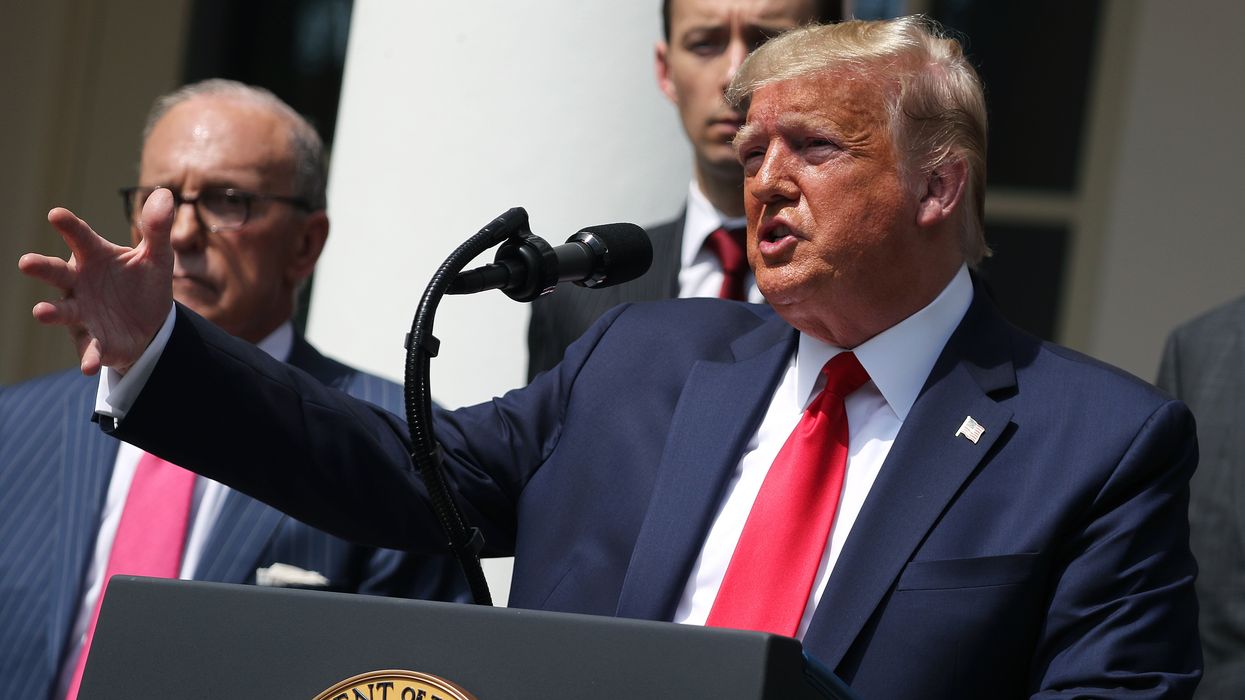
President Donald Trump
Chip Somodevilla/Getty Images

President Trump cannot unilaterally cut federal funding for schools, as highlighted by House Democrats on June 8.

"Congress provides federal education funding to support some of the most vulnerable young people in our country," said Evan Hollander, a spokesman for the Democrats on the House Appropriations Committee. "The president has no authority to cut off funding for these students, and threatening to do so to prop up his flailing campaign is offensive."

However, Trump could restrict some pandemic relief funding and decline to sign or veto future legislation for federal grants and bailouts for schools.


Trump and his administration have previously proposed cutting federal grants for schools as well as reducing the Education Department's budget, but Congress, which has oversight power when it comes to federal grants, has continued to reject these proposals.

"As with all legislation generally, Congress oversees the grant's implementation to ensure that the federal administrating agency is held accountable," as stated in a 2019 report from the Congressional Research Service on federal grants.

Read More

Red elephants and blue donkeys

The ACA subsidy deadline reveals how Republican paralysis and loyalty-driven leadership are hollowing out Congress’s ability to govern.

Carol Yepes

Governing by Breakdown: The Cost of Congressional Paralysis

Picture a bridge with a clearly posted warning: without a routine maintenance fix, it will close. Engineers agree on the repair, but the construction crew in charge refuses to act. The problem is not that the fix is controversial or complex, but that making the repair might be seen as endorsing the bridge itself.

So, traffic keeps moving, the deadline approaches, and those responsible promise to revisit the issue “next year,” even as the risk of failure grows. The danger is that the bridge fails anyway, leaving everyone who depends on it to bear the cost of inaction.

Keep ReadingShow less
Who thinks Republicans will suffer in the 2026 midterms? Republican members of Congress

U.S. Speaker of the House Mike Johnson (R-LA); House Chamber at the U.S. Capitol on December 17, 2025,.

(Photo by Kevin Dietsch/Getty Images)

Who thinks Republicans will suffer in the 2026 midterms? Republican members of Congress

The midterm elections for Congress won’t take place until November, but already a record number of members have declared their intention not to run – a total of 43 in the House, plus 10 senators. Perhaps the most high-profile person to depart, Republican Rep. Marjorie Taylor Greene of Georgia, announced her intention in November not just to retire but to resign from Congress entirely on Jan. 5 – a full year before her term was set to expire.

There are political dynamics that explain this rush to the exits, including frustrations with gridlock and President Donald Trump’s lackluster approval ratings, which could hurt Republicans at the ballot box.

Keep ReadingShow less
Social Security card, treasury check and $100 bills
In swing states, both parties agree on ideas to save Social Security
JJ Gouin/Getty Images

Social Security Still Works, but Its Future Is Up to Us

Like many people over 60 and thinking seriously about retirement, I’ve been paying closer attention to Social Security, and recent changes have made me concerned.

Since its creation during the Great Depression, Social Security has been one of the most successful federal programs in U.S. history. It has survived wars, recessions, demographic change, and repeated ideological attacks, yet it continues to do what it was designed to do: provide a basic floor of income security for older Americans. Before Social Security, old age often meant poverty, dependence on family, or institutionalization. After its adoption, a decent retirement became achievable for millions.

Keep ReadingShow less
How Texas’ Housing Changes Betray Its Most Vulnerable Communities
Miniature houses with euro banknotes and sticky notes.

How Texas’ Housing Changes Betray Its Most Vulnerable Communities

While we celebrate the Christmas season, hardworking Texans, who we all depend on to teach our children, respond to emergencies, and staff our hospitals, are fretting about where they will live when a recently passed housing bill takes effect in 2026.

Born out of a surge in NIMBY (“not in my backyard”) politics and fueled by a self-interested landlord lawmaker, HB21 threatens to deepen the state’s housing crisis by restricting housing options—targeting affordable developments and the families who depend on them.

Keep ReadingShow less