


Skip to content
Search

Latest Stories

Follow Us:
Top Stories

Podcast: We the entrenched

Podcast: We the entrenched

The U.S. Constitution is an 18th-century straitjacket. It’s almost impossible to amend, it gives outsize power to small states, and its meaning is subject to the whims of unelected and increasingly intransigent judges.

So what’s new? Well, you might be intrigued to learn on this episode of Democracy in Danger just how America might wrench itself out of that morass, short of trashing the Constitution altogether. With the 2022 midterms on the horizon, this episode’s guests offer up a few ideas — some new, some as old as Athens.

https://open.spotify.com


Read More

Why Trump’s antics don’t work on our allies

From left to right: Ukraine's President Volodymyr Zelensky, Britain's Prime Minister Keir Starmer and France's President Emmanuel Macron hold a meeting during a summit at Lancaster House on March 2, 2025, in London, England.

(Justin Tallis/WPA Pool/Getty Images/TNS)

Why Trump’s antics don’t work on our allies

It is among the most familiar patterns of the Trump era. First, the president says or does something weird, rude or otherwise norm-defying. Some elected Republicans object, and the response from Trump and his minions is to shoot the messenger. The dynamic holds constant whether it’s big (January 6 pardons) or small (tweeting “covfefe” just after midnight).

The essence of this low-road-for-me-high-road-for-thee dynamic rests on the belief that Trumpism is a one-way road. Insulting Trump, deservedly or not, is forbidden, while Trump’s antics should be celebrated when possible, defended when necessary, or ignored when neither of those responses is possible. But he should never, ever face consequences for his own actions.

Keep ReadingShow less
Government Cyber Security Breach

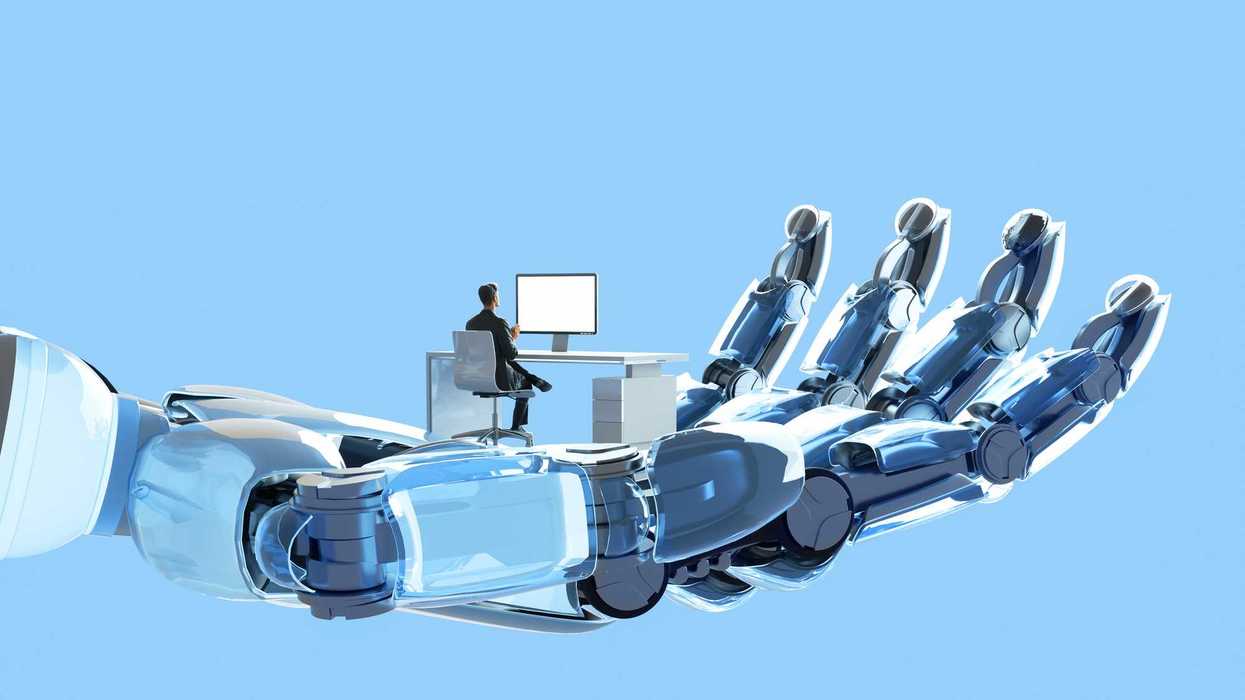
An urgent look at the risks of unregulated artificial intelligence—from job loss and environmental strain to national security threats—and the growing political battle to regulate AI in the United States.

Getty Images, Douglas Rissing

AI Has Put Humanity on the Ballot

AI may not be the only existential threat out there, but it is coming for us the fastest. When I started law school in 2022, AI could barely handle basic math, but by graduation, it could pass the bar exam. Instead of taking the bar myself, I rolled immediately into a Master of Laws in Global Business Law at Columbia, where I took classes like Regulation of the Digital Economy and Applied AI in Legal Practice. By the end of the program, managing partners were comparing using AI to working with a team of associates; the CEO of Anthropic is now warning that it will be more capable than everyone in less than two years.

AI is dangerous in ways we are just beginning to see. Data centers that power AI require vast amounts of water to keep the servers cool, but two-thirds are in places already facing high water stress, with researchers estimating that water needs could grow from 60 billion liters in 2022 to as high as 275 billion liters by 2028. By then, data centers’ share of U.S. electricity consumption could nearly triple.

Keep ReadingShow less
The Cracks in the Nonprofit System Are Built into Its Foundation
1 U.S.A dollar banknotes

The Cracks in the Nonprofit System Are Built into Its Foundation

Across the nonprofit sector, signs of strain are becoming more visible. Staff turnover is rising, compliance demands are increasing, and community needs are growing more complex. Yet the funding structures that support this work remain largely unchanged. What appears today as instability is not a sudden disruption. It is the predictable outcome of a model that has relied on endurance rather than investment.

For decades, nonprofit organizations have been tasked with addressing society’s most persistent challenges. Domestic violence, homelessness, behavioral health, and poverty depend heavily on nonprofit infrastructure to deliver services and stabilize communities. The sector has sustained this responsibility not because it was designed to be durable, but because the people working within it continued to adapt under pressure. Commitment filled the gaps where investment was limited. That approach is now reaching its limits.

Keep ReadingShow less
Concerns Rise as States Opt In to National Voucher Plan
boy in green sweater writing on white paper
Photo by CDC on Unsplash

Concerns Rise as States Opt In to National Voucher Plan

WASHINGTON — Cris Gulacy-Worrell used to call herself a “public school purist,” openly advocating against school voucher programs in the early 2010s. Then she founded Oakmont Education, a network of charter schools in Ohio, Iowa and Michigan, designed to help students who have dropped out of high school earn their diplomas and secure jobs.

Now she describes herself as “pro-school choice” and wants to see change in the K-12 education system.

Keep ReadingShow less