



Free Speech For People (FSFP) works to renew our democracy and our United States Constitution for 'we the people'. Founded on the day of the Supreme Court's Citizens United ruling, FSFP envisions a democratic process in which all people have an equal voice and an equal vote. FSFP is a leading force in the country for defending our Constitution and reclaiming the basic promise of democracy and American self-government: of, by, and for the people. FSFP advocates for a new constitutional amendment to limit campaign spending and to repeal the doctrine of corporate personhood.
Site Navigation
Search
Latest Stories
Join a growing community committed to civic renewal.
Subscribe to The Fulcrum and be part of the conversation.
Top Stories


Read More
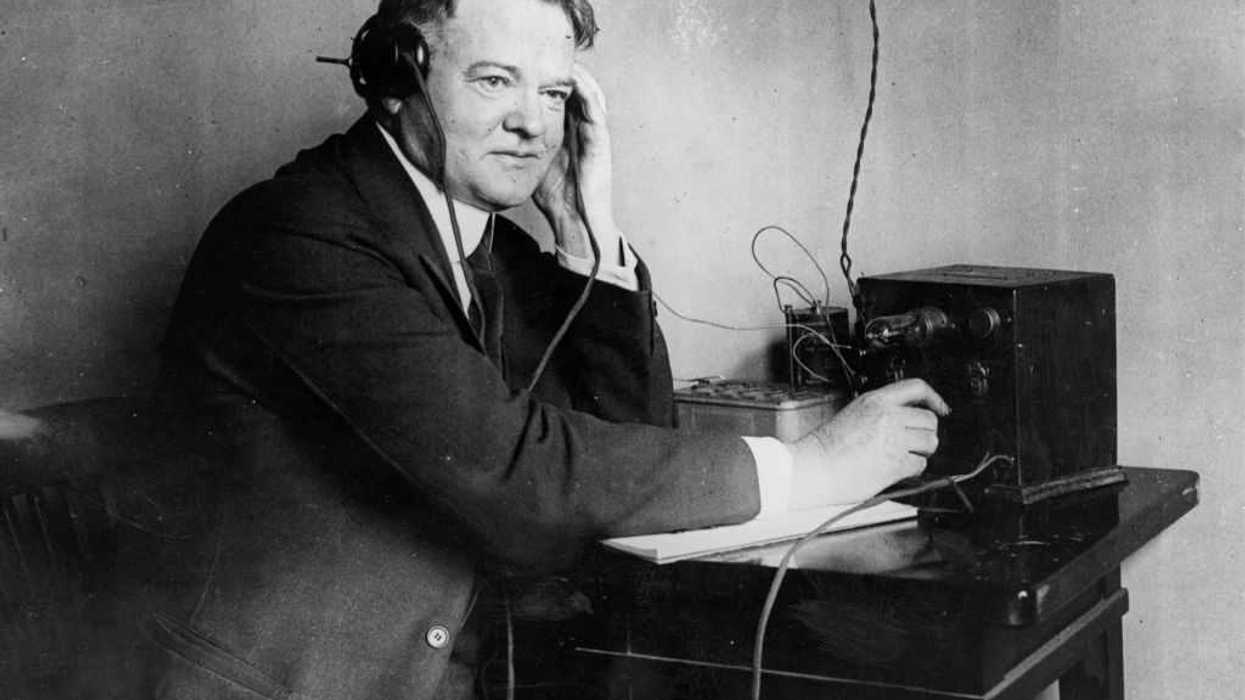
Herbert Hoover (1874 - 1964), Republican Party candidate for the Presidency of the United States of America, listening to a one valve radio set.
Topical Press Agency/Getty Images
A Second Axial Age Demands Global Leadership Rooted in Hoover’s Ideals
Oct 20, 2026
The time has come when we must take an enlarged vision of the future. (Herbert Hoover)
Our 31st President, Herbert Hoover, said this in 1926. Although one hundred years have passed since — and it is always time to take a larger view of the future — his proclamation rings truer now than ever.
The Axial Age refers to a period in human history and a turning point in human development, generally considered the 8th--3rd centuries BCE, when disparate societies shifted away from localized beliefs toward more universal truths. Urbanization, endless warfare, and the rise of empires had broken down tribal structures. With a new collective awareness, people instituted just moral codes and emphasized societal responsibility. These profound changes brought a time of great achievement and promise. Individuals took responsibility beyond their own societies, recognizing that the general good and an improved state benefited all. This “One for All and All for One” collective awareness resulted in a tremendous leap in human achievement.
Hoover was born in a simple two-room cottage in West Branch, Iowa, in 1874 and orphaned at ten. He was a self-made man. An expert mining engineer, he lived and traveled worldwide and was a millionaire by age 40. He gave away most of his fortune; when he made more, he gave away more. He was not motivated by money or by power. He wanted to serve.
Hoover lived a life of public service, embodying the vision our founding fathers had for our nation. The authors of the Constitution did not envision career politicians or PAC money, but people who would serve their constituents. They were to act as leaders, implementing visionary ideas to improve the welfare of individuals and families and thus enhance and promote our country’s welfare.
If there was a President who embodied what the United States strives to be, it was President Hoover, known as the Great Humanitarian. With extraordinary organizational skills, he had a strong ability to work with others and enlist cooperation toward a common goal. In one instance, as Director General of American Relief after World War I, he was responsible for feeding 350 million people in 21 countries. Millions of Europeans credited him with saving their lives.
Hoover served under Presidents Wilson, Harding, and Coolidge before assuming the presidency himself. He won a landslide victory in 1928 and served as president from 1929-1933. But our previous president, Coolidge, and our nation were deafened by the Roaring Twenties and did not listen when he, as Secretary of Commerce, repeatedly warned of impending financial disaster. Much as he tried to circumvent it, Hoover’s presidency was defined by the Great Depression. Yet, after losing to Franklin Roosevelt in 1933, Hoover continued to serve under two more presidents, Truman and Eisenhower.
Many contemporary philosophers believe we are now standing at the threshold of a second Axial Age. Driven by an impending planetary crisis with the triple worldwide threats of climate chaos, global conflicts, and accelerated technological advancement and our increasing dependence on it, we are on the precipice.
Such threats demand a worldwide shift from the “state” to a global perspective, yet we face this tipping point with a dangerously disturbed world order. Governing has a moral component that, if not upheld, will rot a society from within. The “Queen of Hearts” strategy of “off with their heads,” figuratively “decapitating” anyone who disagrees with the “ruler,” does not work now, if it ever did.
Whether millennia ago, during the first Axial Age, or a century ago when Hoover lived, the essential requirements remain the same. Humanitarian qualities must define this movement. Caring for one's fellow man is not a threat to individualism. This is not the time for isolation; it is a time to work together. It is not “us” or “them”; it is all of us.
Now is the time to advance just values and a clear vision. We need statesmen who can see the “bigger picture” and will truly “step across the aisle,” as so few have the courage to do.
There is no reason the United States should not lead the rest of the world as we plunge into this second “Axial Age.” And we will, if we act upon the ideals our country was founded upon.
Our individualism differs from all others because it embraces these great ideals: that while we build our society upon the attainment of the individual, we shall safeguard to every individual an equality of opportunity. I have had every honor to which any man could aspire. There is no place on the whole earth except here in America where all the (children) of man can have this chance in life…. (Herbert Hoover, once again)
Amy Lockard is an Iowa resident who regularly contributes to regional newspapers and periodicals. She is working on the second of a four-book fictional series based on Jane Austen’s “Pride and Prejudice."
Keep ReadingShow less
Recommended







Elections end, but neighbors’ needs don’t. Learn how faith communities can listen, engage candidates, and keep leaders accountable after the midterms.
Maskot/Getty Images
Faith’s Work Will Outlast the Ballot
Oct 19, 2026
After the midterm elections, people will still need groceries. A parent will still weigh the cost of a prescription against the rent. A child will still enter a classroom carrying burdens no backpack should hold. Whatever the electoral map looks like, faith communities will wake to neighbors who need more than a winning party's promises.
The prophetic promise of faith-informed communities lies in their ability to form people who participate, discern, organize, and remain accountable to one another long after the campaign signs come down. Elections measure that work, but they are not its endpoint.
In his recent article, “How Multiracial Churches Are Depoliticizing Black Americans,” sociologist Ryon J. Cobb offers a critical assessment of congregational life. He identifies an association between multiracial worship settings—particularly those led by white clergy—and diminished Black partisan attachment. Black-led multiracial congregations show a different pattern. Cobb points to institutional authority as a possible explanation and cites my book, Holding Up Your Corner, in his discussion of pastoral leadership. Although he notes that the evidence does not establish causation, his analysis deserves careful attention.
These findings matter for faith leaders across traditions and communities. The way religious institutions distribute authority shapes how members engage in social and political life. Leadership decisions can either encourage meaningful participation and belonging or constrain them.
Cobb’s citation also raises deeper questions about religious leadership. Who is permitted to name suffering within our sanctuaries? Whose experiences inform our decisions? What happens when a member’s testimony challenges a congregation’s preferred image of itself? These are not merely questions of church governance. They help people determine whether their voices matter.
Every week, congregations enact a vision of public life. Their practices teach members how to handle disagreement, allocate resources, recognize authority, and respond to vulnerability. When leaders welcome honest testimony and share consequential decisions, members learn participation. When they punish difficult questions or meet them with silence, members learn to withdraw. A congregation’s internal life always communicates a public theology, whether acknowledged or not.
As the midterms approach, faith leaders should ask what kind of citizens their ministries are forming. Can members evaluate claims before repeating them? Can they question a preferred candidate? Can they recognize the dignity of others while challenging their positions? Can they move beyond slogans and consider how policies affect actual households?
I have described the public responsibility of religious communities as “prophetic citizenship”: joining moral conviction with collective action, accepting the costs of confronting injustice, and creating conditions in which neighbors can thrive. Such faith connects the commitments expressed in worship with the decisions communities make together.
That work begins with listening. Before issuing another statement on a national controversy, congregations should pay close attention to the people living nearby. They might host listening sessions, conduct confidential surveys, or arrange small-group interviews in trusted settings. Parents can describe their childcare challenges. Older adults can explain their transportation needs. Workers can describe unpredictable schedules, while young people can share their hopes and fears about the future. What congregations hear should shape their priorities, budgets, and public advocacy.
Listening also sharpens electoral discernment. Congregations can ask candidates how their proposals would affect housing stability, healthcare, public education, wages, and children’s daily lives. Press candidates to explain their plans in terms residents can examine. People may disagree about the best solutions, but the human consequences must remain visible. Religious conviction gains public credibility when it can identify whom a proposal serves, what it demands, and who may bear its costs.
Faith communities can make civic participation more accessible by helping neighbors find reliable election information, arranging transportation, hosting substantive public discussions, and guiding people through unfamiliar processes. Such efforts must respect freedom of conscience. Assistance should never depend on agreement with a congregation’s politics or theology.
For Christians, this work rests on the belief that every person bears the image of God. Human dignity comes before citizenship, productivity, wealth, or usefulness. That conviction resists measuring public success solely through economic growth or electoral advantage. It asks whether people can live securely, exercise agency, and help shape the communities to which they belong.
The work must continue after November. Whatever governing arrangement emerges, congregations should monitor decisions, attend hearings, question budgets, and hold officials to their commitments. Electoral disappointment cannot excuse withdrawal, and electoral victory cannot justify complacency. Moral witness must address those we supported and those we opposed with equal honesty.
Economic well-being, too, requires sustained attention. Emergency assistance can help households survive a crisis and should be offered generously and discreetly. Yet recurring needs should prompt deeper questions. If the same families repeatedly face utility shutoffs, residents, service providers, employers, and public officials should examine what structural changes are possible. Relief should lead to collaborative inquiry and durable action, with affected families helping shape the response.
This work will require partnerships across religious traditions and with people who claim no faith. Participants need not share a theology to cooperate. Trust grows when partners acknowledge their differences, distribute decision-making fairly, keep their promises, and act together on concerns that matter.
The midterm elections offer opportunities worth pursuing, but their greatest promise lies in what communities build afterward: a public life in which fewer people are pushed aside, more people exercise meaningful agency, and power remains accountable to those affected by its decisions. Faith communities can help create such a society. We should approach the ballot ready to participate—and leave it ready to keep our commitments.
Rev. Dr. F. Willis Johnson is a spiritual entrepreneur, author, and scholar-practitioner whose leadership and strategies around social and racial justice issues are nationally recognized and applied.
Keep ReadingShow less
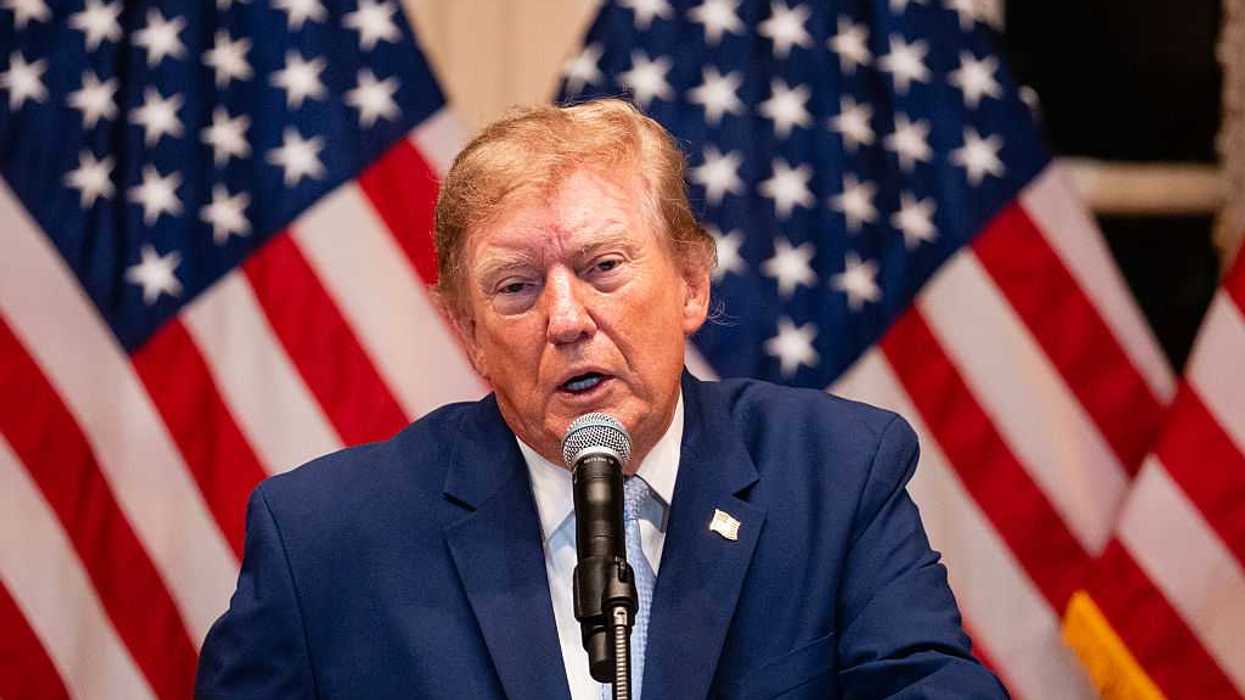
U.S. President Donald Trump on October 16, 2026 in Palm Beach, Florida.
(Photo by Eric Lee/Getty Images)
Trump — President by Law, Not by Constitutional Duty
Oct 19, 2026
A president can win an election and still fail the test of leadership. The presidency is a public trust, not a personal platform, family enterprise, or license to demean people and disregard the law. Donald Trump holds the office legally. Yet his conduct raises a fundamental question: is he fulfilling the constitutional duties that give the presidency its meaning? The answer, visible in his behavior, is no. He performs the role of president the way a showman performs a part — loudly, aggressively, and without the substance the office requires.
Leadership is not conferred by a title; it is demonstrated through conduct. Ethical leadership requires integrity, honesty, sound judgment, and accountability. Moral leadership demands empathy, fairness, humility, and the courage to do what is right even when doing so carries a personal or political cost. When a president repeatedly demeans people, disregards established norms, and places personal interests above public duty, citizens have every reason to question his leadership — or whether he is leading at all.
Millions of Americans now say, “He is not my president.” They are not denying his election. They are expressing a deeper concern: a president cannot fully discharge the office while rejecting the obligations that define it. The Constitution grants power, but it also imposes duty. When a president abandons those duties, he hollows out the meaning of the presidency and becomes president in law only — not in constitutional substance.
On January 20, 2025, Trump took the presidential oath. The Constitution does not require a Bible; it requires a commitment to preserve, protect, and defend the Constitution and faithfully execute the office. The oath is not ceremonial. It is a promise to the American people. The question is whether his conduct honors that promise.
No serious leader behaves the way Donald Trump behaves. He is unfocused, impulsive, and driven by personal grievance rather than public duty. His deeds are often cruel, his rhetoric divisive, and his priorities centered on power, praise, and money. He praises dictators, demands constant admiration, and treats public office as a stage for self‑promotion rather than a responsibility to the nation. FOX News awarded him a “Patriotic” honor, yet patriotism is measured by service, sacrifice, and fidelity to the Constitution — not by showmanship or self‑congratulation. In my view, he is not a leader, not a patriot, and not a president in the constitutional sense. He is a man who holds the title but rejects the substance.
Courts, Congress, and federal agencies exist to check presidential power, yet Trump has repeatedly treated those limits as optional. Federal judges have ruled against administration actions, and reporting has documented delays and defiance of court orders. After the 2020 election, he challenged lawful results and pressured state officials to change outcomes. Presidential power is substantial but not unlimited; the Constitution’s Take Care Clause requires faithful execution of the laws. A president cannot make personal certainty the final authority over elections, courts, or law. Constitutional government collapses when lawful constraints are dismissed as inconveniences.
Public trust erodes when the presidency appears to advance personal interests rather than national priorities. Attacks on the press deepen that distrust. The late Senator John McCain warned that suppressing the press is “how dictators get started.” A free press helps citizens evaluate government claims and hold officials accountable. Leaders who seek to restrict scrutiny weaken the public’s ability to judge their actions.
Many Americans fear that public service is becoming self‑service. When questions about conflicts of interest, personal financial gain, or the use of public resources arise, citizens deserve transparent answers. Public office must never become a means of private enrichment. A president cannot demand public trust while treating accountability as an attack.
Professionalism also requires humility and perspective. Trump has repeatedly insisted that he deserves the Nobel Peace Prize. A president may believe his diplomatic efforts deserve recognition, but ethical leadership does not demand honors or treat their absence as an insult to the nation. Leadership is measured not by awards a leader believes he deserves, but by responsibility accepted and consequences faced. Public service is not a personal competition for recognition.
Constitutional leadership requires evidence‑based decisions, sound judgment, and respect for lawful outcomes. Repeated litigation and judicial rebukes should prompt restraint and compliance, not attacks on the legitimacy of the courts. When citizens are expected to obey the law, the president must demonstrate that he is bound by it, too.
Effective leaders also demonstrate empathy, humility, resilience, and the ability to build shared purpose. Critics see the opposite in Trump’s governance: loyalty‑based appointments, attacks on journalists, disregard for established processes, and behavior they regard as retaliatory or cruel. The question is not whether another president would have faced identical circumstances. It is whether constitutional standards are applied consistently, regardless of party. Accountability that depends on political allegiance is not accountability.
Senator Lisa Murkowski warned in 2025 that “retaliation is real.” When elected representatives fear punishment for exercising independent judgment, the issue extends beyond one senator or dispute. Congress is supposed to check executive power, not accommodate it.
Congress has both the authority and the responsibility to restrain presidential overreach. It must investigate credible evidence of misconduct, protect inspectors general and whistleblowers from retaliation, and demand transparency about executive decisions and public spending. Its appropriations power is a constitutional safeguard. No administration should divert public money without lawful authority or evade meaningful oversight. Taxpayer funds must serve legitimate public purposes, not personal image‑making or partisan advantage.
Congress should also strengthen safeguards against conflicts of interest and require meaningful disclosure of presidential financial interests. These are practical protections for public trust. Oversight must be continuous, evidence‑based, and applied without regard to party.
Not every presidential action citizens dislike is unconstitutional. Presidents have legitimate authority to set policy, issue lawful orders, veto legislation, nominate officials, and conduct foreign policy. Constitutional government depends on evidence, legal process, and institutional checks — not partisan assumptions or personal allegiance. Allegations must be investigated fairly, and violations must be addressed through lawful remedies.
The responsibility does not rest with Congress alone. Americans can vote, petition, organize, support independent journalism, demand transparency, and examine how their representatives vote. Democratic accountability continues between elections.
The deeper danger is the erosion of institutional trust: constitutional limits become negotiable, loyalty replaces independent judgment, and accountability is dismissed as persecution. Confidence without competence is not leadership. Power without restraint is not strength.
The question is not whether Trump occupies the office. He remains president in law. Whether he fulfills its responsibilities must be judged by his conduct, the evidence, and constitutional standards. The title cannot substitute for duty.
No Fortune 500 board would tolerate the patterns of conduct we have seen — not because of politics, but because leadership requires judgment, accountability, and respect for institutional limits. A president may hold the office in law, but leadership is earned through duty.
A president may hold the office in law, but the Republic endures only when its leaders fulfill the constitutional duties that give that office meaning — and when its citizens insist that no president is exempt from those obligations.
______________________________________________________________________
Carolyn Goode is a retired educational leader and former principal who spent her career advancing civic responsibility, equity, and public engagement. She writes about democracy, ethical leadership, and the values that strengthen American communities.
Keep ReadingShow less
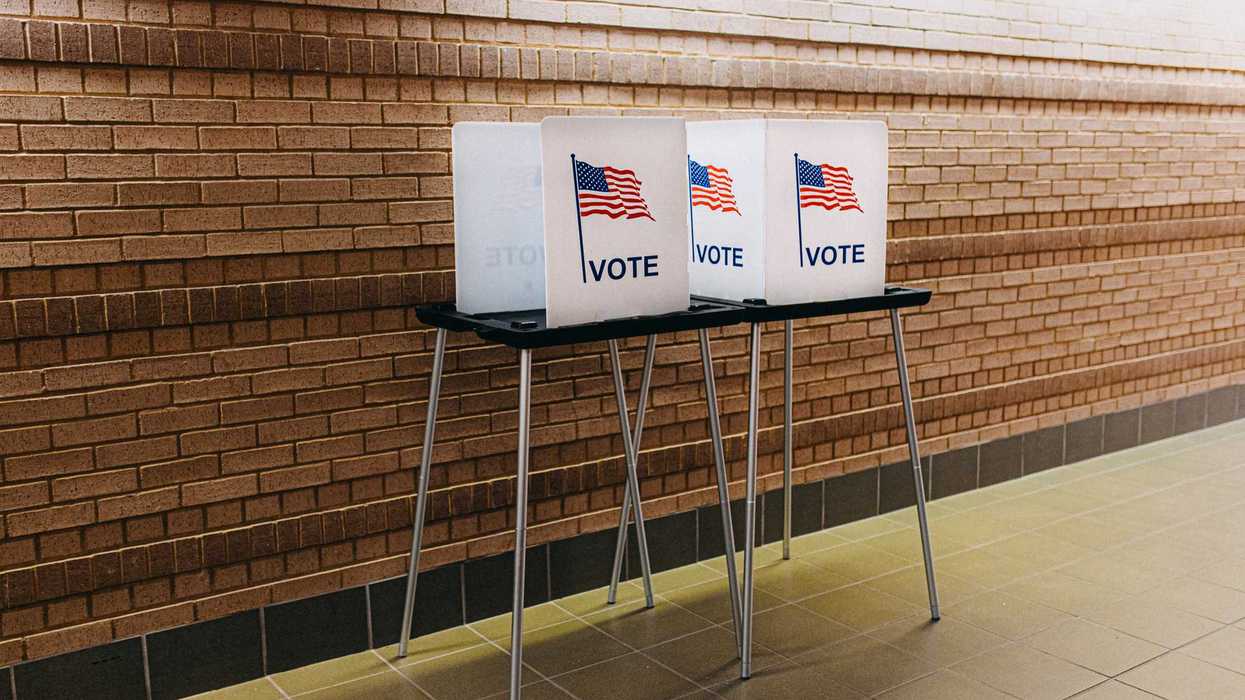
voting booths
Getty Images
Holding the Lines That Protect Every Voter and Every Election
Oct 19, 2026
We are people of many traditions. We do not agree on candidates. We don't need to.
We agree on something older than any election: that every person carries a dignity that no government grants and no government may take away, and that a free people governs itself by counting every lawful vote and honoring the count.
Our nation was founded on the ideal that all humans are created equal, and yet we have, at times, lived as if some are not fully human. We have made real progress, but can and must do better. As a nation, we express this ideal through the Constitution, our laws and procedures, including the election of our representatives at every level of government: one person, one vote.
Elections are like a hinge that joins our values together. On one side is the dignity of every person: the conviction that each voice counts equally. On the other is the rule of law: the steady constitutional frame that lets millions of people who disagree govern themselves in peace.
A hinge allows a door to do two things. Open, it allows movement; closed, it gives the security of a boundary. A good election does both.
A good election, through a lawful process, opens the way for power to change hands or stay where it is, then closes on a result that all sides can accept. That is why we want this election to be fair in its rules, free in its participation, safe for every voter and election worker, and trustworthy and honored in its result.
Here are the lines that must not be crossed: not by any candidate, any party, any office, any agency, any official, or any citizen.
Counting. Every lawfully cast ballot is counted, and only lawfully cast ballots are counted. Counting is open to observers from all political parties who are entitled to by law.
Reconciliation. The number of ballots counted must reconcile with the number of voters credited with voting. If the numbers do not reconcile, the discrepancy is disclosed publicly, explained, and resolved before certification — not after, and not only when someone outside the office notices it.
Evidence. Credible evidence of an illegal vote, or of misconduct by anyone administering an election, is referred, investigated, and prosecuted. Allegations unsupported by evidence are not treated as evidence. The absence of an investigation is not proof that nothing happened, and an investigation is not proof that something did.
Rules. No official changes the rules of an election while it is being conducted or counted — not to admit ballots the law excludes, and not to exclude ballots the law admits. Where the rules are disputed, a court decides. Every official complies with that decision, including the officials who disagree.
Custody. Ballots, voting equipment, and election records remain in the custody of the officials designated by state and federal law to administer the election, from the casting of the first ballot through certification and the legal retention period.
Presence. No federal, state, or local personnel, armed or unarmed, enter an election office, counting facility, or polling place to direct, halt, or inspect its work, except as the law expressly provides, a court orders, or an emergency requires.
Certification. The officials the law names certify results on the schedule the law sets, and they may be altered only by lawful recount, lawful audit, or a court's judgment.
Seating. Those charged with convening the next Congress, and every state legislature, seat the members whose election has been lawfully certified.
Peace. No one is threatened, intimidated, or harmed for voting, administering an election, observing one, or the result of one.
These lines are not partisan; they are American. They protect the process: those elected and those not elected. They protect our nation from fear and violence, and they protect every person and the democratic republic we share.
If any of these lines is crossed, we call on all Americans, ourselves included, to say so plainly and to seek a lawful remedy. Let us do so in grief and humility rather than in anger and hostility. Whatever may be broken belongs to all of us. Yet, we must keep the door open to every neighbor, including those who voted for whoever crossed the line. Our bond as neighbors came before the election, and it will outlast it.
Finally, our traditions teach that no human and no human-created system is perfect. Imperfection is not a sign of failure nor that a system is so broken that it should be discarded. In elections, imperfection is an invitation to make the system one step better — for subsequent generations, as our nation always has.
So, we ask every person of faith and conscience to hold these lines with us, beginning with prayer for the officials and workers who administer the election, for every voter, and for our neighbors whose ballots differ from our own.
Co-Signers:
Cheryl Graeve, Director of National Programs, Engaging Differences, and Golden Rule 2020, National Institute for Civil Discourse.
Rabbi Michael G. Holzman, Northern Virginia Hebrew Congregation and Founder of faith250, a national organization that rebuilds civic culture through multi-faith spiritual conversations over our nation’s foundational texts.
Scott Rasmussen, Director of Democracy Initiatives, Interfaith America, a national organization that activates leaders to build a country that embraces pluralism, where we cooperate across differences for the common good.
Rev. Terry Kyllo is a Lutheran pastor and director of Paths to Understanding, a Washington State organization working to gather neighbors and grow trust, and a leadership partner in Faith in America.Dr. Brenda Murphy is a Christian follower in an Evangelical tradition, co-chair of Braver Faith, a department of Braver Angels, former homeschool mom, and an educational psychologist for a faith-based K-12 private school organization.
The Rt. Rv. Mark Beckwith is a retired bishop of the Episcopal Diocese of Newark and co-chair Braver Faith.
Keep ReadingShow less
Load More