

Skip to content
Search

Latest Stories

Follow Us:
Top Stories

Dance and American Culture

Dance and American Culture

Ian Gavan
/ Contributor/Getty Images

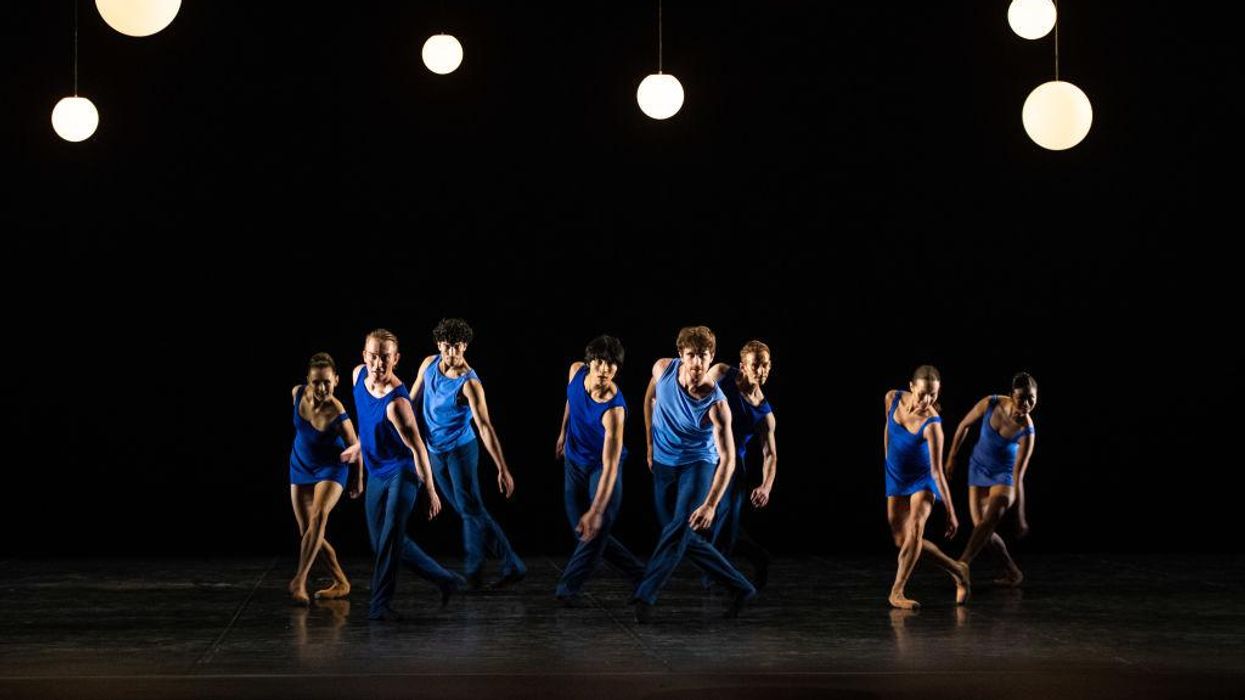
The medium of dance has a long history of speaking to American culture. In 1927 Isadora Duncan choreographed "I Hear America Singing" (a poem by Walt Whitman), her vision for dance as a powerful tool for cultural expression.

During the 1930s and 1940s many choreographers and members of the New Dance Group asserted their voices against the rise of fascism, homelessness, hunger, unemployment and racism, among other themes.


And today dance still reflects the diverse spectrum of American culture.

This excerpt from "Ounce of Faith" by Darrell Grand Moultrie features Khalia Campbell of the Alvin Ailey American Dance Theater.

These lyrics are beautiful on their own, but when combined with the grace and beauty of dance there is a special impact.

https://www.youtube.com/watch?v=TqfBIdHJnho

Enjoy, and please offer your thoughts as to how dance impacts our society and culture today by email at pop-culture@fulcrum.us.
Read More

Keep artificial intelligence out of American classrooms

Fourth-grade students read books in the elementary school at the John F. Kennedy Schule dual-language public school on Sept. 18, 2008, in Berlin.

(Sean Gallup/Getty Images/Tribune Content Agency)

Keep artificial intelligence out of American classrooms

Norway is, by almost any metric, a profoundly successful nation. It’s rich, democratic and relatively corruption-free. It’s not a socialist country, but fans of a robust welfare state and high taxes see much to admire in the very progressive Norwegian model. It also benefits from having the biggest and arguably best-run sovereign wealth fund in the world.

And yet, Norway nearly ruined its children.

Keep ReadingShow less
An illustration of orange-colored megaphones, one megaphone in the middle is red and facing the opposite direction of the others.

A growing crisis threatens U.S. public data. Experts warn disappearing federal datasets could undermine science, policy, and democracy—and outline a plan to protect them.

Getty Images, Richard Drury

America's Data Crisis: Saving Trusted Facts Is Essential to Democracy

In March 2026, more than a hundred information and data experts gathered in a converted Christian Science church to confront a problem most Americans never see, but that shapes nearly every public debate we have. The nonprofit Internet Archive convened this national Information Stewardship Forum at their San Francisco headquarters because something fundamental is breaking: the country’s shared foundation of facts.

For decades, the United States has relied on a vast ecosystem of federal data on health, climate, the economy, education, demographics, scientific research, and more. This data is the backbone of journalism, policymaking, scientific discovery, and public accountability. It is how we know whether the air is safe to breathe, whether unemployment is rising or falling, whether a new disease is spreading, or whether a community is being left behind.

Keep ReadingShow less
Warrantless Surveillance and TPS for Haitians

Bamilia Delcine Olistin restocks product at Bon Samaritain Grocery, a Haitian-owned grocery, on February 3, 2026 in Springfield, Ohio. A federal judge issued a temporary stay blocking the Trump administration's attempt to strip Temporary Protected Status (TPS) for Haitian immigrants, but Haitian TPS beneficiaries and residents of Springfield continue to face uncertainty over their protected status.

Getty Images, Jon Cherry

Warrantless Surveillance and TPS for Haitians

Warrantless Surveillance

Almost 3 weeks ago, House Republicans appeared to be spitting mad because the Senate had had the temerity to pass a DHS funding agreement overnight by unanimous consent and then recess. The Senate did that because it was the best deal that could get passed. (The House still hasn’t acted on that Senate DHS funding bill.)

But last night, around 2 am, the House passed a 10 day extension of existing Foreign Intelligence Surveillance Act Section 702 authorities by unanimous consent and then recessed until Monday. Apparently, it’s fine when the House does it. Why did the House do this? Because it was the best deal that could get passed.

Keep ReadingShow less