

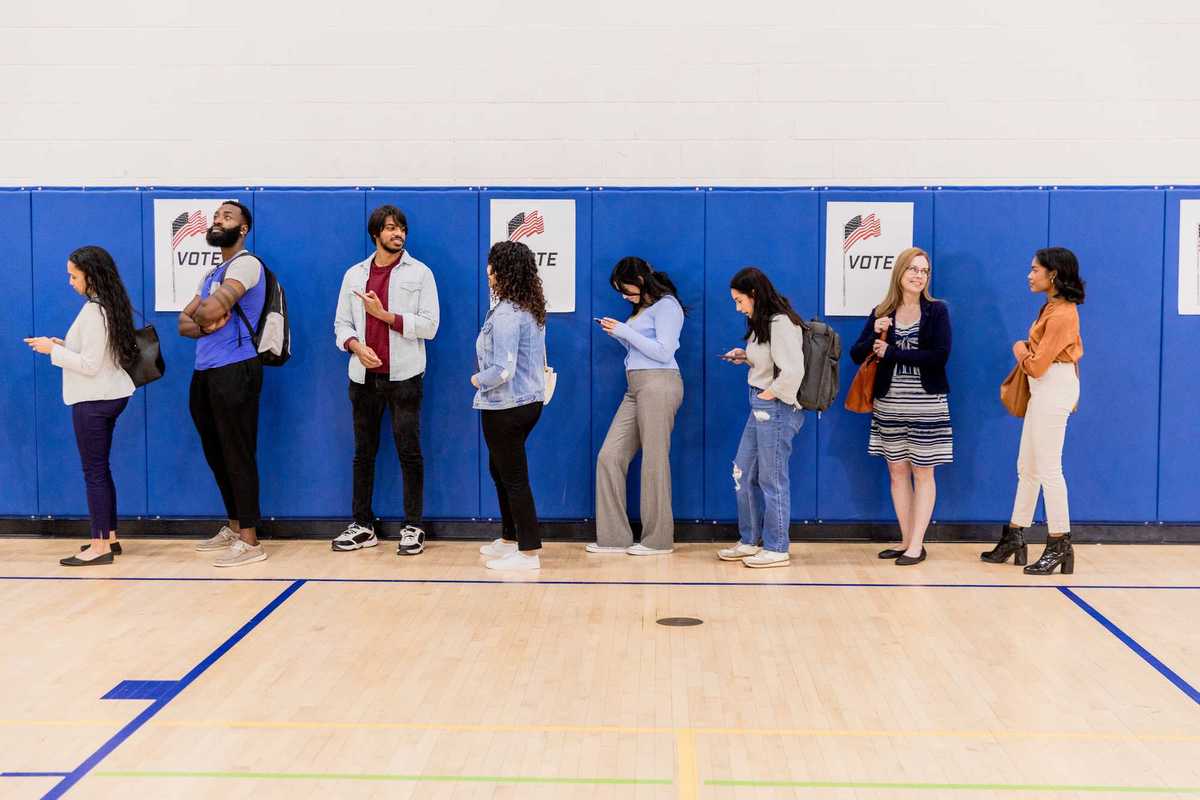
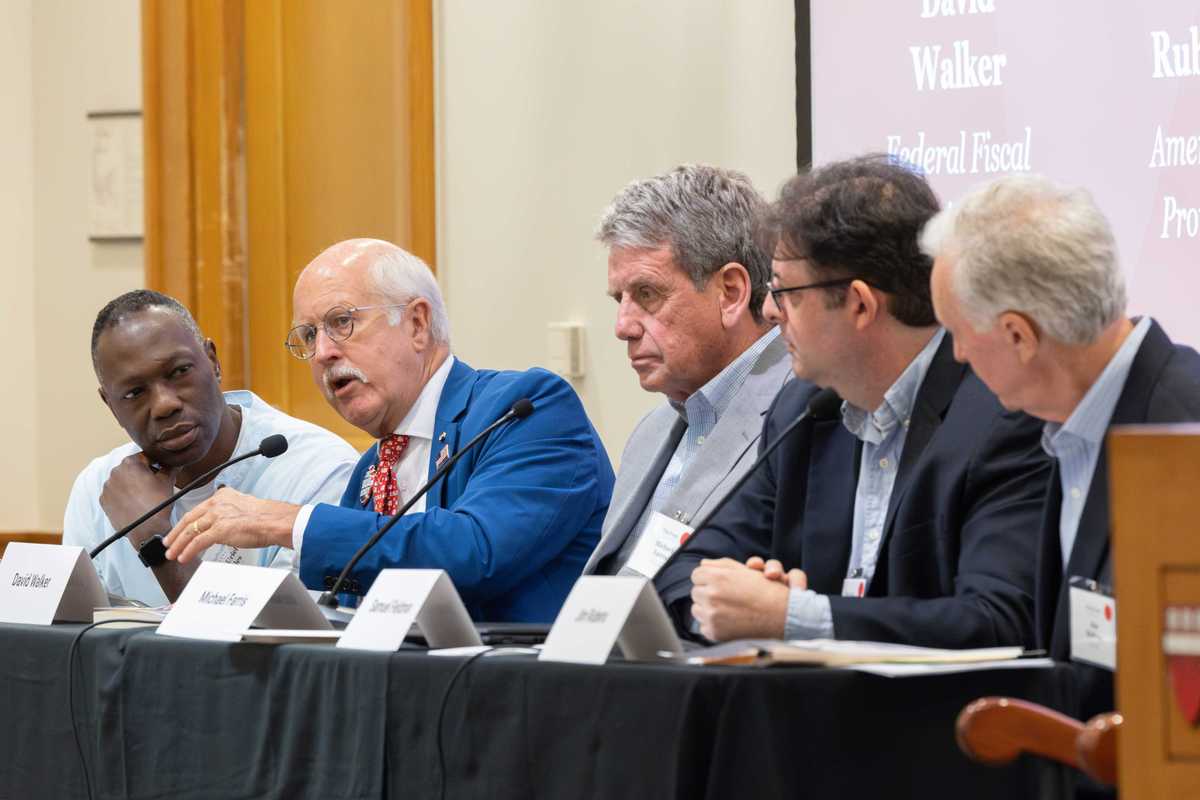
VerifiedVoting.org is a nonpartisan, nonprofit organization that advocates for legislation and regulation that promotes accuracy, transparency and verifiability of elections. We believe the integrity and strength of our democracy relies on citizens' trust that each vote be counted as cast. Our primary concern lies in ensuring that the means for verifying election outcomes are in place and used for that purpose. We also focus on the reliability and security of voting systems. We connect those who are making and implementing policy that shapes how we vote to those who understand the particular risks associated with the emerging digital landscape, particularly online and electronic voting.
Site Navigation
Search
Latest Stories
Join a growing community committed to civic renewal.
Subscribe to The Fulcrum and be part of the conversation.
Top Stories

Latest news



Read More

America’s polarization has closed us off to each other’s humanity. The Golden Rule and the churches may be the way back to common ground.
Getty Images, PeopleImages
Land of the Free, Home of the Brave? How Trump Is Destroying America's Soul
Oct 22, 2026
The recent actions by both some Jewish leaders and pro-Palestinian activists against NY mayor Zohran Mamdani are an example of just how far our nation has come from our ideals under the presidency of Donald Trump.
Even with Mamdani's consistent pro-Palestinian statements, he was called a "coward" and a "sellout" because he stood with the Jewish community in remembering the October 7 Hamas attack. Jewish leaders condemned him for his criticism of Israel and Palestinian sympathies expressed in the same breath as remembrance of the attack. But Mamdani understands the connection between the treatment by Israel of Palestinians and Palestinian treatment of Israel.
The United States under Trump has become driven by hatred and distrust. There has of course always been much hatred and distrust in our country, as there is everywhere in the world.
But under Trump, those feelings have been heightened to the point that we have become so polarized that the two sides—any two sides, not just MAGA and liberals—cannot talk to each other. There is no commonality remaining and there is little hope of finding common ground, so closed off is one side to the other's humanity and its core desire for the same things that we all desire—respect and the ability to live our lives in peace.
We have no freedom if we are caught in this vortex of hate and distrust. There is no bravery if we don't have the courage to listen to the other side's valid sorrows and understand where they are coming from.
In this, as in so many other ways, we are far from the ideals of our founding principles as stated in the Declaration of Independence—equality and the right to pursue life, liberty, and happiness. Or as the Pledge of Allegiance puts it, "Liberty and justice for all."
Let's look at the struggle between Israel and the Palestinians as an object lesson. Both sides have the same dream: to live in a country that validates and protects their existence and their ability to pursue life after decades or centuries of being subject to the control of others, of being persecuted, of having to live their lives in fear.
And so both have tried to create a space—a state—where they can be free to live their lives as human beings. But to do that, they have not just been willing, but felt it necessary to subjugate another people just as they have been subjugated. It's in many ways the same story as the English Puritans who founded the Massachusetts Bay colony. They came to America to escape persecution. But once they got here and founded their own state, they persecuted all other Christians, let alone other religions, who did not agree with them.
So our current dynamic is not a new page in the story of human societies. Nor is it the worst example of how a majority treats a minority. But it is an example of how our founding principles remain, in so many ways, far from achievement even as we as a nation have made substantial progress towards implementing those principles.
Nor is this just a failure to live up to the founding principles of our country. Every religion has at the core of its teaching a version of the Golden Rule: "Do unto others as you would have them do unto you."
Yet this principle remains far from the hearts and actions of man; historically, even from that of many religious establishments. To live that rule requires great humility, a characteristic not very prevalent among humans; instead, we are ruled by ego, insecurity, anger, fear, self-righteousness, and a host of other negative emotions.
These are all examples of human nurture, as opposed to human nature. These negative emotions are all a result of how man is raised, the experiences he has—especially as a young child—and the culture in which he lives. These emotions reflect man as he develops, not man as he is born. He is born a child of the Universe (or the child of God, if you prefer) full of light and love, positive energy and joy, equanimity. See my book, Discover Your Power.
But those seeds are not watered by his life experiences, which are predominantly negative, and so his ego grows to be a dominating force, bowling over any effort by his true self to do what is right. You've all seen the cartoons of a person with an angel sitting on one shoulder whispering good thoughts in his ear, and the devil sitting on the other shoulder, whispering negative thoughts in the other ear—it is always the devil that wins out.
How do we as a nation, let alone the world, move towards a world filled with more equality and more understanding? During the civil rights movement, in addition to the civil disobedience of Blacks led by Martin Luther King, Jr., White churches and their leaders were important in making clear that this was not just a Black v White movement, it was a movement by those who fought for equality and respect against those who had no interest in those values, except for themselves.
Today, to move our country forward, the churches must step forward again and be part of a movement (see American Solidarity) to have people come to embrace the principles of equality and respect, to embrace the Golden Rule, treating others the way they want to be treated. To bring about MLK's dream, that one day, "all of God’s children — black men and white men, Jews and Gentiles, Protestants and Catholics — will be able to join hands and sing in the words of the old Negro spiritual: 'Free at last! Free at last! Thank God Almighty, we are free at last!'"
Ronald L. Hirsch is a teacher, legal aid lawyer, survey researcher, nonprofit executive, consultant, composer, author, and volunteer. He is a graduate of Brown University and the University of Chicago Law School and the author of We Still Hold These Truths. Read more of his writing at www.PreservingAmericanValues.com
Keep ReadingShow less
Recommended







Hand holding cutout of figures holding hands
Image produced on Canva
Leaders Igniting Transformation Helps Milwaukee Youth Find Their Voice
Oct 22, 2026
MILWAUKEE, WI– At Kozy Community Center, giant post-it notes with questions about school resource officers and student safety covered the walls of a meeting room. The meeting was hosted by Leaders Igniting Transformation, a nonprofit focused on empowering young Black and Brown people in Wisconsin.
Over the course of the afternoon, students shared about what helped them feel safe in their communities, and learned about Act 12, the legislation responsible for the reinstatement of school resource officers in Milwaukee Public Schools (MPS). They brainstormed answers to questions about how officers should be used in schools.
“We provide support to young people to mobilize around issues that they care about,” Kahina Cargile, co-executive director of LIT, said.
LIT, which was founded in 2017, has chapters at the high school and college level, as well as a civics department that brings in people locally from the city of Milwaukee. They offer a fellowship for high school and college students.
The state of Wisconsin does not require civics instruction in its schools, and Cargile said LIT is filling a gap. This year, more than four hundred high school and college students have taken part in LIT through school chapters, fellowships, and citywide meetings,
“We're constantly focused on civic education. We're bringing experts in to explain bills, explain policies,” Cargile said.
During the summer, LIT hosts Black Hogwarts, a paid summer leadership institute aimed at helping students develop the skills they need to organize.
The civic education LIT provides to young people through Black Hogwarts and as fellows helps them develop stronger reading and writing abilities.
“They're building public speaking skills. They're building writing skills, along with learning how to make real change in their communities,” Cargile said.
At the high school level, LIT’s current initiative is focused on making sure that the memorandum of understanding between MPS and the Milwaukee Police department allows high school students to feel safe in the building with police officers. The memorandum has been in effect since early 2025.
Adija A., a high school fellow with LIT, was attending the event with her cousin. Adija said LIT was the first space she had where she could talk about issues that mattered to her.
“I have these people that care as much as I do, and we can actually discuss and try to figure out what we can do about it to stand up for ourselves,” she said.
Adija said she is concerned about school resource officers in her school.
“A lot of times, they abuse their power,” Adija said. “I want to know how I can know these rights and use them effectively and also have other people know that they have these rights within the school system, so that they don't let the school system abuse them.”
LIT offers opportunities for the local community to participate in the process year-round, like the meeting held at the Kozy Community Center.
Connor Grossnickle, development coordinator for LIT, said that he was drawn to LIT by its flexibility and willingness to meet the community’s needs.
“We're trying to make these spaces available to people who wouldn't have that space otherwise,” Grossnickle said. Barriers to civic engagement, like a need for childcare or a meal, are reduced through the spaces LIT provides.
Another goal for LIT is to reach Wisconsin voters about the upcoming midterms elections. The ballot for November features three referendums.
Cargile said LIT is educating Black and Brown voters about the impacts of the referendums through canvassing. From March through December this year, LIT’s nonpartisan canvassers knocked on 50,003 doors and had 1,786 conversations with voters in Milwaukee’s majority-Black and Latino 8th, 12th and 15th aldermanic districts.
“We believe if those demographics are equipped, they have the information, they have the confidence to go vote, that they can really make a change in the city,” Cargile said.
Adija said LIT has taught her that her voice and rights as a young person matter.
“It’s gonna help you be able to make change because at the end of the day, whether you're involved in these things or not, they are going to affect you,” she said.
Abbey Osborn is a fall Fulcrum Fellow. A student at CUNY Newmark Graduate School of Journalism, Abbey focuses on local democracy, public institutions, and youth civic engagement. She brings experience in community reporting and a commitment to amplifying voices often overlooked in political coverage.
Keep ReadingShow less
us a flag on pole under cloudy sky
Photo by iStrfry , Marcus on Unsplash
This Country ’Tis of Thee Calls America to Unite Again
Oct 22, 2026
In July 2024, before the presidential election, I was deeply moved by a song written by New York/Nashville recording artist and songwriter Candace Asher. It’s called “This Country ’Tis of Thee.” Asher is internationally and critically acclaimed for several top‑five hits and airplay in 12 countries in the early 2000s.
I teamed up with Candace, and together we wrote new, contemporary lyrics for “This Country ’Tis of Thee,” and together we produced the video that went live on YouTube.
At the time, Asher said: “Working on this tune with David meant the world to me. We both wanted to capture the importance of this profound American moment — one that we all must responsibly seize. It’s arguably the presidential election that will define this nation’s future.”
And now, two years later, as we approach another important election less than 20 days away, the same uncivil, dysfunctional behaviors continue to divide our nation.
As I said then, when “This Country ’Tis of Thee” first appeared, the rancor and division between Americans had reached a breaking point. We must stop obsessing over our differences and instead rediscover the common bonds of our shared humanity — bonds that can, do, and must hold us together.
Today, two years later, our political rhetoric and national divisiveness are worse than ever. The success of democracy rests on our power to harness the tensions of the day, approaching our differences as opportunities to learn, grow, and find out how to work together. Only then can Americans fulfill our Constitution’s promise — the inalienable right to life, liberty, and the pursuit of happiness. For all.
Listen to “This Country ’Tis of Thee” as it calls on every American to express their patriotism through positive, meaningful action. Don’t sit on the sidelines. Don’t wait to get started. Define what being a better American means to you and help make it real.
America has always been an exceptional country, for many reasons. From the outset, its citizens saw themselves as participants in an experiment bearing implications for all humankind. The journey that is the United States of America began 248 years ago with the motto e pluribus unum, meaning out of many, we are one. This unity has always depended on respecting and valuing our nation's diverse backgrounds and perspectives, each of which enriches our shared experience. For this motto to remain America’s foundational premise, "We the People" must once again become actively involved.
The lyrics to “This Country ’Tis of Thee” are Asher’s and my way of an appeal to action—today, as they were two years ago, and as they will be for generations to come. Since the song's release, we have heard from Americans across the country who shared how the message inspired them, from teachers using it in civics classrooms to neighbors organizing community discussions. We have received notes from listeners who said the song moved them to vote for the first time or to reach out to those with different viewpoints. These stories remind us that music can unite and motivate us, and we hope even more people will share in this spirit by taking positive steps forward.
We are a nation trying to heal herself
We’re a nation who is we.
We’re a nation who has to make tough choices now
To remain the land of the free.
We all hear the call from sea to shining sea
But leave it up to someone else to lead the way
When in fact it is up to each and every one of us.
That’s the real American way.
So what will you do — what will you say?
What stand will you take — get started today.
In each one of our dreams there is something we are trying to reach.
We must save this democracy because this country ’tis of thee.
Please listen to “This Country ’Tis of Thee” and take one step, however small, to help heal and unite America.
David Nevins is the publisher of The Fulcrum and co-founder and board chairman of the Bridge Alliance Education Fund.
Keep ReadingShow less
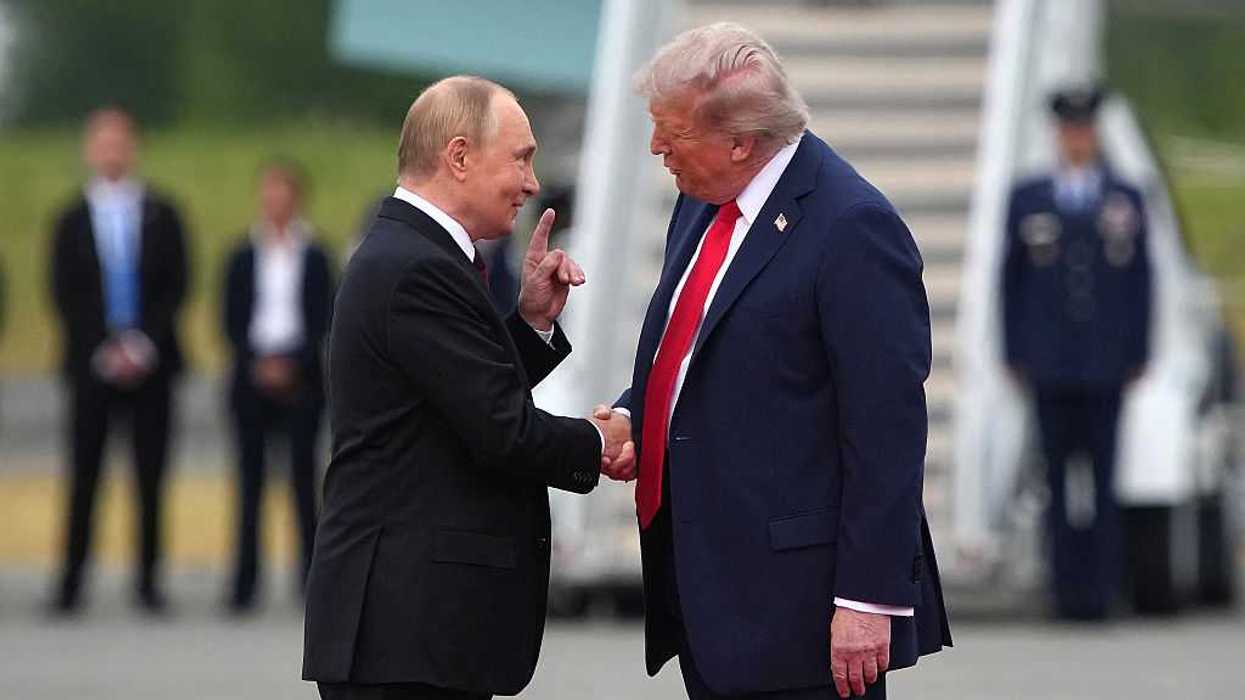
U.S. President Donald Trump (R) greets Russian President Vladimir Putin as he arrives at Joint Base Elmendorf-Richardson on August 15, 2025 in Anchorage, Alaska.
Andrew Harnik/Getty Images
What Would Putin’s Puppet Do Differently?
Oct 22, 2026
This winter, Russia plans to freeze Ukraine into submission. According to an intercepted Russian plan, Moscow intends to use hundreds of ballistic missiles, long-range drones, and glide bombs to strike Kyiv, Kharkiv, and Odesa with such intensity that they are cut off from power, heat, and water, slashing electricity and heat by up to 90 percent and crippling sewage systems. Russia hopes that with an energy system so thoroughly destroyed, millions of Ukrainian citizens would become so cold, sick, and desperate that their country might just surrender. Deliberately attacking the heat and water of civilians is a war crime, but Moscow thinks it can get away with it. Ukraine is running short on the Patriot interceptors it needs to stop ballistic missiles, and Putin is betting Trump will continue to betray Ukraine. It’s looking like a safe bet.
Trump shows no evidence to the contrary. On October 9, he got off a call with the Russian president and then immediately lifted U.S. sanctions on Russian diesel. The next day, after Russian strikes killed at least 17 people in Zaporizhzhia, Trump announced it was “time for Ukraine to get a new president.” Days later, the American-controlled satellite network Ukraine’s military depends on was throttled without warning, knocking out service to the drones Ukraine uses to chase down Russian attack drones. Trump denied giving the order, but The Telegraph reported that Musk pitched the idea and Trump agreed.
Trump chooses Putin even over himself. On September 18, Trump signed the Lindsey Graham Sanctioning Russia and Iran Act. On October 16, he waived its sanctions, two days before they took effect. The Senate passed the bill 86 to 11, the House passed it 262 to 159, and the president signed it into law, only to render his own signature worthless–all for Putin. Then he blamed Zelenskyy, claiming that the Ukrainian president “doesn’t want to end this war, and probably never did.” Trump himself promised to end the war in 24 hours. It’s been a very long 24 hours. Meanwhile, Putin’s investment envoy says Washington is already brainstorming ways to lift even more sanctions. If Congress objects while Trump is listening to Putin whisper sweet nothings, does it make a sound?
Ukraine was promised better. In 1994, it gave up the world’s third-largest nuclear arsenal in exchange for assurances that its borders would be respected. Russia signed that agreement. So did the United States. One signer broke its word by invading. The other is now helping the invader. According to The Wall Street Journal, on that same October 9 call, Putin proposed a summit with Trump and Xi Jinping to settle the war on Moscow’s terms. Ukraine isn’t invited. A former Russian intelligence officer said Putin envisions a second Yalta, where great powers carve the world into spheres of influence. This proposed meeting of the triumvirate could be the soft launch, while Europe and NATO brace themselves for impact. Germany is already preparing its hospitals for war on NATO soil.
None of this should surprise us. Ten years ago this week, in the final presidential debate, Hillary Clinton said Putin would rather Trump be elected because he wanted “a puppet as president of the United States.” She called Trump out for refusing to admit that Russia was behind cyberattacks on the U.S., saying he was “willing to spout the Putin line, sign up for his wish list, break up NATO, do whatever he wants to do.” Trump shot back: “No puppet, no puppet. You’re the puppet.” Clever rebuttal, but I’m not sure I’m convinced.
Turns out, Clinton’s warning was prescient. Spout the Putin line? Trump says Ukraine needs a new president. Sign up for his wish list? Trump continues to ease or flat-out waive sanctions on Russia. Break up NATO? Trump may attend a Yalta-style summit to redraw Europe’s map with no Europeans in the room. What does Trump get in return for doing his puppet master’s bidding? A bipartisan Senate Intelligence Committee report found that Putin approved and directed Russia’s 2016 interference to help Trump. In 2024, the Justice Department seized 32 Kremlin propaganda domains and charged two Russian state-controlled media employees with funneling nearly $10 million to an American media company. This fall, Bloomberg found Russia was using an army of bots to disseminate fake election videos against Democrats in 20 of 35 Senate races. Trump still calls it all a “hoax.”
If Putin had put a puppet in the White House, what would that puppet be doing differently? Whether Putin is pulling the strings or not, Trump is betraying our closest allies with reckless disregard for the long-term health of our nation and the world. Every country that has ever trusted an American promise is watching what happens to Ukraine this winter. So are our adversaries.
Some Republicans are waking up. Senator Lisa Murkowski said Trump should use the authorities Congress gave him instead of letting Russia rake in revenue. Senate Republicans, including Mitch McConnell and John Cornyn, signed a bipartisan letter calling the diesel deal “a gift to our adversary and a betrayal of our allies.” Representative Brian Fitzpatrick is forcing a House vote on a bill to block it, and in National Review, Andrew McCarthy wrote that Trump is giving Putin “aid and comfort,” the Constitution’s own language for treason, and demanded hearings. Just this week, a bipartisan congressional delegation held a video call with Zelenskyy where they affirmed, despite Trump’s actions, their commitment to Ukraine in ending “the slaughter in Russia’s war of aggression.” It’s a good start, but every Republican who ever praised Reagan for standing up to Moscow should put up or shut up. It’s time they reined in the leader of their party.
The rest of us have work to do, too. Call your representatives. Demand that they enforce the sanctions they passed, send Ukraine air defenses before the cold sets in, and hold hearings on this administration’s dealings with the Kremlin. This winter, Ukrainians will share generators, check on their neighbors, and refuse to break. The least we can do is pick up the phone and vote by November 3.
Julie Roland was a Naval Officer for ten years, deploying to both the South China Sea and the Persian Gulf as a helicopter pilot before separating in June 2025 as a Lieutenant Commander. She has a law degree from the University of San Diego, a Master of Laws from Columbia University, and is a member of the Truman National Security Project.
Keep ReadingShow less
Load More