
Skip to content
Search

Latest Stories

Follow Us:
Top Stories

And Campaign

The AND Campaign believes that politics is a limited, but essential forum for pursuing the well-being of our neighbors. It is limited in both its scope and its effectiveness. Politics can and should only reach so much and so far, and political solutions will never approach the perfect justice that Jesus will bring and is bringing. Our hope in all things is in Him. There is rarely one Christian position on a public policy issue, but every Christian should be thinking Christianly about politics. In the policies The AND Campaign promotes and in the positions we take, we believe social justice (&) moral order are not at odds, but are two sides of the same coin. We seek to act as faithful Christians, applying the timeless values of our faith and Christianity's true account to the reality we all face, in this political moment. We invite all who affirm our approach to join us in our work to assert a compassionate and convictional witness into the public square.


Read More

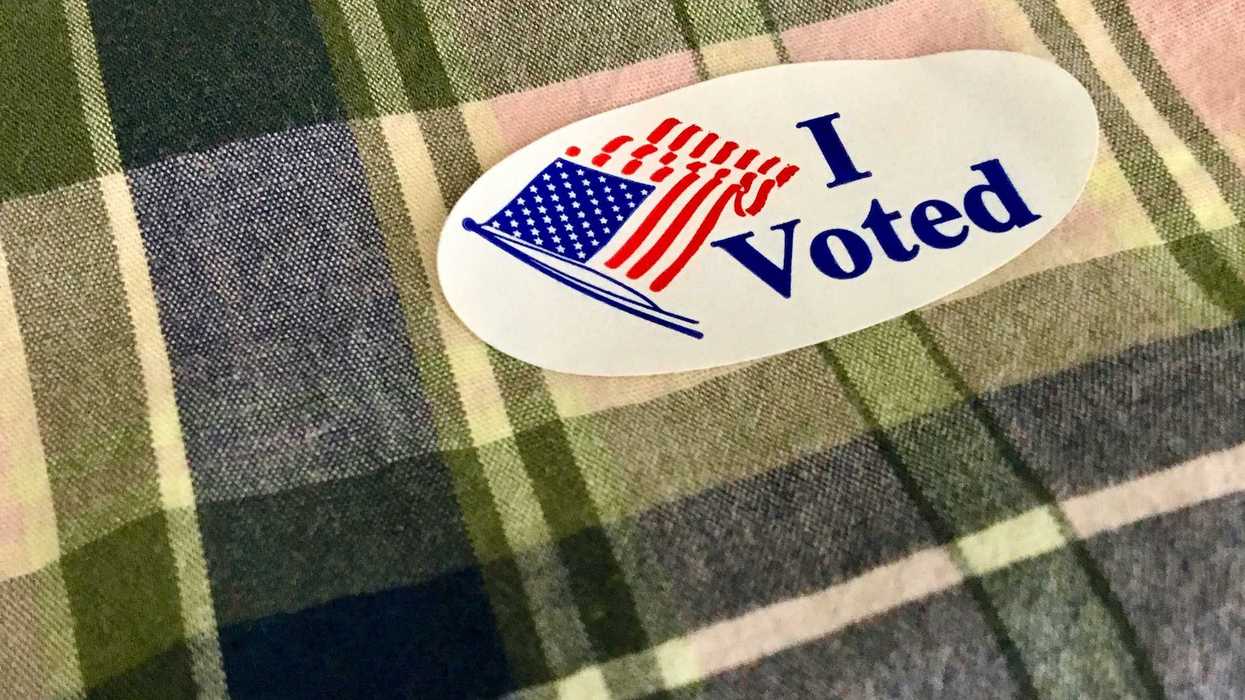
California Voters Don’t Like Either Party. Good Thing the Primary Doesn’t Belong to The Parties.

California voters increasingly distrust both major parties. Here's why the state's Top Two primary gives independent voters more power to shape elections.

Image: Duncan Shelby on Alamy.

California Voters Don’t Like Either Party. Good Thing the Primary Doesn’t Belong to The Parties.

SAN DIEGO, Calif. - California voters have already received ballots for the June 2 primary, and the message they have going into these elections may not be what the political class wants to hear: They are not thrilled with either major party.

A recent analysis from the Public Policy Institute of California (PPIC) found that majorities of likely voters have unfavorable views of both parties—61% unfavorable toward the Democratic Party and 70% unfavorable toward the Republican Party.

Keep ReadingShow less
Demonstrators hold signs during a January 6th memorial march in Washington, DC.

Demonstrators hold signs during a January 6th memorial march marking five years since the attack on January 06, 2026 in Washington, DC

Win McNamee / Getty Images

America at 250: A Nation Drifting from Its Ideals—As Unchecked Power Corrupts

As the nation approaches its 250th Anniversary, Americans should be entering a moment of pride, reckoning, and aspiration — honoring our founding ideals, confronting our injustices, and committing to a shared, inclusive future. But millions cannot reach that place. They are living in a country where the most basic democratic promise — that no one, not even the president, is above the law — is no longer true. And they are asking a question no democracy should ever force its people to ask: How do you confront injustice when leaders erase the history, hide the evidence, excuse the wrongdoing, and protect the perpetrators?

People are watching January 6 perpetrators not only be pardoned, but now discussed as victims deserving compensation — while others who committed far lesser offenses remain in prison. They are watching families who lost loved ones, officers who were attacked, and judges who were threatened receive no acknowledgment, while those who carried out the violence are elevated. They are watching Epstein victims still seeking closure while Maxwell lives comfortably. And they are watching Congress and the courts fail to check a president who intimidates, retaliates, enriches himself, and bends institutions to serve him.

Keep ReadingShow less
Businessman on ladder arranging large, multicolored speech bubbles on blue background

Pluralism has a messaging problem. Explore how body metaphors shape politics, exclusion, diversity, and democratic governance across difference.


Malte Mueller / Getty Images

We Need a New Metaphor of Us

Pluralism has a messaging problem. Part of the reason why is that there is no common emotionally intuitive metaphor for the collaborative co-creation of governance across differences that is a pluralistic democracy.

This matters because humans do not think politically through abstract principles alone — we think through metaphor.

Keep ReadingShow less
The Fragile Coalitions Beneath American Politics
white concrete building during daytime

The Fragile Coalitions Beneath American Politics

Part 1 of “Today’s Governing Gap,” a three-part series on coalition fragility, governing coherence, and the institutional continuity democratic systems require.

American politics looks stable from a distance. Two dominant parties, fiercely competitive elections, a constitutional framework that has held since the Civil War.

Keep ReadingShow less