



Skip to content
Search

Latest Stories

Follow Us:
Top Stories

Podcast: Depolarizing America

Podcast: Depolarizing America

Kelly Johnston and Rob Fersh disagree strongly on many issues, and voted differently in the 2020 presidential election. But they are friends and “agree on major steps that must be taken for the nation to heed President-elect Biden’s welcome call for us to come together.” Both believe that constructive steps must be taken to help build trust among Democrats and Republicans, despite deep polarization and a firm resistance to bipartisanship from both ends of the political spectrum. They encourage open dialogue between sectors and interest groups whose views diverge in an effort to deal with divisive political discourse.

Rob Fersh founded Convergence Center for Policy Resolution, and previously worked for Democrats on the staffs of three congressional committees. Kelly Johnston, also a founding board member of Convergence, is a committed Republican and former Secretary of the U.S. Senate. In this episode of Let’s Find Common Ground produced in partnership with Convergence, we talk with both Fersh and Johnston about bridge building and why this work is so urgently needed in an era of political gridlock.

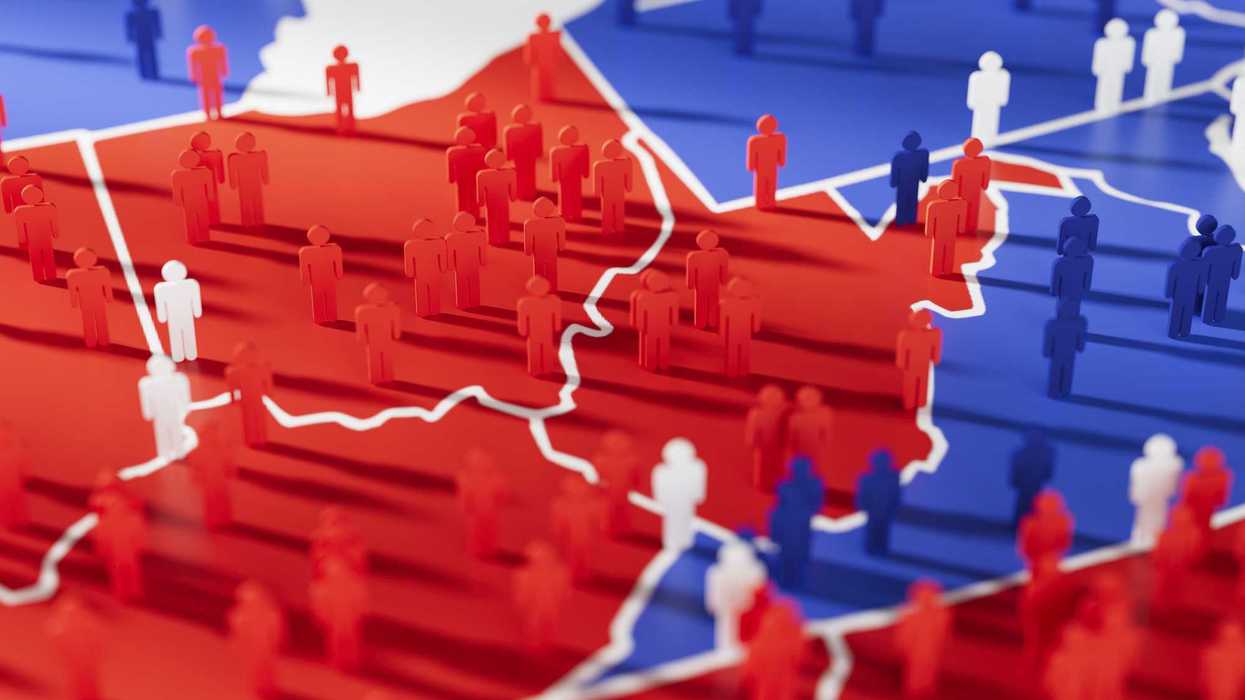
Depolarizing America: Building Consensus Step-by-Step

Kelly Johnston and Rob Fersh believe that constructive steps must be taken to help build trust among Democrats and Republicans, despite deep polarization and a firm resistance to bipartisanship from both ends of the political spectrum.


Read More

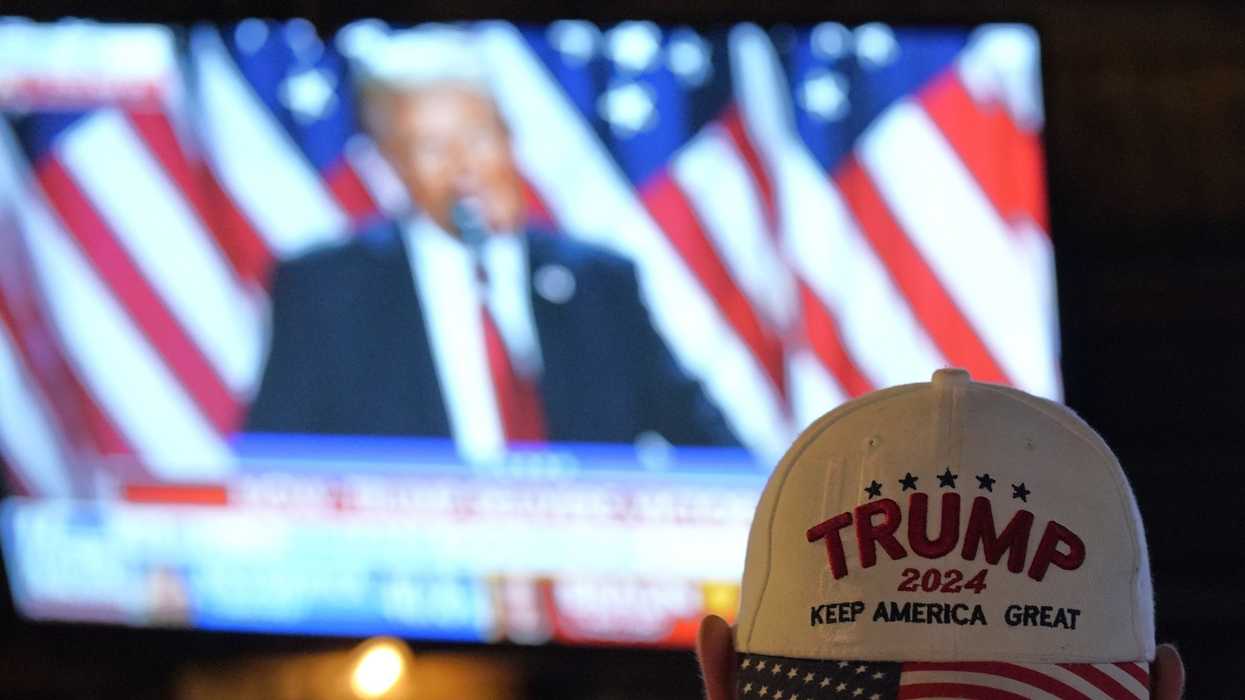
Donald Trump

U.S. President Donald Trump speaks during a“ Steel Across America” event ahead of the 25th anniversary of the Sept. 11th attacks on the Ellipse near the White House on Sept. 8, 2026 in Washington, D.C. President Trump welcomed 9/ 11 first responders to the Tunnel to Towers Foundation’ s“ Steel Across America” event featuring a 16,900- pound, 21- foot steel beam recovered.

(Getty Images)

For Trump, even 9/11 is an opportunity

There was a reason organizers of the 9/11 ceremony in Manhattan told President Trump he could not speak at this year’s memorial service.

A good one, it turns out.

Keep ReadingShow less
Donald Trump dancing

Republican presidential candidate and former President Donald Trump dances off stage at the end of a campaign rally at the Grappone Convention Center on Friday, Jan. 19, 2024, in Concord, New Hampshire.

(Chip Somodevilla/Getty Images/TNS)

‘Trumpapalooza’ is a sad, unnecessary spectacle that achieves nothing

Republican National Committee Chairman Joe Gruters says the GOP midterm election “convention” will be a “Trumpapalooza.” It’d be better if everyone called it that.

American political conventions are one of the best examples — among way too many — of American institutional decay.

Keep ReadingShow less
Fire Pete Hegseth to help GOP in midterms

Secretary of Defense Pete Hegseth speaks during a meeting with Australia's Deputy Prime Minister and Minister for Defense Richard Marles at the Pentagon in Washington, D.C., on Sept. 2, 2026.

(Kent Nishimura/AFP via Getty Images/TCA)

Fire Pete Hegseth to help GOP in midterms

“Muscles, dudes in dresses, testosterone.”

That’s how one European defense official described the priorities of Defense Secretary Pete Hegseth, according to a bombshell new report from CNN on the growing concern inside the U.S. military over Hegseth’s leadership.

Keep ReadingShow less
THE POLITICS OF EXCLUSION: When Abuse of Power Pushes Communities Out of the American Story

An opinion essay traces America's cycle of welcoming immigrants and communities of color for labor, then excluding them once they gain power.

Westend61/Getty Images

THE POLITICS OF EXCLUSION: When Abuse of Power Pushes Communities Out of the American Story

The politics of exclusion is the deliberate use of power to push certain communities out of the American story through fear, cruelty, erasure, and unequal treatment. It is what happens when leaders abandon constitutional ideals and replace them with grievance, retaliation, and division.

The late John McCain warned that we weaken our greatness when we confuse patriotism with tribalism. Liz Cheney cautioned that no one should support a leader who uses fear and division to hold onto power. Adam Kinzinger called it authoritarianism. Mitt Romney said plainly, “He has caused fear and division.” Alexandria Ocasio-Cortez observed that “the cruelty is the point,” and the late John Lewis reminded us that “democracy is not a state; it is an act.” Together, these voices describe the elephant in the room. America is confronting a pattern bigger than corruption and bigger than authoritarian drift. It is the social, racial, and moral dimension of democratic erosion — lying, cheating, cruelty, intimidation, erasure, and exclusion masquerading as patriotism.

Keep ReadingShow less