


Lynn is CEO and co-founder of RepresentUs.
The Jan. 6 committee hearings are exposing the grotesque underbelly of what many of us witnessed in real time that day: the ongoing and unrelenting attacks on our democracy. Yet despite the overwhelming evidence of treasonous wrongdoing, despite tapes, emails, video and confessions, millions of Americans passionately believe in the Big Lie.
The truth is that there was a coordinated effort leading up to Jan., 6, 2021, to overturn the results of a free and fair election. Incredibly, that effort was explicitly encouraged by the outgoing president. A year and a half later, a lot of the same folks who tried to overturn the 2020 election are still at it – laying the groundwork to undermine the 2022 and 2024 elections. That’s the truth.
So why can’t we get America — all of America — to accept that truth?
The answer is clear. We not only need to tell the truth, we need to tell the whole truth. It’s time for the media, influencers, politicians and concerned citizens across America to stop harping only on the Big Lie and get comfortable with the Big Truth.
What’s the Big Truth?
The Big Truth is that American democracy is a beautiful, powerful force for good. Not just in the ideal, but in practice. Our Founders looked to democracy when crafting our republic. Democracy was at the root of America’s ascendance in global politics. It has raised more people out of poverty, brough more security to the world and helped America become the world’s richest country, Reagan’s “Shining City on a Hill.”
The Big Truth is also that our democracy is in deep trouble. It’s been backsliding for decades, and the American people know it in their gut. Time and time again, special interests and political operatives are getting ahead while everyday Americans pay the price. Some 90 percent of races for the U.S. House are so badly gerrymandered, one party wins before any votes are cast. The two-party system’s death grip on elections stifles the new ideas and fresh thinking that would move our society forward. Special interests with armies of lobbyists bundle millions in campaign “donations” to curry favor from lawmakers.
The Big Truth is that no matter which political party they’re with, members of Congress shouldn’t be trading stocks, shouldn’t be taking donations from lobbyists, shouldn’t be drawing their own congressional districts, and shouldn’t be conspiring to pick winners and losers. They should be working for us. Some do, but on the whole, they don’t.
Because of that, America’s trust in our most important institutions continues to erode. We’re at the point where those institutions are on the verge of collapse.
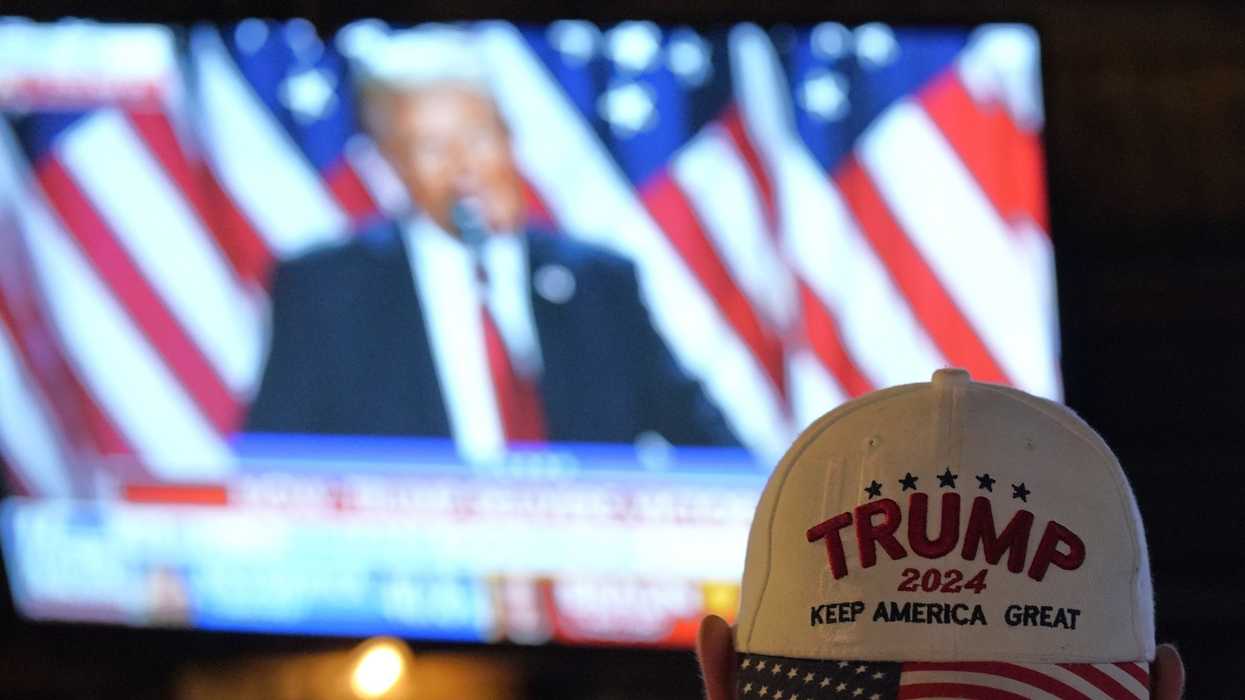
The Big Truth is that a sophisticated team of political operatives took advantage of the erosion in 2016 to galvanize a new anti-democracy movement here in America. In the final weeks of the 2016 presidential race, former President Donald Trump’s campaign issued its closing argument via a campaign ad that blanketed the airwaves, boasting: “Our movement is about replacing the failed and corrupt political establishment with a new government controlled by you, the American people.”
This was the message America needed to hear. Sen. Bernie Sanders’ campaign had been playing it on repeat. Disaffected voters needed a home, and those campaigns were speaking to them.
They weren’t wrong. The system is corrupt, and the system is failing the vast majority of Americans. That’s the Big Truth. The Big Truth is also that the 2020 presidential election was won fair and square. It wasn’t stolen.
As Republican Rep. Liz Cheney said in the Jan. 6th committee’s first hearing, “President Trump engaged in a massive effort to spread false and fraudulent information – to convince huge portions of the U.S. population that fraud had stolen the election from him. This was not true.”
Those of us who love American democracy know it needs some fixing, but we also know it’s worth protecting. So we’ve got to get comfortable with the truth: The system is broken. The game is rigged. The political elite hold too much power and We the People are being silenced. And the 2020 election was not stolen. That’s all true.
It’s also true that the system can be fixed. RepresentUs and our pro-democracy allies have won more than 160 victories in cities and states across the country to fight corruption, end gerrymandering, and give voters more power in our elections.
There's a lesson here that seems to be taking America far too long to learn: Sometimes, more than one thing can be true at once. And when that’s the case, telling the whole truth is what earns us the credibility to be heard. So we need to start telling the Big Truth, and we need to start now. The good guys are losing this messaging battle right now. And right now, our democracy can’t afford the loss.