
Skip to content
Search

Latest Stories

Follow Us:
Top Stories

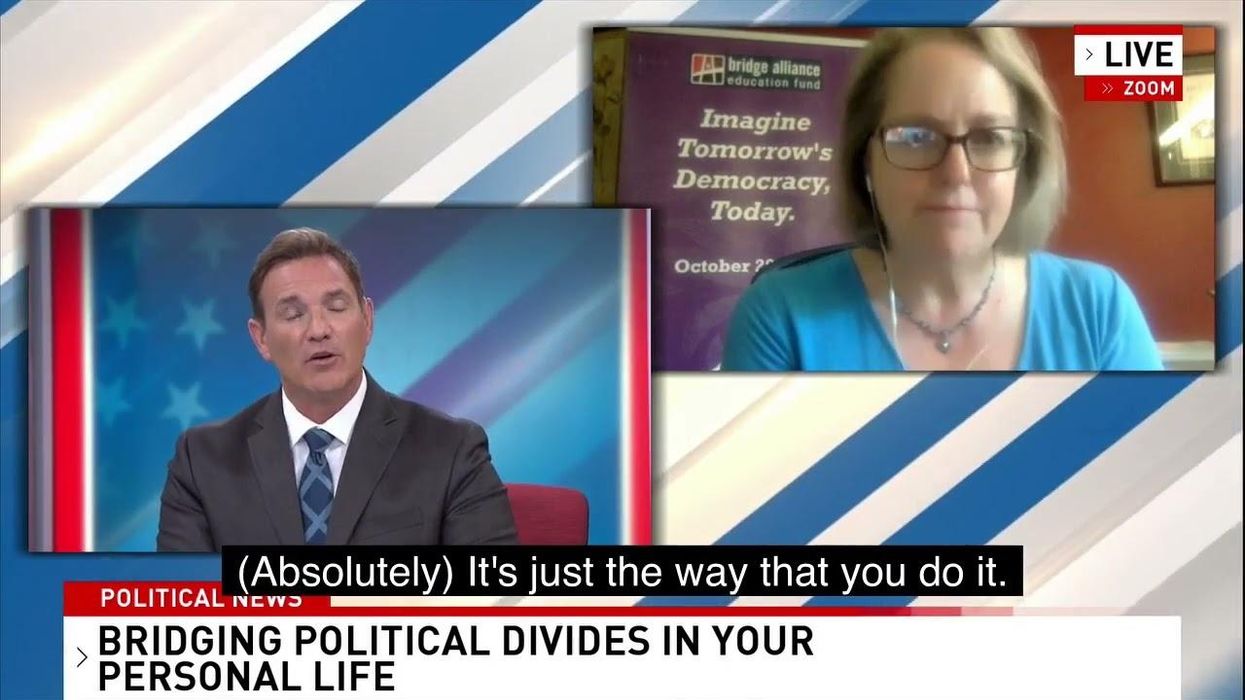
Video: Fox45 News featuring Debilyn Molineaux of The Bridge Alliance

As the political landscape becomes even more divisive and splits within parties create deeper tension, trying to have a conversation about ideas and policies with family, friends and coworkers is often just avoided.

Co-publisher of The Fulcrum and co-founder and CEO of the Bridge Alliance Debilyn Molineaux recently joined Fox45 TV for a segment to share that it does not have to be this way. Molineaux explained that it's sad that people can't come to constructive disagreements in bridging divides. When talking about social media and filtering what we may like and don't like, she also says that it prevents you from getting different perspectives and leads to many problems online with people who may not want to be friends with you anymore.

Read More

Bad Bunny Super Bowl Clash Deepens America’s Cultural Divide

Bad Bunny performs on stage during the Debí Tirar Más Fotos world tour at Estadio GNP Seguros on December 11, 2025 in Mexico City, Mexico.

(Photo by Emma McIntyre/Getty Images)

Bad Bunny Super Bowl Clash Deepens America’s Cultural Divide

On Monday, January 26th, I published a column in the Fulcrum called Bad Bunny’s Super Bowl Halftime Show Sparks National Controversy As Trump Announces Boycott. At the time, I believed I had covered the entire political and cultural storm around Bad Bunny’s upcoming Super Bowl performance.

I was mistaken. In the days since, the reaction has only grown stronger, and something deeper has become clear. This is no longer just a debate about a halftime show. It is turning into a question of who belongs in America’s cultural imagination.

Keep ReadingShow less
Springsteen’s ‘Streets of Minneapolis’ Demands Justice Now

Bruce Springsteen on October 22, 2025 in Hollywood, California.

(Photo by Rodin Eckenroth/Getty Images for AFI)

Springsteen’s ‘Streets of Minneapolis’ Demands Justice Now

Bruce Springsteen didn’t wait for the usual aftermath—no investigations, no statements, no political rituals. Instead, he picked up his guitar and told the truth, as he always does in moments of moral fracture.

This week, Springsteen released “Streets of Minneapolis,” a blistering protest song written and recorded in just 48 hours, in direct response to what he called “the state terror being visited on the city of Minneapolis.”

Keep ReadingShow less
A woman typing on her laptop.

North Carolina's Project Kitty Hawk, an online program-management system built by the government, has been beset by difficulties and slow to grow despite good intentions.

Getty Images, Igor Suka

Online Learning Works Best When Markets Lead, Not Governments. Project Kitty Hawk Shows Why.

North Carolina’s Project Kitty Hawk is a grand experiment. Can a government entity build an online program-management system that competes with private providers? With $97 million in taxpayer funding, the initiative seemed promising. But, despite good intentions, the project has been beset by difficulties and has been slow to grow.

A state-chartered, university-affiliated online program manager may sound visionary, but in practice, it’s expensive, inefficient, and less adaptable than private solutions. In a new report for the James G. Martin Center for Academic Renewal, I examined the experience of Project Kitty Hawk and argued that online education needs less government and more free markets.

Keep ReadingShow less
medical expenses

"The promise of AI-powered tools—from personalized health monitoring to adaptive educational support—depends on access to quality data," writes Kevin Frazier.

Prapass Pulsub/Getty Images

Your Data, Your Choice: Why Americans Need the Right to Share

Outdated, albeit well-intentioned data privacy laws create the risk that many Americans will miss out on proven ways in which AI can improve their quality of life. Thanks to advances in AI, we possess incredible opportunities to use our personal information to aid the development of new tools that can lead to better health care, education, and economic advancement. Yet, HIPAA (the Health Information Portability and Accountability Act), FERPA (The Family Educational Rights and Privacy Act), and a smattering of other state and federal laws complicate the ability of Americans to do just that.

The result is a system that claims to protect our privacy interests while actually denying us meaningful control over our data and, by extension, our well-being in the Digital Age.

Keep ReadingShow less