

AI is rapidly evolving and has the potential to transform many aspects of our lives, including democracy.
One of the most promising applications of AI in democracy is in the field of election monitoring, where it can be used to detect and prevent fraud, as well as improve the accuracy of vote counting.
On the other hand, the use of AI in political communication also raises concerns about the potential for bias and manipulation. AI algorithms are only as unbiased as the data on which they are trained. If the data is biased, then the results produced by AI systems will also be biased.
The question is, can we ensure that the use of AI technology is ethical and responsible in order to better our democracy?
Take a listen.
This podcast was originally published on The Democracy Group.









Lorraine Marquez Eiler’s photo of her great-great grandparents and her great-grandparents, who would walk about 50 miles through the Sonoran Desert to the springs.
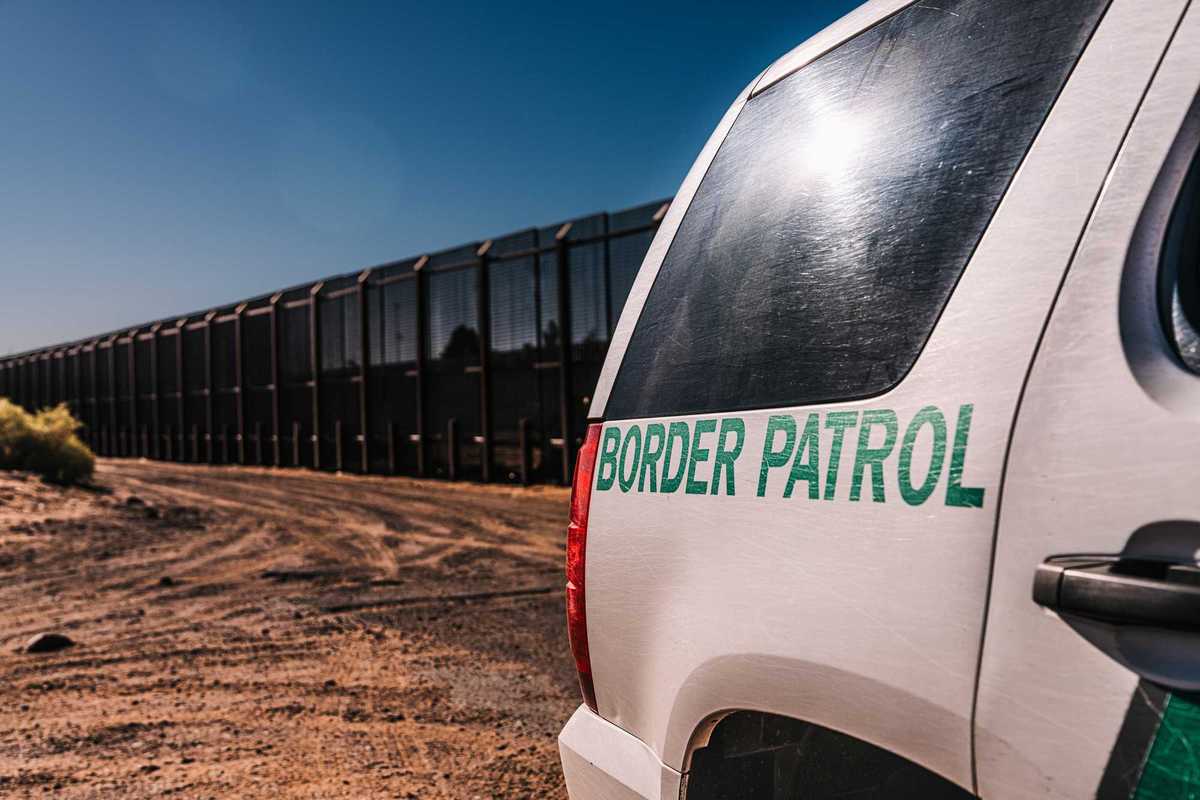
Construction equipment is seen near the U.S.-Mexico border just west of the Lukeville port of entry on Monday, Aug. 24, 2026. Credit: Stephanie Casanova
Rep. Adelita Grijalva, left, and Tohono O’odham Chairman Verlon Jose listen as Lorraine Marquez Eiler, a Hia-C’ed O’odham elder, shares how her ancestors would hold ceremonies at Quitobaquito Springs. Grijalva visited the springs with tribal leaders on Monday, Aug. 24, 2026. Credit: Stephanie Casanova
Sara Mae Williams, Justice of the Peace in Ajo and a Tohono O’odham citizen, shares their concerns regarding border wall construction on Tohono O’odham land at a town hall at the Ajo Plaza Rec Hall on Monday, Aug. 24, 2026. Credit: Stephanie Casanova