

Equal Citizens has one simple but incredibly important mission: to fix democracy by establishing truly equal citizenship. Once we, as a nation, have done that, we may then take on all the other challenges facing us. The good news is, since Congress created this problem, Congress can fix this problem. The legislation to do so has already been written. Now it's simply a matter of making sure Congress hears our voices and acts to make us truly equal citizens.
Equal Citizens
By David MeyersSep 20, 2019
David Meyers
David Meyers is the Executive Editor of The Fulcrum. Before launching The Fulcrum, David spent more than two decades at CQ Roll Call, a leading publisher of political news and information. During his time there, David served as managing editor of Roll Call (“the newspaper of Capitol Hill”) and as managing editor of member information and research, which included co-editing the definitive biographical directory of Congress, “Politics in America.” David went on to lead all of CQ Roll Call’s congressional research teams as vice president of research and content development before shifting to a revenue and strategy role as vice president of business operations for Roll Call, working with the advertising and editorial teams to develop new revenue models and expand the company’s events business. David lives in Fairfax, Va., with his wife, two daughters and rottweiler. A graduate of Tufts University, David is a past president of the Tufts University Alumni Association. He is also a past president of the Washington Press Club Foundation, which works to celebrate and advance the role of women and minorities in the media. David currently serves on the board of directors for Temple B’nai Shalom in Fairfax Station.

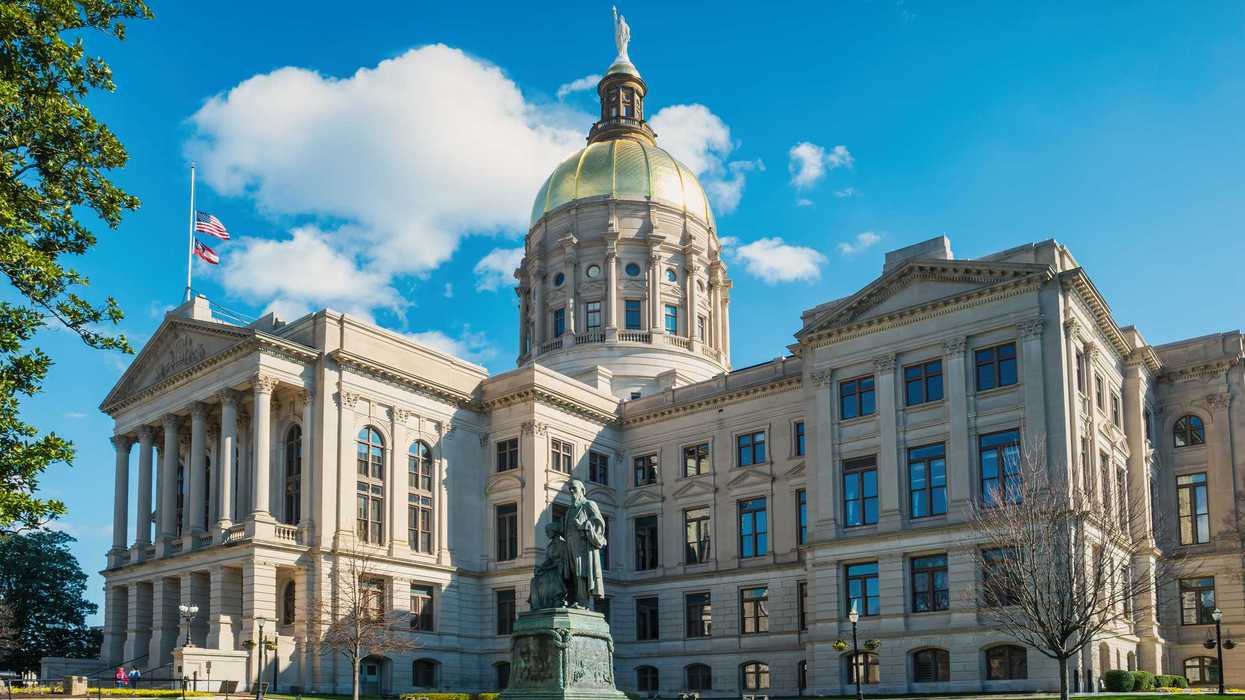








Demonstrators rally outside the U.S. Supreme Court as justices hear oral arguments on whether President Donald Trump can deny citizenship to children born to parents who are in the United States illegally or temporarily, on Capitol Hill, in Washington, Wednesday, April 1, 2026. (AP Photo/Mariam Zuhaib)
Luz Angela Nuñez with her daughter Aisha Quershi Nuñez at their home in College Point, Queens. Photo: Mia Anzalone for Documented.
Kimberly Alvarez, 25, with her daughter Evangeline and her husband John Alvarez in Medellin, Colombia. Photo courtesy of Kimberly Alvarez.Alvarez arrived in New York City in February 2024 with her husband John Alvarez as asylum seekers from Venezuela. In April 2025, Alvarez found out she was pregnant with her first child, a baby girl. Her first reaction, she said, was fear.“How am I going to keep her alive?” she said. “That’s what I was thinking. ‘How am I going to be able to take care of her?’”At the beginning of Alvarez’s pregnancy, she said she was aware of the immigration enforcement occurring around the country, but vowed not to let it deter her from showing up to her doctor’s appointments.“When you went out, you were always on alert because you didn’t know if [ICE] might be around. I never saw anything suspicious,” Alvarez said. “But of course, you feel scared.”In October, when Alvarez was six months pregnant, her husband was detained by ICE agents at 26 Federal Plaza. When the immediate shock wore off, she obsessively checked the Online Detainee Locator System to find out where her husband went. A day later, she discovered that he was being kept at Delaney Hall detention center in New Jersey. Alvarez quickly set up an account to pay for phone calls, and every two days, she would pay about $10 for a one-hour call, updating her husband about the baby, her appointments and how she was doing.“Crying was the only way for me to release the tension,” said Alvarez, who worried that her lack of sleep and bad diet were impacting her baby. “Crying was the only way for me to release the tension.”—Kimberly AlvarezThat tension built up day by day, week by week following her husband’s arrest. Alvarez had stopped her work as a cleaner in the neighborhood’s synagogues two weeks before her husband’s detention because of her pregnancy. The plan, she said, was to rely solely on his income as a maintenance worker for “the food, the rent, everything.” Left with few choices, Kimberley had to rely on her mother’s income as a cleaner. The older woman had moved to New York from North Carolina to assist with Alvarez’s pregnancy. “I feel like I’m supposed to help my mom, not the other way around,” Alvarez said. “I felt powerless because I couldn’t do anything.”On Dec. 9, Alvarez gave birth to a daughter, Evangeline. While her baby was healthy, Alvarez’s anxieties did not go away. While she returned to cleaning synagogues a few months after Evangeline’s birth to help make ends meet, Alvarez and her daughter rarely left home. Alvarez said she felt paralyzed, getting frequent alerts from a neighborhood WhatsApp group when ICE was spotted nearby. One day, she said, ICE arrested her friend’s husband in Sunset Park, in an area where she would sometimes take Evangeline for walks.“I’m so afraid that I’ll go out and run into one of them and that they’ll take her away from me,” Alvarez said. “That’s my biggest fear, that someone will take her away from me and I won’t know where my daughter is.”In March, her husband decided to voluntarily remove himself from the United States and move back to Colombia, where he is originally from. It was a family decision, but it was not a happy one — hiring immigration lawyers was too expensive, Alvarez said, adding that staying in the U.S. felt too uncertain.