

Skip to content
Search

Latest Stories

Follow Us:
Top Stories

Even With Limited Energy, I Resist

Opinion

Even With Limited Energy, I Resist
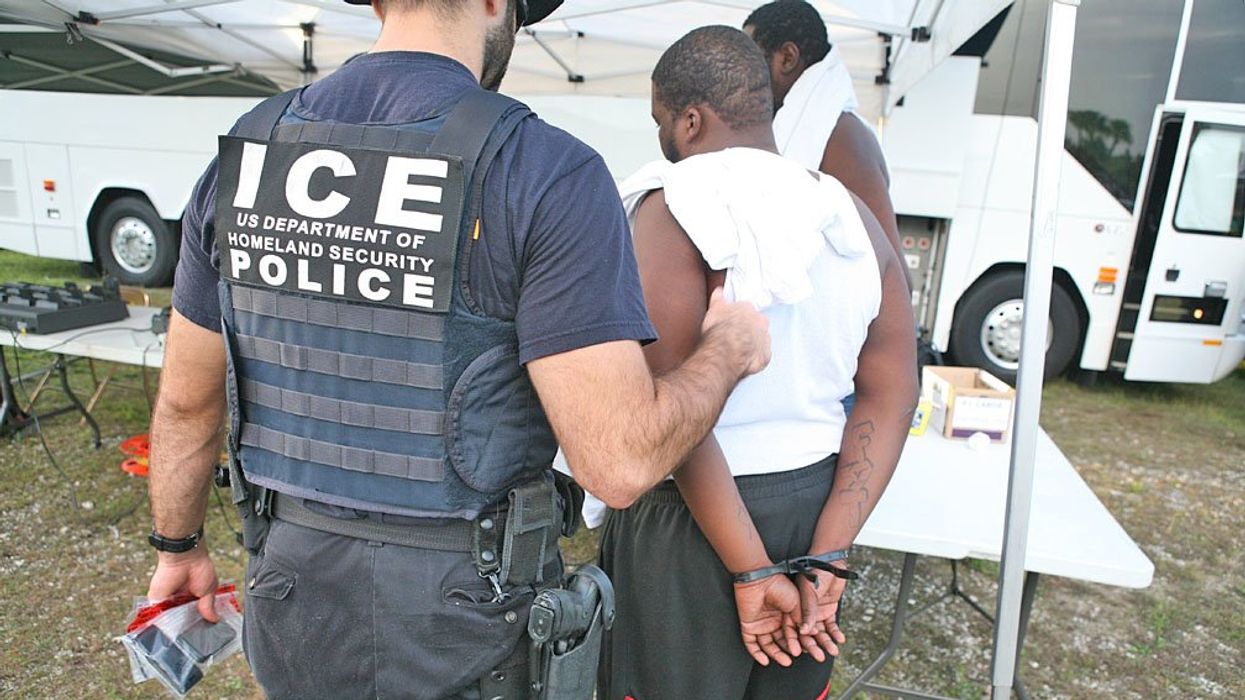
File:ICE.Arrest lg.jpg - Wikipedia

Each of us follows a unique destiny, even as we know we will each wind up dead one day. Some people afflicted with a life-ending disease keep it to themselves. They would rather soldier on as though everything were normal. Maybe they tell a trusted friend or two, but they don’t broadcast it. They prefer not to have to deal with the sometimes halting words of empathy from strangers. Many people don’t know what to say, so in some sense, the sick person is relieving others of the need to commiserate publicly. To find suitable words. They talk about the weather or the Chicago Cubs. Anything but disease and its cousin, death.

As someone whose life has followed an unconventional path, I felt it was important that when I was diagnosed with cancer of the tongue and lymph nodes, I not keep this to myself. I didn’t know the difficult path that lay ahead, but since all of my family had died, I knew that I would have to rely on the support of friends (my chosen family) to make it through it. After a brutal surgery to remove the cancerous parts of my tongue, the surgeon took nerves from my arm to reconstruct a new tongue. This was followed by 33 targeted radiation treatments that left me unable to swallow solid food and the loss of my taste buds. Doctors thought I might regain those abilities and sensations, but alas! They have never returned.


It's been 5 years now since my diagnosis. While I struggle with a poor quality of life, I know that many cancer patients don’t get additional years. So I quietly go about my day, reading, sleeping, and walking. Grateful that I can still appreciate the flight of a butterfly on my patio or the rustle of the wind in the trees.

I was formerly an American diplomat. Mainly in the Middle East. The United Arab Emirates, Syria, Morocco, Lebanon. Before that, I was a Peace Corps Volunteer in Chad. Others have become diplomats after having served in the Peace Corps. Others have lived with HIV for decades. Others have suffered through cancer treatments. But that combination of Chad, the Middle East, HIV, and cancer makes my story perhaps more of a one-off. And because of that, I felt it was important to share my story more publicly. To document the roller coaster of emotions when confronted by your mortality every time you walk into a doctor’s office.

Disease gives us some distance from the quotidian tasks that make up most people’s lives. Not being able to eat is okay if I forget to drink my daily smoothie. I’ll drink it tomorrow. I may lack energy, but with no demands on my time—except for making regular doctor visits—I can opt to sleep and dream about another success in another place and time. Sometimes I have nightmares where people who have treated me badly in the past are doing it again to me. But when I wake, I realize that it is just a bad dream and no one is hounding me today except for the cancer cells hiding somewhere inside me.

Because my energy is low, some friends have counseled me not to pay attention to the ongoing attacks on our American democracy and way of life. They say I should conserve my limited energy. But I refuse. In whatever time I have left, I will have to speak out and resist what they are doing to the country I have served and loved all my life.

The fact that spokespersons for the Trump Administration continue to say that the immigration raids are rounding up the “worst of the worst” is clearly not true. Legal residents without criminal records who have been working and paying taxes for decades are being rounded up and trucked off to horrible places like Alligator Alcatraz in the Everglades in Florida. They are given no due process. The conditions are horrible, and politicians make jokes about alligators having immigrants for lunch. This is not something to be laughing about. Lives are being destroyed, and we must stand up and say this is not the America that used to be a beacon on the hill to others in the world over as a place of respect for people and their rights and their ability to pursue happiness in freedom.

And so I speak not only because I can, but because I feel I must. In illness, in aging, and protest, we live most fully when we refuse to look away. The measure of my life isn’t only in its length or comfort, but in my stubborn insistence to raise my voice against indifference and cruelty.

The conscience of our country once knew better -and perhaps, in the time I have left, my voice can help it remember.

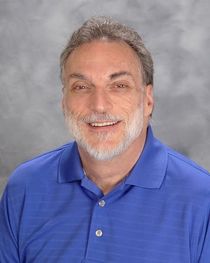
Michael Varga is the author of “ Under Chad’s Spell." He was a Foreign Service officer, serving in Dubai, Damascus, Casablanca, and Toronto



Read More

A TSA employee standing in the airport, with two travelers in the foreground.

A Transportation Security Administration (TSA) worker screens passengers and airport employees at O'Hare International Airport on January 07, 2019 in Chicago, Illinois. TSA employees are currently working under the threat of not receiving their next paychecks, scheduled for January 11, because of the partial government shutdown now in its third week.

Getty Images, Scott Olson

Nope. Nevermind. Some DHS agencies still shut down.

House Republicans reject clean bill to open shut-down DHS agencies (March 28 update)

House Republicans (and three Democrats) rejected the Senate's clean bill to end the shutdown late Friday night. Instead, the House passed a different bill that fully funds every agency in the Department of Homeland Security (DHS) but for only 60 days with the knowledge that this short-term continuing resolution will not pass in the Senate.

Both chambers are out until April 13 so the shutdown is expected to last until then at least. Hope that no major weather disasters occur before then because FEMA is one of the DHS agencies out of commission (though some of its employees may be working without pay). It's possible that air travel security lines won't get worse since the President signed an Executive Order authorizing DHS to pay TSA workers. New DHS Secretary Mullin says paychecks will start to go out as early as Monday. How long can this approach continue? Unknown. Leaving aside the questionable legality of repurposing funds in this way, DHS may not be willing to keep paying TSA from these other funds long-term.

Keep ReadingShow less
Protestors holding signs, including one that says "let the people vote."
Attendees hold signs advocating for voting rights and against the SAVE America Act at a rally to outside the U.S. Capitol on March 18, 2026 in Washington, DC.
Getty Images, Heather Diehl

The Senate Was Meant to Slow Us Down—Not Stop Us Cold

The Senate is once again locked in a familiar pattern: a bill with clear support on one side, firm opposition on the other—and no obvious path forward.

This time it’s the SAVE Act, framed by its supporters as a safeguard for election integrity and by its opponents as a barrier to voting access. The arguments are well-rehearsed. The positions are firm. And yet, beneath the policy debate sits a more revealing truth: in today’s Senate, the outcome of legislation is often shaped long before a final vote is ever cast.

Keep ReadingShow less
Clarity Is Power: The Three Pillars That Keep the People in Charge
man in white robe holding a book statue
Photo by Caleb Fisher on Unsplash

Clarity Is Power: The Three Pillars That Keep the People in Charge

American democracy does not weaken all at once. It falters when citizens lose clarity about how power is being used in their name. Abraham Lincoln warned that “public sentiment is everything… without it, nothing can succeed.” When people understand what their leaders are doing, they can hold them accountable.

But when confusion takes hold, power shifts quietly, and the public’s ability to act begins to erode. Clarity enables citizens to participate fully in democratic life and shape a government that responds to them. Confusion is not harmless; it erodes the safeguards, public awareness, and civic action that make self‑government possible. Clarity strengthens all three pillars at once — it protects our constitutional safeguards, sharpens public awareness, and fuels civic action.

Keep ReadingShow less
CONNECT for Health Act of 2025
person wearing lavatory gown with green stethoscope on neck using phone while standing

CONNECT for Health Act of 2025

How does a bill with no enemies fail to move? That question should trouble anyone who cares about Medicare, about rural health care, and about whether Congress can still do straightforward things.

In plain terms, the CONNECT Act would permanently end the outdated rule that limits Medicare telehealth to patients in rural areas who travel to an approved facility. It would make the patient's home a covered site of care. It would protect audio-only services, critical for seniors without broadband or smartphones, especially for behavioral health. It would ensure that Federally Qualified Health Centers can be reimbursed for telehealth, and it would lock in the pandemic-era flexibilities that Congress has been extending on a temporary basis since 2020. In short, it would turn five years of emergency workarounds into permanent, accountable policy.

Keep ReadingShow less