

Skip to content
Search

Latest Stories

Follow Us:
Top Stories

Combatting the Trump Administration’s Militarized Logic

Opinion

Combatting the Trump Administration’s Militarized Logic

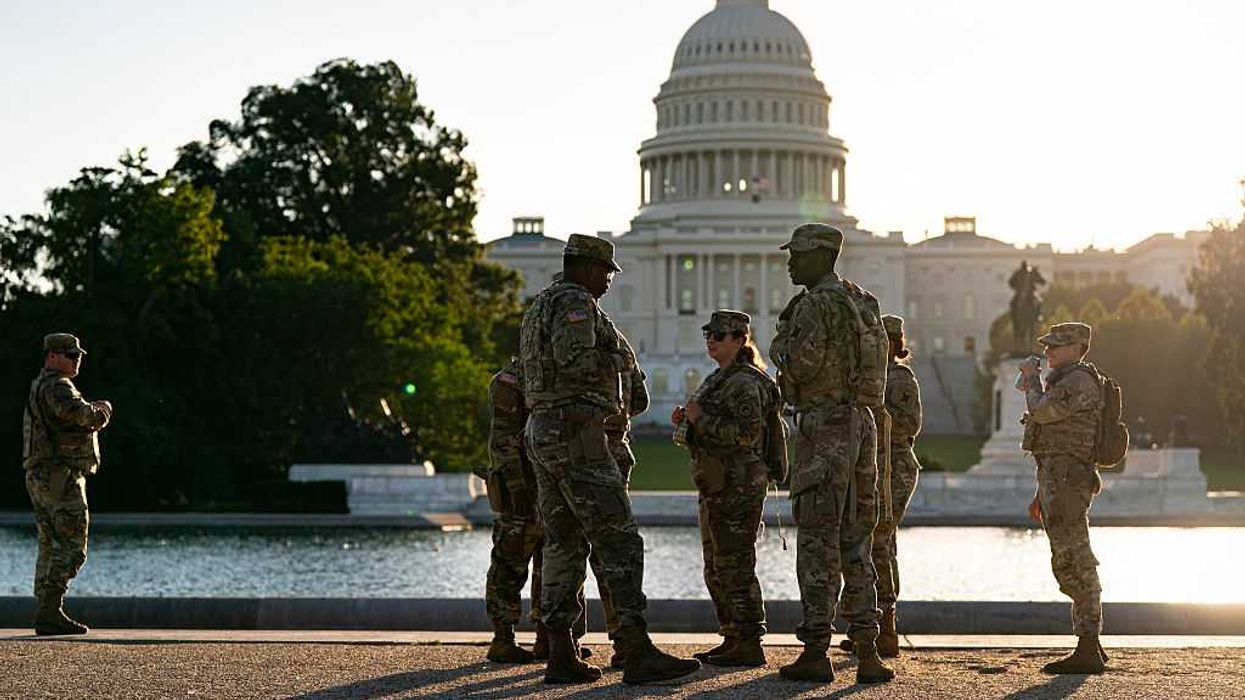
Members of the National Guard patrol near the U.S. Capitol on October 1, 2025 in Washington, DC.

(Photo by Al Drago/Getty Images)

Approaching a year of the new Trump administration, Americans are getting used to domestic militarized logic. A popular sense of powerlessness permeates our communities. We bear witness to the attacks against innocent civilians by ICE, the assassination of Charlie Kirk, and we naturally wonder—is this the new American discourse? Violent action? The election of Zohran Mamdani as mayor of New York offers hope that there may be another way.

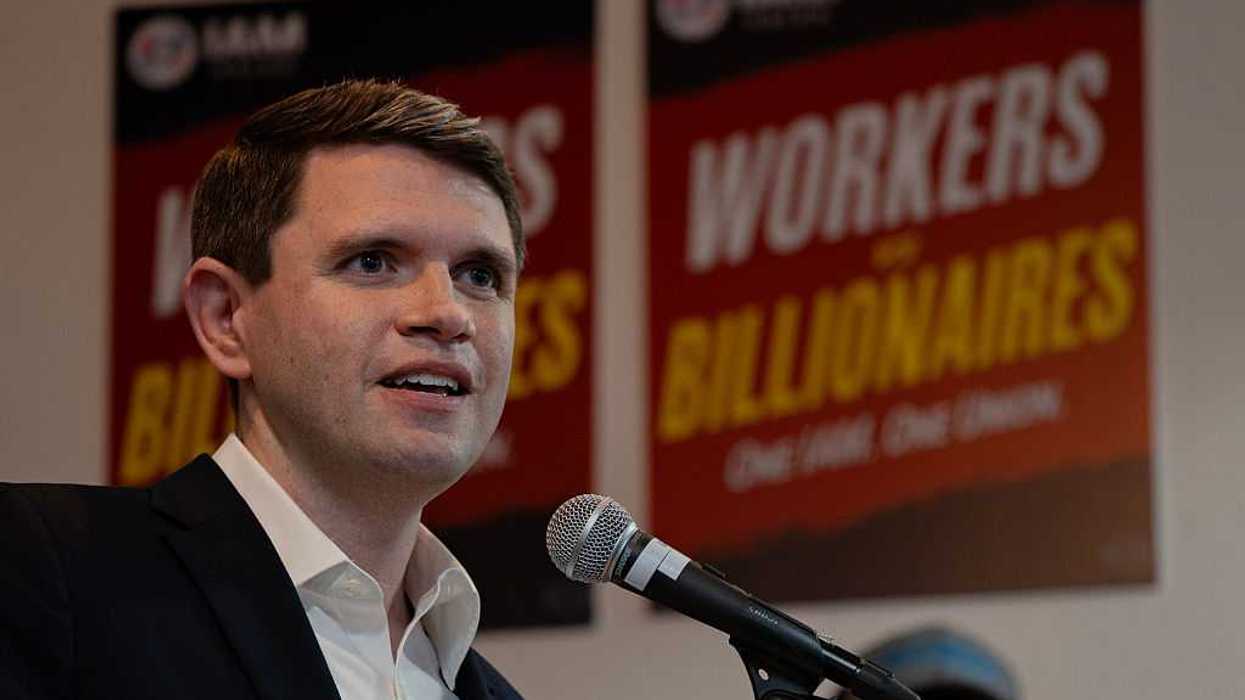
Zohran Mamdani, a Muslim democratic socialist, was elected as mayor of New York City on the fourth of November. Mamdani’s platform includes a reimagining of the police force in New York City. Mamdani proposes a Department of Community Safety. In a CBS interview, Mamdani said, “Our vision for a Department of Community Safety, the DCS, is that we would have teams of dedicated mental health outreach workers that we deploy…to respond to those incidents and get those New Yorkers out of the subway system and to the services that they actually need.” Doing so frees up NYPD officers to respond to actual threats and crime, without a responsibility to the mental health of civilians.


Mamdani’s proposed reforms demonstrate that he does not see his citizens as a force to be contained. Mamdani’s rhetoric recognizes citizens with needs, which can be met with common sense and empathy, rather than militarized action to fortify his own position.

Meanwhile, Trump continues with an opposite approach. The Trump administration, dissatisfied “with the pace of deportations,” is consolidating militarized power in our major metropoles. A Washington Examiner report tipped off the public to leadership changes within the ICE administration. According to anonymous informants, ICE officials in several major cities will be replaced by Border Patrol agents. The shift is unprecedented, expanding Border Patrol’s administrative territory exponentially, and moving federal agents in a way not seen before.

The leadership shakeup reveals the Trump administration’s central assumptions. The Trump administration operates on the assumption of dissent. Trump continues to pass militarized landholdings into the hands of sympathizers, undermining the inherent dignity of civilians (and non-civilians). Almost like a bad artist, he is reaching into the clay of the public to create a vision of his own face, terrified, looking back at him.

Eventually, administration logic leaks into the public consciousness. I can only wonder who among us feels that violent action is the only language that will be heard at the moment. But Mamdani’s election in our most populous city spells an opposite hope. A major territory now relies on sympathetic logic, focusing on the dignity of the working class. Clearly, peaceful popular action continues to have an impact. The ballot is still an effective place for discourse. I hope Mamdani’s election will call on Americans to find their own dignity in the face of delegates. If we continue to look to our electorate and see only representatives of the 1%, our sense of power will continue to assume the insecure character of the Trump administration.

Read More

A TSA employee standing in the airport, with two travelers in the foreground.

A Transportation Security Administration (TSA) worker screens passengers and airport employees at O'Hare International Airport on January 07, 2019 in Chicago, Illinois. TSA employees are currently working under the threat of not receiving their next paychecks, scheduled for January 11, because of the partial government shutdown now in its third week.

Getty Images, Scott Olson

Nope. Nevermind. Some DHS agencies still shut down.

House Republicans reject clean bill to open shut-down DHS agencies (March 28 update)

House Republicans (and three Democrats) rejected the Senate's clean bill to end the shutdown late Friday night. Instead, the House passed a different bill that fully funds every agency in the Department of Homeland Security (DHS) but for only 60 days with the knowledge that this short-term continuing resolution will not pass in the Senate.

Both chambers are out until April 13 so the shutdown is expected to last until then at least. Hope that no major weather disasters occur before then because FEMA is one of the DHS agencies out of commission (though some of its employees may be working without pay). It's possible that air travel security lines won't get worse since the President signed an Executive Order authorizing DHS to pay TSA workers. New DHS Secretary Mullin says paychecks will start to go out as early as Monday. How long can this approach continue? Unknown. Leaving aside the questionable legality of repurposing funds in this way, DHS may not be willing to keep paying TSA from these other funds long-term.

Keep ReadingShow less
Protestors holding signs, including one that says "let the people vote."
Attendees hold signs advocating for voting rights and against the SAVE America Act at a rally to outside the U.S. Capitol on March 18, 2026 in Washington, DC.
Getty Images, Heather Diehl

The Senate Was Meant to Slow Us Down—Not Stop Us Cold

The Senate is once again locked in a familiar pattern: a bill with clear support on one side, firm opposition on the other—and no obvious path forward.

This time it’s the SAVE Act, framed by its supporters as a safeguard for election integrity and by its opponents as a barrier to voting access. The arguments are well-rehearsed. The positions are firm. And yet, beneath the policy debate sits a more revealing truth: in today’s Senate, the outcome of legislation is often shaped long before a final vote is ever cast.

Keep ReadingShow less
Clarity Is Power: The Three Pillars That Keep the People in Charge
man in white robe holding a book statue
Photo by Caleb Fisher on Unsplash

Clarity Is Power: The Three Pillars That Keep the People in Charge

American democracy does not weaken all at once. It falters when citizens lose clarity about how power is being used in their name. Abraham Lincoln warned that “public sentiment is everything… without it, nothing can succeed.” When people understand what their leaders are doing, they can hold them accountable.

But when confusion takes hold, power shifts quietly, and the public’s ability to act begins to erode. Clarity enables citizens to participate fully in democratic life and shape a government that responds to them. Confusion is not harmless; it erodes the safeguards, public awareness, and civic action that make self‑government possible. Clarity strengthens all three pillars at once — it protects our constitutional safeguards, sharpens public awareness, and fuels civic action.

Keep ReadingShow less
CONNECT for Health Act of 2025
person wearing lavatory gown with green stethoscope on neck using phone while standing

CONNECT for Health Act of 2025

How does a bill with no enemies fail to move? That question should trouble anyone who cares about Medicare, about rural health care, and about whether Congress can still do straightforward things.

In plain terms, the CONNECT Act would permanently end the outdated rule that limits Medicare telehealth to patients in rural areas who travel to an approved facility. It would make the patient's home a covered site of care. It would protect audio-only services, critical for seniors without broadband or smartphones, especially for behavioral health. It would ensure that Federally Qualified Health Centers can be reimbursed for telehealth, and it would lock in the pandemic-era flexibilities that Congress has been extending on a temporary basis since 2020. In short, it would turn five years of emergency workarounds into permanent, accountable policy.

Keep ReadingShow less