




Vote From Home 2020 is a grassroots project that's harnessing progressive activist power from across the country to send mail-in ballot applications directly to voters. Data shows black, Latinx, AAPI, and young voters are less likely to request mail-in ballots than older white voters. We're ensuring the 2020 general election is accessible and safe by mailing applications to voters and then following up with reminder calls and texts. Vote From Home 2020 supporters will help make the 2020 elections safe and accessible with our unique direct impact model. With a $25 donation, Vote from Home 2020 is able to send applications to 20 voters. By using the Center for Civic Design tools and working directly with a Union printer, we're able to keep costs down and reach more voters.
Site Navigation
Search
Latest Stories
Join a growing community committed to civic renewal.
Subscribe to The Fulcrum and be part of the conversation.
Top Stories


Latest news




Read More
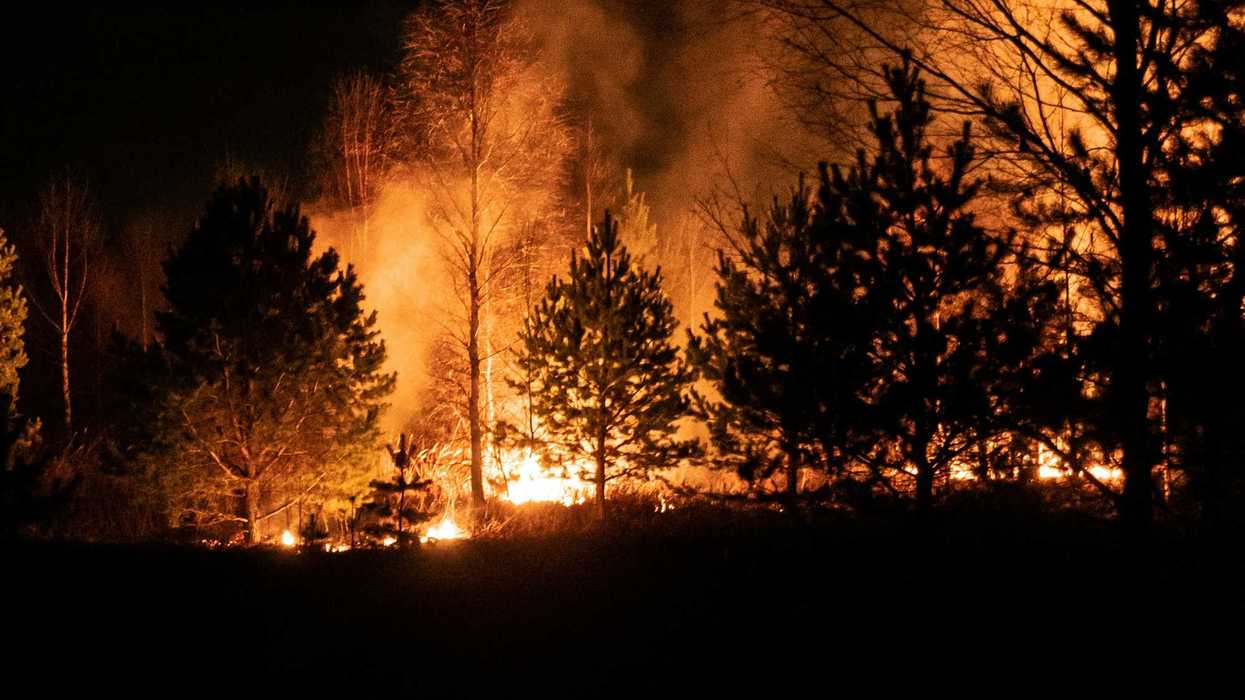
A forest fire glowing with bright orange flames and smoke at night
Photo by Egor Vikhrev on Unsplash
Humans May Start Wildfires. Climate Change Makes Them Catastrophic.
Oct 16, 2026
The summer of 2026 once again saw wildfire smoke from the West Coast and Midwest blanketing East Coast skies. Smoke-filled summer skies now seem to be the norm across America, and wildfire season isn’t even close to over.
The public response is also becoming normal. When investigators determine that a person started a wildfire, online chatter usually centers on the idea that humans are the cause and that climate change could not have played a role. That argument confuses the ignition source with the complex conditions that contribute to wildfire. A spark may explain where a wildfire began. It cannot, on its own, explain why flames spread so far and devastate entire communities.
As a professor and through my work studying fire and helping launch the Eastern Fire Network, I have seen how wildfire emerges from an interaction among three basic ingredients: an ignition source, flammable vegetation, and climate conditions that dry fuels and let flames spread.
And it’s true, humans often supply the spark that starts wildfires.
Researchers examining more than 1.5 million wildfire records from 1992 to 2012 found that humans caused 84 percent of U.S. wildfires. Human ignitions also made the fire season three times longer than the lightning-caused fire season and added an average of roughly 40,000 fires per year. Human-started fires expanded especially in the eastern United States.
At the same time, climate change is increasingly creating conditions that make these incidents worse.
A warmer planet increases evapotranspiration, making it harder for vegetation to cool down. As vegetation dries, it becomes more flammable, allowing fires to ignite more easily, spread faster, and burn more intensely. One study found that human-caused climate change accounted for approximately 55 percent of the observed increase in fuel aridity in western U.S. forests from 1979 to 2015.
A hundred years ago, a discarded cigarette in the woods or an improperly extinguished campfire could have produced a manageable fire. Under today’s climate conditions, that fire could be far more dangerous when it sparks amid parched vegetation after weeks of abnormally high heat and little rain.
Meanwhile, across forests in the East, decades of fire suppression and changing land use have increased woody cover by about 37 percent from 1990 to 2020, with Pennsylvania’s Appalachian and Allegheny landscapes seeing some of the largest increases. This has resulted in more fuels in areas where more people live.
That is why identifying a wildfire's source is only part of the equation. We must consider climate change when managing future wildfire hazard, or we risk ignoring one of the forces making the landscape more combustible and the resulting fires harder to contain.
If, as a country, we address the growing threat of wildfires only by preventing accidental ignitions and managing overgrown vegetation, we ignore rising temperatures that dry fuels and create more dangerous fire conditions. And as most forest managers know, managing forests this way is far too costly and unsustainable.
Protecting communities over the long term will require confronting climate change directly: replacing fossil fuels with cleaner, cheaper energy sources like solar and wind, and holding elected officials and industries accountable for the choices that continue to drive global warming. Without these necessary actions, fire prevention will address only a fraction of the problem while the underlying danger grows.
We also need to learn to live with fire, creating defensible spaces around our homes, factoring fire risk into zoning and emergency management planning, and using beneficial fires to restore healthy forests where appropriate.
There will undoubtedly be many more devastating wildfires, and responses will likely continue to blame the source while ignoring climate change's role. If we dismiss climate change, we also dismiss part of the solution, leaving the country unprepared for the increasingly dangerous conditions that drive fire intensity.
Humans may provide the spark, but the science shows that climate change is increasingly turning fires into catastrophes.
Dr. Erica A. H. Smithwick is a professor of Geography at Penn State, a landscape and ecosystem ecologist, and leader of the Eastern Fire Network.
Keep ReadingShow less
Recommended






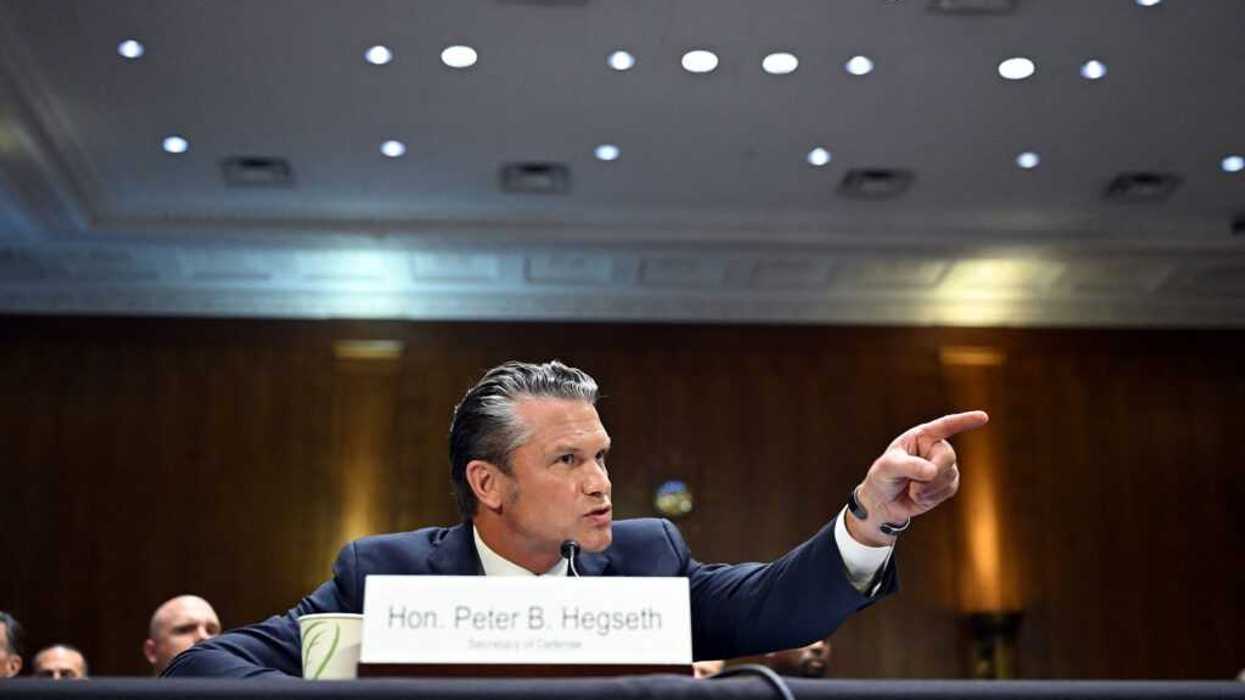
U.S. Defense Secretary Pete Hegseth testifies during a Senate Committee on Appropriations hearing on Capitol Hill in Washington, D.C., on July 21, 2026. Hegseth is crafting a strong and masculine identity for his audience as he reportedly contemplates a presidential run.
(Alex Wroblewski/AFP/Getty Images/TNS)
Politicians Can’t Just ’Give the People What They Want’
Oct 16, 2026
For reasons that will baffle my many detractors, I am often asked for advice about being an opinion journalist. One of my standard responses is: You have to be willing to disappoint your biggest fans.
What I mean is that if you start to see your job as telling fans what they want to hear, you risk becoming an entertainer rather than a thinker, and eventually you become a caricature. I’ve seen it happen numerous times. Patrick Buchanan was a brilliant columnist and a serious person. But over the course of his career, he listened too much to the people who said, “Go Pat, go!” and too little to friends who said, “I think that’s taking it too far.”
In journalism — or what passes for it — you can see the same arc most acutely in talk radio and TV hosts, who define their roles as telling the audience what it wants to hear rather than what it needs to hear. In the early Trump era, many prominent pundits were fairly conventional conservatives. When the audience veered towards populism and MAGA, the hosts followed the advice widely attributed to the French 19th century politician, Alexandre Auguste Ledru-Rollin: “There go the people, I must follow them, for I am their leader.” (In fairness, he didn’t say it, critics ascribed it to him.)
But the most dangerous realm for this dynamic isn’t political journalism. It’s politics. Politicians often are captured by their true-believing base. It’s most commonly seen among “conviction” politicians, who make a name for themselves on a single issue or idea. Congressman and Secretary of State William Jennings Bryan’s deep populist support was enough to earn him the Democratic nomination three times (1896, 1900 and 1908), but his support wasn’t wide enough to ever win.
Segregationists like George Wallace, socialists like Norman Thomas, and even Buchanan himself offer similar examples of the problem. Sarah Palin, Bernie Sanders, Kari Lake and Ron Paul provide more recent cautionary tales.
One of the key problems is ego. Politicians see huge crowds or read favorable media coverage and assume their people are the people. In the U.K., socialist Labor politician Jeremy Corbyn was wildly popular among people who liked Jeremy Corbyn. He brought his superfans into the party, but his superfans didn’t represent the broader electorate or even the traditional rank and file who fled the party in droves.
At a campaign event for Lake’s 2022 bid for an Arizona U.S. Senate seat, she asked the crowd, “We don’t have any McCain Republicans in here, do we? All right, get the hell out.” John McCain was one of the most dominant political figures in Arizona, winning six back-to-back Senate elections. Thinking that she didn’t need support from Republicans, or the Democrats and independents who voted for McCain, was a pristine example of mistaking intensity of support for quantity of support.
But I started with journalism to illustrate a point. Jesse Watters, a reliable water-carrier for President Trump, is Fox News’ most popular prime-time host, averaging about 2.7 million viewers per night. That means on any given night, roughly 346 million Americans aren’t watching. But if you’re Trump, you might think Watters is representative of the American people.
Now Watters’ audience does matter, not least because GOP primary voters and small donors are undoubtedly more likely to watch. And because of idiotic “reforms” to our system, many politicians now care more about the primary electorate than the general electorate, because the greatest threat to incumbency is in party primaries. Also, primaries are what matter for the nomination.
The result: Politicians orient themselves to small, intense slices of the electorate. This polarizing dynamic is further intensified by social media. Politicians and activists mistake the “vibes” of X and TikTok for the real world. They become intensely “online” and responsive to the feedback they’re fed by social media algorithms.
Secretary of Defense Pete Hegseth recently told Jack Posobiec, the exceedingly online conspiracy theorist and right-wing troll, that the Pentagon would livestream the execution by firing squad of Nidal Hasan, the Fort Hood shooter. I have no issue with Hasan being executed, but a livestreamed execution of a man in a wheelchair is grotesque. Hegseth, who is reportedly contemplating a presidential run, cares about appearing strong and manly to Posobiec and his audience. Posobiec, if you didn’t know, is an open superfan of Spanish dictator Francisco Franco, hosting “Franco Fridays” on his podcast.
It seems that Hegseth’s pandering to a tiny sliver of the electorate won’t yield a political snuff film. Even Trump and JD Vance are leery of the idea.
But, who knows, maybe if Watters starts pushing it, they’ll change their minds.
Jonah Goldberg is editor-in-chief of The Dispatch and the host of The Remnant podcast. His Twitter handle is @JonahDispatch.
Keep ReadingShow less

Gallup and The Rippel Foundation report just 48.1% of Americans are thriving and hope is at a record low. See how 14 communities are changing course.
Getty Images, miodrag ignjatovic
America’s Well-Being Falls, but Communities Are Rewriting the Future
Oct 15, 2026
American well‑being has fallen to levels not seen in more than a decade, and hope about the future has dropped to its lowest point since Gallup began tracking it in 2008. Yet a new report released today by Gallup and The Rippel Foundation argues that decline is not destiny. Across the country, communities are already using well‑being data to understand local conditions, bring residents and leaders together, and chart a different course.
The report, Thriving Together in America: Trends, Discoveries, Community Action, and Advice for Leaders, draws on Gallup’s national well‑being data plus insights from practitioners working to reverse the slide. It paints a sobering picture of the nation’s present trajectory—but additionally highlights local efforts that show how communities can strengthen the vital conditions that support thriving.
Well‑Being Is Falling — and Hope Is Falling With It
Gallup finds that just 48.1% of U.S. adults were “thriving” in the third quarter of 2026, down more than 10 percentage points from the 2021 peak and approaching historic lows. Hope — measured by expectations for future life — stands at 59.4%, essentially unchanged from last year’s all‑time low.
The declines are not evenly distributed. Young adults ages 18 to 29 have experienced the sharpest deterioration: from the highest‑thriving age group in 2010 (64%) to the lowest in 2026 (44%). Thriving levels have also converged across racial and ethnic groups, but the convergence reflects broad declines rather than shared improvement.
Place is still a powerful determinant. Some counties approach 70% prospering while others hover near or below 40%, underscoring how national averages may obscure the actual realities shaping people’s lives.
“The report’s data confirm what we already know: division, othering, and turning away from each other are bad for our well‑being,” said Becky Payne, President and CEO of The Rippel Foundation. “The steep declines are a clarion call, but in no way a verdict on our future.”
Communities Already Changing the Trajectory
The report profiles 14 communities using well‑being measurement not simply to document challenges but to guide action. Their experiences point to a shared lesson: data becomes most powerful when assessed alongside resident knowledge and used to inform decisions over time.
In Greater Cincinnati, the Cincinnati Children’s Hospital Medical Center partnered with Gallup to build one of the nation’s most comprehensive regional well‑being measurement systems. The data now informs decisions on food security, youth well‑being, and juvenile justice — demonstrating how granular insights shall shape policy and investment.
“Community measurement isn't just about tracking a number; it's about giving leaders and residents a shared, more granular perspective of their own conditions,” said Dan Witters, Research Director of the Gallup National Health and Well‑Being Index. That shared perspective, he said, helps communities move from a general sense of decline to specific, actionable priorities.
“Well‑being data can be both a mirror on the past and a map toward a better future,” added Bobby Milstein, Director of System Strategy at The Rippel Foundation.
Four Drivers of Thriving
The report identifies four drivers that shape whether communities thrive:
- Belonging and civic muscle — Opportunities for people to show up for one another strengthen connection to place.
- Vital conditions — From food and water to humane housing and social connection, these necessities form the foundation for long‑term well‑being.
- Fairness in systems — Redesigning systems so opportunity is not determined by identity or starting point.
- Effective urgent services — Meeting immediate needs without allowing emergency responses to crowd out long‑term solutions.
Communities aligning around these drivers are already showing measurable gains. But the report stresses that no single institution — not government, philanthropy, business, or health systems — can create these conditions alone. Progress requires cross-sector coordination and a common understanding of what residents need.
A Call to Measure, Learn, and Act
The report urges leaders to begin by measuring well‑being locally — not to produce a scorecard, but to start a conversation. Sustained improvement, it argues, will come from communities learning from one another, acting on what they find, and coordinating across sectors.
The full report, Thriving Together in America: Trends, Discoveries, Community Action, and Advice for Leaders, is available here.
Keep ReadingShow less
Congress approval is at a record-low 10%. Moderation and consensus-building, not partisan theatrics, are how Washington gets problems solved.
Richard Sharrocks / Getty Images
Reclaiming the Politics of the Possible
Oct 15, 2026
Washington is stuck in a cycle of performative conflict. The incentives seem to reward outrage, not outcomes that last; purity tests, not problem‑solving. So it’s no surprise that after three shutdowns in less than a year, public approval of Congress collapsed to just 10 percent this spring. (Gallup, April 2026.) But the country we live in — where many middle-income families report persistent financial strain and businesses are navigating unprecedented technological upheaval — cannot be governed by theatrics. Breaking this cycle requires moderation, consensus‑building, and a cooperative approach to governance.
This is not a call for centrism as an ideology. Instead, this is a call for transformative leaders to embrace moderation as their governing strategy, recognizing that in a pluralistic country of nearly 350 million people durable solutions require broad and stable alliances. Ultimately, this is a call for the 240 million of us who are eligible to vote in November to elect consensus-builders instead of bomb-throwers, and healers instead of arsonists.
The Cost of Governing by Extremes
The consequences of zero‑sum politics are no longer abstract. They show up in the daily dysfunction of our federal government.
When Congress is locked in partisan trench warfare, even routine responsibilities become crises. Budgeting devolves into brinkmanship. Oversight becomes a weapon, not a safeguard. And businesses and households face policy whiplash whenever control of Washington changes hands: executive orders are reversed on day one, regulations are rewritten with each new administration, and laws passed on party-line votes are left perpetually exposed to repeal.
This is not sustainable, nor is it what voters want. Nine in ten Americans say compromise is crucial to getting anything done; only fifteen percent think fighting for their values matters more than actually finding a solution. (Walton Family Fdn., Nov. 2023.)
Moderation Is a Method
Moderation is often caricatured as mushy centrism — a bland midpoint between two poles. But in governance, moderation is something else entirely. It is a pragmatic operating system for our politically diverse republic.
Moderation means building coalitions broad enough to survive changes in political power. It means crafting federal programs that states with different political cultures will actually carry out, rather than resist or litigate. It means acknowledging that no party has a monopoly on good ideas, and that the best solutions often emerge from negotiation rather than unilateral action.
Perhaps the most practical argument for compromise is that laws built with support from both parties tend to endure, because the people who helped write them do not spend the next election cycle promising to tear them down. A bill that clears the Senate’s 60-vote threshold almost always carries the fingerprints of the chamber’s minority — and that shared ownership is what protects it when power changes hands. Compare the Americans with Disabilities Act, which passed with overwhelming bipartisan majorities in 1990 and has been settled law ever since, with the Affordable Care Act or the 2017 tax cuts: each passed on a party-line vote, and each spent years as partisan fodder.
In poll after poll, Americans prefer practical, incremental, cross‑partisan solutions. (Gallup, March 2026; Morning Consult/Next American Era, July 2026.) We want leaders who can disagree without demonizing one another, and who can legislate without turning every issue into a referendum on national identity.
But there is a catch, and it helps explain why gridlock persists: most voters want the other side to bend more than their own. In one recent Pew Research Center survey, roughly three-quarters of both Democrats and Republicans said it was very important for the opposing party’s leaders to compromise. However, fewer than half said the same about their own party’s leaders. (Pew, Oct. 2025.) Genuine moderation asks something harder: holding one’s own side to the same standard expected of the other.
Consensus-Building Is Not Naïve — It’s Necessary
Congress, by design, requires collaboration. The framers created a system that forces negotiation through federalism, bicameralism, and checks and balances. So when certain lawmakers denounce compromise as weakness, they are actually disparaging one of the overarching objectives of our nation’s Constitution.
The House’s Problem Solvers Caucus is proof the system can still work: several dozen Democrats and Republicans (in equal numbers) are bound by a promise requiring broad support from both parties before the group will endorse any bill. The Problem Solvers played a pivotal role in negotiating and passing the bipartisan infrastructure law, the CHIPS and Science Act, and the 2023 debt-ceiling deal.
What to Look for in November
Voters who want consensus-based leadership don’t have to take candidates at their word: they can look at the record. How often has an incumbent cosponsored legislation with members of the other party? Independent scorecards like the Lugar Center’s Bipartisan Index measure exactly that. Does a candidate belong to (or indicate a desire to join) a cross-party working group like the Problem Solvers Caucus? And when asked about a major issue, can a candidate name a single idea from the other side that deserves support or at least consideration? Candidates who cannot answer that question are telling you how they intend to govern.
Voters can also back reforms that would make consensus-based leadership the rule rather than the exception. Independent redistricting commissions, now used in a number of states, reduce the number of seats so safe that an incumbent’s only real threat is a primary challenge. Open or nonpartisan primaries give the broader electorate, not just each party’s most motivated voters, a say in who appears on the general-election ballot. None of these is a cure-all. But each one changes the incentives that today reward outrage over outcomes.
The voters who would be empowered by these reforms are not a fringe. Fully a quarter of Americans say neither party represents their interests well, majorities say both parties are too extreme, and the share viewing both parties unfavorably has nearly quadrupled since 2000. (Pew, Oct. 2025 and May 2026.) More than a third of eligible voters sat out the 2024 election (Pew, June 2025), many of whom feel neither party speaks for them. This “forgotten middle” is arguably the most important constituency in American politics, and certainly the most neglected. Give them something to vote for, not just someone to vote against, and they will show up.
The Politics of the Possible
The challenges ahead — like economic shifts, energy security, climate resilience, Social Security solvency, and our ballooning national debt — cannot be solved by one party alone. They require political leaders who are willing to work across fault lines, resist the gravitational pull of extremes, and restore both houses of Congress to their intended roles as deliberative bodies that thrive on collegiality and efficacy.
If we want a government capable of solving real problems, we must choose leaders who recognize the need for cooperation as a feature – not a bug – in the operating system the founders crafted nearly 250 years ago; who understand that principles actually get translated to policy through coordination, not combat. This is the politics of the possible. The founders built the operating system. Now it’s up to us to run it.
D. James Jones is the Chief Operating Officer of New Statecraft Institute, a DC-based think tank that conducts independent research and analysis of American public policy. He also serves as Senior Advisor to Resonant Public, a public affairs firm. He can be reached at djames@newstatecraft.org.
Keep ReadingShow less
Load More