
Morin is a communications coordinator at Nonprofit VOTE with a primary focus on digital and social media for National Voter Registration Day.
With Election Day in the rearview mirror, it’s easy to assume we all have time to focus on things like gifts and Hallmark holiday specials while we put that whole “democracy” thing on the back burner until late next summer, right?
If you work in a nonprofit — especially one that serves low-income communities, communities of color or new citizens — your efforts to ensure that those underrepresented in our democracy have a say are never on the back burner. The work to sustain democracy is not seasonal, it is year-round and does not take breaks.
“It’s hard to overstate the important role that nonprofits play in fostering an inclusive democracy,” says Brian Miller, executive director of Nonprofit VOTE. “Whether it’s employing the natural ability of nonprofits to reach underrepresented communities or simply getting out the vote for the election of the local school board, the deeply rooted community presence of America’s nonprofits can light the fire of voter engagement from state to state.”
It’s that natural ability to close registration gaps that makes nonprofits so essential to building the infrastructure of grassroots democracy at the local level. It’s no secret that voters engaged by nonprofits are more likely to hit the polls. What's more important is that the phenomenon is magnified for historically underrepresented groups. Black, Hispanic, and Asian American and Pacific Islander voters who were engaged by nonprofits were 3, 5, and 6 percentage points more likely to vote than comparable voters not contacted by nonprofits. The proof is in the pudding.
It’s this nonprofit role in boosting turnout that we need to combat “off year” election voter apathy that reared its ugly head once again in 2021. While there was no shortage of ink spilled about the political horserace implications of this year’s state and local races, what garnered far less fanfare was the jaw-dropping plunge in voter participation all across the country. Even accounting for the post-presidential-election participation drop off that often plagues off-years, 2021’s sharp turnout declines, from Philadelphia to New Mexico’s Doña Ana County and from Colorado to New Jersey and its hotly contested gubernatorial race. were a dire warning of the risks of civic complacency.
Is this drop-off new? Of course not. But we don’t find it acceptable to write off one out of every four election cycles as a guaranteed dud. After a 2020 that saw seismic shifts in voter registration, rates of early and absentee voting, and civic activism, it can no longer be acceptable to see participation drops as high as 49 percent as business as usual for democracy in America.
What’s needed is “democracy maintenance:” the day-to-day upkeep of the basic component parts of a healthy democracy. In the same way that regular medical checkups help to avert larger problems, consistent and purposeful community voter engagement makes for a healthier body politic no matter the offices on the ballot in a given election year.
Nonprofits by their very nature are perfectly suited for year-round democracy maintenance, and it can take a virtually limitless number of forms. Here are just a few things your nonprofit can be doing right now:
- Engage leaders and candidates on your issues. Well-organized groups have a natural advantage at getting the ear of changemakers. Leverage your nonprofit’s space in the community to engage elected officials and candidates alike on the issues that matter to the populations you serve. Invite candidates to your organization and shine the light on your constituents as the human faces of policy decisions.
- Make the issues real. State and local politics impact our day-to-day lives far more immediately than the daily machinations in Washington — but you’d never know it by our collective hyper-focus on the big national races. Nonprofits speak the language of the communities and in doing so can serve as trusted translators of the direct connections between the workings of government and the needs of constituencies.
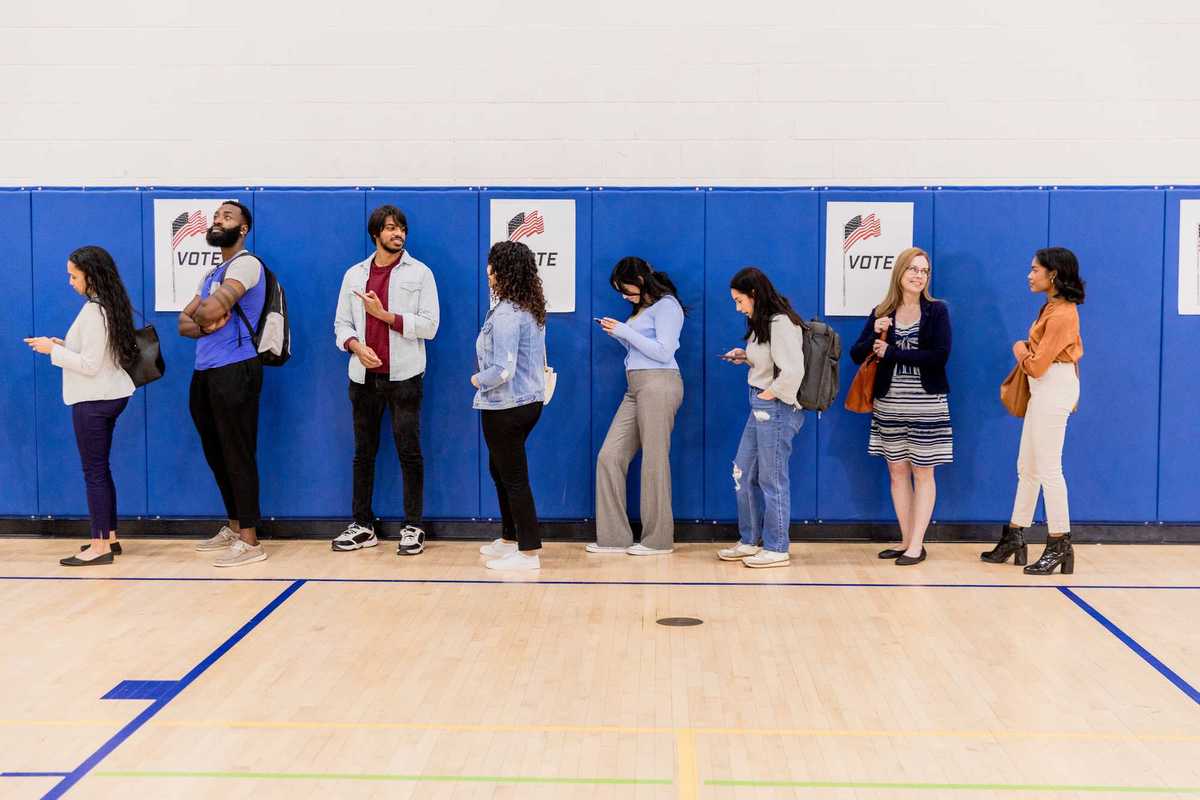
- Make your community voting experts. Turn your nonprofit into a centralized hub for all things voting. Devote your resources to demystifying the often hard-to-find information on the whens (election and primary dates), hows (early and absentee voting options), and wheres (polling places and ballot dropoff sites) of voting in your neck of the woods.
And that’s just the beginning! With roughly four months until the first handful of states head to the polls for their respective primaries and the 2022 midterms soon to follow, there’s no time like now for nonprofits to start mapping out the next 360-odd days of democracy maintenance and engaging their communities to ensure they are #VoteReady for the next election. And signing up for our Nonprofit VOTE newsletter is a great first step of the planning process.
So, by all means, enjoy your family gatherings, TV specials and any other year-end festivities that spark the joy you’ve absolutely earned. But just remember: Democracy doesn’t take a holiday just because you do.