

The Voter Participation Center (VPC) is a progressive, non-profit organization in the United States. It seeks to increase voter registration among Americans, including unmarried women, people of color and young people. The VPC Data Center has been created to provide Information and analysis from multiple sources on the social, economic and political lives of this fast-growing, increasingly powerful population.
Site Navigation
Search
Latest Stories
Join a growing community committed to civic renewal.
Subscribe to The Fulcrum and be part of the conversation.
Top Stories
Latest news

Read More

US President Donald Trump arrives onstage for a campaign rally in the Mitchell Center at the University of South Alabama on Oct. 2, 2026, in Mobile, Alabama.
(Anna Moneymaker/Getty Images/TCA)
Trump’s obsessions help bury GOP chances
Oct 10, 2026
Maine Sen. Susan Collins is facing one of the toughest reelection battles of her lifetime. And at Tuesday night’s debate, she was clearly on the defensive.
This race should not have been this competitive. Collins has held this seat for five terms. And while Maine has voted for the Democrat in every presidential election since 1992, it still has a fierce independent streak, and a healthy Republican base.
But this year is different. President Trump’s approval numbers are abysmal, his tariffs and his war in Iran have tanked our economy, and he seems focused on things that would actively turn voters off — like spending taxpayer dollars on propaganda ads, vanity construction projects, fighting with journalists, and punishing his enemies.
And all the while, he’s telling voters that their affordability concerns are a hoax. It’s hard to run on two more years of…this.
In Maine, Trump’s trade war with bordering Canada is a particular pain point, evidenced by how badly Collins tried to distance herself from the tariffs during the debate.
She boasted that she fought to keep a few important items off of Trump’s tariff list, including concrete, pulp, and road salt.
Her Democratic opponent, Troy Jackson, a longtime Maine legislator, delivered a response that should become a mantra for every Dem running this cycle:
It was a simple and straightforward acknowledgment that most Americans are struggling to pay their bills, put gas in their cars, put food on the table, and meanwhile Trump’s tariffs are making all of that harder. Collins saving the road salt doesn’t help with any of it.
But it’s more than road salt…
So much of what Trump and Republicans are offering in this 11th hour of desperation won’t solve Americans’ affordability crisis either.
Trump’s obsession with building monuments to himself won’t help a farmer in Iowa put diesel in his tractor. We can’t eat ballrooms.
Trump’s cheerleading for AI while the rest of the world panics about the power-hungry tech bros leading the charge won’t put money in the pocket of a single mom working three jobs in Trenton, New Jersey. We can’t eat data centers.
Trump’s endless war and its global economic destruction isn’t helping the North Carolina apple farmer who lost it all in Hurricane Helene. We can’t eat Iran strikes.
Trump’s fixation with punishing political enemies, and Republican lawmakers’ preening efforts to oblige him in Congress, won’t help the laid-off auto worker in Pontiac, Michigan. We can’t eat Jack Smith hearings.
Trump’s constant grifts, self-dealing, and his family’s efforts to line their own pockets through crypto and billion-dollar Pentagon contracts aren’t helping the family in Ames, Iowa struggling to pay their cancer treatment bills. We can’t eat corruption.
Trump’s attacks on journalists, threats to sue over coverage he doesn’t like, and attempts at turning the press into his personal Pravda won’t convince the soccer mom in Bakersfield, California that $5 a gallon gas is somehow affordable. We can’t eat censorship.
Trump’s obsession with baseless election fraud claims and threats to rig or militarize our elections won’t help the recent college grad who’s sent out 300 resumes but can’t get a job. We can’t eat paranoia.
Trump’s preoccupation with authoritarian strongmen like Russia’s Vladimir Putin, China’s Xi Jinping, and North Korea’s Kim Jong Un is a slap in the face of a Cuban refugee trying to make a life for his family in Miami. We can’t eat jealousy.
Running the country in service of one guy’s megalomania hasn’t made America great again, and it hasn’t made life better for Americans.
We can’t eat Trump.
S.E. Cupp is the host of "S.E. Cupp Unfiltered" on CNN.
Keep ReadingShow less
Recommended






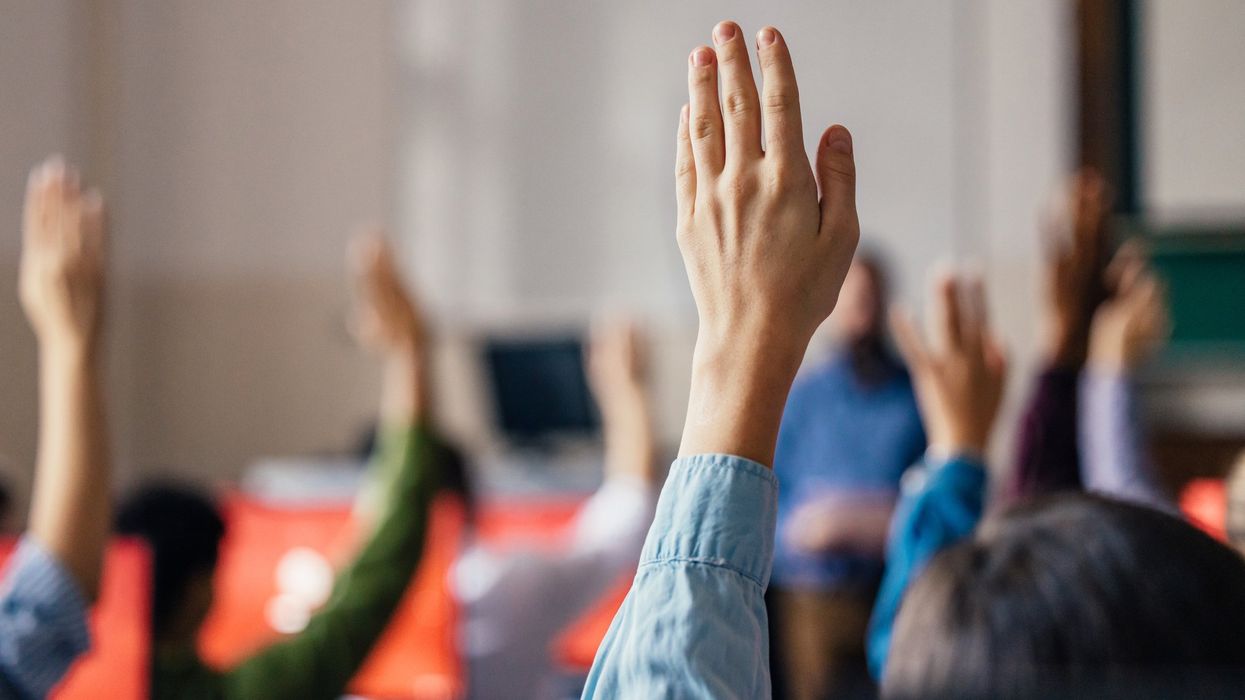
Schools teach civics all day through grading and discipline policies. When rules aren’t enforced consistently, students learn that institutions can’t be trusted.
Getty Images, FreshSplash
What Schools Teach When the Rules Stop Mattering
Oct 09, 2026
Long before Americans decide whether to trust the government, respect workplace expectations, or take responsibility within their communities, they spend more than a decade learning how institutions work. Institutional credibility is learned, and schools are one of the first places students experience whether rules are legitimate, predictable, fair, and meaningful.
While formal civics courses teach the branches of government, voting, rights, constitutional structures, and maybe even civil discourse, there is also a hidden civics curriculum taking place daily. These lessons are taught through the policies and practices of the school. Research on adolescent institutional trust describes adolescence as a period when young people develop beliefs about the fairness and legitimacy of institutions, with their experiences with authority playing a role in the trust they develop.
From a worthy desire to make grading fairer and keep struggling students from giving up, schools have increasingly implemented practices intended to make academic success more accessible. One example is “equitable grading.” A 2025 Fordham Institute report, based on a nationally representative survey of public school teachers conducted in partnership with the RAND Corporation, found that about half of teachers said their school or district had adopted at least one such policy. Among the most common were minimum grades of 50 for missing work, no penalties for late assignments, and unlimited retakes.
During my 18 years as an educator, I saw this transition and the contradiction these policies can create firsthand. Students were given deadlines, but teachers had to accept work weeks later without reducing scores. Students heard that assignments must be completed, but received substantial credit for work they never did. In the same survey, 81 percent of teachers said giving partial credit for work never submitted was harmful to student engagement, while 56 percent said the same about accepting late work without penalty.
The disconnect extends beyond grades. In a 2019 Fordham Institute report based on a nationally representative RAND Corporation survey of more than 1,200 teachers, most teachers reported that discipline was inconsistent or inadequate in their schools. The impact on students’ institutional perceptions becomes clear in Katrina Morrison’s Journal of Classroom Interaction study where she found that students perceived school rules as unfair when adults applied them inconsistently.
Schools may communicate clear expectations for attendance, behavior, and academic responsibility, but when students repeatedly experience exceptions, inconsistent consequences, or policies that remove accountability, they learn that what an institution says and what it actually expects do not always align.
These experiences teach something about how institutions work, and young people are extraordinarily good at discovering the difference between what an institution says and what it actually does. Over time, students can begin to see rules as opening bids, responsibility as transferable, and official expectations as different from actual expectations. Students do not consciously decide these beliefs. They develop them through repeated experience.
Those lessons do not disappear at graduation. They can shape the habits young adults carry into workplaces, leadership, and civic life. The quiet harm of policies created with good intentions may reveal itself when young adults enter institutions that expect them to meet deadlines, accept consequences, follow processes, and take ownership without being rescued from every mistake.
What happens when people spend their formative years learning that institutional expectations frequently are not real? The risk is that they come to expect exceptions instead of processes, see responsibility as something imposed externally, and become cynical of institutions.
The connection to civic life is not simply rhetorical. A longitudinal Child Development study of 515 Black and Latino middle school students found that an equitable school climate predicted stronger civic attitudes one year later. School experiences are part of civic development. If we want citizens who can trust legitimate institutions, accept responsibility, navigate disagreement, and participate constructively in democratic life, schools must model accountability that is both credible and humane.
One of the mantras repeated in schools about improving student outcomes is “build relationships.” It is good advice. Relationships matter. The problem comes when building relationships is treated as incompatible with holding students accountable. In the schools where I worked during the final eight years of my career, I often saw rules bent and expectations lowered in an effort to preserve relationships with students. But removing accountability also removes opportunities for growth. Accountability done well is not the opposite of relationship. It is part of it. Accountability done well shows love because it builds stronger people.
The answer is not harsher schools. An overly punitive environment risks teaching equally damaging civic lessons: authority does not have to explain itself; power matters more than fairness; mistakes permanently define people; and compliance matters more than growth. Schools do not have to choose between accountability and compassion.
We can implement a better model of support: high expectations paired with high support, consistent and restorative accountability, and meaningful opportunities to recover from mistakes without erasing responsibility for them.
Research supports that pairing. A study of more than 87,000 Virginia middle and high school students found that both disciplinary structure and student support were associated with stronger student engagement, higher course grades, and higher educational aspirations.
That model begins with clarity of expectations and consistency in outcomes when expectations are and are not met, based on systems rather than emotion or pressure to produce favorable data outcomes. It pairs accountability with restoration, providing consequences while also giving students the opportunity to develop new patterns of behavior and the skills to move forward. And it provides support that does not remove ownership, including tutoring, counseling, and credit recovery that still requires students to demonstrate learning.
Democracy requires citizens who can live within shared rules, take responsibility for personal actions, distinguish between disagreement and injustice, and both trust credible institutions and hold institutions accountable when they fail to demonstrate credibility.
Those skills are not learned only in government class. They are practiced in hallways, classrooms, athletic teams, lunchrooms, discipline offices, deadlines, group projects, and conversations with adults.
If we want citizens who believe responsibility matters and institutions can be trusted, the institutions children encounter first must demonstrate that expectations are real, accountability can be fair, and mistakes can be repaired without being erased.
Keep ReadingShow less
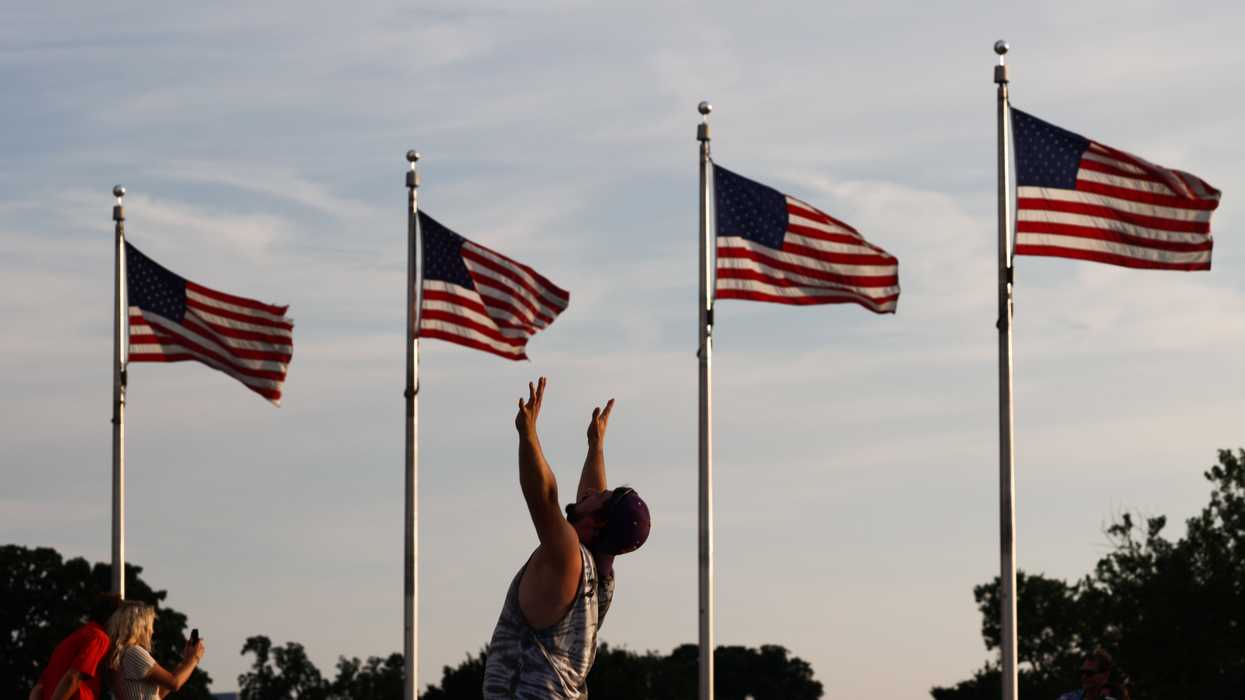
American flags fly near Washington Monument.
Jakub Porzycki/NurPhoto via Getty Images
America’s Democracy Needs a Renewal Movement
Oct 09, 2026
Every election now feels existential.
That's the word NYU law professor Richard Pildes used in a recent New York Times interview with Sarah Isgur: many Americans on both sides of the political spectrum are convinced the country will never be the same if the other side wins. He points to a striking pattern. Since 2000, control of the House, the Senate, or the White House has changed hands in every election but two. Razor-thin margins, enormous stakes, and fading trust in institutions add up to real dread.
That fear isn't just hyperbole, or parties stoking anxiety to raise money and drive turnout. The past few cycles have given people real reasons for unease: January 6, years of election deniers making their voices the loudest in the room, and last year's National Guard deployments and ICE raids in American cities. In Georgia, where I live, voters watched federal agents raid the Fulton County election offices in January. All of it chips away at voters' trust in the foundation of a free and fair nation.
The people who run our elections understand that dread, and they're taking it seriously. Last month, South Carolina election officials gathered in Charleston to rehearse how they would respond to Election Day disruptions.
I understand the dread, too. We have real scenarios to prepare for, and civil society is preparing for them alongside election officials. But the loudest voices shouldn't set the tone for November. Arguing against the dread isn't enough. We can outnumber it with something joyful and celebratory — an alternative to election anxiety.
I've seen what that looks like. On an early morning this May, I stood at Loomis Plaza in Atlanta's Grant Park and watched something I wish every anxious American could see. A young family walked together toward the polling place. A veteran smiled and waved as he left the building. People passed by, chatting, going about their business. Nobody asked anyone who they were voting for. Everyone showed up for something bigger than their individual politics, taking part in a democratic act that is both ordinary and remarkable — quietly, joyfully, trusting that their votes would count.
What I was watching was Project HALO, an effort led by The Chamberlain Network. HALO brings together veterans, military families, faith leaders, legal professionals, and local volunteers to create a welcoming, celebratory, nonpartisan presence around elections, so every voter feels welcome casting a ballot. Our partners span the political spectrum and come from every corner of civil society. We disagree about plenty, but we agree on this. We piloted the model this spring in Georgia, Ohio, and Pennsylvania, and this fall we are working in five states: Georgia, Michigan, North Carolina, Ohio, and Pennsylvania.
Project HALO is still recruiting volunteers in all five states. The need is greatest in our priority counties — in metro Atlanta, that means Cobb and DeKalb. Anyone can sign up at halovote.org/volunteer. Volunteers will help staff community gatherings just outside the legal buffer around polling places, where the mood is closer to a block party than a standoff.
But HALO can't be everywhere, and combating existential dread isn't a job a handful of organizations can do alone. It will take whole communities stepping up, and there are plenty of ways to help.
We need poll workers. Counties across the country are recruiting for the fall, and their deadlines are coming up fast. Poll workers are the quiet backbone of what I saw in Grant Park: neighbors checking in neighbors, answering questions, handling every ballot with care. Nothing builds trust in an election like seeing up close how carefully it is run. Anyone who can give a day should contact their county election office soon.
Not everyone can give a full day, but everyone can play a role. Faith leaders can preach calm and neighborliness in the weeks ahead and open their doors for voter information nights. Legal professionals can be a steady, knowledgeable resource for volunteers and voters with questions about the rules. Local businesses and civic clubs can host their own community gatherings. All of us can walk a neighbor through a voting plan, offer a ride, or check on the older folks down the street. And when a rumor circulates in a group chat or on social media, any of us can point people to the county election office instead of passing it along.
Election Day can be something to look forward to. The line outside a polling place can be the friendliest spot in town. The people checking in voters can be neighbors from church or the ballfield. Every voter, whoever they're voting for, can be welcomed and thanked for showing up. That is what self-government looks like when we do it together, and it is within reach.
When I picture November, I don't see the scenes from the worst-case forecasts. I see Loomis Plaza. I see that veteran waving on his way out the door, as he'd just done the most ordinary thing in the world. Because he had. Project HALO is doing its part. It will take all of us to do the rest. The anxiety is real, but so is a community that shows up for one another, and together we can overcome it. Early voting is already underway in some states, and in Georgia it begins October 12. Come stand with us at halovote.org/volunteer.
Christopher Purdy is the founder and CEO of The Chamberlain Network, a national nonprofit that mobilizes veterans for civic engagement. He is an Army National Guard veteran who deployed to Iraq in 2011.
Keep ReadingShow less
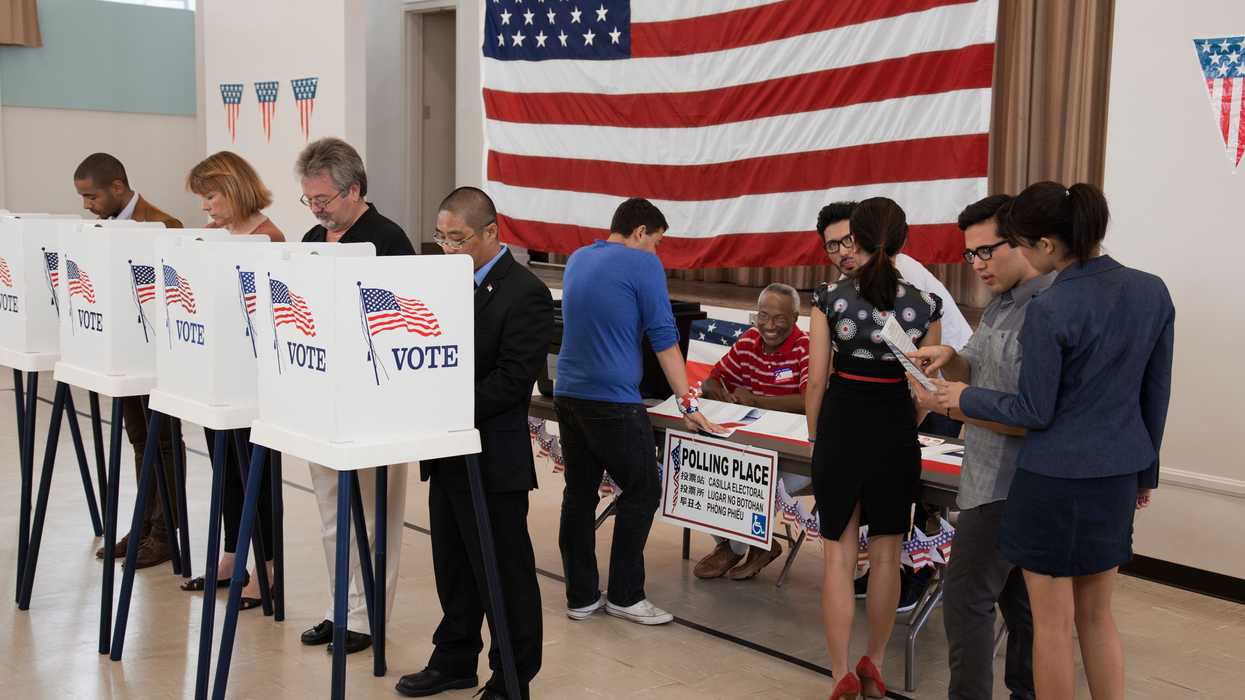
People voting
Hill Street Studios/Getty Images
Catch a Wave
Oct 09, 2026
Millions of Americans no longer fully trust our elections, and the mid-term elections are on Tuesday, November 3rd. Can we fix this? We can make a meaningful impact if enough of us choose to join. After this election, we can keep building trust for all the right reasons.
While talking with faith leaders about Faith in America events this fall, I heard concern that we lack sufficient time to make this as fabulous and widespread as it needs to be. We have a vision of massive engagement to help shift us toward a culture of faith in our elections and trust in each other.
I felt regret that we didn’t have more time, and then I remembered: millennial celebrations were an extravagant worldwide affair that took well over a year to plan. The celebrations were spectacular, and watching them unfold worldwide as the sun moved around the globe reminded us that we are all on this planet together. But a year of planning isn't the only way to organize a huge event. In my eyes, even more remarkable were the worldwide anti-war protests that happened on Feb. 15th 2003, before the Iraq War started. Yes, I could be biased. I participated in organizing these protests as a co-founder of MoveOn.org.
This was a fire drill– we had a war to stop! What we didn’t fully anticipate was the snowball effect that resulted in the protests not only taking off nationally, but also wrapping around the world! All around this country and around the world, individuals and organizations took on the challenge. Massive numbers of people showed up to stand for peace. Watching these protests from around this country and around the world was stunning. The NYT reported the following day:
"Perhaps now there are two superpowers, the USA and world public Opinion”
It was a head-turning example of how people can step up in a time of need. It still breaks my heart that we failed to stop that war. Nonetheless, those February 2003 protests had valuable impacts. They show that a pressing need, coupled with doable, meaningful action, can mobilize a massive number of people. It builds community. It reminds us that together, we can be seen and make an impact.
So why now? Most people recognize that the fairness and reliability of our elections will be questioned. Concerns about the trustworthiness of our upcoming elections have become increasingly present in our media and personal conversations. Yet an overwhelming majority of people want “Free, Fair and Trustworthy” elections. Or, said another way, “Voting should be easy. Cheating should be hard.” This is the first principle of Braver Angels' Trustworthy Elections Report. We have a deep agreement and a call to action. Local communities could gather en masse to build confidence and pride in their election processes.
Yes, time is short. People are too busy. Many people feel powerless. Still, meaningful impact is possible. So why not try? Whatever momentum we can gather this year can then be leveraged to do even more next year.
The beauty of this work is that even if we don’t create the broad cultural shift we want today, each conversation and every community that gathers brings us a little closer to the connected, more trustworthy culture most everyone desires. So, if you are part of a congregation, hold a Faith in America event. If you are part of a civic group or an individual who wants to build trust in our elections, go to TrustworthyElections.US. Consider what you would like to do to join a wave of civic engagement that builds local and national trust in elections and in each other.
Joan Blades is the co-founder of Living Room Conversations and MomsRising, and an organizer of the Trust in Elections initiative for the 2026 cycle.
Keep ReadingShow less
Load More
The President Invited Iran to Bomb My Home