

Skip to content
Search

Latest Stories

Follow Us:
Top Stories

Lawsuit seeks time for mailed ballots to arrive in Pa.

Absentee ballots

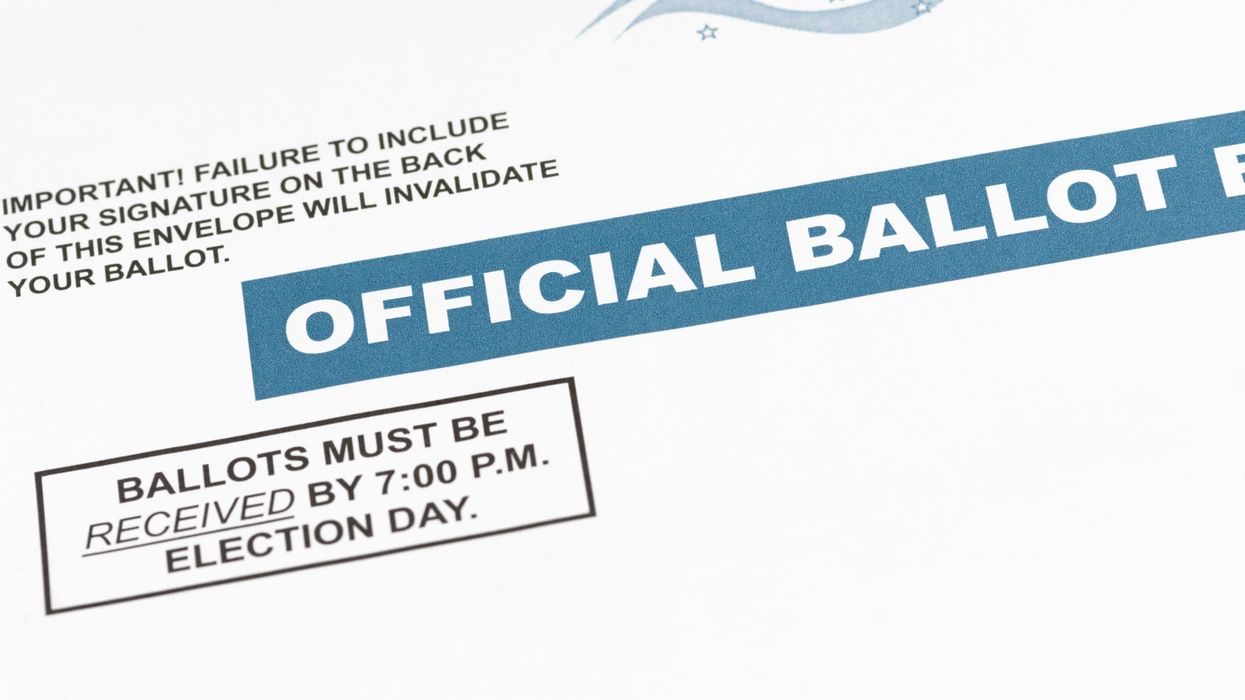
Language similar to what's on this California envelope governs mailed ballots in Pennsylvania as well.

SKrow/Getty Images

Disability and seniors' rights groups are suing Pennsylvania to count absentee ballots that are postmarked on time but get delayed in the mail for as long as a week.

The lawsuit asks the state Supreme Court to declare the current rules in violation of the state constitution in light of the coronavirus pandemic. Currently, mailed ballots only get counted if they arrive at local election offices by the time the polls close.

Filed late Monday, the lawsuit is the latest in a wave of litigation hoping the public health crisis will provide the necessary leverage to ease election regulations in battleground states.


The lawsuit argues the surge of Pennsylvanians taking advantage of the state's no-excuse absentee voting rules this spring could be punished through no fault of their own. The inevitable backlog in fulfilling so many ballot applications will be compounded by slowed deliveries to the voters and back again, since the Postal Service has been hobbled by the Covid-19 outbreak.

More than 600,000 requests for mailed ballots had been made as of Thursday, seven times as many as voted absentee in the 2016 primaries, when both parties' presidential nominations were still hotly contested.

In Allegheny County, where Pittsburgh is located, officials have so far processed only 20,000 of the 71,000 applications received, the lawsuit states.

The plaintiffs say their aim is to avoid a repeat of Wisconsin. That problem-plagued primary three weeks ago has prompted an investigation by the Postal Service into reports of requested absentee ballots never getting delivered or arriving at voters' homes after Election Day. (The Supreme Court refused to extend the deadline for absentee voting despite the pandemic.)

Disability Rights Pennsylvania and SeniorLAW Center are among the plaintiffs in the new suit against Democratic Secretary of the State Kathy Boockvar.

Last week, the state's Alliance for Retired Americans filed a similar lawsuit. It also asked a state court to make Boockvar provide a postage-paid return envelope with every absentee ballot and permit voters to have help in completing their forms.

The Democratic presidential race is effectively over, and there's not much competition for the congressional and state legislative nominations in Pennsylavnia's primary, now delayed six weeks to June 2. But the state's 20 electoral votes will be one of the most hotly contested prizes in the fall. Last time President Trump carried the state by 44,000 votes, or 7 tenths of a point, breaking a six-election winning streak for the Democrats. Polling currently shows former Vice President Joe Biden with a narrow edge.



Read More

People voting at voting booths.

A little-known interstate compact could change how the U.S. elects presidents by 2028, replacing the Electoral College with the national popular vote.

Getty Images, VIEW press

The Quiet Campaign That Could Rewrite the 2028 Election

Most Americans are unaware, but a quiet campaign in states across the country is moving toward one of the biggest changes in presidential elections since the nation was founded.

A movement called the National Popular Vote Interstate Compact (NPVIC) is happening mostly out of public view and could soon change how the United States picks its president, possibly as early as 2028.

Keep ReadingShow less
An illustration of a paper that says "Ranked-Choice" with options listed below.
Image generated by IVN staff.

Why Mathematicians Love Ranked Choice Voting

The Institute for Mathematics and Democracy (IMD) has released what may be the most comprehensive empirical study of ranked choice voting ever conducted. The 66-page report analyzes nearly 4,000 real-world ranked ballot elections, including some 2,000 political elections, and more than 60 million simulated ones to test how different voting methods perform.

The study’s conclusion is clear. Ranked choice voting methods outperform traditional first-past-the-post elections on nearly every measure of democratic fairness.

Keep ReadingShow less
Three people looking at a gerrymandered map, with an hourglass in the foreground.
Image generated by IVN staff.

Missouri’s Gerrymander Faces a Citizen Veto, but State Officials Aren't Taking 'No' for an Answer

People Not Politicians (PNP) submitted over 305,000 signatures last week to freeze a congressional gerrymander passed by the Missouri Legislature in September. However, state officials are doing everything they can to pretend this citizen revolt isn’t happening.

“The citizens of Missouri have spoken loudly and clearly: they deserve fair maps, not partisan manipulation,” said PNP Executive Director Richard von Glahn.

Keep ReadingShow less
California’s Governor Race Is a Democratic Nightmare, But There’s One Easy Fix
Photo by Tim Mossholder on Unsplash.

California’s Governor Race Is a Democratic Nightmare, But There’s One Easy Fix

A new Emerson College poll of California’s 2026 governor’s race confirms what many election observers have suspected. California is entering a high stakes primary season with no clear front runners, a crowded field, and an election system where the outcome often depends less on voter preference and more on mathematical luck.

Emerson poll

Keep ReadingShow less