

Skip to content
Search

Latest Stories

Follow Us:
Top Stories

Not from here? Then don't send political donations, Arizona lawmaker says

Arizona filled with money
iQoncept/Getty Images

While more and more states and localities are moving to ban foreigners from influencing their elections, one Arizona lawmaker wants to take it a step further.

Republican state Rep. Bob Thorpe is not as concerned about people from other countries as he is with people from other states. So last week he proposed legislation banning contributions to legislative and ballot initiative campaigns from anybody outside Arizona.

A similar measure in South Dakota has been struck down as an unconstitutional restriction on speech, while a version in Alaska has been tied up in litigation for years.


Thorpe and other Republicans typically extend their hands-off approaches to governmental regulation to include restrictions on campaign financing. But the Tea Party conservative says he's now more interested in preventing wealthy people from other parts of the country (particularly the liberal coastal elites) from influencing election outcomes that would only affect the people of Arizona.

The Legislature is only narrowly in Republican hands, and prospects for the bill getting through before this year's session concludes at the end of April are unclear. In addition,

Tom Collins, the executive director of the state's nonpartisan campaign finance regulatory agency, says the proposal is probably unconstitutional.

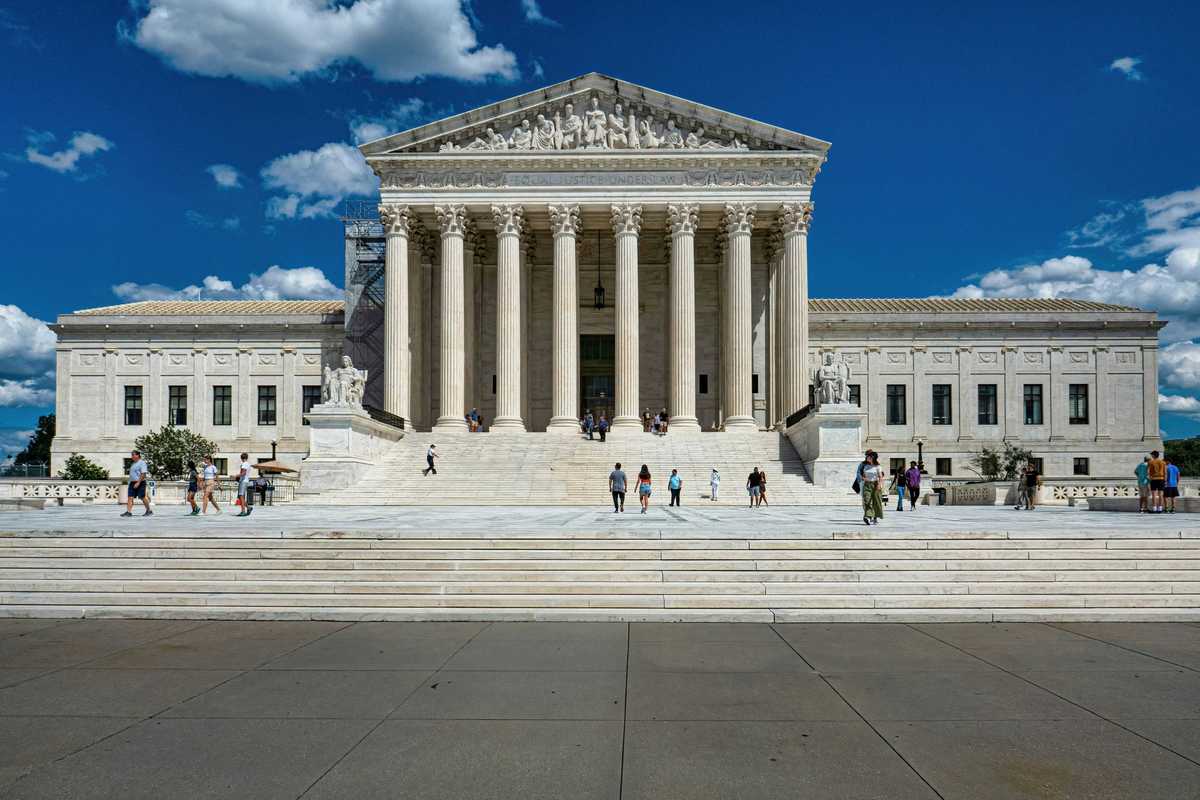
Thorpe conceded that point to the Arizona Daily Star. But he said he's pushing the measure anyway in hope of eventually making the Supreme Court decide the issue.

Last spring a federal judge said the First Amendment would be violated by implementing a ballot measure, approved by South Dakotans with 56 percent support in 2018, calling for a complete ban on out-of-state campaign contributions. The state has not yet filed an appeal.

Meanwhile, the Supreme Court in November sent back to the 9th U.S. Circuit Court of Appeals a challenge to an array of campaign finance restrictions Alaska imposed in the 1990s, including a cap on how much candidates for governor or the Legislature may receive from outside the state. Back in 1999, however, the Alaska Supreme Court ruled this limitation did not violate the First Amendment.

The bill by Thorpe, who is barred by state term limits from running to represent the Flagstaff area again this November, says any person or corporation from another state "shall not make a contribution to any committee located in this state or any person or candidate for office in this state." The bill does not mention independent expenditures, so presumably super PACs could still spend on advertising to influence Arizona elections.

In explaining his rationale for the measure, he pointed to the $24 million spent in favor of a 2018 ballot measure that would have required the state to boost its renewable energy usage. Much of the money was spent by the political action committee started by billionaire Democratic presidential candidate Tom Steyer. In the end, though, the ballot initiative was rejected, in part thanks to a $40 million campaign by Pinnacle West Capital, headquartered in Phoenix.

Read More

A person signing a piece of paper with other people around them.

Javon Jackson, center, was able to register to vote following passage of a 2019 Nevada law that restored voting rights to formerly incarcerated individuals.

The Nation Is Missing Millions of Voters Due to Lack of Rights for Former Felons

If you gathered every American with a prison record into one contiguous territory and admitted it to the union, you would create the 12th-largest state. It would be home to at least 7 million to 8 million people and hold a dozen votes in the Electoral College.

In a close presidential race, this hypothetical state of the formerly incarcerated could decide who wins the White House.

Keep ReadingShow less
People standing at voting booths.

The proposed SAVE Act and MEGA Act would require proof of citizenship to register to vote, risking the disenfranchisement of millions of eligible Americans.

Getty Images, EvgeniyShkolenko

The SAVE Act is a Solution in Search of A Problem

The federal government seems to be barreling toward a federal election power grab. Trump's State of the Union address called for the Senate to push through the SAVE Act, which has already passed the House, in the name of so-called "election integrity." And the SAVE Act isn’t the only such bill. Like the SAVE Act, the Make Elections Great Again (MEGA) Act—introduced in the House—would require voters to provide a document outlined in the Act that allegedly proves their U.S. citizenship. We’ve been down this road before in Texas, and spoiler alert: it was unworkable.

Both the SAVE and MEGA Acts would disenfranchise millions of eligible U.S. citizens without making our federal elections more secure. They seek to roll out a faulty federal voter registration system, despite the existing separate registration and voting process for state and local elections. And these Acts target a minuscule “problem”—but would unleash mass voter purges and confusion.

Keep ReadingShow less
Stickers with the words "I Voted Today."

Virginia is on its way to be the 19th jurisdiction to adopt the National Popular Vote Interstate Compact, bringing the U.S. closer to electing presidents by the national popular vote.

Getty Images, EyeWolf

Virginia On The Path to Join the National Popular Vote Interstate Compact

NPVIC is an agreement among U.S. states and the District of Columbia to award all their electoral votes to the presidential ticket that wins the overall popular vote in all 50 states and the District of Columbia. It is considered a pragmatic, voluntary state-based initiative because it aims to ensure the winner of the national popular vote wins the presidency without requiring a constitutional amendment, operating instead within the existing Electoral College framework by utilizing states' constitutional authority to appoint electors. If enough states join the NPVIC to reach a total of 270 electoral votes, the United States will effectively shift from a winner-take-all (WTA) regime to a national popular vote system for electing the President.

With Virginia's adoption, the National Popular Vote Interstate Compact will be adopted by eighteen states and the District of Columbia, collectively holding 222 electoral votes. The compact requires 270 electoral votes (a majority of the 538 total) to take effect. It currently needs forty-eight more electoral votes to become active.

Keep ReadingShow less
With the focus on the voting posters, the people in the background of the photo sign up to vote.

Should the U.S. nationalize elections? A constitutional analysis of federalism, the Elections Clause, and the risks of centralized control over voting systems.

Getty Images, SDI Productions

Why Nationalizing Elections Threatens America’s Federalist Design

The Federalism Question: Why Nationalizing Elections Deserves Skepticism

The renewed push to nationalize American elections, presented as a necessary reform to ensure uniformity and fairness, deserves the same skepticism our founders directed toward concentrated federal power. The proposal, though well-intentioned, misunderstands both the constitutional architecture of our republic and the practical wisdom in decentralized governance.

The Constitutional Framework Matters

The Constitution grants states explicit authority over the "Times, Places and Manner" of holding elections, with Congress retaining only the power to "make or alter such Regulations." This was not an oversight by the framers; it was intentional design. The Tenth Amendment reinforces this principle: powers not delegated to the federal government remain with the states and the people. Advocates for nationalization often cite the Elections Clause as justification, but constitutional permission is not constitutional wisdom.

Keep ReadingShow less