

Skip to content
Search

Latest Stories

Follow Us:
Top Stories

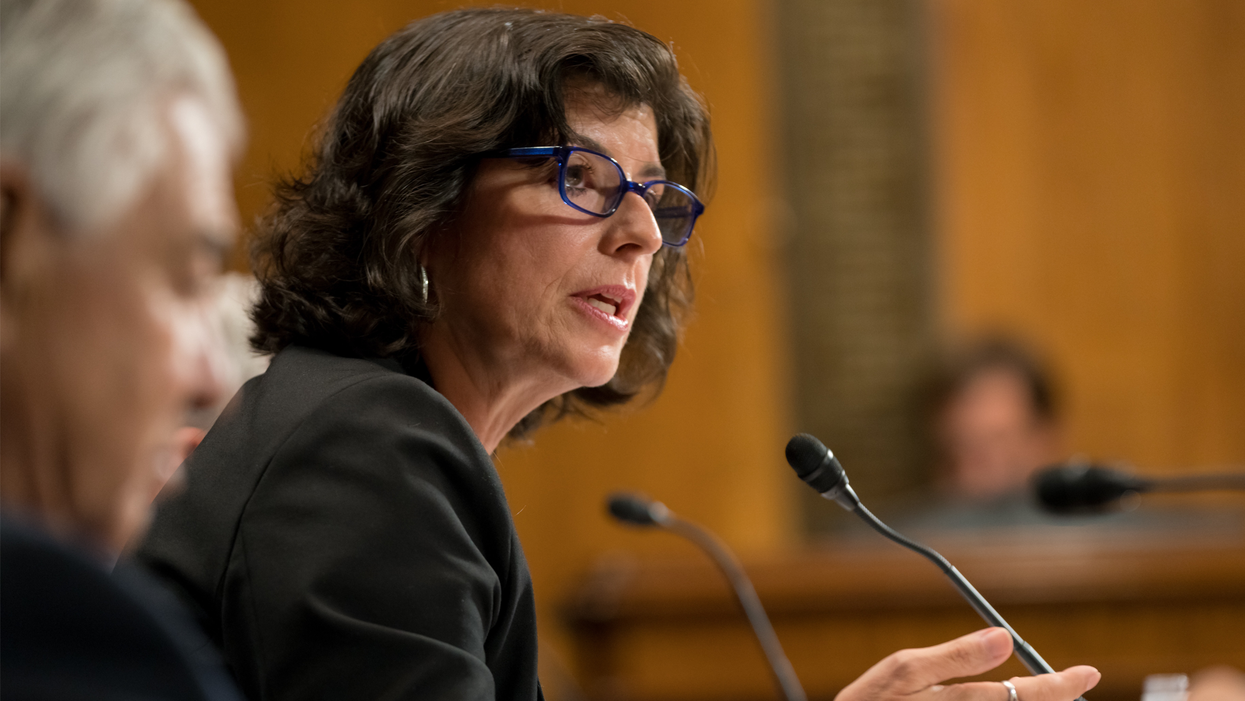
Meet the reformer: Danielle Brian, a dean of the watchdogs

Danielle Brian of the Project on Government Oversight

Danielle Brian is executive director at the Project On Government Oversight.

(Danielle Brian)

Danielle Brian is executive director of the Project On Government Oversight, a nonpartisan independent watchdog that investigates corruption, misconduct and conflicts of interest in the federal government. A South Florida native and National FOIA Hall of Fame member, Brian has testified before Congress more than 40 times in the 27 years she's been leading the organization, which goes by the memorable acronym POGO. She returned to the group and took the reins in 1993 after interning there a decade earlier. Her answers have been lightly edited for clarity and length.

What's the tweet-length description of your organization?

@POGOBlog is a nonpartisan watchdog that fights to fix the federal government. We investigate corruption, abuse of power and when the government silences whistleblowers. We champion reforms to achieve a more effective, ethical and accountable federal government that safeguards constitutional principles.


Describe your very first civic engagement.

During my internship for my member of Congress, I persuaded him to change a vote. I thought it was because of the power of my arguments but learned later from the legislative director that it was the passion with which I made my case that won him over.

What was your biggest professional triumph?

Working with whistleblowers, we helped to expose a massive fraud against taxpayers by the oil and gas industry. When we sued the 15 biggest oil companies, they fought back hard and got their friends in Congress to go after us for them. After years of battles that might have destroyed the organization, we not only emerged stronger, but we forced the companies to pay nearly $500 million back to the taxpayers, helped break up the Minerals Management Service into three separate agencies at the Interior Department and caused the regulations to change so that companies couldn't commit that fraud again in the future.

And your most disappointing setback?

Not getting intelligence community whistleblower protections into the Whistleblower Protection Enhancement Act when we helped get it passed in 2012. (But maybe now we will!)

How does your identity influence the way you go about your work?

Being an independent, I'm liberated from feeling the pain of partisan hypocrisy.

What's the best advice you've ever been given?

When it comes to working in Washington, it's a combination of "Put not your trust in princes" and Stephen Stills' "Love the one you're with." I have learned to work with a person I agree with on an issue, but I don't assume we will agree on anything else.

Create a new flavor for Ben & Jerry's.

"Exposing Cocoa-ruption": nuts partially covered in chocolate in a swirling base of strawberry and blueberry.

What's your favorite political movie or TV show?

I can't decide between West Wing and House of Cards. It depends on my mood.

What's the last thing you do on your phone at night?

Check to see if either of my adult kids or my mom has texted.

What is your deepest, darkest secret?

I worked for Geraldo Rivera!

Read More

After the Ceasefire, the Violence Continues – and Cries for New Words

An Israeli army vehicle moves on the Israeli side, near the border with the Gaza Strip on November 18, 2025 in Southern Israel, Israel.

(Photo by Amir Levy/Getty Images)

After the Ceasefire, the Violence Continues – and Cries for New Words

Since October 10, 2025, the day when the US-brokered ceasefire between Israel and Hamas was announced, Israel has killed at least 401 civilians, including at least 148 children. This has led Palestinian scholar Saree Makdisi to decry a “continuing genocide, albeit one that has shifted gears and has—for now—moved into the slow lane. Rather than hundreds at a time, it is killing by twos and threes” or by twenties and thirties as on November 19 and November 23 – “an obscenity that has coalesced into a new normal.” The Guardian columnist Nesrine Malik describes the post-ceasefire period as nothing more than a “reducefire,” quoting the warning issued by Amnesty International’s secretary general Agnès Callamard that the ”world must not be fooled” into believing that Israel’s genocide is over.

A visual analysis of satellite images conducted by the BBC has established that since the declared ceasefire, “the destruction of buildings in Gaza by the Israeli military has been continuing on a huge scale,” entire neighborhoods “levelled” through “demolitions,” including large swaths of farmland and orchards. The Guardian reported already in March of 2024, that satellite imagery proved the “destruction of about 38-48% of tree cover and farmland” and 23% of Gaza’s greenhouses “completely destroyed.” Writing about the “colossal violence” Israel has wrought on Gaza, Palestinian legal scholar Rabea Eghbariah lists “several variations” on the term “genocide” which researchers found the need to introduce, such as “urbicide” (the systematic destruction of cities), “domicide” (systematic destruction of housing), “sociocide,” “politicide,” and “memoricide.” Others have added the concepts “ecocide,” “scholasticide” (the systematic destruction of Gaza’s schools, universities, libraries), and “medicide” (the deliberate attacks on all aspects of Gaza’s healthcare with the intent to “wipe out” all medical care). It is only the combination of all these “-cides,” all amounting to massive war crimes, that adequately manages to describe the Palestinian condition. Constantine Zurayk introduced the term “Nakba” (“catastrophe” in Arabic) in 1948 to name the unparalleled “magnitude and ramifications of the Zionist conquest of Palestine” and its historical “rupture.” When Eghbariah argues for “Nakba” as a “new legal concept,” he underlines, however, that to understand its magnitude, one needs to go back to the 1917 Balfour Declaration, in which the British colonial power promised “a national home for the Jewish people” in Palestine, even though just 6 % of its population were Jewish. From Nakba as the “constitutive violence of 1948,” we need today to conceptualize “Nakba as a structure,” an “overarching frame.”

Keep ReadingShow less
Ukraine, Russia, and the Dangerous Metaphor of Holding the Cards
a hand holding a deck of cards in front of a christmas tree
Photo by Luca Volpe on Unsplash

Ukraine, Russia, and the Dangerous Metaphor of Holding the Cards

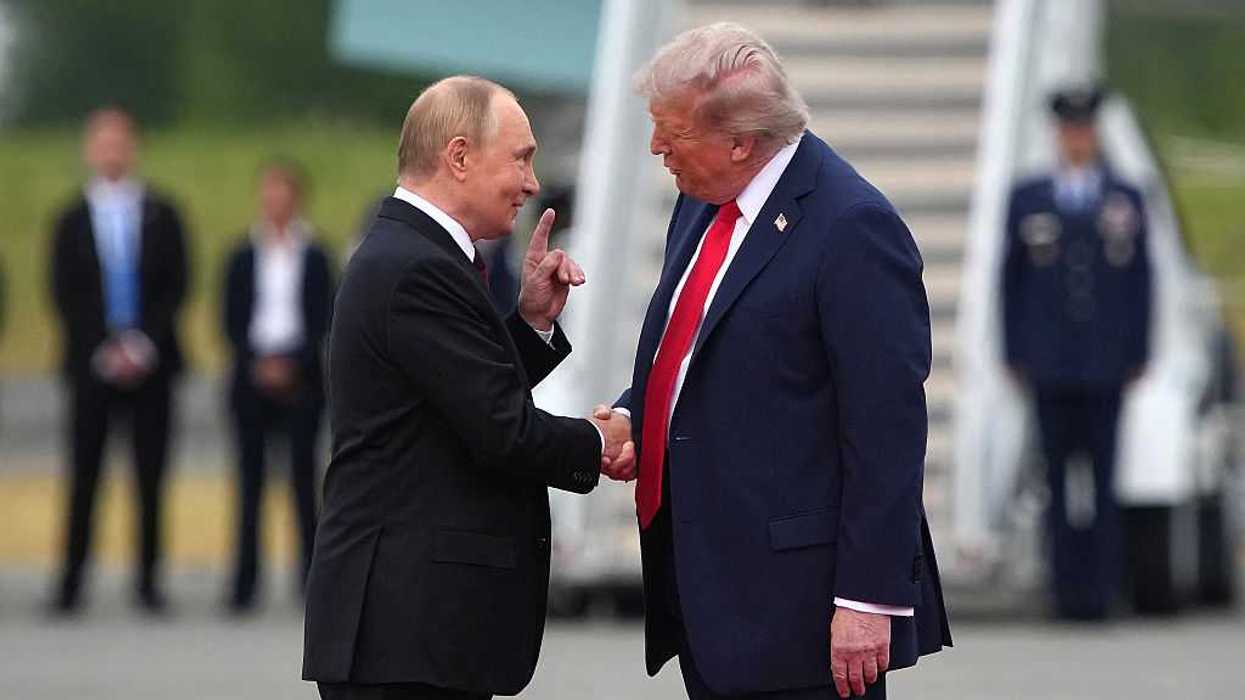
Donald Trump has repeatedly used the phrase “holding the cards” during his tenure as President to signal that he, or sometimes an opponent, has the upper hand. The metaphor projects bravado, leverage, and the inevitability of success or failure, depending on who claims control.

Unfortunately, Trump’s repeated invocation of “holding the cards” embodies a worldview where leverage, bluff, and dominance matter more than duty, morality, or responsibility. In contrast, leadership grounded in duty emphasizes ethical obligations to allies, citizens, and democratic principles—elements strikingly absent from this metaphor.

Keep ReadingShow less
Beyond Apologies: Corporate Contempt and the Call for Real Accountability
campbells chicken noodle soup can

Beyond Apologies: Corporate Contempt and the Call for Real Accountability

Most customers carry a particular image of Campbell's Soup: the red-and-white label stacked on a pantry shelf, a touch of nostalgia, and the promise of a dependable bargain. It's food for snow days, tight budgets, and the middle of the week. For generations, the brand has positioned itself as a companion to working families, offering "good food" for everyday people. The company cultivated that trust so thoroughly that it became almost cliché.

Campbell's episode, now the subject of national headlines and an ongoing high-profile legal complaint, is troubling not only for its blunt language but for what it reveals about the hidden injuries that erode the social contract linking institutions to citizens, workers to workplaces, and brands to buyers. If the response ends with the usual PR maneuvers—rapid firings and the well-rehearsed "this does not reflect our values" statement. Then both the lesson and the opportunity for genuine reform by a company or individual are lost. To grasp what this controversy means for the broader corporate landscape, we first have to examine how leadership reveals its actual beliefs.

Keep ReadingShow less