Skip to content
Search

Latest Stories

Follow Us:
Top Stories

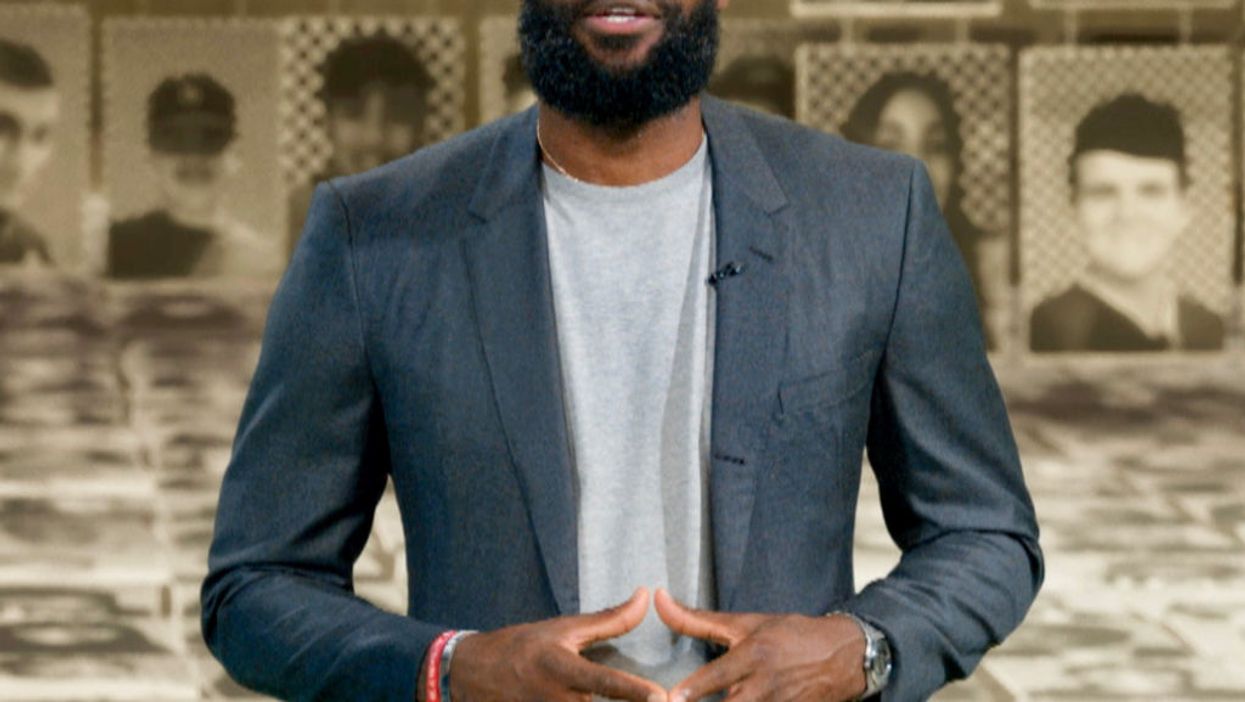
LeBron's group donates $100,000 to pay off Florida felons' fees

Lebron James, felons' voting rights

More Than a Vote, created by LeBron James and other basketball stars, is giving $100,000 to help ex-felons in Florida pay off their fees and fines so they can have their voting rights restored.

Getty Images

Basketball superstar LeBron James' new voting rights group is donating $100,000 to help pay fines and fees for ex-felons in Florida so they can register and vote.

More Than a Vote was founded in June by the Los Angeles Lakers' small forward and other current and past basketball stars including: former NBA player Jalen Rose; Sklyar Diggins-Smith of the WNBA; and young NBA phenom Trae Young.


In 2018, voters in Florida overwhelmingly approved a ballot initiative restoring voting rights to convicted felons who had served their terms. But the GOP-controlled Legislature passed a bill, signed into law by Republican Gov. Ron DeSantis, that required ex-felons to pay all of their outstanding fines and fees before being allowed to vote. They argued that paying these fees and fines constituted completion of their sentences.

Opponents said requiring people to pay fees and fines was equivalent to the poll taxes that had been used to block Blacks from voting in the South after the Civil War.

Udonis Haslem, a former teammate of James' and a member of More Than a Vote, said the fees and fines are "a barrier we all have to come together and break down together" in a video posted on the More Than a Vote Facebook page.

The group is calling on others to donate to pay the fees and fines through the Florida Rights Restoration Coalition.

A federal district judge in May struck down the law requiring fees and fines be paid before voting rights would be restored. The state appealed and earlier this month the 11th Circuit Court of Appeals granted a request from DeSantis to put the trial judge's decision on hold until the full appeals court could hear arguments on Aug. 18.

An estimated 1.4 million Floridians could be eligible to have their voting rights restored. There are no hard numbers, but ex-felons in Florida owe upward of hundreds of millions dollars in fines and fees.

In announcing the donation, a news release from More Than a Vote indicated that more announcements about the group's partnership with the Florida Rights Restoration Coalition would occur in the coming weeks.

One already announced: James' group will host public screenings of "John Lewis: Good Trouble," with the proceeds going to the Florida Rights Restoration Coalition fund.

The coalition already has raised a total of $1.8 million toward a goal of $3 million.

Read More

Healthcare Jobs Surge Mask a Productivity Crisis—and Rising Costs
person sitting while using laptop computer and green stethoscope near

Healthcare Jobs Surge Mask a Productivity Crisis—and Rising Costs

Healthcare and social assistance professions added 693,000 jobs in 2025. Without those gains, the U.S. economy would have lost roughly 570,000 jobs.

At first glance, these numbers suggest that healthcare is a growth engine in an otherwise slowing labor market. But a closer look reveals something more troubling for patients and healthcare professionals.

Keep ReadingShow less
A large group of people is depicted while invisible systems actively scan and analyze individuals within the crowd

Anthropic’s lawsuit against the Trump administration over a Pentagon “supply-chain risk” label raises major constitutional questions about AI policy, corporate speech, and political retaliation.

Getty Images, Flavio Coelho

Anthropic Sues Trump Over ‘Unlawful’ AI Retaliation

Anthropic’s dispute with the Trump administration is no longer just about AI policy; it has escalated into a constitutional test of whether American companies can uphold their values against political retaliation. After the administration labeled Anthropic a “supply‑chain risk”, a designation historically reserved for foreign adversaries, and ordered federal agencies to cease using its technology, the company did not yield. Instead, Anthropic filed two lawsuits: one in the Northern District of California and another in the D.C. Circuit, each challenging different aspects of the government’s actions and calling them “unprecedented and unlawful.”

The Pentagon has now formally issued the supply‑chain risk designation, triggering immediate cancellations of federal contracts and jeopardizing “hundreds of millions of dollars” in near‑term revenue. Anthropic’s filings describe the losses as “unrecoverable,” with reputational damage compounding the financial harm. Yet even as the government blacklists the company, the Pentagon continues using Claude in classified systems because the model is deeply embedded in wartime workflows. This contradiction underscores the political nature of the designation: a tool deemed too “dangerous” to be used by federal agencies is simultaneously indispensable in active military operations.

Keep ReadingShow less