Skip to content
Search

Latest Stories

Follow Us:
Top Stories

Remembering Mort Sahl, a trailblazing comedian

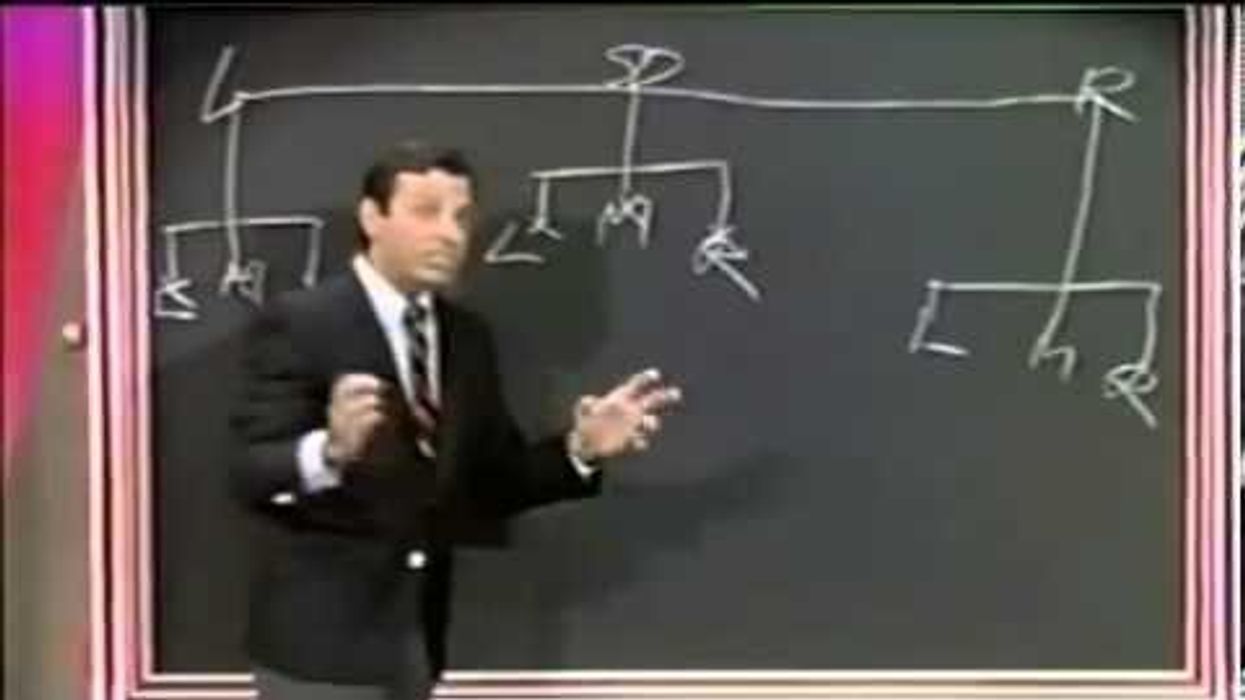
Mort Sahl explains politics - 1967

Mort Sahl arrived on the comedy scene in the 1950s, well before his time, using comedy to express uncomfortable truths about politicians, society and his audiences.

He died Tuesday at his home in Mill Valley, Calif., at the age of 94.

He made us laugh at the absurdity of what he saw as a political circus. He called attention to the misinformation and the posturing amongst politicians. He understood like few others the low level of discourse and understanding that politicians exhibited on a daily basis.


He saw it all as a charade: the dishonesty, misleading statements and ethical lapses. He saw the hypocrisy and called out politicians for their lack of accountability, for the promises unkept and for the disregard for their less powerful constituents.

In 1955 Sahl recorded "At Sunset," which has been added to the National Registry at the Library of Congress. As noted in the archive: "Mort Sahl ventured very far from the clownish mother-in-law joke or such vaudevillian patter." His groundbreaking album is described as "a well-pun pastiche of sophisticated ideas, an understated celebration of free-speech, and a tightly packed time capsule of mid-fifties lore."

In the more naive and peaceful 1950s, Sahl was a shock to the system and laid the groundwork for comedians of the future like Lenny Bruce, Dick Gregory, Jonathan Winters, Richard Pryor, George Carlin, Jon Stewart and Stephen Colbert.

In a society awash in social and political dysfunction, in which reality in many ways differs from the ideals of our Founding Fathers, comedy is still used to confront us and to effectively to open our minds and, yes, to make us laugh.

Sahl's one-liners from the '50s survive the test of time:

"There's a danger our fiscal bankruptcy might overtake our moral bankruptcy."

"If you maintain a consistent political position long enough, you'll eventually be accused of treason."

Sahl was an equal opportunity offender being equally offensive at times to those on the left as to those on the right.

Surely conservatives are offended by: "Liberals feel unworthy of their possessions. Conservatives feel they deserve everything they've stolen."

And progressives by: "Now that Obama is at war in a third country, does that mean he has to give back his Nobel Peace Prize?"

Comedy certainly can separate and divide us, as we have seen through many examples in the news today. Dave Chappelle's jokes about the LGBTQ community in his recent Netflix comedy special was deeply offensive and exemplified the potential for comedy to feed hate and to divide us as Americans.

At its best comedy can engage and inform and encourage us to unite as Americans.

Stewart, the satirist made famous as host of "The Daily Show", was the Mort Sahl of his time, with his form of no-holds-barred satire on his generation. Stewart famously said, "I'm not going to censor myself to comfort your ignorance." A strong statement indeed that in many ways embodies Sahl's work.

Mort Sahl famously joked through all the criticism bestowed upon him that "My life needs editing." Dead at the age of 94, but his legacy lives on. Relive the satirical uniqueness of Mort Sahl as he explains politics in 1967 and decide for yourself if his life needs editing.
Read More

A Hollow Song for a Hollow Patriotism: Reclaiming the Real Patriotic Ballads
Imagine a democracy concert followed by a yearlong democracy call to action roadshow—designed to build a new civic movement
Getty Images, gilaxia

A Hollow Song for a Hollow Patriotism: Reclaiming the Real Patriotic Ballads

After musician after musician pulled out from Trump’s June 24 “Freedom 250” concert, we’re left with Lee Greenwood and an opera tenor. The anthem that made Greenwood a star, “God Bless the USA,” was written in 1985 during the height of the Cold War. It begins with the specter of loss—“If tomorrow—all the things were gone, I’d worked for all my life / And I had to start all over with my children and my wife.” Then the wounds disappear before they’re felt: “I’d thank my lucky stars to be living here today / Because the flag still stands for freedom and they can’t take that away.”

Ronald Reagan made the song his campaign theme while launching a new age of American inequality by systematically busting unions and cutting taxes for the wealthiest. Greenwood treats layoffs and the resulting toll on ordinary lives as a mere inconvenience. As the refrain shifts from violins and a church organ to a military march, he repeats, “I’m proud to be an American, where at least I know I’m free / And I won’t forget the men who died who gave that right to me.”

Keep ReadingShow less
Colbert’s Final Late Show Reveals What We’re Losing in Public Dialogue

Stephen Colbert attends the 51st Chaplin Award Gala honoring George Clooney at Alice Tully Hall, Lincoln Center on April 27, 2026 in New York City.

(Photo by Gilbert Carrasquillo/GC Images)

Colbert’s Final Late Show Reveals What We’re Losing in Public Dialogue

Stephen Colbert hosted The Late Show for the last time last week.

Tributes have been pouring in for Colbert’s nightly monologue and comedic genius. And rightly so. He has a unique and deeply humane way of making the unbearable bearable, giving us a little light and lift on our darkest days.

Keep ReadingShow less
Stapleton’s Colbert Performance Shows Power of Nonpolitical Messages

Chris Stapleton performs onstage during the 59th Annual CMA Awards at Bridgestone Arena on November 19, 2025 in Nashville, Tennessee..

(Photo by Astrida Valigorsky/WireImage)

Stapleton’s Colbert Performance Shows Power of Nonpolitical Messages

On May 6th, I watched Chris Stapleton perform “Living in the Promiseland” on The Late Show with Stephen Colbert. The song, a Willie Nelson classic from 1985, hit me hard. Originally, Nelson released it at a time when debates about immigration and the American dream were in the headlines, and the song became an anthem of hope and inclusivity. These days, almost everything gets viewed through a political lens, but the song’s opening lines felt powerful without being political:

Give us your tired and weak, and we will make them strong
Bring us your foreign songs, and we will sing along
Leave us your broken dreams, we'll give them time to mend
There's still a lot of love living in the promised land

Keep ReadingShow less
​Bruce Springsteen on stage, holding a microphone in one hand and a sign that reads, "No Kings," in the other hand.

Bruce Springsteen & The E Street Band perform during Land of Hope & Dreams American Tour at Target Center on March 31, 2026 in Minneapolis, Minnesota.

Getty Images,

It’s All About Soul — And the Future of American Democracy

American democracy is experiencing an unparalleled stress test. The headlines churn, the rhetoric hardens, and the daily spectacle can make it feel as if the country is losing its footing. The deeper danger, many observers note, isn’t simply that a political figure says outrageous things — it’s that the public grows accustomed to them. When shock becomes routine, the unacceptable becomes normalized. And once that happens, the standards that define who we are as a nation begin to erode.

When we get used to being shocked, things that should be unacceptable start to seem normal. When that happens, the values that shape our nation begin to fade.

Keep ReadingShow less