


Rush is a professor of politics and law and the director of the center for international education at Washington and Lee University.
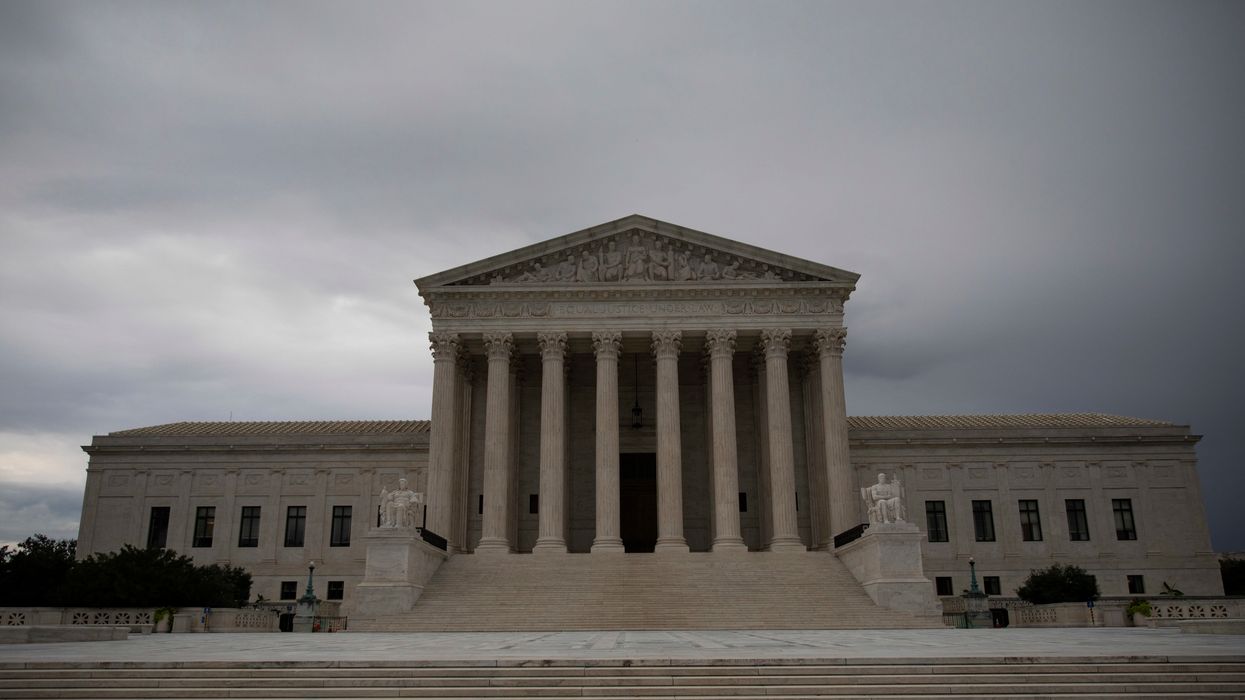
This spring, the Supreme Court will hear arguments in Colorado Department of State v. Baca and then decide if members of the Electoral College are bound to abide by the laws of the states from which they hail.
In the case, Michael and Polly Baca as well as Robert Nemanich — electors from Colorado in 2016 — assert that this year's (and all future) electors have the right to vote for anyone, regardless of how the people of Colorado vote. The Supreme Court chose to hear the case because of a conflict between two lower courts. The Washington Supreme Court ruled a state could bind its Electoral College delegates. In Colorado, the 10th U.S. Circuit Court of Appeals ruled that this was not the case.
The Baca case is vexing for numerous reasons. Foremost, it highlights once again the arcane and undemocratic manner in which the United States elects its presidents. According to the Constitution, one needs a majority of the electoral college votes — not a majority of the popular vote — to win the election. For most of the country's history, the winner received a majority of both. But in 2000 and again in 2016, George W. Bush and Donald Trump did not win the popular vote.
For those who decry such results, the Electoral College is nothing less than an abomination — a mechanism that can override the will of the people. For others, it is nothing more than another rule built into the constitutional structure (such as an independent judiciary and the bicameral Congress) that makes it difficult for majorities to form (or govern) too easily.
Regardless of how one views the Electoral College, the Baca case looms as an ominous threat that could render the Electoral College even more controversial. As arcane as the system may be, it remains part of a constitutional structure that recognizes the integral role states play in the political system. No doubt, the system has its shortcomings. Throughout American history, "states' rights" claims have promoted a host of evils ranging from the perpetuation of slavery and Jim Crow laws to more mundane but inefficient practices, from different driving ages for different categories of people to laws that make it difficult for professionals to transfer their licenses from one state to the next.
The sordid history of states' rights notwithstanding, within the context of the Electoral College the states remain a fundamental part of the constitutional system. It would be extraordinary — and even more undemocratic — to empower a state's electors to ignore the will of the people who sent them to the college in the first place.
Granted, if electors are bound by the will of the people, they could rightfully ask what the point of sending them to their state capitals to cast their votes for what would be a preordained outcome. There is no questioning this logic: If we know the outcome of the presidential election in November, what's the point of symbolically reaffirming it two months later?
On the other hand, if the electors can defy the will of the people who chose them with their presidential votes, what's the point of having electors in the first place? Again, if the election result is known in November, why go through a ritual two months later if the Electoral College delegates can overturn the November results?
As controversial and arcane as the Electoral College is, it remains part of the Constitution. If the country wishes to get rid of it, it must do so by constitutional amendment. This is an arduous, slow and time-consuming process. But, it is a process the Constitution outlines clearly. If the Electoral College is such an undemocratic disaster, an amendment to get rid of it should require relatively little trouble.
Until the amendment idea becomes a reality, however, there is no question electors should be bound by the will of the people and the legislature of the state that sends them. To free them from that bond would render the Electoral College even more undemocratic than it already is and radically increase the likelihood of electoral chaos every four years with the nation forced to wait until January, close to inauguration day, to see whether the November popular vote result was to be overturned.
Let us hope — let us pray — that the Supreme Court keeps this in mind as it hears the Baca arguments.