
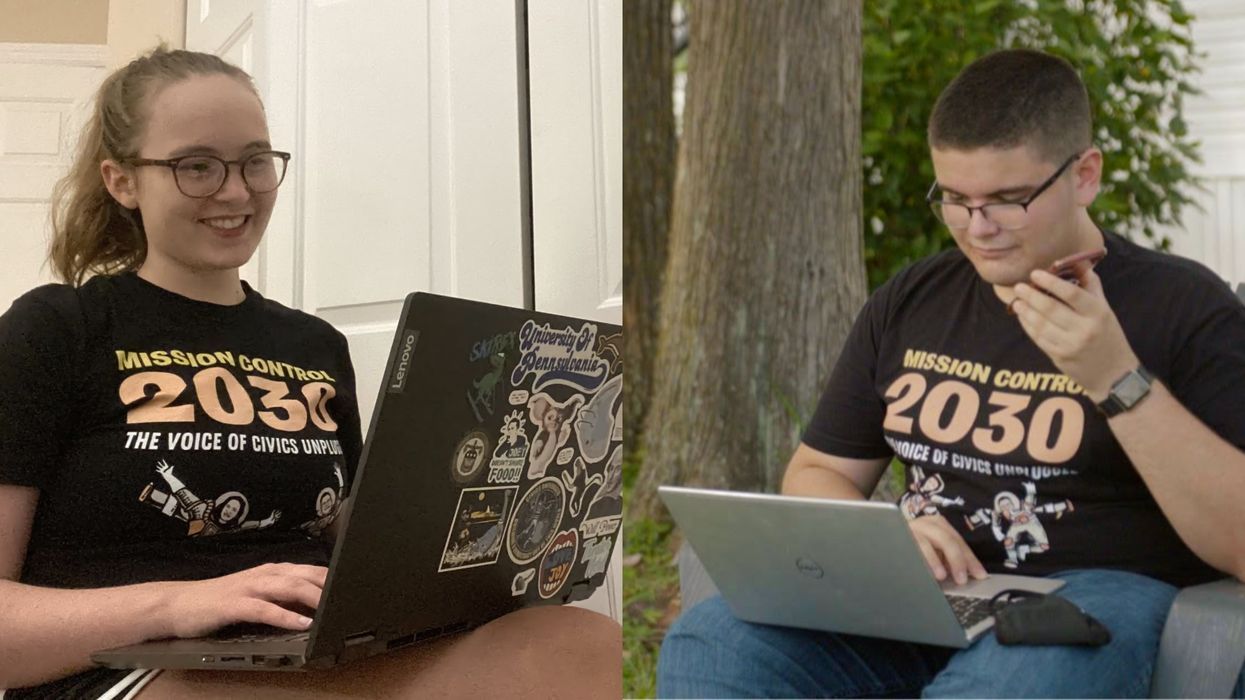
Following a long day of remote learning, two high school students — 17-year old Elena Ashburn of Broward and 16-year-old Dariel Cruz Rodriguez of Orlando — shared their experiences as founders of Students for Open Primaries. The group is campaigning for adoption of a ballot measure that could remake politics in the most populous purple state — by opening Florida's legislative and other state primaries to all voters, regardless of party, and advancing the top two vote-getters, also regardless of party, to the general election. Our conversation has been edited for clarity and brevity.
Fahey: How did you become involved in the open primary movement?
Ashburn: We both learned about Open Primaries, the group at the forefront of the campaign, through Civics Unplugged, which empowers Gen Z leaders with the tools needed to advance democracy.
Cruz Rodriguez: We're a small group of volunteers. We've been calling and texting newly registered voters under 22. Other organizations have solicited these people to register and we're following up by saying, "Did you know independents can't vote?"
Ashburn: We're students and we want to get the word out to other students because Gen Zers and millennials are becoming increasingly less dependent on parties. A recent poll showed 44 percent of millennials nationwide are not registered Democrats or Republicans. So a huge voting bloc is being shut out of primaries in closed states like ours.
Fahey: Do you identify as independents?
Cruz Rodriguez: Yes, we've both pre-registered as NPAs, or No Party Affiliates, meaning we'll automatically be placed into the rolls when we turn 18.
Ashburn: We were like, "We've been fighting for the last few weeks for open primaries, but we're not even registered." So we got on a Zoom call and preregistered together.
Fahey: Why are you passionate about open primaries?
Ashburn: I was drawn to this idea because I'm not in love with either of the two major parties. I'd rather hold onto my values and be without a party than compromise my values by registering with one.
Cruz Rodriguez: A lot of people from my school were telling me to register, but independents simply can't vote in primaries. It's more productive to change the system to let all voters vote than to get more people into one of the major parties.
Fahey: You need 60 percent of the vote to win. What's your strategy?
Cruz Rodriguez: Independents are already on board, so we're targeting mainly Democrats and Republicans. The two parties are sending out lots of misleading information and we're trying to combat that with correct information.
Ashburn: We're also trying to show the wide support we've got. We've been endorsed by almost every major newspaper in Florida, people like Magic Johnson and reform groups such as Independent Voting.
Fahey: Have you met each other in person? If not, what has it been like to work together virtually?
Ashburn: We are super close friends but we've never met in person. It's really weird. With the coronavirus our whole campaign has been online. It's not a major hindrance to do most of our work this way.
Cruz Rodriguez: We will be featured in "The Young Vote," a documentary on Gen Zers in electoral politics. We have this grand plan that, for the post-election results, we'll do an in-person interview together.
Fahey: What is the role of independents in today's political system?
Cruz Rodriguez: We are often a moderating force as the main parties become increasingly more radicalized. Finding common ground is the only way this country can move forward, and independents are the bridge.
Ashburn: And we will continue to play a crucial role as more and more young people identify as independent.
Fahey: What's the role of young people in our politics?
Ashburn: We're going to change the world! That's a nonnegotiable statement. From March for Our Lives to Black Lives Matter, this year the world has seen that Gen-Zers are going to better our democracy. We've all grown up in this very polarized, very partisan atmosphere, and honestly we're sick of it. We know we need to work together to use our power and speak up for what we believe in.
Cruz Rodriguez: Young people have been active in politics for a long time, but they're just now getting attention. Whether it be local, like how my school district finally changed our dress code, or national, such as March for Our Lives, issues that affect youth are finally in the spotlight, and so is our activism.
Fahey: Have you felt pushback or skepticism due to your age?
Ashburn: Oh yeah. I've been told by adults, "Your views will change when you get older," or "You don't really know what you're talking about, you can't even vote yet." I've done my research, I know what my values are and I align my political beliefs to match those values.
Cruz Rodriguez: People actually thought we were paid actors being used by political operatives. We received a lot of pushback campaigning on social media or on the phone with voters. Just because we're kids doesn't mean that we can't spark impactful change.
Fahey: What is the most fun you've had on this campaign?
Ashburn: Without this experience, I never would have gotten to know Dariel as well as I do. Now, we host the "Mission Control 2030 Podcast" and do so many other projects together. I can't imagine doing any of those things without him.
Cruz Rodriguez: And also, taking on all the outrageous online arguments from the opposition. I'm a person who challenges people's ideas, and this experience has really brought that out in me.
Fahey: Finally, what does being an American mean to you?
Cruz Rodriguez: It means being able to exercise the right to critique our government, from the founders who dumped tea into Boston Harbor to the young people protesting in the streets today.
Ashburn: Loving your country, and being willing to do whatever it takes to change it for the better.