
Skip to content
Search

Latest Stories

Follow Us:
Top Stories

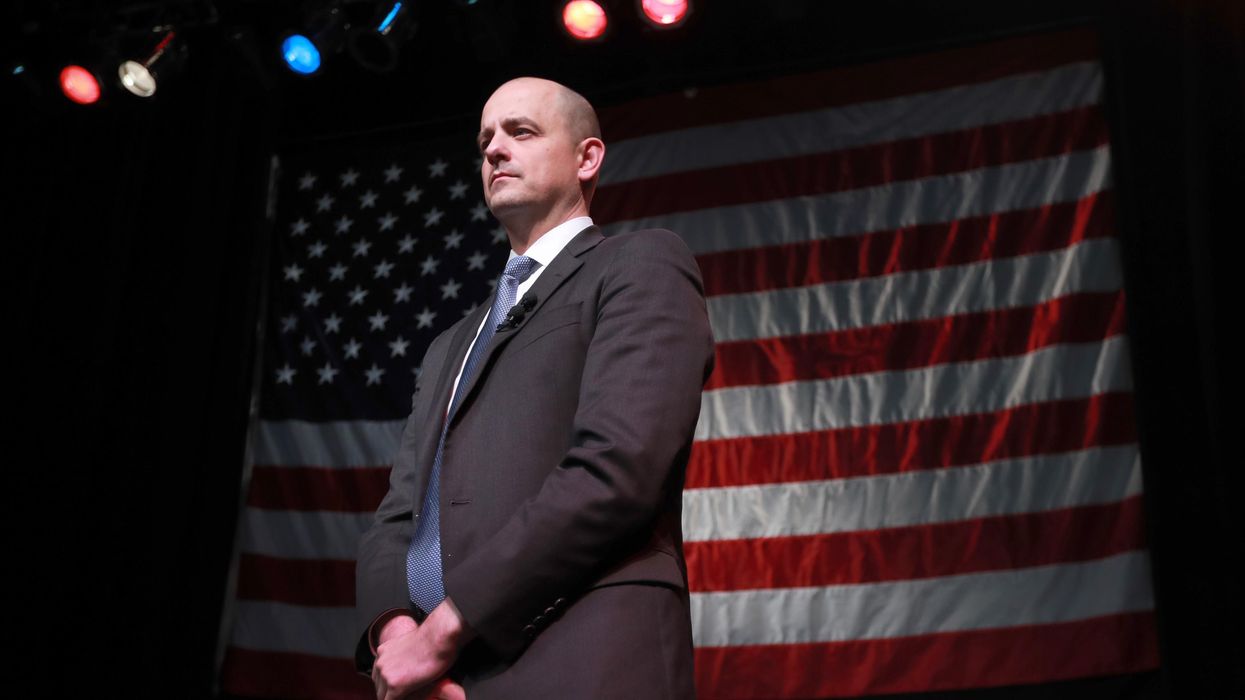
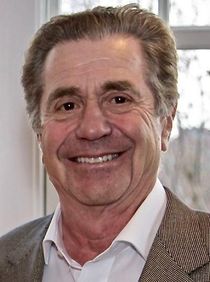
Why I am supporting Evan McMullin

Opinion

Evan McMullin
George Frey/Getty Images

Nevins is co-publisher of The Fulcrum and co-founder and board chairman of the Bridge Alliance Education Fund.

As the co-publisher of The Fulcrum it is my responsibility to adhere to the principles of our daily publication.

Our mission states we are “a platform where insiders and outsiders to politics are informed, meet, talk, and act to repair our democracy and make it live and work in our everyday lives.”

We approach all our news stories with an open and skeptical mind, and with a determination, through research and critical thinking, to acquaint our readers with a wide range of viewpoints.

As best we can, we remove personal bias from our reporting and seek a variety of perspectives in the opinion pieces we choose to publish.

And while many publications endorse candidates, The Fulcrum has never done so.

With the above in mind it is with great caution and forethought that I announce my personal support for the election of Utah’s Evan McMullin to the Senate. This is not a change in policy for The Fulcrum, which continues to focus on coverage of solutions to the problems plaguing our nations without endorsing any specific ideas or people.


Few deny that our political system is broken. The crippling partisanship and grinding gridlock in Congress that frustrate and anger most Americans must come to an end. However, election after election we vote for candidates who put political parties over the needs of our country. Does anyone really believe virtually every candidate’s promises that they will solve our problems and deliver real solutions to our nation’s problems? To believe so is the definition of insanity. Something must change in the type of people we elect.

Political leadership must change. The sound bite nature of media coverage must change. The very nature of the national dialogue must change. The behavior that people accept from our leaders must change.

And that is why I am supporting Evan McMullin for Senate.

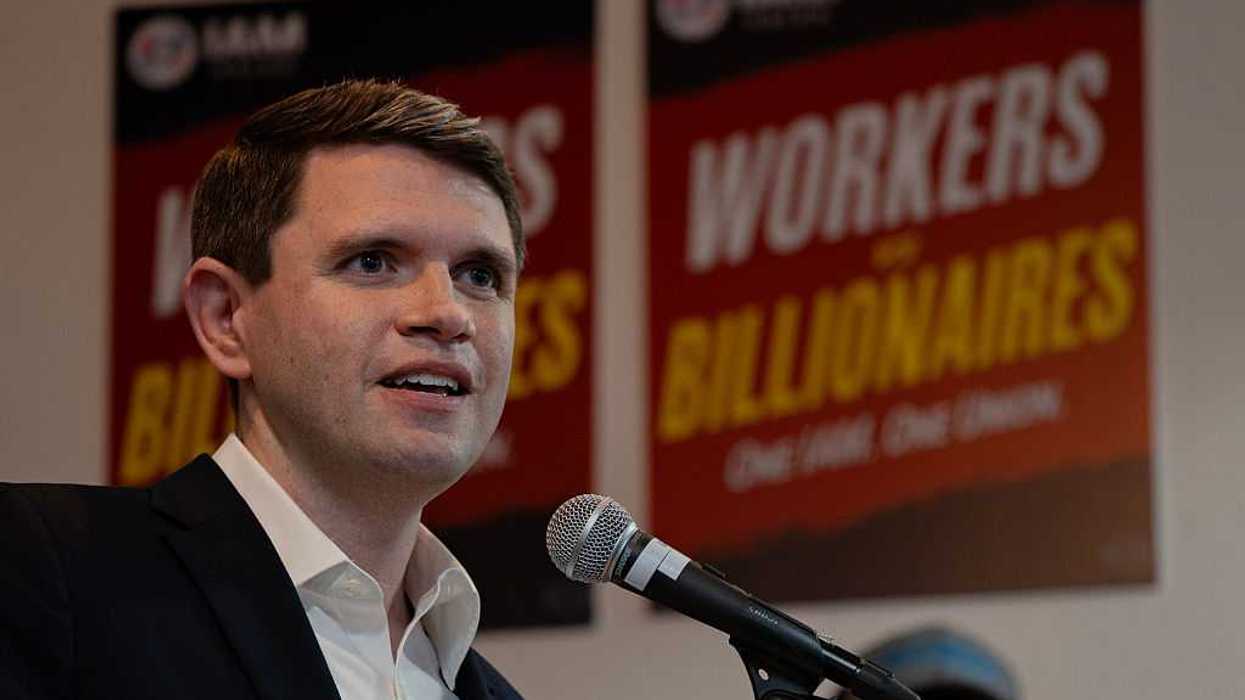
McMullin is a former Republican, now a declared independent and fully backed by the Democratic Party. He says uniting voters across the spectrum is the only way to unseat the incumbent,Trump ally Mike Lee.

"People are sick of the divisiveness," McMullin told People. "We've got mounting challenges in Utah — inflation is worse here than almost anywhere else, air quality is a real challenge especially during the summer, we're running out of water in a historic drought, we've got high cost of health care and on and on. Politics of division and extremism just don't solve them, and people are tired of it."

Our nation is at a crossroads. Now more than ever, when we are locked into a divisive political battle between left and right, we can – and we must – come together to support one thing that unites us all: a belief in the freedom of people to determine their own destiny.

I believe Evan McMullin embodies these principles.

MuMullin is looking for votes from what he calls "principled Republicans," as well as Democrats and, of course, independents. This is not the typical way candidates seek election. McMullin says: "We're building a coalition of Utahns who have not been well represented in Utah or national politics for decades."

He continues: "We listen to each other. That's what's happening here that I don't think is happening anywhere else in the country, but it needs to. Our country will not survive if we don't build a new, sustainable coalition to defend our democracy. Even if it is Pollyanna-ish, it's what we have to do."Typically independent candidates do not succeed because finding a coalition of conservatives, moderates and liberals is a difficult task indeed. "It doesn't mean there aren't tough conversations. We don't agree on everything, and that's okay," McMullin says. He looks for moderate solutions that most people support. He explains, for example, he's a gun owner who believes in "sensible reform." People can enjoy their Second Amendment right and laws can protect against gun violence. "It's not an either-or."

McMullin’s campaign is focused on the vast middle that he believes represents America. While he admits we all don’t agree on the issues "we agree on standing up to the extremes."

Our country needs bold leadership. We need leadership that is direct and honest in public statements and puts ethical commitments above partisan or career objectives. I believe McMullin embodies this principle.

Our country needs leaders who respect all persons, including opponents, and are willing to engage constructively. I believe McMullin embodies this principle.

Our country needs leaders who take full accountability for actions through a willingness to amend one’s positions, learning from one's mistakes, thus resulting in a more constructive approach to problem identification and solutions. I believe McMullin embodies this principle.

Our country needs leaders who always remain open to learning new information and seeking it out through supporting research and analysis that actively broaden one’s horizons. I believe McMullin embodies this principle.

Our country needs leaders who are willing to demonstrate bold leadership by taking political risks if necessary to advance controversial policies, particularly those likely to bring long-term benefits. I believe McMullin embodies this principle.

Only with leaders like Evan McMullin can we defeat the tribalism that separates us as a nation and build bridges and alliances beyond one’s constituency. By adhering to the principles that I believe guide McMullin, and leaders like him, we can build trust and understanding as a nation. "We are at a real crossroads in American history when we have to get back to basics. This coalition is defending what matters most in America and without that we won't solve any other problems in our country," he asserts. "Every generation or two there is a realignment in American politics," McMullin says. "And we need that right now to stand up to those who threaten our democracy.”

I agree.
Read More

Varying speech bubbles.​ Dialogue. Conversations.

Examining the 2025 episodes that challenged democratic institutions and highlighted the stakes for truth, accountability, and responsible public leadership.

Getty Images, DrAfter123

Why I Was ‘Diagnosed’ With Trump Derangement Syndrome

After a year spent writing columns about President Donald Trump, a leader who seems intent on testing every norm, value, and standard of decency that supports our democracy, I finally did what any responsible citizen might do: I went to the doctor to see if I had "Trump Derangement Syndrome."

I told my doctor about my symptoms: constant worry about cruelty in public life, repeated anger at attacks on democratic institutions, and deep anxiety over leaders who treat Americans as props or enemies. After running tests, he gave me his diagnosis with a straight face: "You are, indeed, highly focused on abnormal behavior. But standing up for what is right is excellent for your health and essential for the health of the country."

Keep ReadingShow less
After the Ceasefire, the Violence Continues – and Cries for New Words

An Israeli army vehicle moves on the Israeli side, near the border with the Gaza Strip on November 18, 2025 in Southern Israel, Israel.

(Photo by Amir Levy/Getty Images)

After the Ceasefire, the Violence Continues – and Cries for New Words

Since October 10, 2025, the day when the US-brokered ceasefire between Israel and Hamas was announced, Israel has killed at least 401 civilians, including at least 148 children. This has led Palestinian scholar Saree Makdisi to decry a “continuing genocide, albeit one that has shifted gears and has—for now—moved into the slow lane. Rather than hundreds at a time, it is killing by twos and threes” or by twenties and thirties as on November 19 and November 23 – “an obscenity that has coalesced into a new normal.” The Guardian columnist Nesrine Malik describes the post-ceasefire period as nothing more than a “reducefire,” quoting the warning issued by Amnesty International’s secretary general Agnès Callamard that the ”world must not be fooled” into believing that Israel’s genocide is over.

A visual analysis of satellite images conducted by the BBC has established that since the declared ceasefire, “the destruction of buildings in Gaza by the Israeli military has been continuing on a huge scale,” entire neighborhoods “levelled” through “demolitions,” including large swaths of farmland and orchards. The Guardian reported already in March of 2024, that satellite imagery proved the “destruction of about 38-48% of tree cover and farmland” and 23% of Gaza’s greenhouses “completely destroyed.” Writing about the “colossal violence” Israel has wrought on Gaza, Palestinian legal scholar Rabea Eghbariah lists “several variations” on the term “genocide” which researchers found the need to introduce, such as “urbicide” (the systematic destruction of cities), “domicide” (systematic destruction of housing), “sociocide,” “politicide,” and “memoricide.” Others have added the concepts “ecocide,” “scholasticide” (the systematic destruction of Gaza’s schools, universities, libraries), and “medicide” (the deliberate attacks on all aspects of Gaza’s healthcare with the intent to “wipe out” all medical care). It is only the combination of all these “-cides,” all amounting to massive war crimes, that adequately manages to describe the Palestinian condition. Constantine Zurayk introduced the term “Nakba” (“catastrophe” in Arabic) in 1948 to name the unparalleled “magnitude and ramifications of the Zionist conquest of Palestine” and its historical “rupture.” When Eghbariah argues for “Nakba” as a “new legal concept,” he underlines, however, that to understand its magnitude, one needs to go back to the 1917 Balfour Declaration, in which the British colonial power promised “a national home for the Jewish people” in Palestine, even though just 6 % of its population were Jewish. From Nakba as the “constitutive violence of 1948,” we need today to conceptualize “Nakba as a structure,” an “overarching frame.”

Keep ReadingShow less
Ukraine, Russia, and the Dangerous Metaphor of Holding the Cards
a hand holding a deck of cards in front of a christmas tree
Photo by Luca Volpe on Unsplash

Ukraine, Russia, and the Dangerous Metaphor of Holding the Cards

Donald Trump has repeatedly used the phrase “holding the cards” during his tenure as President to signal that he, or sometimes an opponent, has the upper hand. The metaphor projects bravado, leverage, and the inevitability of success or failure, depending on who claims control.

Unfortunately, Trump’s repeated invocation of “holding the cards” embodies a worldview where leverage, bluff, and dominance matter more than duty, morality, or responsibility. In contrast, leadership grounded in duty emphasizes ethical obligations to allies, citizens, and democratic principles—elements strikingly absent from this metaphor.

Keep ReadingShow less
Beyond Apologies: Corporate Contempt and the Call for Real Accountability
campbells chicken noodle soup can

Beyond Apologies: Corporate Contempt and the Call for Real Accountability

Most customers carry a particular image of Campbell's Soup: the red-and-white label stacked on a pantry shelf, a touch of nostalgia, and the promise of a dependable bargain. It's food for snow days, tight budgets, and the middle of the week. For generations, the brand has positioned itself as a companion to working families, offering "good food" for everyday people. The company cultivated that trust so thoroughly that it became almost cliché.

Campbell's episode, now the subject of national headlines and an ongoing high-profile legal complaint, is troubling not only for its blunt language but for what it reveals about the hidden injuries that erode the social contract linking institutions to citizens, workers to workplaces, and brands to buyers. If the response ends with the usual PR maneuvers—rapid firings and the well-rehearsed "this does not reflect our values" statement. Then both the lesson and the opportunity for genuine reform by a company or individual are lost. To grasp what this controversy means for the broader corporate landscape, we first have to examine how leadership reveals its actual beliefs.

Keep ReadingShow less