






On June 29, the Equal Protection Project (EPP), a 501(c)(3) that challenges DEI initiatives through legal action at universities across the country, filed a civil rights complaint against the University of Southern California (USC) and Loyola Marymount University (LMU).
The complaint cites the involvement of both universities in hosting the Youth Leadership Institute, a summer program that flies out upwards of 500 Hispanic rising high school seniors to Los Angeles for a five-day intensive, teaching them about the college application process, financial literacy, and expanding their networks to student mentors who previously attended the program.
The EPP states that in hosting the program, USC and LMU have violated Title VI rights, which prohibit the use of federal funds for discriminatory practices based on race.
In an email to the Fulcrum, EPP Founder William Jacobson states that the program set off alarms for the EPP due to its alleged “discriminatory” nature.
“Here, the universities were involved at every step in the process, including promotion, programming, hosting, and housing. This conduct implicated not only the civil rights laws but also laws prohibiting discrimination in temporary housing,” wrote Jacobson. “So all-around, this set off all the civil rights alarms, and after evaluation, we came to the conclusion that a formal administrative complaint was the proper path to achieve equal protection for students.”
The YLI isn’t the only program targeted by the EPP. Since its 2023 inception, the project has taken action against nearly 550 programs and scholarships nationwide for similarly discriminatory practices, according to its website.
But does a program that hosts Hispanic students of all backgrounds, races, and identities truly violate Title VI rights? What do students who’ve attended the program believe?
In 2025, I had the honor of being part of the YLI, alongside nearly 500 peers from across the country, none of whom I had previously known. By the end of June, I was flying across the country from my home in Boca Raton, Fla., to Los Angeles, Calif., to meet the other students from my cohort and the mentor I was paired with.
Following the Civil Complaint, USC quietly withdrew from hosting the program, and the YLI was shifted to a five-day virtual format, leaving 250 students who would’ve had the same opportunity I had a little over a year ago.
Lucca Rodríguez Pedraza also participated in last year’s YLI and is now headed off to the University of California at Berkeley for her undergraduate studies. About a week before heading off to Los Angeles to serve as a mentor-in-training for this year’s YLI cohort, she was informed that the in-person program would be replaced by a virtual component.
The program, which is usually held between June at LMU and July at USC, had proceeded with its June programming as scheduled, but had its USC dates canceled at the last minute.
Pedraza shares that hearing the news was difficult, especially as she had watched her peers participate in LMU programming only weeks earlier.
“So many of my friends who had gone back to Loyola… talked to me about how refreshing it was to see the whole process from a mentor perspective. I was also building connections with my mentees and with my familia, as well as understanding that these kids did need guidance and did need help,” Pedraza said.
To participate in the in-person component, students must be selected from an applicant pool of over 6,500 and complete a two-day virtual component lasting over six hours each day. According to LMU’s website, 100% of participants are in the top 5% ranking of their class and have an average unweighted GPA of 3.94.
“It was really disappointing to see such an amazing program and something that's helped me so much, just you know, be taken away from these kids, especially because they like they earned it,” said Pedraza.
Nathalie De Paula, a rising senior from Connecticut, was selected to be a part of this year’s cohort at USC but was informed at the last minute of the program’s cancellation. She shares that hearing the news devastated her.
“I was expecting to meet so many people and make so many friends, especially since in my school, it's hard to meet like-minded people. I had heard all these amazing experiences because my mentor went to USC last year, and she was telling me all the amazing things. I was like, ‘Wow, I'm really gonna get a lot out of this.’”
Anthony Rodas, a 2026 mentor-in-training at LMU, shared the impact the YLI had on him last year.
“I think my experience at the YLI was transformative,” said Rodas. “I am the first in my family to go to undergrad here in the U.S., so… I didn't really have a lot of guidance in that. And through the YLI, it was kind of like a whole new world opening up… It really felt like I found a strong community there. As soon as I stepped foot onto the LMU campus… I just felt like there was so much future opportunity that could come from an experience like that.”
Through the program, Rodas was able to meet students who had attended Brown and other prestigious universities and came from backgrounds similar to his own. He was inspired to apply and has since committed to Brown University for his undergraduate studies.
Rodas strongly believes that without his experience at the YLI, we wouldn't have been inspired to attend the school, which is ranked #13 among national universities by U.S. News and World Report.
“It really opened my eyes about what that school was and how much more of a fit I would be there than some of the other schools I was considering. I think if I hadn't done the YLI, first of all, I wouldn't have felt anywhere near prepared enough, like apply and actually get accepted. But second of all, I probably wouldn't have even, maybe not have chosen that school to be the one that I ended up at.”
Growing up, I was always told that attending a top-tier institution was an experience reserved for the upper echelon of society, and that going to college far from home wasn’t something I would be capable of — whether I was told that by my peers or from my tight-knit Hispanic family, it didn’t matter; the consensus was overwhelmingly that it wasn’t possible.
In the U.S., Hispanics make up only about 13% of all students enrolled at private nonprofit four-year colleges and universities, according to a study by UnidosUS, and are ranked among the least likely to be enrolled in college or to hold bachelor's degrees.
In recent years, it has been revealed that many public flagship universities use discriminatory practices when it comes to enrollment, barring many Latino and African American students from setting foot on their campuses.
But “Latino” isn’t the only term used to describe Hispanic students, and the terms “Hispanic” and “Latino” cannot necessarily be used interchangeably — neither term is classified as a race by the U.S. Census. Admittedly, Hispanics represent one of the most racially and ethnically diverse groups in the country.
Emelyn dela Peña, president of the National Association for Diversity Officers in Higher Education, has worked on initiatives and in offices centered around Diversity, Equity, and Inclusion for the past 30 years.
Dela Peña explains that the goals of organizations like the EPP aren’t to make higher education more equitable, but rather more equal — she notes that this goal isn’t always better in the end.
“We can respond to a particular need without losing sight of our responsibility to the broader community; we can take non-discrimination seriously and take disparities in educational opportunities seriously at the same time,” said Dela Peña. “I think that if we have a commitment to fair opportunity and a commitment to understanding where barriers exist, so we can eliminate barriers, then we have to look at who is showing up at particular barriers.”
When asked about USC’s cancellation of the programming, Jacobson stated that the goal of the complaint wasn’t to necessarily get the program canceled entirely, but to protect against federal Title VI violations.
“As a general matter, our goal is not to terminate discriminatory programs, but to remove the discrimination. So these programs lawfully can run on college campuses that receive federal funding, but the programs cannot discriminate based on national origin,” wrote Jacobson.
Regardless, the in-person programming for the event was canceled. The EPP boasts over 175 wins between its attacks on scholarships and higher education programming since its inception.
It’s a flawed logic to assume that asking the Department of Education to investigate a program wouldn’t cause ripples in the program's very own livelihood, and the EPP’s “wins” are nothing less than proof that their goal isn’t just to play a corrective role in programs such as the YLI.
Pedraza feels that the program, if anything, embraces the diverse roots of its participants.
“To me, being Hispanic, being Latino is to be diverse. It is to be multicultural, and like we are, you know, historically oppressed or historically have less advantages, and so these programs are so important to help higher education and to become more diverse to help give students opportunities,” said Pedraza.
Dela Peña believes that the importance of programs like the YLI lies in the questions they raise about accessibility and equity. She believes that in cutting programs that value equity over equality, the most help for all students is shortened.
“Ultimately, I think that's what diversity, equity, and inclusion has done: is that when we try to lift up the most marginalized, we lift up everybody,” said Dela Peña.
Gabriela Quintero is an incoming freshman at Barnard College of Columbia University, pursuing her B.A. in Political Science and Economics. Interested in politics, migration, policy, and culture, she hopes to pursue a career in political and cultural journalism.
Correction: An earlier version of this story incorrectly formatted Emelyn dela Peña's name.




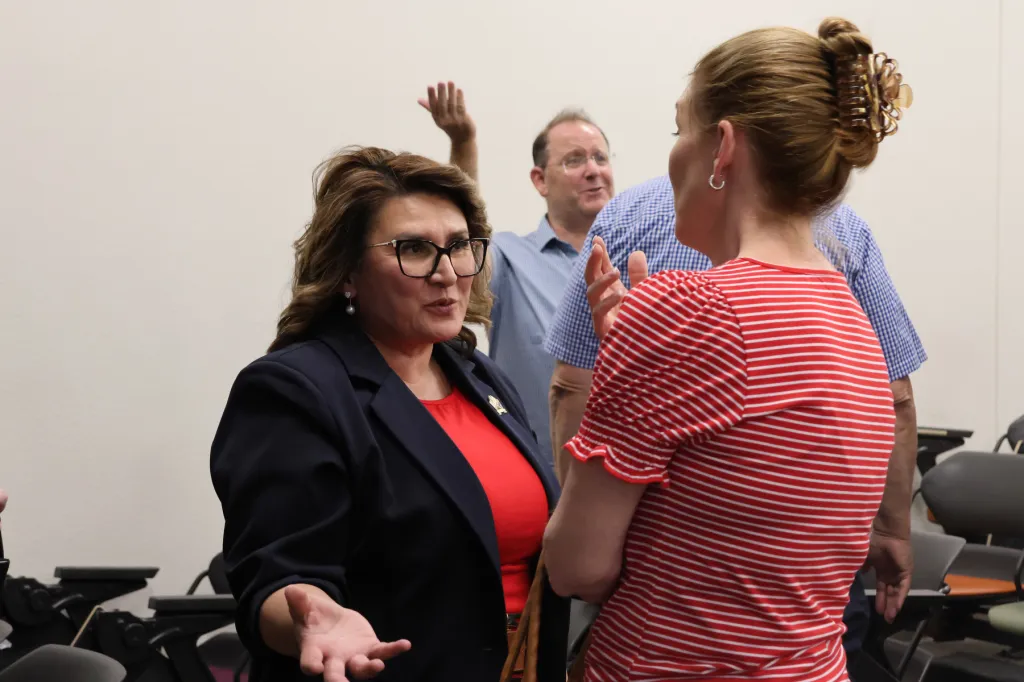 Congressional candidate JoAnna Mendoza has leaned into her working class background as she runs for a seat in the U.S. House to represent Arizona’s 6th congressional district. (Courtesy JoAnna Mendoza campaign)
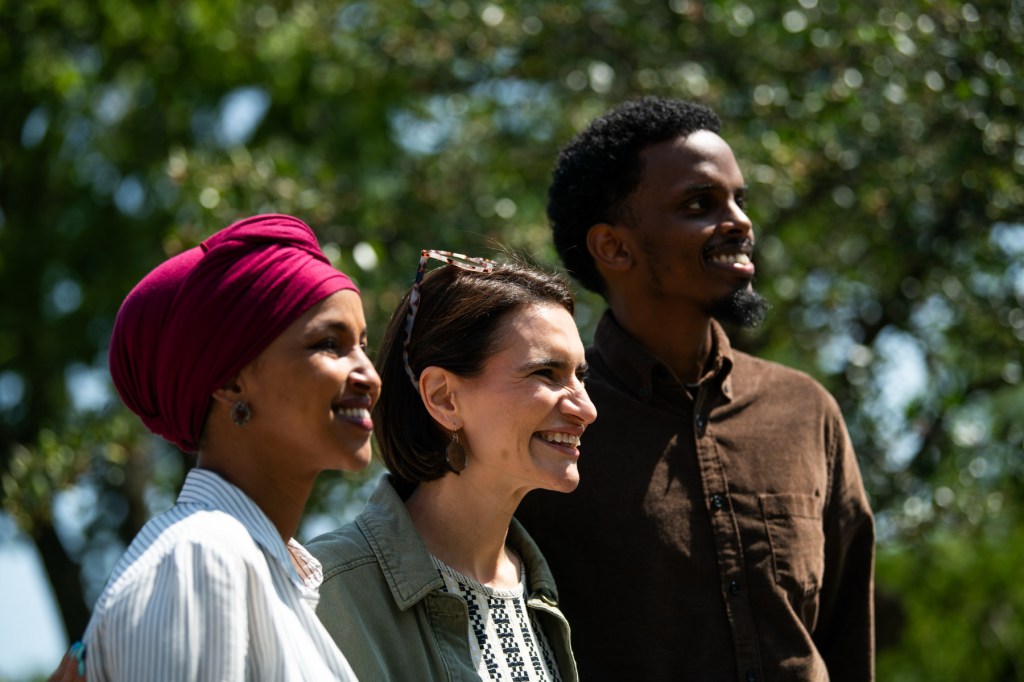 Politicians who come from working class backgrounds, like Minnesota Lt. Gov. Peggy Flanagan (center) and Minnesota state Sen. Omar Fateh (right), are resonating with voters during a particularly challenging economic period. (Stephen Maturen/Getty Images)






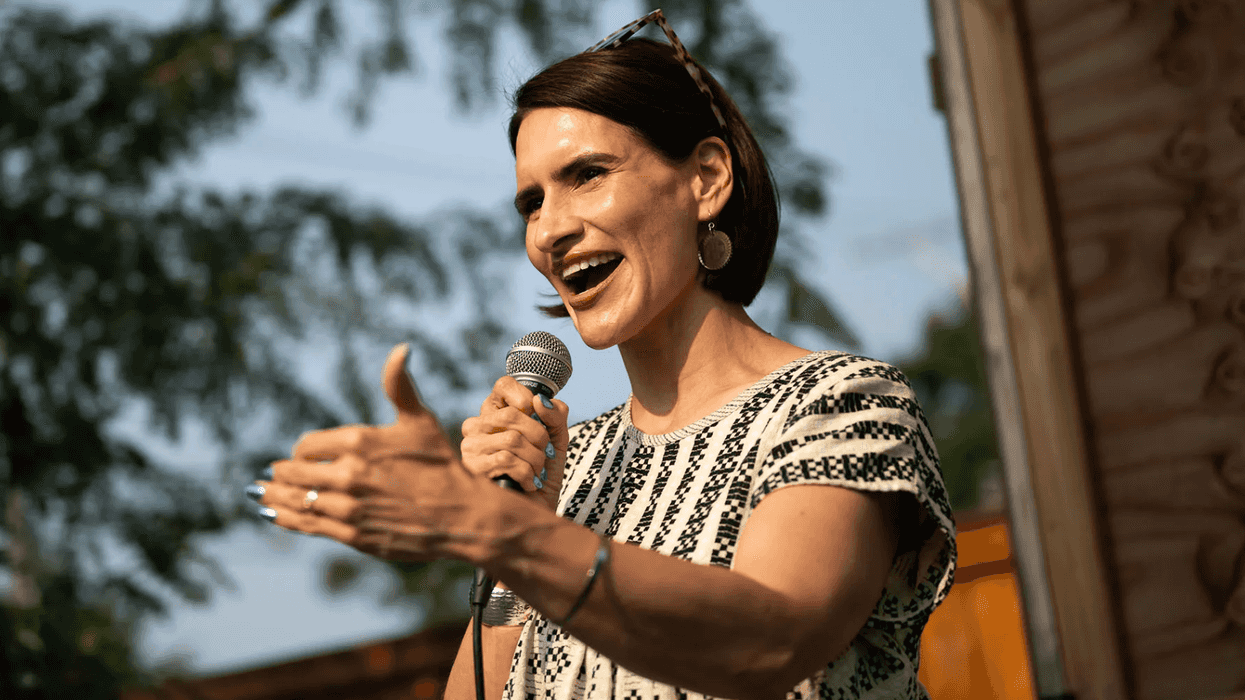
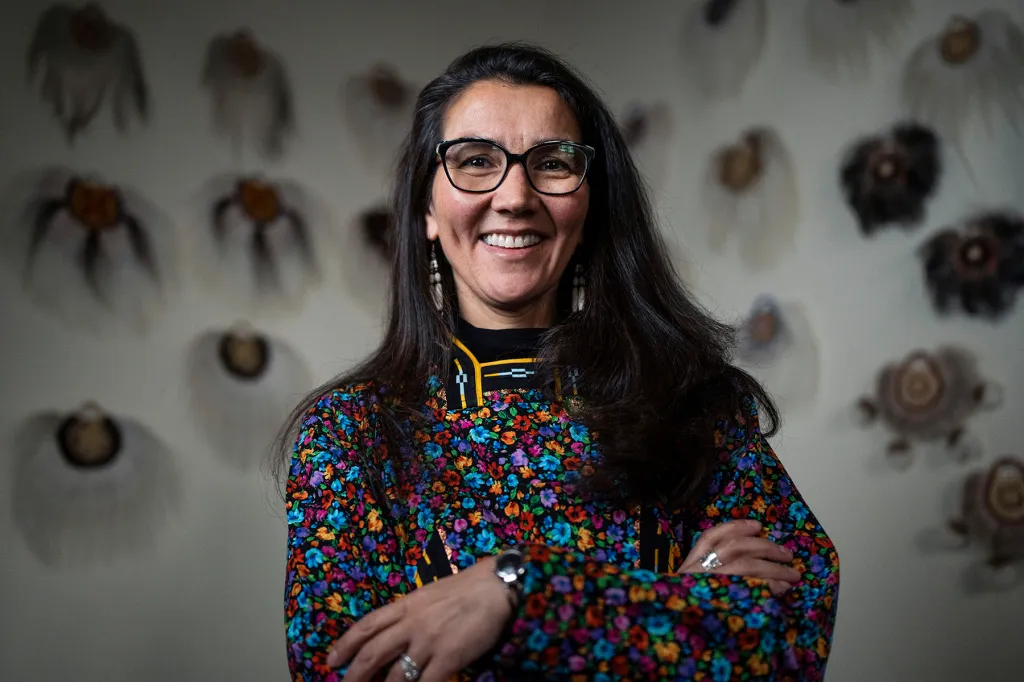 Mary Peltola poses for a portrait in her office on February 9, 2023, in Washington, D.C. (Tom Williams/CQ-Roll Call/Getty Images)
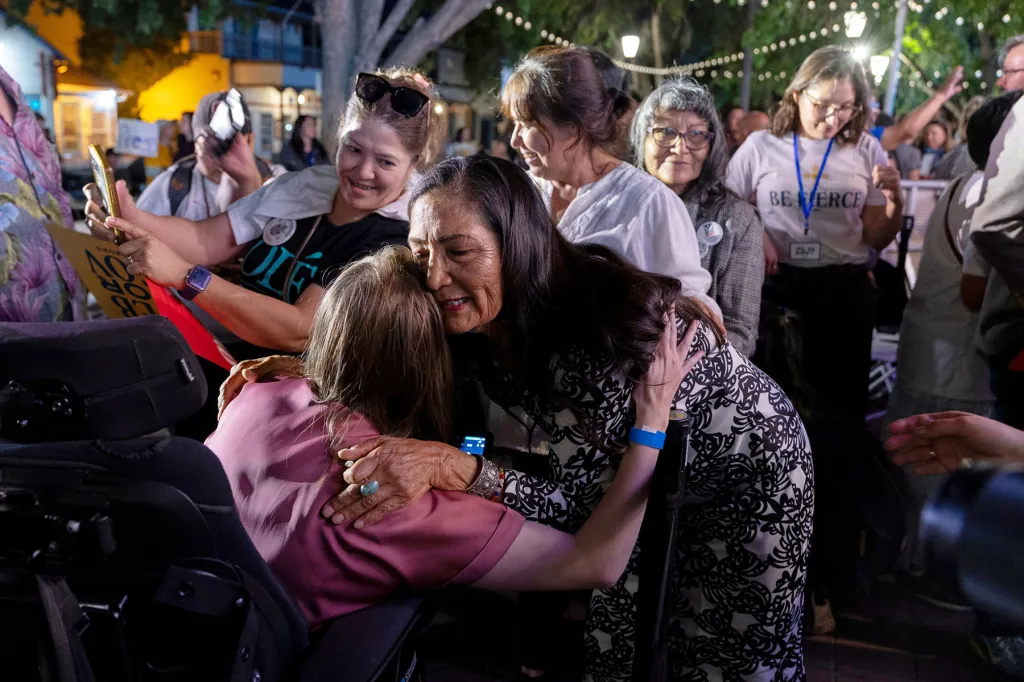 Democratic gubernatorial candidate Deb Haaland hugs and greets supporters following her speech during a primary election night watch party after winning the Democratic nomination, on June 2, 2026, in Albuquerque, New Mexico. (JON AUSTRIA/AP)