
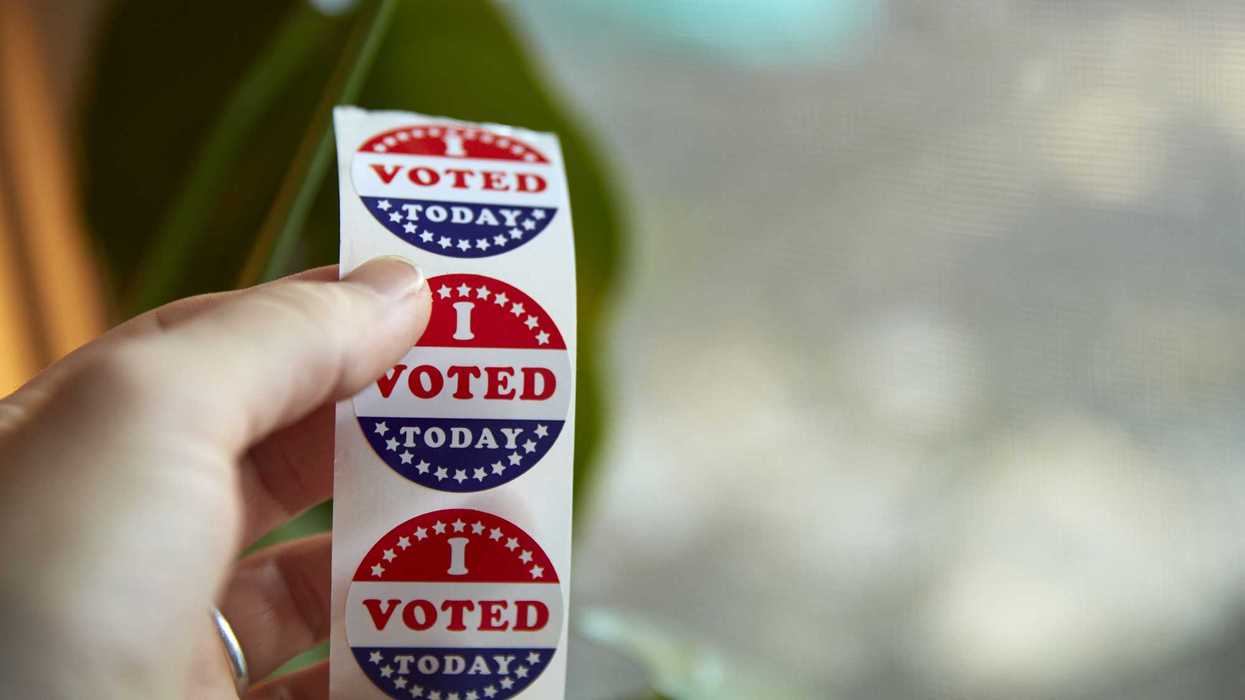

The people who count your vote, certify the results, and are accountable to you made a commitment before anyone knew who won. More than 90 secretaries of state, candidates for the office, and election officials from both parties have publicly affirmed the Principles for Trusted Elections, including Brad Raffensperger (R–Georgia), Jena Griswold (D–Colorado), Maggie Toulouse Oliver (D–New Mexico), and Sam Reed (R–Washington), a former secretary of state and former president of the National Association of Secretaries of State. You can read the statement and see the full list on our website.
Their commitment comes with a message for voters: be patient, but don’t be passive.
That commitment isn’t new. In a race four years ago for Washington secretary of state, just before they debated, Steve Hobbs, who now holds the office, and Julie Anderson stopped to record a video together. They were opponents who disagreed on many things, but they made the video because they agreed on something they believed mattered more than the race: the Principles for Trusted Elections. These standards were not written for any one moment, and they matter more than ever. Two opponents put them on the record in the middle of a race, and that history helps voters believe them now.
The five Principles are: honest process, nonviolent campaigns, secure voting, responsible oversight, and trusted outcomes. Collectively, they describe what healthy elections look like and what they ask of all of us, regardless of who wins. |
These are the people who run elections and certify results, or who ask voters to assume that responsibility. They have publicly said they stand behind the standards that make an election worth trusting. A commitment made in advance is something voters can rely on, and it gives us all a standard to hold everyone to, including them.
Mark Coakley has worked in election administration for nearly 30 years and is now the Director of Elections and General Registrar in Henrico County, Virginia. “I’ve seen a lot change – new technology, new laws, new challenges – but one thing has always stayed the same: election officials’ commitment to running elections that are accurate, secure, and worthy of the public’s trust,” he says.
Be patient, because the count takes time. “Those are unofficial results,” says Tim Tsujii, the director of elections in Forsyth County, North Carolina, about the numbers that appear on election night. “Across the country, in all 50 states, we all have to go through what’s called the canvass period.” In North Carolina, that period lasts ten days and includes reviewing provisional ballots and hand-counting paper ballots in a random sample of precincts to verify the machines. The purpose is the same everywhere: accuracy before speed.
Who is doing that careful work? It’s your neighbors: the person from the grocery store, the nurse down the street, and the volunteer who gave up a Saturday to help.
And don’t be passive; those neighbors want you involved. “Your neighbors and friends are running elections, and we care about your right to vote just as much as you do,” says Derek Bowens, Durham County's elections director. In many places, county boards meet in the days after the election to review and certify the results. Those meetings are open to the public, so you can go and see it for yourself. Ask your county elections office questions. Share information with care by verifying what you read before passing it on, especially anything about the people counting the ballots.
You can also add your name to the Principles for Trusted Elections.
Affirm the Principles for Trusted Elections
You can also continue learning with our new 15-minute Principles in Practice module, which examines how these principles apply to situations we may encounter before and after Election Day.
Take the Principles in Practice learning module
Be patient, and be involved. Thousands of Americans, including the people who run our elections, are already doing both.
Chris Newlon, CEO and Co-Founder of Team Democracy: The Principles for Trusted Elections is led by Team Democracy and guided by the National Alliance for an Enduring Democracy, a cross-partisan national steering committee co-chaired by The Carter Center and the Gerald R. Ford Presidential Foundation.