


Skip to content
Search

Latest Stories

Follow Us:
Top Stories

Podcast: “I never thought of it that way” with Mónica Guzmán

Podcast: “I never thought of it that way” with Mónica Guzmán

Ready to fight back against the confusion, heartbreak, and madness of our dangerously divided times? Find the answers you need by talking with people—rather than about them—and asking the questions you want across the divides you want, curiously. Seeing where people are coming from isn’t just possible. It’s easier than you think.

Mónica Guzmán is a bridge builder, journalist, and author who lives for great conversations sparked by curious questions. Her new book, “I Never Thought of it That Way: How to Have Fearlessly Curious Conversations in Dangerously Divided Times,” was featured on the Glenn Beck Podcast and named a New York Times recommended read.


Monica is Senior Fellow for Public Practice at Braver Angels, the nation’s largest cross-partisan grassroots organization working to depolarize America; founder and CEO of Reclaim Curiosity, an organization working to build a more curious world; host of live interview series at Crosscut; and cofounder of the award-winning Seattle newsletter The Evergrey.

https://open.spotify.com


Read More

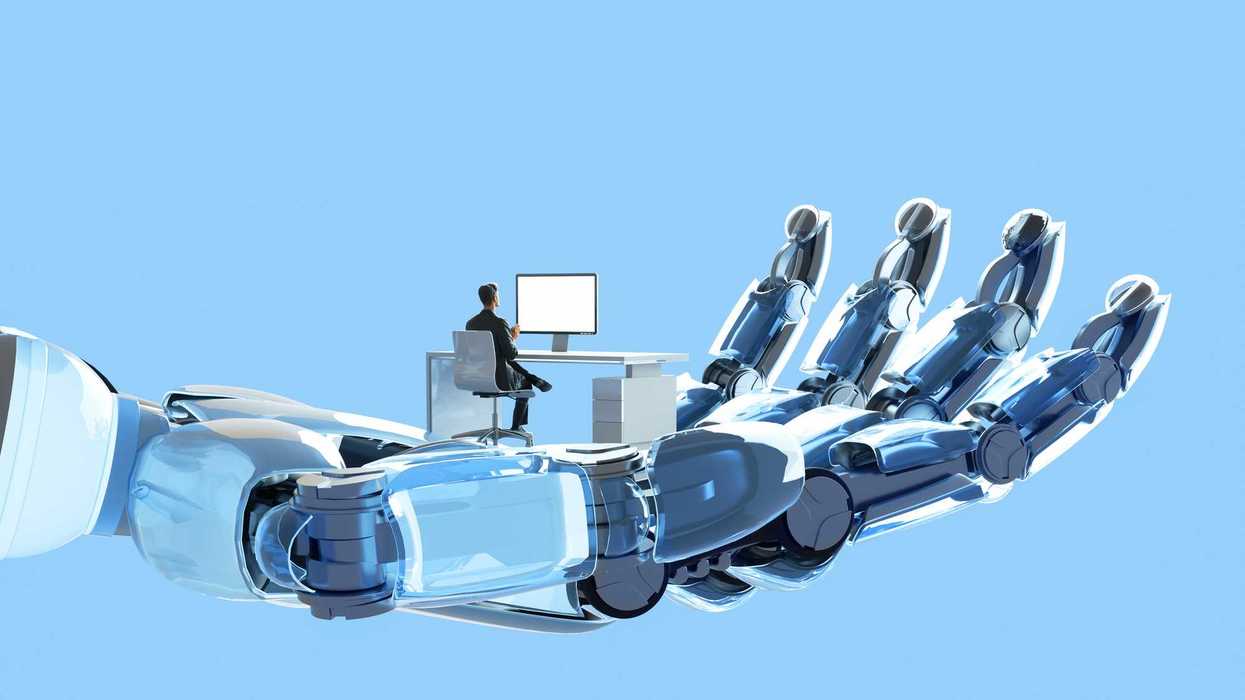
The robot arm is assembling the word AI, Artificial Intelligence. 3D illustration

AI has the potential to transform education, mental health, and accessibility—but only if society actively shapes its use. Explore how community-driven norms, better data, and open experimentation can unlock better AI.

Getty Images, sarawuth702

Build Better AI

Something I think just about all of us agree on: we want better AI. Regardless of your current perspective on AI, it's undeniable that, like any other tool, it can unleash human flourishing. There's progress to be made with AI that we should all applaud and aim to make happen as soon as possible.

There are kids in rural communities who stand to benefit from AI tutors. There are visually impaired individuals who can more easily navigate the world with AI wearables. There are folks struggling with mental health issues who lack access to therapists who are in need of guidance during trying moments. A key barrier to leveraging AI "for good" is our imagination—because in many domains, we've become accustomed to an unacceptable status quo. That's the real comparison. The alternative to AI isn't well-functioning systems that are efficiently and effectively operating for everyone.

Keep ReadingShow less
A collage within a manilla folder.

The DOJ under Attorney General Pam Bondi declined over 23,000 criminal cases in 2025, marking a historic shift in enforcement priorities toward immigration and away from fraud, drugs, and national security.

Collage by Alex Bandoni/ProPublica. Source images: Jose A. Bernat Bacete, Pictac and skaman306/ Getty Images.

Trump’s Justice Department Dropped 23,000 Criminal Investigations in Shift to Immigration

In the first days after Pam Bondi was appointed attorney general last year, the Department of Justice began shutting down pending criminal cases at a record pace.

The cases included an investigation into a Virginia nursing home with a recent record of patient abuse; probes of fraud involving several New Jersey labor unions, including one opened after a top official of a national union was accused of embezzlement; and an investigation into a cryptocurrency company suspected of cheating investors.

Keep ReadingShow less
Why Trump’s antics don’t work on our allies

From left to right: Ukraine's President Volodymyr Zelensky, Britain's Prime Minister Keir Starmer and France's President Emmanuel Macron hold a meeting during a summit at Lancaster House on March 2, 2025, in London, England.

(Justin Tallis/WPA Pool/Getty Images/TNS)

Why Trump’s antics don’t work on our allies

It is among the most familiar patterns of the Trump era. First, the president says or does something weird, rude or otherwise norm-defying. Some elected Republicans object, and the response from Trump and his minions is to shoot the messenger. The dynamic holds constant whether it’s big (January 6 pardons) or small (tweeting “covfefe” just after midnight).

The essence of this low-road-for-me-high-road-for-thee dynamic rests on the belief that Trumpism is a one-way road. Insulting Trump, deservedly or not, is forbidden, while Trump’s antics should be celebrated when possible, defended when necessary, or ignored when neither of those responses is possible. But he should never, ever face consequences for his own actions.

Keep ReadingShow less
Government Cyber Security Breach

An urgent look at the risks of unregulated artificial intelligence—from job loss and environmental strain to national security threats—and the growing political battle to regulate AI in the United States.

Getty Images, Douglas Rissing

AI Has Put Humanity on the Ballot

AI may not be the only existential threat out there, but it is coming for us the fastest. When I started law school in 2022, AI could barely handle basic math, but by graduation, it could pass the bar exam. Instead of taking the bar myself, I rolled immediately into a Master of Laws in Global Business Law at Columbia, where I took classes like Regulation of the Digital Economy and Applied AI in Legal Practice. By the end of the program, managing partners were comparing using AI to working with a team of associates; the CEO of Anthropic is now warning that it will be more capable than everyone in less than two years.

AI is dangerous in ways we are just beginning to see. Data centers that power AI require vast amounts of water to keep the servers cool, but two-thirds are in places already facing high water stress, with researchers estimating that water needs could grow from 60 billion liters in 2022 to as high as 275 billion liters by 2028. By then, data centers’ share of U.S. electricity consumption could nearly triple.

Keep ReadingShow less