
Kshetri is a professor of management at the University of North Carolina at Greensboro.
A developing technology called "blockchain" has gotten attention from election officials, startups and even Democratic presidential candidate Andrew Yang as a potential way to boost voter turnout and public trust in election s.
There are promising signs that blockchain-based voting could boost turnout. The few small-scale tests so far have, however, identified problems and vulnerabilities in the digital systems and government administrative procedures — and they must be resolved before blockchain-based voting can be considered safe and trustworthy. Until then, I don't see clear evidence that system can prevent, or even detect, election fraud.
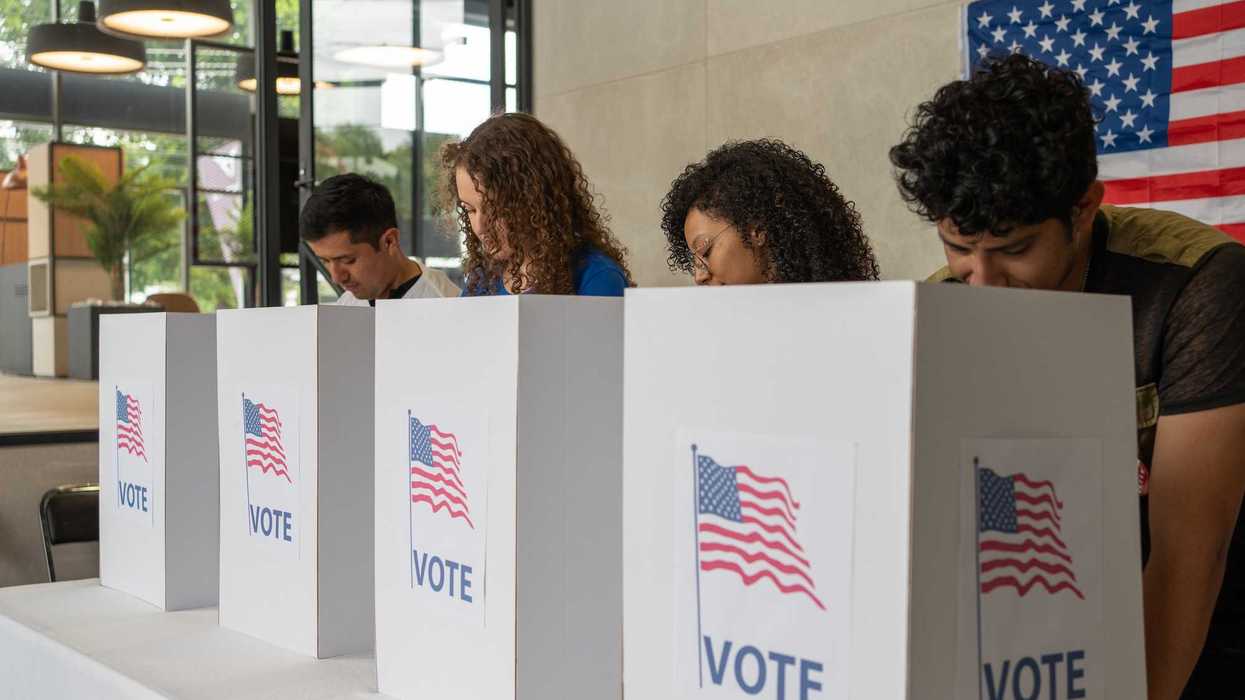
There are a few steps in blockchain-based voting, which uses technology to mirror the process of casting a ballot in person.
First, the system needs to verify a voter's identity — often by having the user upload a photo of a government-issued ID and then a photo or video self-portrait. The system confirms the ID's validity, then facial recognition software makes sure the person in the self-portrait is the person on the ID. Then the user is authenticated as eligible to vote.
Only at that point does blockchain technology enter the process. The system gives each voter a digital token that represents the person's vote and a list of the digital addresses where that token may be used. Each address indicates a vote for a particular candidate or an answer to a ballot question.
Votes remain anonymous. When a voter sends a token, a record is stored simultaneously on several different computers, making it hard for hackers to alter the vote records. After casting the ballot by sending the token, the user receives a unique code for use in looking at the anonymized online vote tally to confirm the vote was counted as intended.
Early results show blockchain may increase turnout. Many of the tests have been for informal ballots, like student government groups and community projects.
However, some election officials in the United States have held small-scale trials of blockchain voting, allowing members of the military stationed overseas to vote electronically rather than by mail.
Last year, West Virginia allowed 144 voters living overseas to cast ballots from 31 different countries using an app developed by a private company called Voatz, which is involved in many of these trials. West Virginia says it plans to continue and expand the trial in 2020. Small-scale trials were also conducted by Denver in its municipal elections in May 2018 and by Utah County, Utah, last August.
The most recent — and largest — was in September's city council election in Moscow. Because of concerns the system was not secure, only three of the Russian capital's 20 precincts allowed voters to use a blockchain-based app from anywhere with an internet connection.
Again, the evidence showed a boost in turnout: It was around 17 percent of registered voters and included a 90 percent turnout of more who registered to use the blockchain system.
However, technological complications barred some from voting, which led at least one losing candidate to object that he would have won had everything worked properly. That sort of problem is what's most worrying for people who hope using mathematical principles and computerized encryption will help more of the public trust election outcomes.
There are several obstacles in the way of blockchain ever becoming useful for large-scale, legally binding voting.
Most people have little understanding of how blockchain systems work. And even experts don't have a way to identify every possible irregularity in online voting. Voting on paper, by contrast, is well studied and easily verified and audited.
When a verified voter establishes an account on the system, that process creates a digital key that identifies them securely when casting a ballot. A more complex key is harder to hack, but also takes more computing resources to verify. The computational power required may make blockchain systems inefficient for voting on a nationwide scale — or even statewide in populous places like California and Texas.
The Moscow system, for instance, initially assigned keys that were too easily hacked. That opened the possibility of voter impersonation, which is bad enough. But that weakness also violated the principle of a secret ballot by letting outsiders know how each person voted.
Other problems with digital voting are separate from the underlying technologies. Even when dealing with current images, facial recognition systems, including the one used by Voatz, have high error rates, especially for non-white voters. Hackers may also try to trick the system.
The device a voter uses to cast a ballot may not be secure, either — and it's not safe to assume the computer networks they communicate over, and the servers storing the data, are safe from manipulation or even random errors.
Proprietary voting apps do not offer the public a way to know whether voters' choices are accurately recorded. Nor do they provide assurance their apps truthfully deliver their ballots' encrypted copy to be counted by election officials.
Voatz has claimed its system has been audited by third parties but has made few details available to the public. West Virginia officials who hired Voatz have also refused to reveal information about how its security was evaluated.
The company has said it would not release that information because of a nondisclosure agreement with the auditors, and for fear its proprietary design might be discovered by competitors.
It's possible blockchain-based voting could boost voter participation rates, but there's no evidence yet it is better at preventing election fraud. With plenty of potential trouble spots outside the system itself, and little public transparency within it, blockchain voting is not yet safe or ready for service.
This article is republished from The Conversation under a Creative Commons license. Click here to read the original article.