



Skip to content
Search

Latest Stories

Follow Us:
Top Stories

Lin-Manuel Miranda, the NRA and Tom Hanks want you to register to vote

Politicians and celebrities take to Twitter on National Voter Registration Day

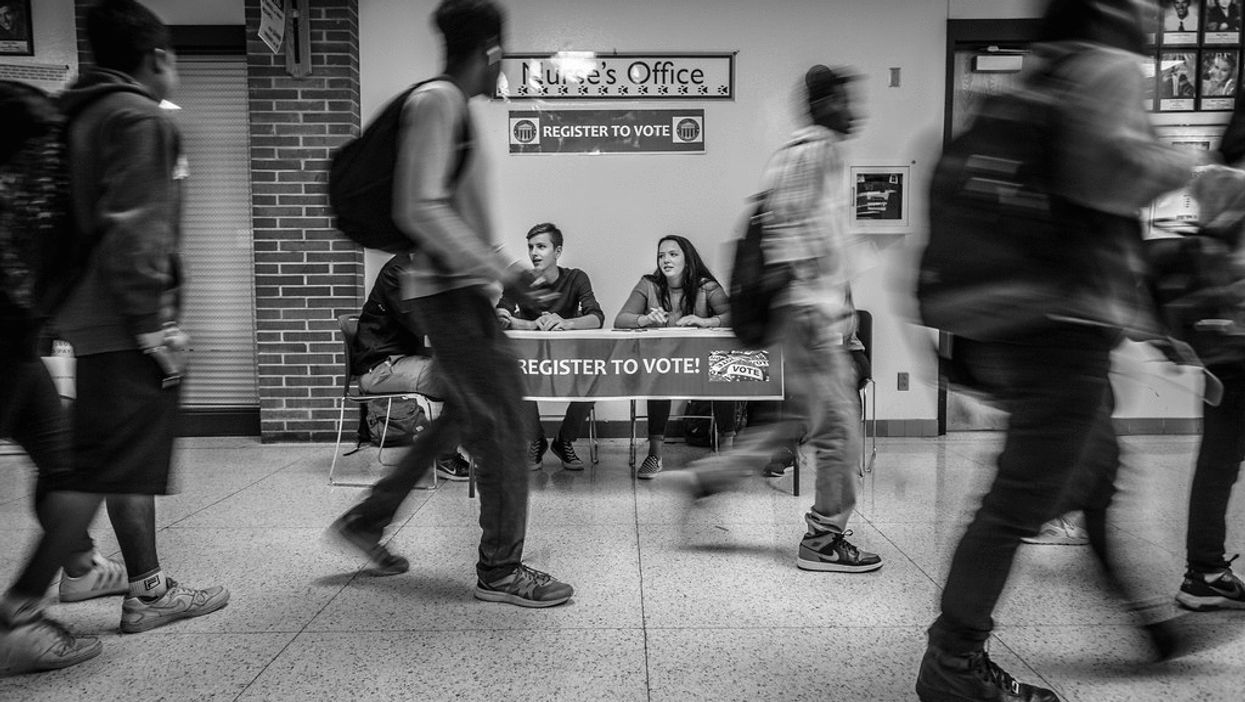
With the presidential election only 406 days away, and the first Democratic nominating contest only 132 days from now, efforts to register voters and encourage election participation have been full steam ahead. Tuesday marks National Voter Registration Day, and politicians and celebrities alike took to Twitter to promote the commemorative day.

Now in its seventh year, it's a nationwide effort by civic educators and state and local officials to boost awareness of registration opportunities — and get as many thousands of new people as possible added to the rolls almost simultaneously.


Among members of Congress, there was a stark difference in who encouraged voter registration, though. Only a few House Republicans tweeted about the holiday, while dozens of House Democrats rallied followers to register to vote.

In the Senate, however, party didn't play as big of a role in determining who celebrated the holiday. Four Republican and seven Democratic members marked the occasion with a tweet.

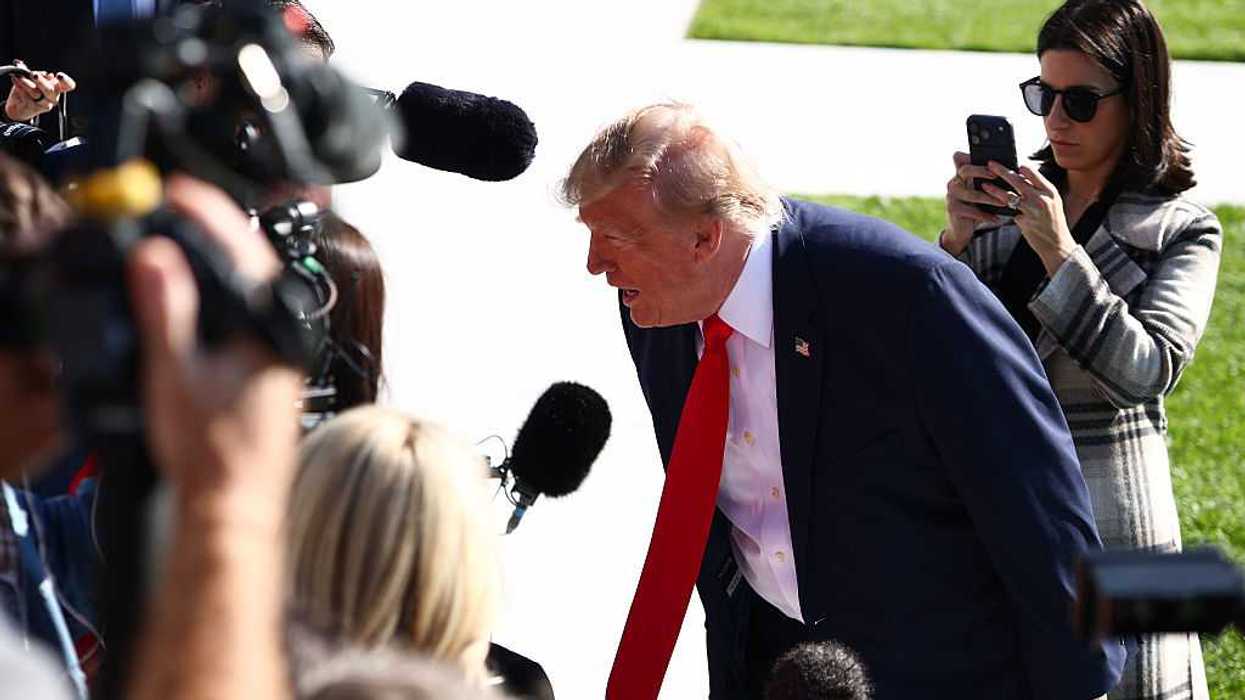
While President Donald Trump was mum on the subject as of 3:30 p.m., his sons Don Jr. and Eric both encouraged followers to register.

Barack and Michelle Obama also chimed in. And many celebrities also promoted National Voter Registration Day, including Lin-Manuel Miranda, Zooey Deschanel, Tom Hanks and Alyssa Milano.









Read More

How the Voting Rights Act Reshaped Texas’ Electoral Maps

President Lyndon B. Johnson, Martin Luther King Jr., Clarence Mitchell Jr., Patricia Roberts Harris, and other guests at the signing of the Voting Rights Act on August 6, 1965.

Yoichi Okamoto - Lyndon Baines Johnson Library and Museum

How the Voting Rights Act Reshaped Texas’ Electoral Maps

In 2002, U.S. Rep. Henry Bonilla, a Republican, nearly lost his South Texas seat to Democrat Henry Cuellar. So when the GOP used its newfound majority in the state Legislature to redraw the voting maps the next year, they sawed through Cuellar’s hometown of Laredo and scattered Latino voters, who tended to vote Democratic, into other districts.

Latino advocacy groups sued under Section 2 of the Voting Rights Act, the cornerstone provision of the law that prevents government bodies from diluting the voting power of specific groups. The Supreme Court found Texas lawmakers had taken away Latino voting power “because they were about to exercise it.”

Keep ReadingShow less
A group of people wait in line to get their ballots to vote in the election.

The National Popular Vote Interstate Compact could reshape presidential elections as Midwest states debate Electoral College reform, political polarization, and the future of winner-take-all voting in America.

Getty Images, SDI Productions

700+ Proposed Amendments Failed, Midwest Voters Can Succeed

The Midwest served as the vanguard and ideological heartland of the Progressive Era, acting as a crucial laboratory for political, social, and economic reforms that later adopted national significance. Midwestern states (the cradle of the movement) pioneered anti-monopoly efforts, democratic, and social improvements.

After 770+ failed proposed U.S. Constitutional Amendments (the most on record for one issue) to remedy the factionalism (21st century polarization) feared by the Framers of the U.S. Constitution.

Keep ReadingShow less
“We Can’t Afford It” Is Never an Acceptable Excuse To Deny Independents a Vote

DC voting rights advocate Lisa D.T. Rice criticized the DC City Council for failing to fund Initiative 83’s semi-open primary system, leaving 85,000 independent voters unable to participate in taxpayer-funded primaries despite overwhelming voter approval in 2024.

Photo by Getty Images on Unsplash.

“We Can’t Afford It” Is Never an Acceptable Excuse To Deny Independents a Vote

WASHINGTON, D.C. - Lisa D.T. Rice spoke before the DC City Council during a Budget Oversight Hearing on May 1 to talk about Initiative 83, the semi-open primary and ranked choice voting measure she proposed that was approved by 73% of voters in 2024.

- YouTube youtu.be

Keep ReadingShow less
The Supreme Court’s Voting Rights Decision Could Reshape Local Government Across Texas

A landmark Supreme Court ruling on the Voting Rights Act could reshape Latino and Black political representation in Texas. Guillermo Ramos and other leaders warn the decision may weaken protections against discriminatory election systems in school boards and city councils.

The Supreme Court’s Voting Rights Decision Could Reshape Local Government Across Texas

Guillermo Ramos remembers seeing few elected leaders who looked like him while he was growing up in the 1980s in Farmers Branch, a fast-growing affluent suburb northwest of Dallas.

Over the years, Latino representation continued to lag, he said. In 2015, after he had become a lawyer, he decided to do something about it.

Keep ReadingShow less