


Originally published by The 19th.
Crystal Mason is waiting for resolution.
On Election Day 2016, at her mother’s urging, the Texas woman went to her local precinct to vote in the presidential election. Mason’s name did not appear on the voter rolls, but a poll worker said she could cast a provisional ballot that would get additional review. The affidavit she signed with her ballot included small print that said it is a felony to vote if a person knows they’re ineligible to cast a ballot.
Months later, officials issued a warrant for Mason’s arrest. It’s when Mason says she learned she was ineligible to vote under Texas law because she was still on supervised release for a federal tax fraud conviction.
Mason’s ballot was never counted in the 2016 presidential election, but her attempt at civic participation sent her back to prison for several months for violating the terms of her federal supervised release. She left behind her three children and other family under her care. Mason doesn’t understand how anyone could think she would risk that.
“You have to show an intent. What was my intent?” Mason told The 19th. “I did nothing wrong but do something that I thought I had the right to do.”
In 2018, a judge convicted Mason of illegal voting, and she was sentenced to five years in prison. Mason is free on bond as she appeals the conviction, and her legal team is expected to file a new briefing in her case this month.
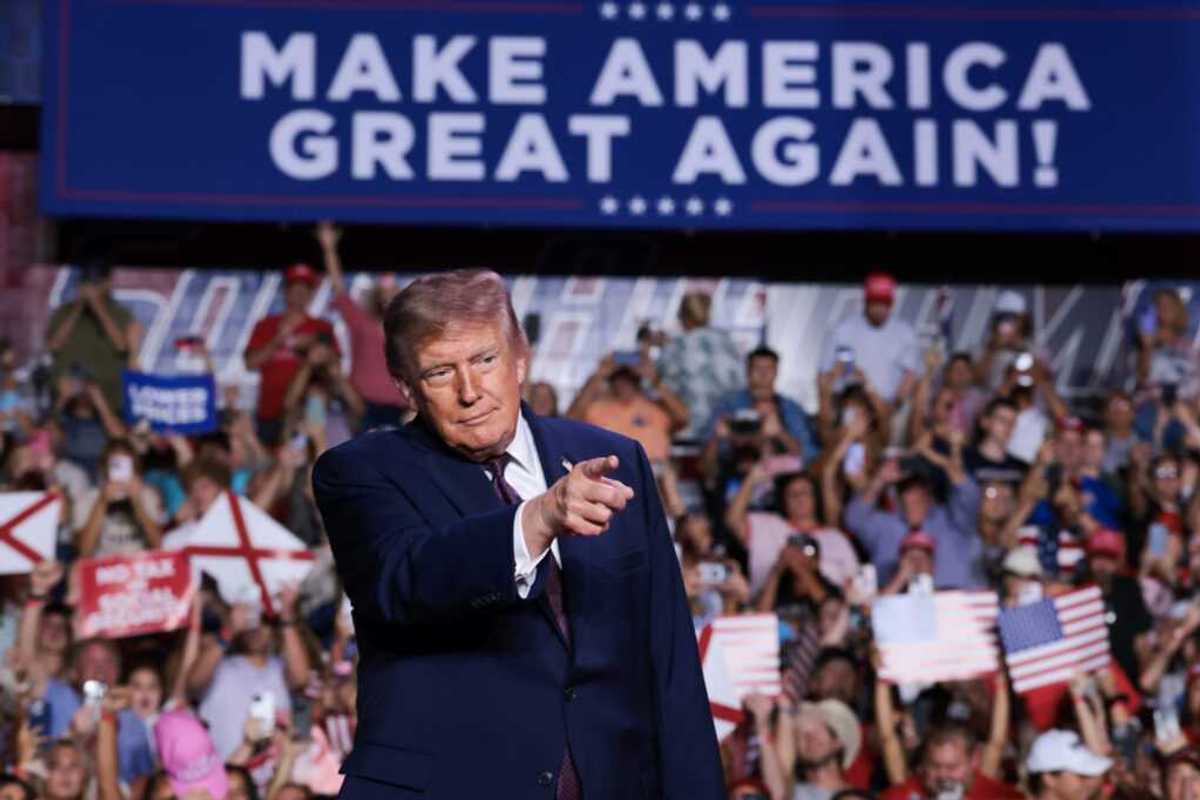
No comprehensive data exist on charges or punishments in voting-related cases, whether they’re related to attempting to register or vote when someone isn’t allowed to, voting twice or voting under a false name. But a number of high-profile cases lately have involved harsh punishment of women of color, particularly Black women like Mason. They come as some Republicans, led by former President Donald Trump, attempt to spread unfounded fears of widespread voter fraud and scapegoat people of color. Voting rights advocates and experts worry that this focus on voter fraud prosecutions could disproportionately affect marginalized communities.
Carla Laroche, a law professor at Washington and Lee University in Virginia who has researched the disenfranchisement of Black women, said the lack of complete data on voter fraud prosecutions doesn’t negate the ways in which narratives get pushed about Black women and women of color when it comes to voting. The end result may discourage their peers from voting.
“The criminalization of Black women is used to push more voter suppression laws,” she said. “On the flip side, it also impacts those who see what Ms. Mason went through and then say, 'That seems like something I may do — and then I will have to go to prison even though it wasn't intentional.' So then de facto disenfranchisement comes into play, and eligible voters don’t vote.”
In Tennessee, activist Pamela Moses, a Black woman, was sentenced earlier this year to six years in prison for trying to register to vote as a felon on probation. Moses said officials told her she could register. Her conviction was dropped after reporting by the Guardian proved Moses’ account.
Rosa Maria Ortega, a Mexican citizen and legal permanent resident in Texas, was convicted and sentenced to eight years in prison in 2017 for illegal voting. She claims she didn’t know her citizenship status prevented her from voting. Ortega was granted parole in 2019 then faced deportation.
LaTosha Brown, co-founder of Black Voters Matter, a national voting rights organization, said voter suppression has targeted Black and Brown voters irrespective of gender. But she noted that white supremacy has also historically centered a patriarchy that is directly challenged by Black women who sit at the intersection of sexism and racism.
“It’s more about what they represent than the individual,” said Brown. The local and state officials want to make examples out of these cases, she said. “They want the Black face. They want the woman. They want the poor person. There’s a particular narrative that otherizes people.”
Mason’s ongoing case comes as Republicans in several battleground states step up their efforts to find voter fraud. While there are cases of voter fraud in every election, it is rare and has not changed the outcome of an election. That hasn’t stopped Republican policymakers from committing resources toward finding cases.
In Georgia, Republican lawmakers this spring approved a bill that gives state investigators more authority to look into allegations of election crimes. In Virginia, the Republican attorney general last month announced an “election integrity unit” of more than 20 attorneys, investigators and paralegals.
In Florida, Republican Gov. Ron DeSantis signed a bill into law in April that created a stand-alone election crimes unit. In August, the office announced the arrest of 20 people on charges of illegally voting in the 2020 election. Some of the voters, many of them residents of heavily Democratic South Florida, have argued that election officials told them they could vote.
Voting rights experts note that policing at the ballot box has a racist past. After the Civil War, states adopted poll taxes, literacy tests and other requirements to keep Black men from voting. After the 19th Amendment was adopted in 1920 and extended the right to vote to women, those policies also kept Black women from voting.
“This is all part of the cycle of voter suppression,” said Gilda Daniels, law professor and author of “Uncounted: The Crisis of Voter Suppression in America.” “We had high turnout in 2020, and instead of passing laws that increase or even celebrate turnout, there’s this onslaught of legislative activity that questions outcomes and creates new laws that criminalize voting.”
Some alleged voter fraud cases that have emerged after the 2020 election show how penalties vary wildly. A case involving an Iowa woman attempting to vote twice resulted in probation and fines; in Pennsylvania, a man who voted on behalf of his dead mother received five years of probation and was prohibited from voting for the next four years. In both instances, the people accused of voter fraud are White.
Laroche said she sees a pattern in how people of color are treated when they aren’t sure about the rules around voting.
“Their confusion loses every time when it's a Black person or another person of color,” she said.
Esosa Osa is the deputy executive director for Fair Fight, a voting rights organization founded by Stacey Abrams, the Democratic nominee for governor in Georgia. Osa pointed to the case of nearly a dozen Black women who flipped a majority-White school board in the Georgia town of Quitman in 2010. A group of mostly Black women, who later became known as the “Quitman 10 + 2,” faced 120 felony counts of voter fraud related to the primary. The investigation was led by the office of Republican Gov. Brian Kemp, then the secretary of state. All the charges were eventually dropped in part over a lack of evidence.
“This hyper criminalization is not new, and breaking democracy in this way for some people will end up breaking democracy for all of us,” Osa said.
A recent survey conducted on behalf of groups including Stand Up America, which advocates for voting rights, found that voters aren’t very aware of voting laws in their state regarding incarceration and felony convictions: A third say they don’t know if incarcerated citizens in their state can vote. Another third say the same about citizens with felony convictions.
Reggie Thedford, deputy political director for Stand Up America, believes Republican politicians are increasingly exploiting the lack of understanding around felony disenfranchisement laws “to score cheap political points at the expense of the most vulnerable individuals.” The organization advocates a guaranteed right to vote for all citizens.
“The truth is that, in the vast majority of states, formerly incarcerated citizens must navigate complicated or unclear legal requirements to restore their right to vote, and, in some cases, government officials misinform or misguide them,” he said in a statement to The 19th. “When they inevitably make a mistake, they’re further punished by the criminal justice system. It’s a no-win situation.”
Two years after Mason’s 2018 conviction, a court of appeals affirmed it, ruling that Mason’s main legal defense — that she didn’t know she was ineligible to vote — was “irrelevant” to the case. But in May, Texas’s highest criminal court disagreed, ruling that the state had to show Mason knew about her voter ineligibility. Her case is now back with the lower court under that new guidance.
Mason said she’s not going to be deterred from having her voice heard. Since finishing her supervised release, she has become eligible to vote and cast a ballot in the Texas primary this year — a moment she described as “exciting.” She has also become more involved in voting rights issues, organizing voter registration drives. She believes her appeal will be successful, but the journey to it has been long.
“Five years later, going on six years now, I have been in the limbo of if I stay out or if I go back to prison — just imagine that whole burden put on someone,” she said.









The President Invited Iran to Bomb My Home