
Skip to content
Search

Latest Stories

Follow Us:
Top Stories

What is an American Hero?

What is an American Hero?

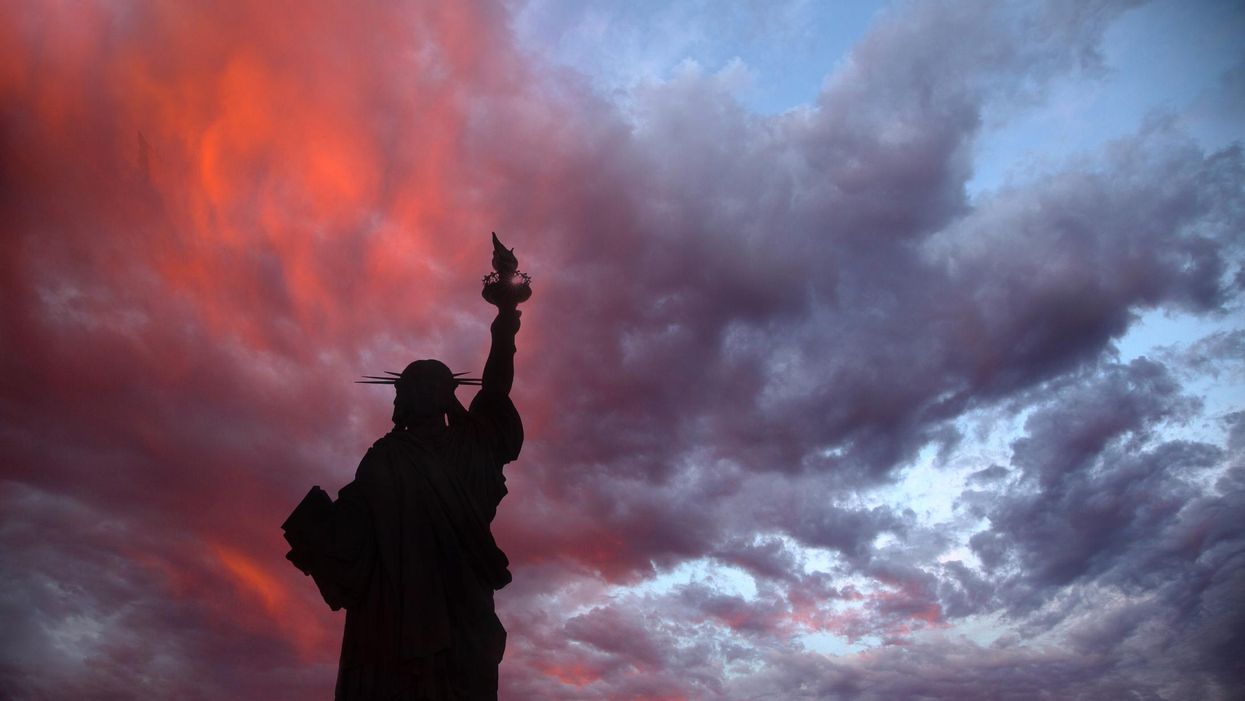
Statue of Liberty


Grant Faint/Getty Images

What is an American Hero? Sometimes American Heroes are famous people. However, not all famous people are heroes.

As we recently honored the 20th anniversary of 9/11, let us celebrate American heroes. These American heroes are ones that we may not know the names of; the first responders, victims, and their families.


September 11th is forever etched in the souls of those of us who witnessed the event.

Ten days after September 11th, Enrique Iglesias performed 'Hero' for the 'America: A Tribute to Heroes'telecast on Sept. 21, 2001. It is a profoundly moving rendition of a beautiful song.

The Fulcrum will be exploring American Heroes in greater depth in the coming months. Who is your American hero? What does the term American hero mean to you? What are the characteristics of a hero that you admire and aspire to? We would love to hear from you.

Please feel free to share your thoughts via email to: pop-culture@fulcrum.us

.


Read More

Is the U.S. at "War" with Iran?

A woman sifts through the rubble in her house in the Beryanak District after it was damaged by missile attacks two days before, on March 15, 2026, in Tehran, Iran.

(Photo by Majid Saeedi/Getty Images)

Is the U.S. at "War" with Iran?

This question is not an exercise in double-talk. It is critical to understand the power that our Constitution grants exclusively to Congress, and the power that resides in the President as Commander-in-Chief of the military.

The Constitution clearly states that Congress has the power to declare war. The President does not have that power. The War Powers Resolution of 1973 recognizes that distribution of power by saying that a President can only introduce military force into an existing or imminent hostility if Congress has declared war or specifically authorized the President to use military force, or there is a national emergency created by an attack on the U.S.

Keep ReadingShow less
Healthcare Jobs Surge Mask a Productivity Crisis—and Rising Costs
person sitting while using laptop computer and green stethoscope near

Healthcare Jobs Surge Mask a Productivity Crisis—and Rising Costs

Healthcare and social assistance professions added 693,000 jobs in 2025. Without those gains, the U.S. economy would have lost roughly 570,000 jobs.

At first glance, these numbers suggest that healthcare is a growth engine in an otherwise slowing labor market. But a closer look reveals something more troubling for patients and healthcare professionals.

Keep ReadingShow less
A large group of people is depicted while invisible systems actively scan and analyze individuals within the crowd

Anthropic’s lawsuit against the Trump administration over a Pentagon “supply-chain risk” label raises major constitutional questions about AI policy, corporate speech, and political retaliation.

Getty Images, Flavio Coelho

Anthropic Sues Trump Over ‘Unlawful’ AI Retaliation

Anthropic’s dispute with the Trump administration is no longer just about AI policy; it has escalated into a constitutional test of whether American companies can uphold their values against political retaliation. After the administration labeled Anthropic a “supply‑chain risk”, a designation historically reserved for foreign adversaries, and ordered federal agencies to cease using its technology, the company did not yield. Instead, Anthropic filed two lawsuits: one in the Northern District of California and another in the D.C. Circuit, each challenging different aspects of the government’s actions and calling them “unprecedented and unlawful.”

The Pentagon has now formally issued the supply‑chain risk designation, triggering immediate cancellations of federal contracts and jeopardizing “hundreds of millions of dollars” in near‑term revenue. Anthropic’s filings describe the losses as “unrecoverable,” with reputational damage compounding the financial harm. Yet even as the government blacklists the company, the Pentagon continues using Claude in classified systems because the model is deeply embedded in wartime workflows. This contradiction underscores the political nature of the designation: a tool deemed too “dangerous” to be used by federal agencies is simultaneously indispensable in active military operations.

Keep ReadingShow less