

Every election now feels existential.
That's the word NYU law professor Richard Pildes used in a recent New York Times interview with Sarah Isgur: many Americans on both sides of the political spectrum are convinced the country will never be the same if the other side wins. He points to a striking pattern. Since 2000, control of the House, the Senate, or the White House has changed hands in every election but two. Razor-thin margins, enormous stakes, and fading trust in institutions add up to real dread.
That fear isn't just hyperbole, or parties stoking anxiety to raise money and drive turnout. The past few cycles have given people real reasons for unease: January 6, years of election deniers making their voices the loudest in the room, and last year's National Guard deployments and ICE raids in American cities. In Georgia, where I live, voters watched federal agents raid the Fulton County election offices in January. All of it chips away at voters' trust in the foundation of a free and fair nation.
The people who run our elections understand that dread, and they're taking it seriously. Last month, South Carolina election officials gathered in Charleston to rehearse how they would respond to Election Day disruptions.
I understand the dread, too. We have real scenarios to prepare for, and civil society is preparing for them alongside election officials. But the loudest voices shouldn't set the tone for November. Arguing against the dread isn't enough. We can outnumber it with something joyful and celebratory — an alternative to election anxiety.
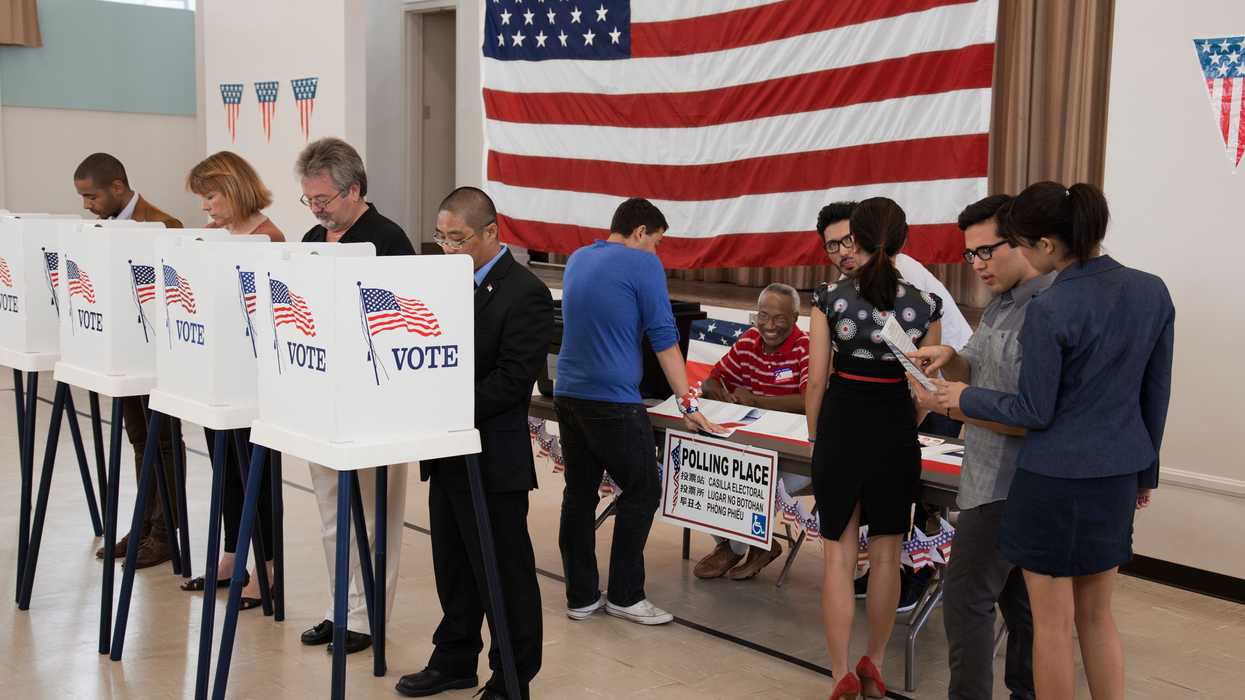
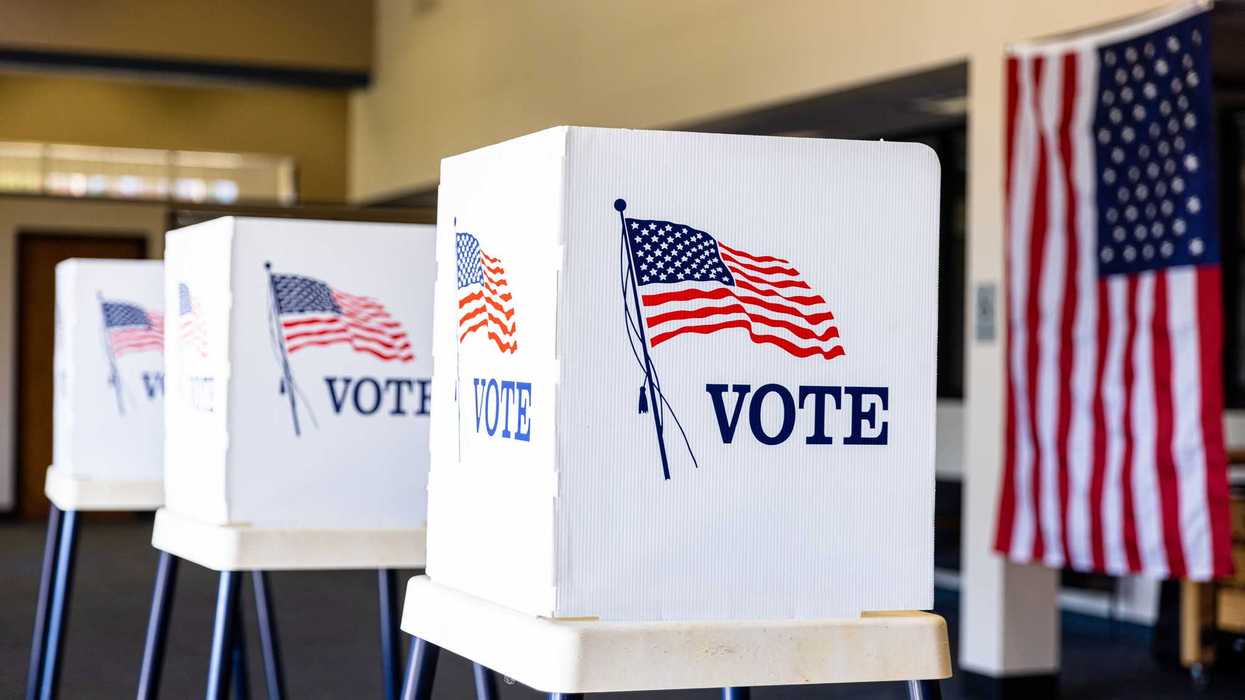
I've seen what that looks like. On an early morning this May, I stood at Loomis Plaza in Atlanta's Grant Park and watched something I wish every anxious American could see. A young family walked together toward the polling place. A veteran smiled and waved as he left the building. People passed by, chatting, going about their business. Nobody asked anyone who they were voting for. Everyone showed up for something bigger than their individual politics, taking part in a democratic act that is both ordinary and remarkable — quietly, joyfully, trusting that their votes would count.
What I was watching was Project HALO, an effort led by The Chamberlain Network. HALO brings together veterans, military families, faith leaders, legal professionals, and local volunteers to create a welcoming, celebratory, nonpartisan presence around elections, so every voter feels welcome casting a ballot. Our partners span the political spectrum and come from every corner of civil society. We disagree about plenty, but we agree on this. We piloted the model this spring in Georgia, Ohio, and Pennsylvania, and this fall we are working in five states: Georgia, Michigan, North Carolina, Ohio, and Pennsylvania.
Project HALO is still recruiting volunteers in all five states. The need is greatest in our priority counties — in metro Atlanta, that means Cobb and DeKalb. Anyone can sign up at halovote.org/volunteer. Volunteers will help staff community gatherings just outside the legal buffer around polling places, where the mood is closer to a block party than a standoff.
But HALO can't be everywhere, and combating existential dread isn't a job a handful of organizations can do alone. It will take whole communities stepping up, and there are plenty of ways to help.
We need poll workers. Counties across the country are recruiting for the fall, and their deadlines are coming up fast. Poll workers are the quiet backbone of what I saw in Grant Park: neighbors checking in neighbors, answering questions, handling every ballot with care. Nothing builds trust in an election like seeing up close how carefully it is run. Anyone who can give a day should contact their county election office soon.
Not everyone can give a full day, but everyone can play a role. Faith leaders can preach calm and neighborliness in the weeks ahead and open their doors for voter information nights. Legal professionals can be a steady, knowledgeable resource for volunteers and voters with questions about the rules. Local businesses and civic clubs can host their own community gatherings. All of us can walk a neighbor through a voting plan, offer a ride, or check on the older folks down the street. And when a rumor circulates in a group chat or on social media, any of us can point people to the county election office instead of passing it along.
Election Day can be something to look forward to. The line outside a polling place can be the friendliest spot in town. The people checking in voters can be neighbors from church or the ballfield. Every voter, whoever they're voting for, can be welcomed and thanked for showing up. That is what self-government looks like when we do it together, and it is within reach.
When I picture November, I don't see the scenes from the worst-case forecasts. I see Loomis Plaza. I see that veteran waving on his way out the door, as he'd just done the most ordinary thing in the world. Because he had. Project HALO is doing its part. It will take all of us to do the rest. The anxiety is real, but so is a community that shows up for one another, and together we can overcome it. Early voting is already underway in some states, and in Georgia it begins October 12. Come stand with us at halovote.org/volunteer.
Christopher Purdy is the founder and CEO of The Chamberlain Network, a national nonprofit that mobilizes veterans for civic engagement. He is an Army National Guard veteran who deployed to Iraq in 2011.






The President Invited Iran to Bomb My Home