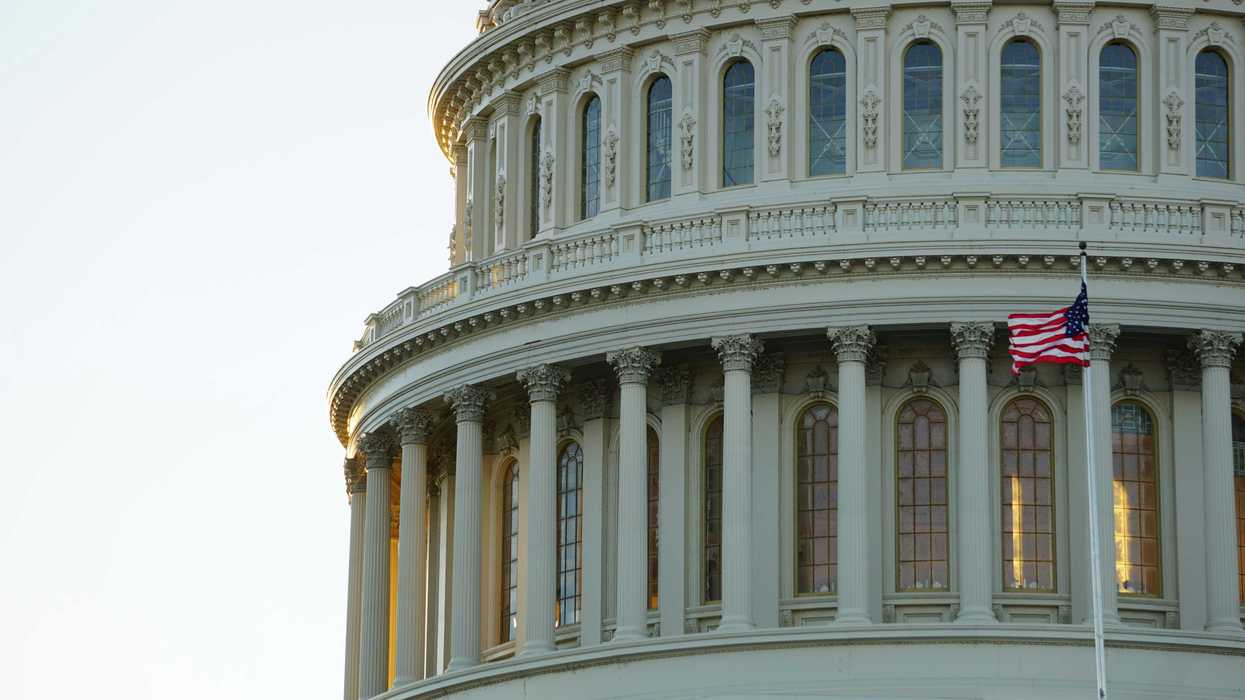

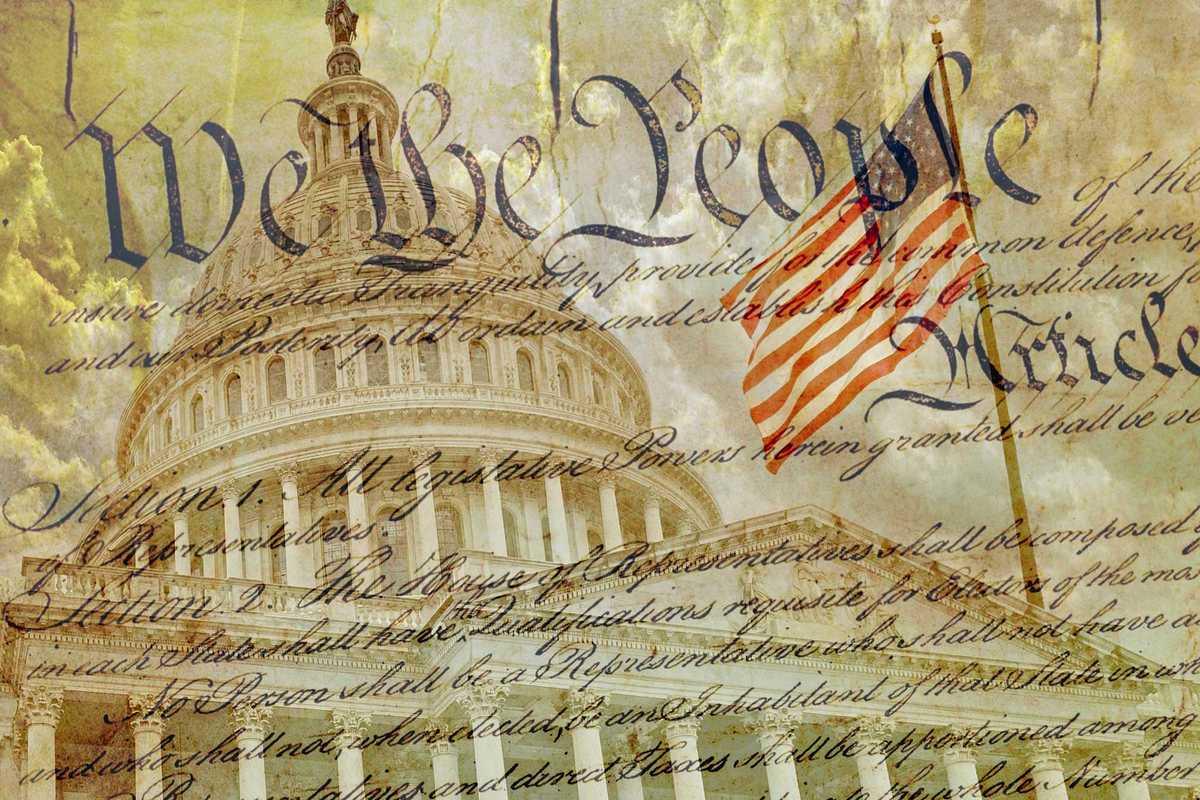

For 250 years and counting, Americans have celebrated Independence Day on July 4 through fireworks, concerts, parades, barbecues, and more. By contrast, Constitution Day arrives soon after, on September 17, with far less fanfare. It is not a time to hear patriotic medleys on the radio, enjoy 20% off a new air-conditioner, watch a hot-dog-eating contest, or exchange cheerful greetings with neighbors. The observance marks the anniversary of the moment when 39 delegates signed our nation’s founding document at the Constitutional Convention in Philadelphia on September 17, 1787. Constitution Day came and went last month with little public awareness. But the observance should inspire all Americans to protect our cherished Constitution throughout the year.
Presidents of the United States recite an oath of office to “preserve, protect and defend the Constitution of the United States.” This oath, familiar to many Americans who watch Inauguration Day ceremonies, is mandated by the Constitution itself (Article II, Section 1, Clause 8). Public officials, judges, service members, and lawyers like me also swear oaths to support the Constitution as part of their public or professional roles.
While oaths may obligate certain people to defend the Constitution, it is critical that all of us play a role in its defense. You can speak out and take action to help sustain our democracy. This is something we must never take for granted.
Ratified in 1791, the Bill of Rights, along with subsequent amendments, protects such crucial rights as freedom of speech, freedom of the press, peaceful assembly, freedom of religion, due process, equal protection, and more. The Bill of Rights further declares that powers not delegated to the United States by the Constitution, nor prohibited by it to the states, are reserved to the states or to the people. Benjamin Franklin expressed his support for such popular sovereignty at the Constitutional Convention in 1787, declaring: “In free governments, the rulers are the servants and the people their superiors and sovereigns.”
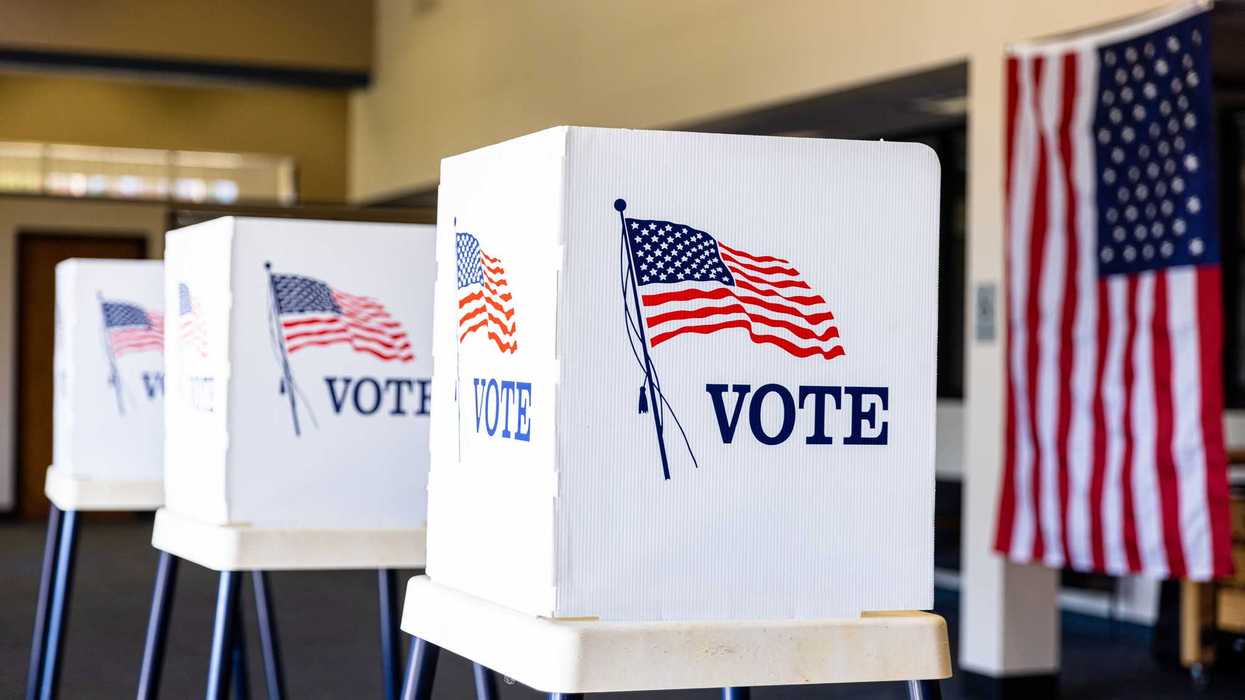
If you’re like most Americans and have not taken an oath to defend the Constitution, you might be hesitant to “get involved,” comparing yourself to activists or policy experts. But this is about our government, not your particular background. A résumé is not required to add your voice at a school board or town hall meeting, march in a peaceful protest, circulate a petition, or vote.
Defending the Constitution also isn’t reserved for any single political party or ideology. Throughout U.S. history, people with a range of values and beliefs have invoked the Constitution to advance their views. Doing so requires us to respect constitutional limits even when they conflict with our political opinions.
In 1770, John Adams took an enormously unpopular position by insisting that Captain Thomas Preston and the eight British soldiers implicated in the Boston Massacre get a fair trial and served as their attorney. Preston was acquitted, and the soldiers’ trial resulted in six acquittals and two lesser convictions of manslaughter rather than murder. This powerful story shows how one of America’s founders believed that consistent application of rights and the rule of law were essential for a healthy nation.
Defending the Constitution does not require us to think in lockstep. On the contrary, constitutional issues are often complicated, and it is the process of disagreement and debate that enables us to work through them. The Constitution itself was the product of disagreement and compromise, with Federalists and Anti-Federalists at odds throughout ratification.
Even the U.S. Supreme Court has overturned its own precedents. In 1896, the Court’s ruling in Plessy v. Ferguson established the “separate but equal” principle. Nearly six decades later, Brown v. Board of Education of Topeka rejected that principle, holding in 1954 that racially segregated public schools violate the Equal Protection Clause of the Fourteenth Amendment and that “separate but equal” has no place in public education.
The Constitution was designed to permit such change. As the Irish playwright George Bernard Shaw wrote, “Progress is impossible without change, and those who cannot change their minds cannot change anything.” Through Article V, the Constitution established an amendment process, which has led to fundamental changes, including abolishing slavery, expanding voting rights, limiting presidential terms, and lowering the voting age to 18.
When we ignore the Constitution, or casually invoke it without understanding it, disagreements become harder to navigate because we lose our framework for resolving them. Soon after retiring as a Supreme Court justice, Sandra Day O’Connor emphasized the importance of constitutional education in a 2007 interview, warning “You don’t inherit that knowledge through the gene pool.” Constitution Day exists in its current form in large part because a retired medical technologist, Louise Leigh, studied the Constitution and took action to encourage constitutional awareness.
As an attorney, I have heightened responsibility because of the oaths I have taken, and I have written this piece with those oaths in mind. But my oaths do not give me greater ownership of the framework of our self-government than any other American. Helping to uphold the Constitution, whether through speaking, writing, voting, petitioning, assembling, serving, learning, or teaching, is key to sustaining our constitutional democracy.
Constitution Day may be Independence Day’s quieter sibling, but it should serve as an annual reminder of our individual and collective responsibility. Constitution Day is September 17, but every day is an opportunity to express an opinion and play a role in shaping history’s next chapter. Through greater appreciation and understanding, we the people can ensure that our Constitution remains the meaningful vehicle for sustaining our democracy, and that it grows as we do.
Ron Leshnower is an attorney, author, and volunteer with Lawyers Defending American Democracy (LDAD) as the New York State Lead for its Meeting the Moment initiative.