



Skip to content
Search

Latest Stories

Follow Us:
Top Stories

15 states join legal fight to keep House districts based on total population

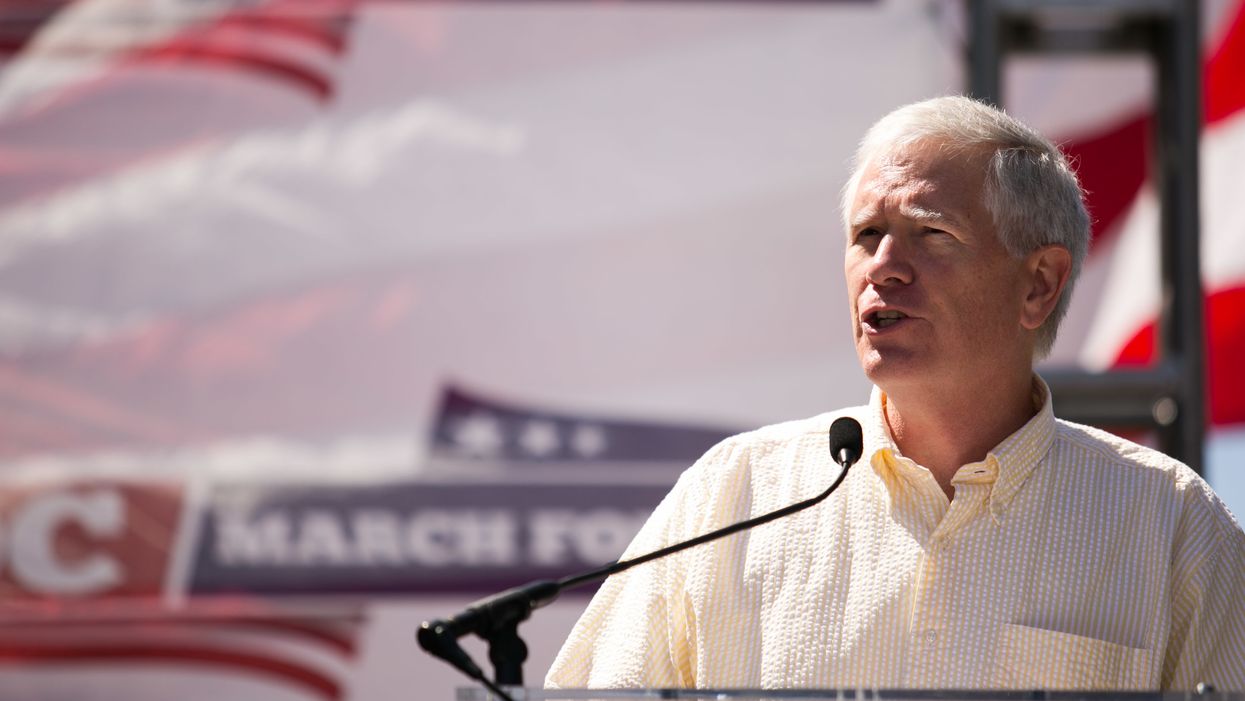
Rep. Mo Brooks

GOP Rep. Mo Brooks has joined the state of Alabama in a lawsuit challenging the Commerce Department practice of counting everyone (not just citizens) for reapportionment.

Drew Angerer/Getty Images

A federal judge is allowing a coalition of 15 states and the District of Columbia to be defendants in a lawsuit seeking to exclude noncitizens from being counted in the run-up to the re-allocation of congressional seats.

Last year the state of Alabama and one of its Republican congressmen, Mo Brooks, sued the Trump administration, arguing that the counting of undocumented immigrants in census figures used for determining reapportionment unfairly benefits states with higher numbers of noncitizens.

Alabama contends that counting the whole population — the practice used for apportionment since Congess began — rather than just citizens will cost the state one of its seven House seats (and therefore one of its electoral votes) following the 2020 census tally.


Alabama's suit is a long shot: Not only does the Constitution specify that a census include "the whole number of persons in each state" regardless of citizenship status, but also the Supreme Court ruled in 2016 against two Texas residents who challenged the practice of using the whole population to draw the state's legislative districts.

But the decision permitting other states to come to the defense of the Commerce Department and its Census Bureau, made last week by U.S. District Judge David Proctor of Birmingham, nonetheless raises the profile of a case that has been plodding along in the shadows of the Trump administration's now-abandoned efforts to add a citizenship question to next year's national population count.

Read More

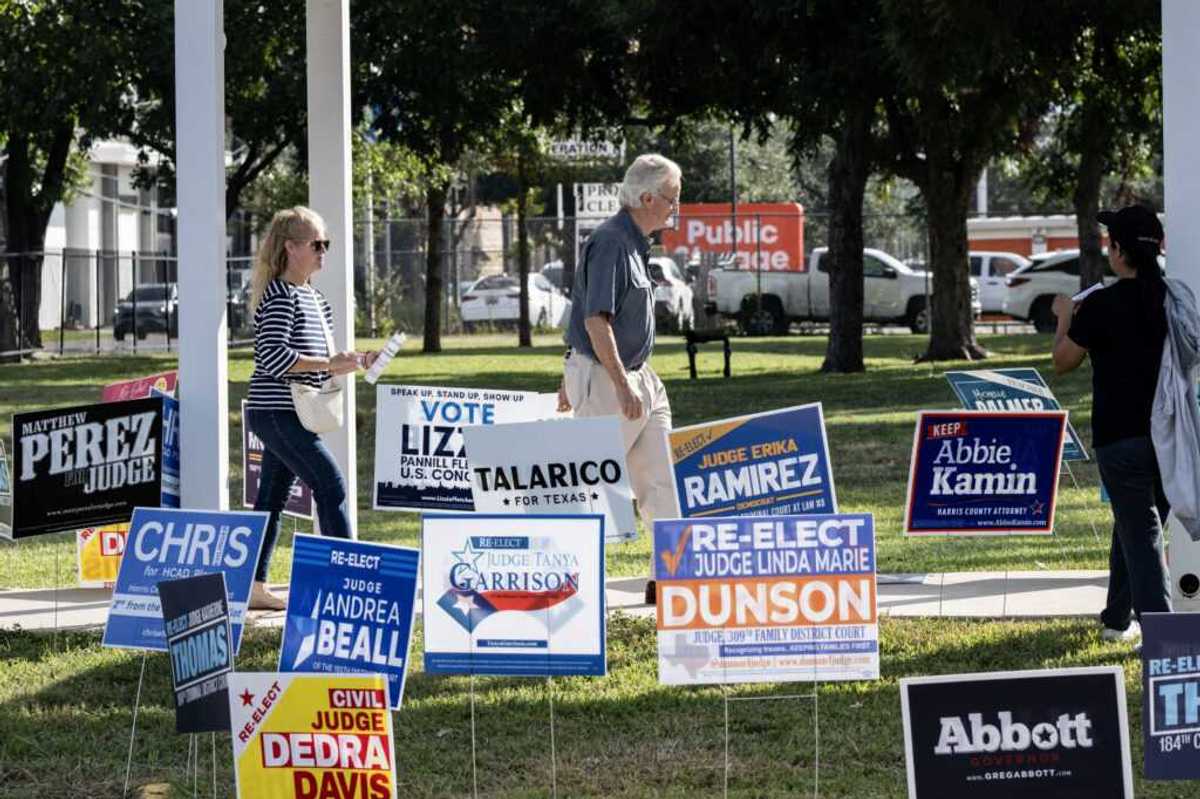
Texas Is Cross-Referencing Its List of Potential Noncitizen Voters With Driver’s License Records

Texas Department of Public Safety Region II Headquarters on Oct. 1, 2025 in Houston. The state is using DPS records to cross-check a list of registered voters it flagged as potential noncitizens using a federal database.

Antranik Tavitian for The Texas Tribune

Texas Is Cross-Referencing Its List of Potential Noncitizen Voters With Driver’s License Records

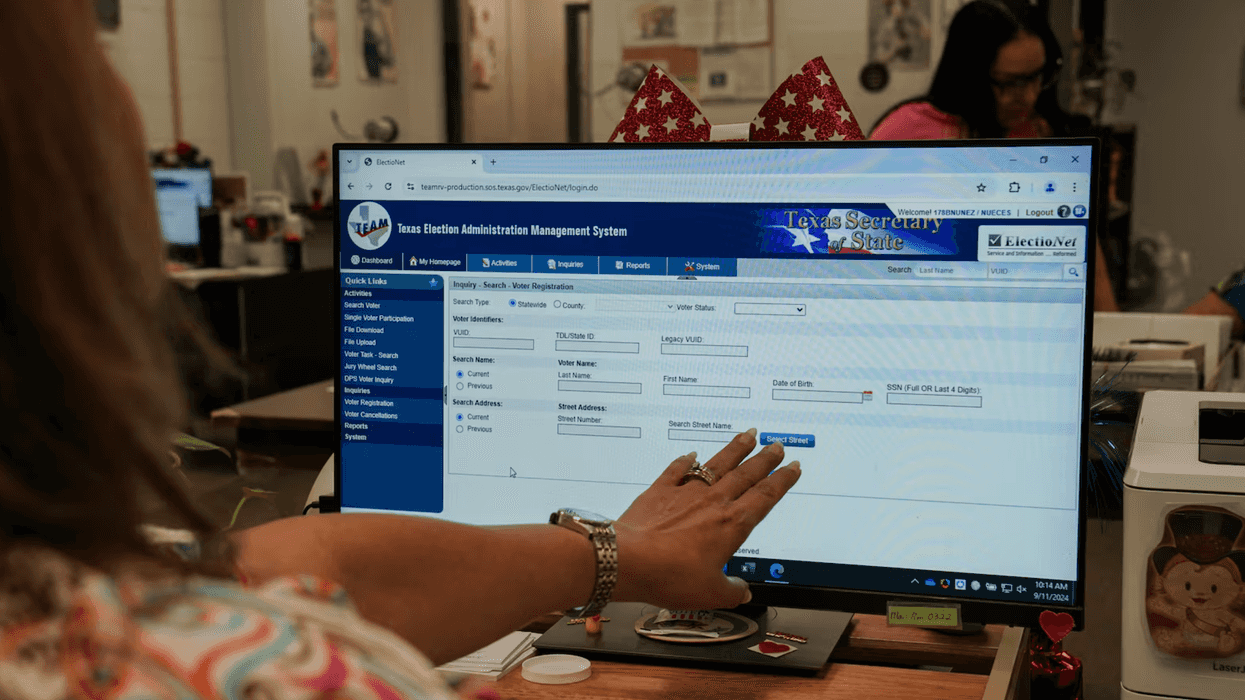
The Texas Secretary of State’s Office is now checking whether 2,724 registered voters it flagged as potential noncitizens may have already provided proof of citizenship to the Texas Department of Public Safety, elections division director Christina Adkins said during a meeting with county election administrators earlier this month. That check comes after county elections officials found the federal database used to generate the list flagged some voters who had already given citizenship documentation to DPS when they registered to vote.

Texas officials in October sent counties the list of potential noncitizens generated by checking the state’s voter roll of more than 18 million registered voters against a federal database used to verify citizenship. Soon after the state released the list, counties began to investigate the flagged registrants and mail notices asking them to provide documented proof of citizenship.

Keep ReadingShow less
The American Experiment at the Brink Due To  Minority Rule

Can America overcome minority rule? Examining the Electoral College, NPVIC, campaign finance, and democratic reform in the 21st century.

adamkaz / Getty Images

The American Experiment at the Brink Due To Minority Rule

The challenge for continuing the American Experiment is recovering from the "Second Gilded Age" (1980s to the present). As of early 2026, the U.S. national debt is 122% to 125% of Gross Domestic Product (GDP). This situation has been exacerbated since 2000, when the U.S. national debt as a percentage of GDP was 33% to 35%. Americans can attribute this worsening situation to two non-popular vote presidents, Bush-43 and Trump-45. Directly, during their terms, and indirectly, with the aftermath of the 2008 Great recession and the aftermath of the COVID-19 pandemic. In 1894, toward the end of the 19th century “Gilded Age," the U.S. national debt was approximately 7% of gross domestic product GDP.

Minority rule occurs when a numerical or ideological minority holds the power to consistently thwart the will of the majority or govern over them. It thrives through the coordinated reinforcement of specific electoral, institutional, and legal mechanisms.

Keep ReadingShow less
Full frame shot of pins that say “vote” with red, white, and blue American flag theme.

An analysis of Project 2025, the Electoral College, and the National Popular Vote Interstate Compact, examining democracy, representation, and presidential elections.

Adrienne Bresnahan / Getty Images

Spirit of 1776 – Rejected by Project 2025, Embraced by NPVIC

Project 2025 is a structural undoing of the "Spirit of 1776." It fundamentally undermines the foundational principles of the Declaration of Independence in the following areas: democratic representation, equality, liberty, and checks/balances. The National Popular Vote Interstate Compact (NPVIC) restores the founding ideals of civic equality.

Spirit of 1776 – Rejected by Project 2025, Embraced by NPVIC

Keep ReadingShow less
California Voters Don’t Like Either Party. Good Thing the Primary Doesn’t Belong to The Parties.

California voters increasingly distrust both major parties. Here's why the state's Top Two primary gives independent voters more power to shape elections.

Image: Duncan Shelby on Alamy.

California Voters Don’t Like Either Party. Good Thing the Primary Doesn’t Belong to The Parties.

SAN DIEGO, Calif. - California voters have already received ballots for the June 2 primary, and the message they have going into these elections may not be what the political class wants to hear: They are not thrilled with either major party.

A recent analysis from the Public Policy Institute of California (PPIC) found that majorities of likely voters have unfavorable views of both parties—61% unfavorable toward the Democratic Party and 70% unfavorable toward the Republican Party.

Keep ReadingShow less