
Skip to content
Search

Latest Stories

Follow Us:
Top Stories

Claim: Universal mail-in voting has led to widespread voter fraud. Fact check: False

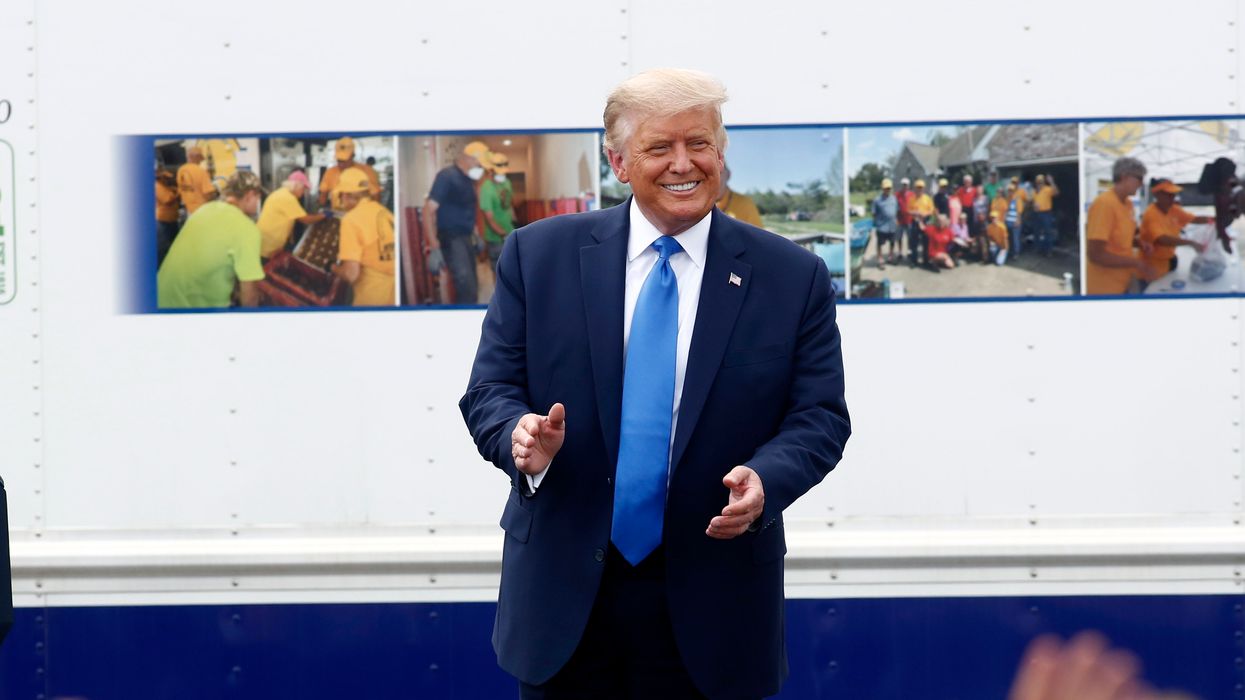
President Donald Trump
Brian Blanco/Getty Images

Nine states and Washington, D.C., will mail ballots directly to voters (what is known as universal mail-in voting), accounting for 44 million voters — half of President Trump's claim. Several states, including Colorado, Nevada and Washington have conducted primary elections in which ballots were mailed to all eligible voters. In Nevada some ballots were rejected largely because they were not properly filled out, but there were no reports of widespread voter fraud in those states


The Heritage Foundation, a conservative think tank, is keeping track of voter fraud during the 2020 election. Its database lists 13 cases so far. None occurred in states with universal mail-in voting.

Read More

The Democracy for All Project

The Democracy for All Project

American democracy faces growing polarization and extremism, disinformation is sowing chaos and distrust of election results, and public discourse has become increasingly toxic. According to most rankings, America is no longer considered a full democracy. Many experts now believe American democracy is becoming more autocratic than democratic. What does the American public think of these developments? As Keith Melville and I have noted, existing research has little to say about the deeper causes of these trends and how they are experienced across partisan and cultural divides. The Democracy for All Project, a new partnership of the Kettering Foundation and Gallup Inc., is an annual survey and research initiative designed to address that gap by gaining a comprehensive understanding of how citizens are experiencing democracy and identifying opportunities to achieve a democracy that works for everyone.

A Nuanced Exploration of Democracy and Its Challenges

Keep ReadingShow less
America Is Not a Place, It’s an Epic Road Trip
empty curved road
Photo by Holden Baxter on Unsplash

America Is Not a Place, It’s an Epic Road Trip

Despite its size, Afghanistan has only a single highway running through it. It’s called National Highway 1, or Ring Road, and I spent a little time on it myself years ago. It has no major intersections, not really. Just 1,400 miles of dusty road that cuts through mountains and across minefields to connect small towns and ancient cities.

Over many decades, America helped build and rebuild Ring Road to support free trade and free movement throughout the country.

Keep ReadingShow less
A “Bad Time” To Be Latino in America

person handcuffed, statue of liberty

AI generated

A “Bad Time” To Be Latino in America

A new Pew Research Center survey reveals that most Latinos in the United States disapprove of President Donald Trump’s handling of immigration and the economy during his second term, underscoring growing pessimism within one of the nation’s fastest-growing demographic groups. Conducted in October, the survey highlights widespread concerns about deportation efforts, financial insecurity, and the broader impact of Trump’s policies on Hispanic communities.

Key Findings from the Pew Survey
  • 65% disapprove of Trump’s immigration policies, citing heightened deportation efforts and increased immigration enforcement in local communities.
  • About four-in-five Latinos say Trump’s policies harm Hispanics, a higher share than during his first term.
  • 61% of Latinos believe Trump’s economic policies have worsened conditions, with nearly half reporting struggles to pay for food, housing, or medical expenses in the past year.
  • 68% feel their overall situation has declined in the past year, marking one of the bleakest assessments in nearly two decades of Pew surveys.

Immigration Enforcement and Fear of Deportation

The study found that about half of Latinos worry they or someone close to them might be deported, reflecting heightened anxiety amid intensified immigration raids and arrests. Many respondents reported that enforcement actions had occurred in their local areas within the past six months. This fear has contributed to a sense of vulnerability, particularly among mixed-status families where U.S. citizens live alongside undocumented relatives.

Keep ReadingShow less