


In the days following the murder of conservative activist Charlie Kirk, I wrote Governor Cox’s Prayer Wasn’t Just Misguided—It Was Dangerous, an article sharply criticizing Utah Gov. Spencer Cox for his initial public response. Rather than centering his remarks on the victim, the community’s grief, or the broader national crisis of political violence, Cox told reporters that he had prayed the shooter would be from “another state” or “another country.” That comment, I argued at the time, was more than a moment of emotional imprecision—it reflected a deeper and more troubling instinct in American politics to externalize blame. By suggesting that the perpetrator might ideally be an outsider, Cox reinforced long‑standing xenophobic narratives that cast immigrants and non‑locals as the primary sources of danger, despite extensive evidence that political violence in the United States is overwhelmingly homegrown.
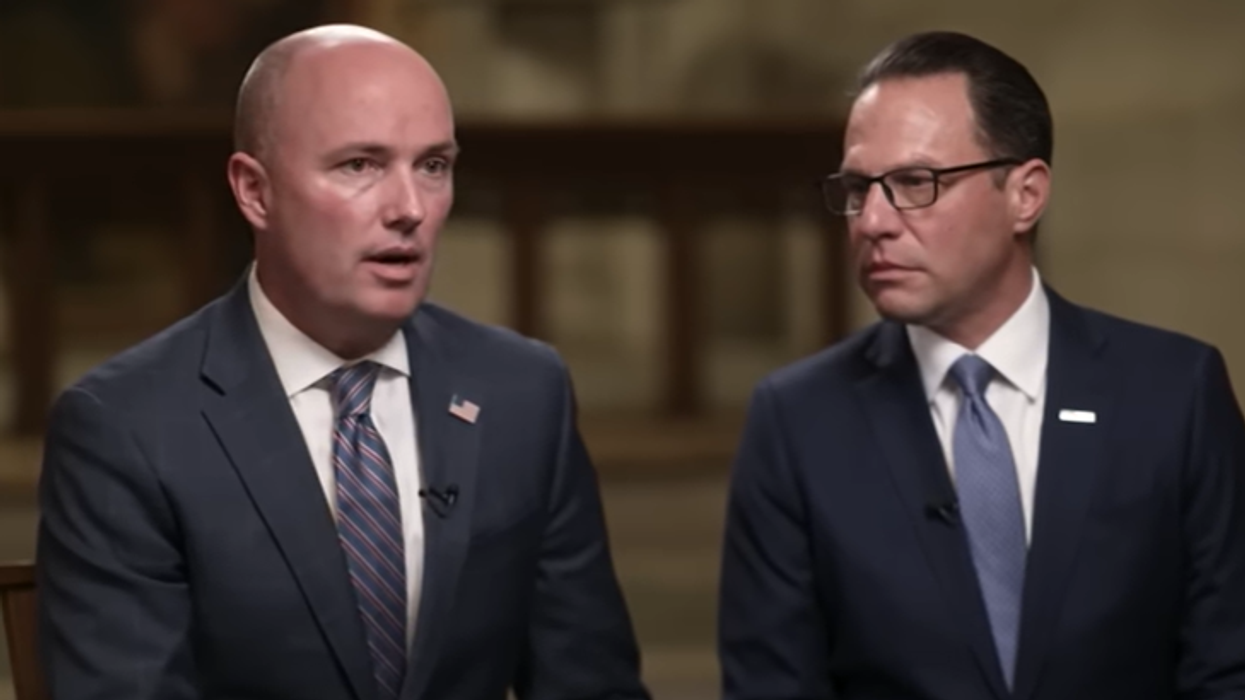
Recently, Cox joined Pennsylvania Governor, Democrat Josh Shapiro, issuing a rare bipartisan warning about the escalating threat of political violence in the United States, calling on national leaders and citizens alike to “tone it down” during a joint interview at the Washington National Cathedral.
- YouTube www.youtube.com
The conversation, conducted by CNN’s Dana Bash, brought together two leaders whose states have been shaken by high‑profile acts of political extremism. “Political violence traumatized our states,” Bash said in the introduction to the segment, framing the urgency of their message.
Shapiro, who has faced multiple politically motivated attacks—including an assassination attempt involving a firebombing at the Pennsylvania governor’s mansion—said the country is at a breaking point. “We cannot keep going down this road where disagreement becomes dehumanization,” he told CNN. “Leaders have a responsibility to turn down the rhetoric before someone else gets hurt.”
Cox echoed the sentiment. “We’ve seen firsthand what happens when people stop seeing each other as Americans,” he said. “This is not about left or right. It’s about whether we can continue to live together in a functioning democracy”.
Both governors emphasized that political leaders—including President Donald Trump—must help reduce tensions. Shapiro was direct: “Everyone, including the president, has a role to play in lowering the temperature”.
Cox, who has championed a national depolarization initiative called Disagree Better, argued that Americans must relearn how to debate without hatred. “We’re not going to agree on everything,” he said. “But we can disagree in ways that don’t lead to violence”.
Despite their shared message, the two occasionally diverged on policy issues such as social media regulation and economic priorities. Still, their joint appearance was a deliberate show of unity. “We don’t have to think the same to stand together against violence,” Shapiro said.
Their bipartisan appeal comes as political tensions continue to rise nationwide, with both governors warning that without collective action, the country risks “normalizing the unacceptable.”
Hugo Balta is the executive editor of the Fulcrum and the publisher of the Latino News Network.