

By this point, most Americans with a cutting board have heard the warning: wash the lettuce, or, even better, avoid it. Now, at least, there's a specific bag to point to.
A year before the worst Cyclospora outbreak in recent memory, the federal government quietly stopped requiring anyone to actively look for it. That is not a coincidence worth shrugging off — and finding the source this week doesn't change that. It confirms it.
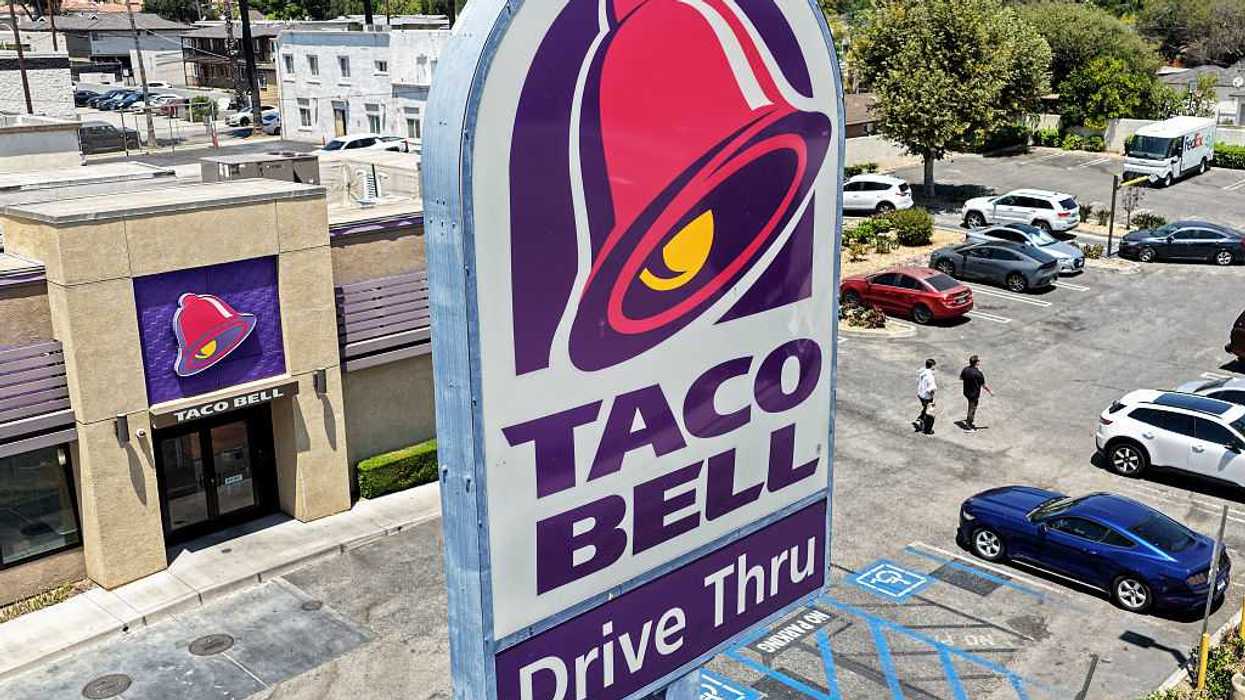
On July 16, the Centers for Disease Control and Prevention (CDC) and Food and Drug Administration (FDA) announced they had traced a multistate Cyclospora outbreak to shredded iceberg lettuce served at Taco Bell locations, primarily in the Midwest, as well as bagged lettuce sold in many stores.
An FDA traceback identified a single lettuce supplier in Mexico, but not until more than 1,644 illnesses and 94 hospitalizations had been tied to that lettuce alone, amid a national outbreak that had reached nearly 7,000 cases.
So, the mystery is solved. What isn't solved is the question the mystery should never have taken this long to answer.
Case interviews for the Taco Bell cluster point to symptom onset in late June. The broader national climb in illnesses stretches back to May. That is roughly two and a half months between the first wave of sick Americans and a federal agency naming a supplier — for a pathogen and a food category — using a well-worn investigative playbook.
There's a reason this one dragged as long as it did, and it isn't bad luck.
In July 2025, the CDC quietly narrowed FoodNet — the federal surveillance network that has tracked foodborne pathogens across 10 states since 1996 — from eight pathogens to two.
Salmonella and E. coli remained mandatory. Six others, including Cyclospora, were reclassified as optional. A CDC talking point at the time cited funding that "had not kept pace" with the cost of running full surveillance.
Eleven months later, the parasite the agency stopped requiring anyone to actively hunt for is the one that took nearly three months and thousands of illnesses to trace to a single supplier.
To be fair to the agency, that timeline is not the whole story, and a column that pretends otherwise isn't being honest with readers.
Public health researcher Craig Hedberg has pushed back against a direct causal link, noting that Cyclospora remains a nationally notifiable disease, tracked separately through the CDC's National Notifiable Disease Surveillance System, regardless of what happened to FoodNet.
An HHS spokesperson made the same point to CNN, adding that funding for state foodborne disease work has remained roughly flat at around $33 million annually. And the Taco Bell cluster, while large, still accounts for only a fraction of the national case total — a reminder that other clusters, with their own separate sources, are still being untangled.
But there's a difference between a disease still being counted somewhere and a disease being counted fast enough to matter.
FoodNet wasn't just another spreadsheet — it was the active layer, the one where public health workers went looking for infections through standardized lab testing rather than waiting for an already-strained state health department to notice a cluster, test for the right pathogen, and pass the news up the chain.
Losing that layer doesn't erase the data. It slows it down and thins it out, at exactly the moment speed matters most — and for eleven weeks this summer, that's precisely what happened while thousands of Americans kept getting sick.
And FoodNet isn't the only place the cupboard has gone bare. The FDA has lost nearly 4,300 employees since the start of 2025; the CDC has shed close to 3,300. The FDA's own outbreak investigations, which identified a source 77 percent of the time in 2024, did so successfully only about a third as often in 2025.
None of that proves that a faster FoodNet would have caught this specific supplier's lettuce in May rather than mid-July. Outbreak investigations are genuinely hard, and this parasite is particularly difficult to trace. But the system eventually worked — it found the lettuce and the supplier.
The question is not whether the system worked. It is why it took eleven weeks and thousands of preventable illnesses to get there, especially when the surveillance layer designed to speed up the process had been quietly turned off a year earlier. Over three decades, we built a system so that “hard to trace” would not also mean “slow to find.” We took part of that system apart a year before the worst Cyclospora outbreak in recent memory.
Lynn Schmidt is a columnist and Editorial Board member with the St. Louis Post-Dispatch. She holds a master's of science in political science as well as a bachelor's of science in nursing.