
Skip to content
Search

Latest Stories

Top Stories

Now's the time for a cross-partisan push to stop future abuse of presidential power

Opinion

Donald Trump

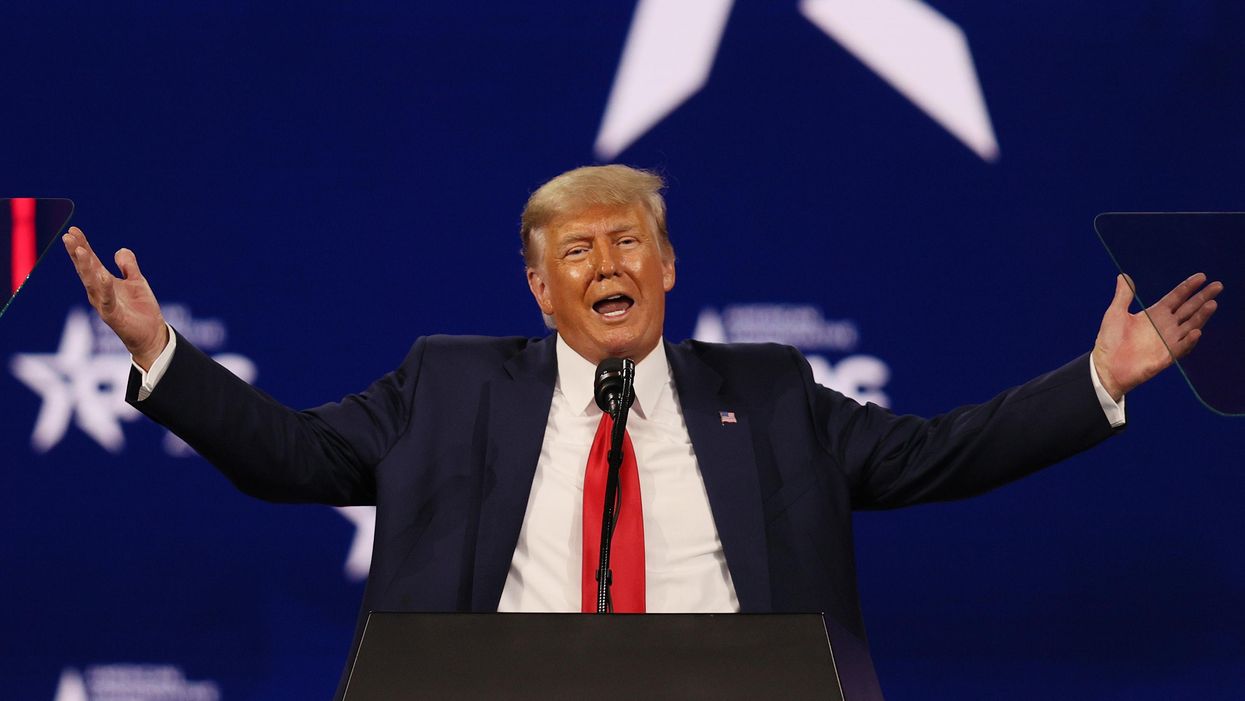
Some of the proposals in PODA respond directly to vulnerabilities in presidential power exploited by the Trump administration, according to Dayton and Lindgrensavage.

Joe Raedle/Getty Image

Dayton is a policy advocate and Lindgrensavage is a counsel at Protect Democracy, a nonprofit group advocating for policies that "prevent our democracy from declining into a more authoritarian form of government." Dayton once worked for a GOP House member and Lindgrensavage for a Democratic senator.


Imagine this: The conduct of the previous presidential administration has crystallized the need for Congress to reassert its constitutional authority as a check on the executive branch.

The year is 2021, to be sure. But it was also 1974. In the wake of the Watergate scandal, lawmakers of both parties acted to address weaknesses in federal laws and government institutions that Richard Nixon had either created himself or exposed.

Nearly half a century later the Protecting Our Democracy Act, a package of good-government reforms first proposed by Democratic Rep. Adam Schiff of California in September, aims to take similar steps toward restoring guardrails on executive power. The legislation is on course for a reintroduction in the House this month.

To raise awareness about the bill and advocate for its passage, experts from half a dozen democracy reform advocacy groups from across the political spectrum have written pieces touting its various virtues. These will appear in the Opinion section of The Fulcrum in coming weeks.

These individual analyses do not constitute an endorsement of the full package. What they demonstrate in combination, rather, is how the multifaceted measure draws from ideas proposed by Republicans and Democrats alike — and how Congress' constitutional prerogatives, not ideology, explain why they fit together.

The Protecting Our Democracy Act, which also goes by the acronym PODA, tackles a dozen different topics:

  • Limiting the president's pardon power.
  • Extending the deadline for prosecuting former presidents and vice presidents for federal crimes before or during their time in office.
  • Enforcing the constitutional ban on presidents using the office to enrich themselves.
  • Boosting enforcement of congressional subpoenas.
  • Reasserting Congress' power of the purse.
  • Mandating disclosure of contacts between the White House and Justice Department.
  • Strengthening protections for inspectors general.
  • Strengthening protections for federal whistleblowers.
  • Ensuring the Senate's say in confirming executive branch officials.
  • Bolstering enforcement of the Hatch Act.
  • Preventing foreign interference in elections.
  • Clarifying federal prohibitions on foreign assistance to campaigns.

Some of the proposals respond directly to vulnerabilities in presidential power exploited by the Trump administration, treating those abuses as lessons from which the need for reform must be learned.

It will remain difficult to hold future presidents accountable for violating the Emoluments Clause, the Constitution's ban on presidential profiteering, or attempting to sway the independence of the Justice Department, for example, without Congress creating mechanisms to guarantee such accountability.

Some of the proposals have a history of bipartisan backing — or began as Republican ideas. The provision to strengthen congressional control over the allocation of federal funds, for example, resembles a bill by Republican Sen. Mike Lee of Utah that the Homeland Security and Government Affairs Committee approved last year on an 11-2 vote. And improving protections for inspectors general and federal whistleblowers has been a longstanding priority of the most senior GOP senator, Chuck Grassley of Iowa..

The Protecting Our Democracy Act meets this current moment in two important ways.

First, it is the right response, and it is similar to a past, successful response in the aftermath to a similar period in our history. After Nixon's resignation, both Republican and Democratic lawmakers understood how his behavior had exposed weaknesses in the system of checks and balances that constrains presidential power, and they responded by enacting laws such as the Privacy Act and the Inspector General Act.

The parallels to today are now widely acknowledged by experts on the right, left and center. Trump "has revealed that the presidency is due for an overhaul for accountability akin to the 1974 reforms," Jack Goldsmith, an assistant attorney general in the George W. Bush administration, told the New York Times. (He and a White House counsel during the Obama administration, Robert Bauer, have come up with their own set of ideas for recalibrating the balance of power.)

Second, PODA responds to increasing numbers of lawmakers asking why their branch is so ineffective relative to the executive and the judiciary. Republican Sen. Ben Sasse of Nebraska, a frequent observer of this development, spent part of his time during last month's confirmation hearing for Attorney General Merrick Garland offering his views.

"I think it's a mix of overreach by Article II and underreach by Article I," he said, adding that it's not "as if everything that's wrong is chiefly outside the Congress, because I think we're probably chiefly to blame."

The Protecting Our Democracy Act gives Congress an opportunity to retake some of its authority and live up to its responsibility.

Ensuring the proper checks and balances between the executive and legislative branches is an ongoing obligation of Congress. But it hasn't kept pace in recent years with the expansion of presidential power or deterred presidents of both parties from exceeding — even abusing — their authority.

This House bill is a big first step on the path to catching up. The fact that Democrats are going to introduce this package when the president is a member of their party should not escape notice. Nor should the repeated instances of Republicans who have voiced concerns and floated measures about the relationship between the president and Congress. The opportunity to bring Republicans and Democrats together to act is now.



Read More

An empty grocery cart in a market.

NYC Mayor Zohran Mamdani proposes five city-run grocery stores. See the arguments for and against, from food deserts to bodega concerns and the $70M cost.

Getty Images, Kwangmoozaa

Government-Owned Grocery Stores: Accessible Nutrition or Government Overreach?

Issue Introduction

Over the past few years, affordability has become the most central issue affecting Americans and the quality of life in the United States. The prices of groceries and basic necessities have risen 25-30% since the COVID-19 pandemic and are projected to rise another 3.2% in 2026. At the same time, the exodus of grocery chains from rural and low-income areas has scattered food deserts throughout individual states. Recent mass closures include Grocery Outlet’s shuttering of 36 stores and continued shut-downs of many Albertsons locations. These factors have led politicians to make affordability a major campaign issue.

During his progressive campaign for mayor of New York City, Zohran Mamdani raised the idea of opening grocery stores owned and operated by the city government to provide New Yorkers with affordable groceries. In his April 2026 public address that marked his first 100 days in office, Mayor Mamdani announced plans for the first of five city-run grocery stores. Mamdani’s proposed initiative will use $70 million in capital funding to build five city-owned municipal stores–one in each borough–and place them under control of the New York City Economic Development Corporation (NYCEDC). NYCEDC will then select third-party operating staff in accordance with city standards for affordability and proper labor practices. Public opinion following the announcement continues to be divided between uproar and support.

Keep Reading Show less
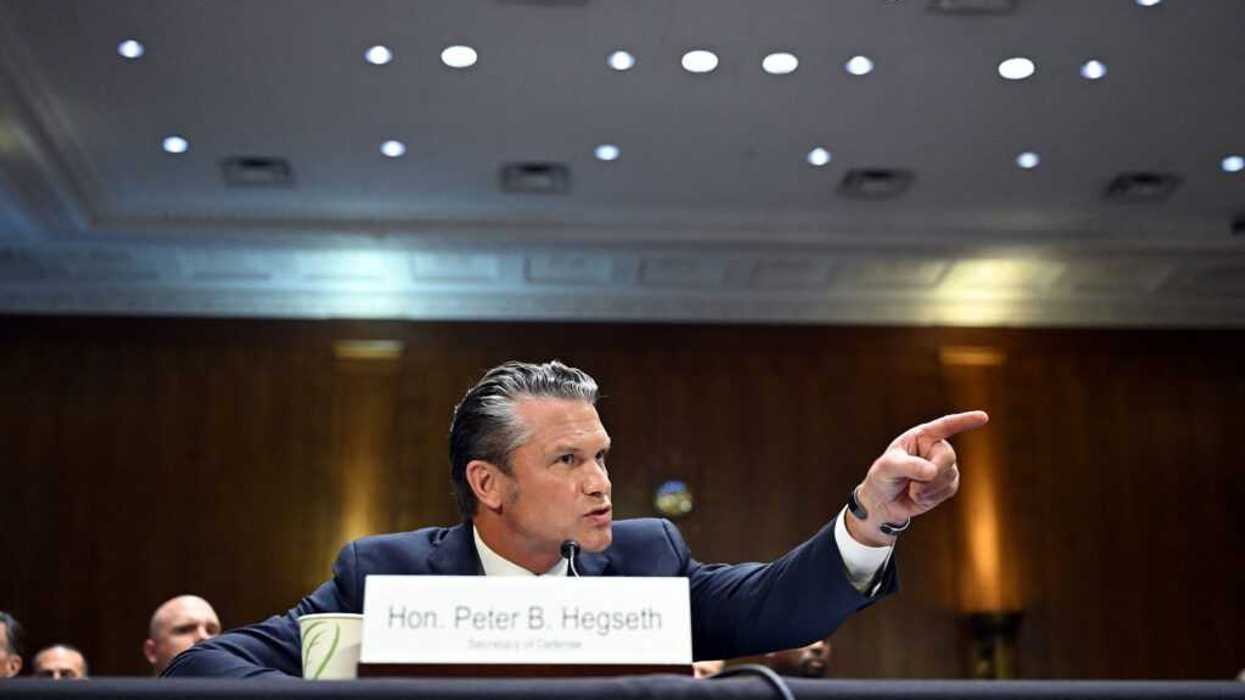
​U.S. Defense Secretary Pete Hegseth

U.S. Defense Secretary Pete Hegseth testifies during a Senate Committee on Appropriations hearing on Capitol Hill in Washington, D.C., on July 21, 2026. Hegseth is crafting a strong and masculine identity for his audience as he reportedly contemplates a presidential run.

(Alex Wroblewski/AFP/Getty Images/TNS)

Politicians Can’t Just ’Give the People What They Want’

For reasons that will baffle my many detractors, I am often asked for advice about being an opinion journalist. One of my standard responses is: You have to be willing to disappoint your biggest fans.

What I mean is that if you start to see your job as telling fans what they want to hear, you risk becoming an entertainer rather than a thinker, and eventually you become a caricature. I’ve seen it happen numerous times. Patrick Buchanan was a brilliant columnist and a serious person. But over the course of his career, he listened too much to the people who said, “Go Pat, go!” and too little to friends who said, “I think that’s taking it too far.”

Keep Reading Show less
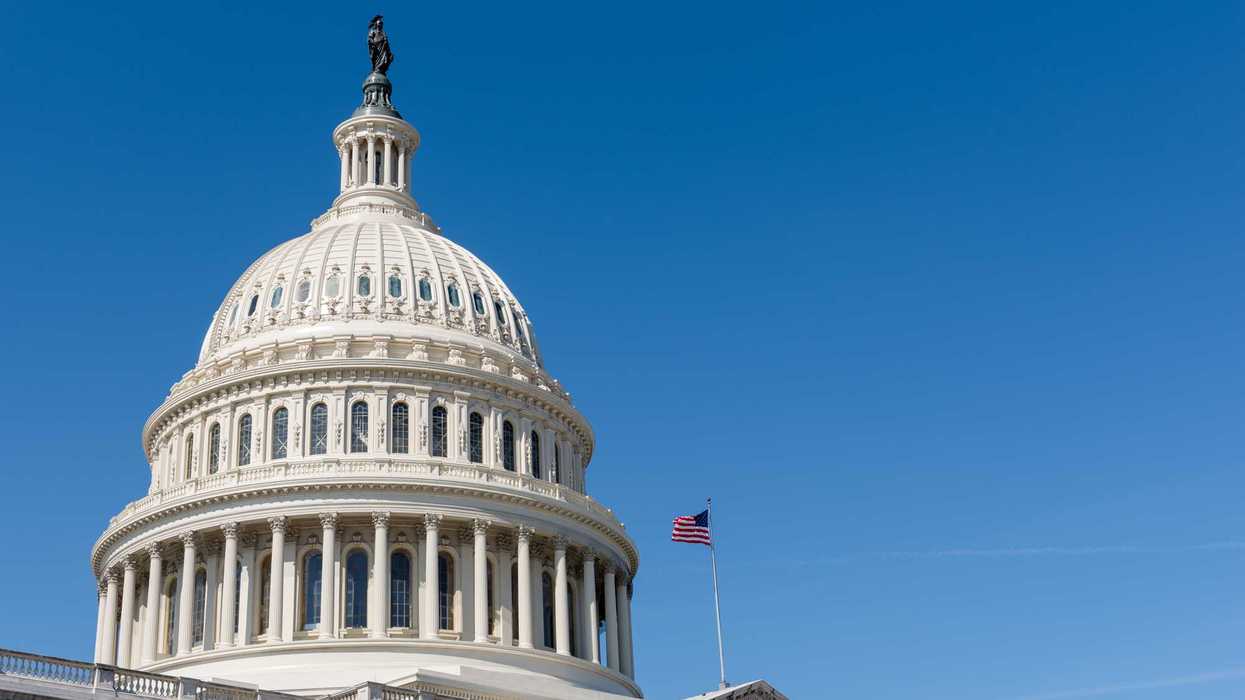
White marble exterior of the United States Capitol, often called the Capitol Building, is the home of the United States Congress and the seat of the legislative branch of the U.S. federal government

Congress approval is at a record-low 10%. Moderation and consensus-building, not partisan theatrics, are how Washington gets problems solved.

Richard Sharrocks / Getty Images

Reclaiming the Politics of the Possible

Washington is stuck in a cycle of performative conflict. The incentives seem to reward outrage, not outcomes that last; purity tests, not problem‑solving. So it’s no surprise that after three shutdowns in less than a year, public approval of Congress collapsed to just 10 percent this spring. (Gallup, April 2026.) But the country we live in — where many middle-income families report persistent financial strain and businesses are navigating unprecedented technological upheaval — cannot be governed by theatrics. Breaking this cycle requires moderation, consensus‑building, and a cooperative approach to governance.

This is not a call for centrism as an ideology. Instead, this is a call for transformative leaders to embrace moderation as their governing strategy, recognizing that in a pluralistic country of nearly 350 million people durable solutions require broad and stable alliances. Ultimately, this is a call for the 240 million of us who are eligible to vote in November to elect consensus-builders instead of bomb-throwers, and healers instead of arsonists.

Keep Reading Show less
Adult man holds a microphone while asking a question during a town hall meeting.

Congress ignored 90% of public support for background checks. Learn how citizen assemblies and sortition helped Ireland break gridlock and could work in the US.

SDI Productions/Getty Images

Consensus Without Power: How Sortition Could Break America's Legislative Gridlock

In April 2013, four months after the Sandy Hook Elementary shooting killed twenty children, the US Senate voted on the Manchin-Toomey Act to expand background checks and to include gun-show and internet sales of firearms. Roughly nine in ten Americans, including a majority of gun owners, supported the bill—a figure that has held steady across more than a decade of polling. It fell short of the 60-vote threshold by six votes. This was not an outlier. On complex issues, representatives often fail to translate public consensus into reality. Research shows that legislators consistently vote in line with donor and interest group preferences over constituent opinion. Before the vote, the National Rifle Association (NRA) warned every senator it would “rate” their vote on its annual rating system, and a low NRA rating could cost senators their next primary. Consequently, the bill died 54-46, and the majority of Americans watched, powerless, as their consensus was overridden by self-interested representatives.

Liberal democracies need a method to bypass electoral incentives that run counter to public opinion. One already exists: Ireland faced the same stalemate on complex issues before it instituted a process called sortition. The beauty of sortition lies in its removal of the primary pressure that misaligns representatives’ interests from public interest: reelection. Much like jury duty, citizens are randomly drawn from the population. An independent body then stratifies the pool, so the final group mirrors the country by age, gender, geography, and income. The group meets over weeks or months, hearing from experts and the public, as well as debating frequently. At the end, it issues a recommendation that parliament may then put to a referendum or pass into law.

Keep Reading Show less