


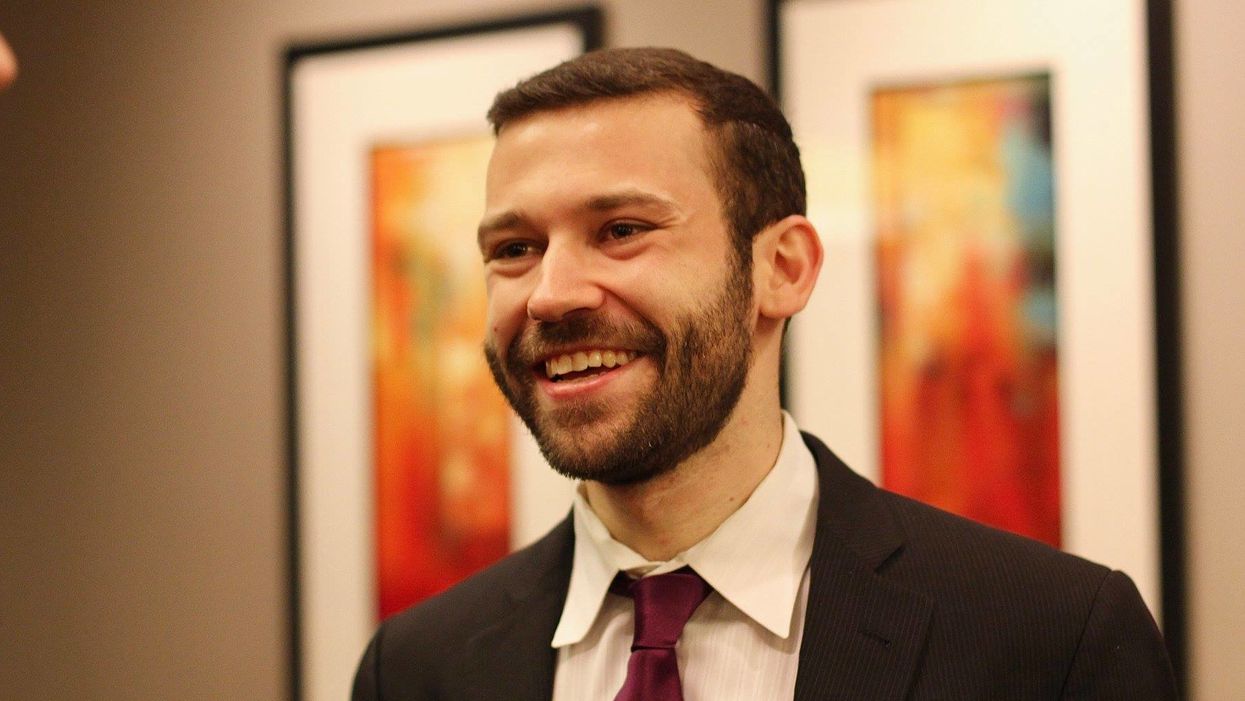
Uriel Epshtein is executive director of the Renew Democracy Initiative, created three years ago by former world chess champion Garry Kasparov to combat populism, promote core constitutional values and offer a home to political centrists. He came to the job after stints at the Boston Consulting Group, DoorDash and Uber. As a Yale undergraduate, he founded and continues to chair the Peace & Dialogue Leadership Initiative, which promotes campus college dialogues on policy in the Middle East. That experience had a profound influence on him, he says, as he began to see increasing similarity between polarized partisan U.S. politics and the Israeli-Palestinian conflict. His answers have been edited for clarity and length.
What's the tweet-length description of your organization?
RDI produces content with the goal of empowering the American public to understand and prioritize core constitutional principles.
Describe your very first civic engagement.
In high school I founded the Pascack Hills Political Club and eventually ended up chairing the New Jersey Teenage Republicans. Politics was my version of a team sport. I was confident my team was right and all we had to do was "defeat" the other guys. It's incredible to think how much has changed since then. I keep wondering what percentage of that change is external and what has come from shifts in my own perspective.
What was your biggest professional triumph?
Transitioning RDI from a one-man team to a more established start-up with a recognizable voice on democratic issues. Now we have published a book, put on two significant conferences and started multiple creative projects — all with the goal of empowering the public to prioritize core American values.
And your most disappointing setback?
We are in a moment of profound national uncertainty, and sometimes I allow myself to get caught up in that when I should simply focus on the task at hand.
How does your identity influence the way you go about your work?
My parents were raised in the former Soviet Union. My dad was an anti-communist, Zionist dissident born under Joseph Stalin in 1936 and my mom was born at a time of overwhelming anti-Semitism in Kiev. Their experiences living in a totalitarian society, dominated by group-think and without freedom to so much as utter a dissenting thought, has made me forever skeptical of ideologies that allow for no disagreement or debate. Today, as each American political side becomes increasingly inflexible, branding anybody willing to compromise as a traitor, I'm beginning to hear echoes of parts of my family's experience. This is what our work at RDI seeks to address. I understand the appeal of sticking with one's own tribe, but I fear that if we're unwilling to experience the discomfort of engaging those with whom we disagree, we may become increasingly willing to sacrifice the principles underpinning our republic to avoid doing so.
What's the best advice you've ever been given?
Something my rabbi said to me in college, which I really started to understand only in the last few years: We should not necessarily identify with our emotions. We never know when a crisis might turn out to be a blessing in disguise or, if we find ourselves at a low point, we have no way of knowing what's waiting around the corner. We just have to keep pushing through.
Create a new flavor for Ben & Jerry's.
Fondue Democracy: Red, white and blue sprinkles swirled together with chocolate fondant.
What's your favorite political movie or TV show?
"The Americans" on FX was a terrific and nuanced show. I was particularly impressed that they hired actual Russian speakers to play the Russian characters.
What's the last thing you do on your phone at night?
Check the news — although I'm trying to break the habit.
What is your deepest, darkest secret?
I have a pretty debilitating fear of spiders. At one point, I was with friends wandering through a children's section at the zoo. We sat down for a few minutes and, while flipping through a National Geographic magazine, I stumbled across a full-page image of a tarantula. I fell out of my seat.

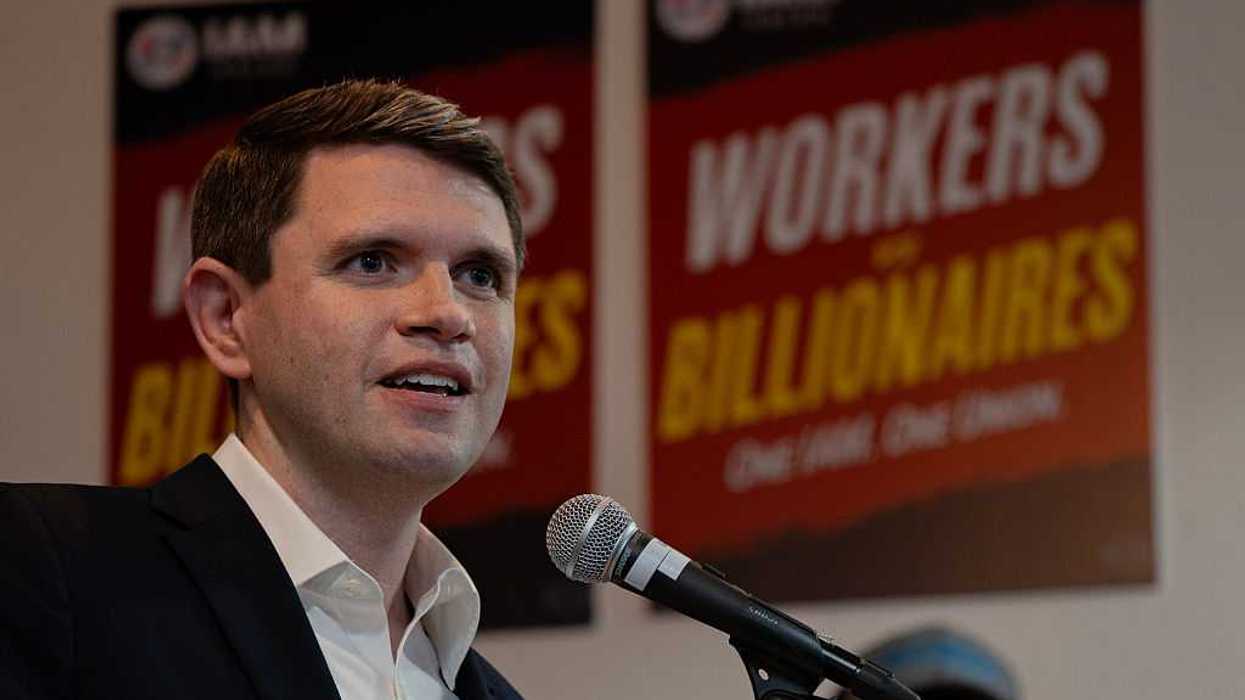













image of U.S. President Donald Trump is displayed on a digital billboard in Times Square in New York on April 8, 2026.
Trump is stuck between two realities. Neither serves the American people
Normally, I worry that events may overtake a column. But not so with the Iran war.
I don’t worry about running afoul of a headline or Truth Social post from the president because what is said about the situation is no longer very relevant to the reality.
On April 8, Nick Catoggio, my Dispatch colleague, dubbed an earlier stoppage with Iran “Schrödinger’s ceasefire.” This was a reference to the famous thought experiment by the physicist Erwin Schrödinger, who was trying to explain the weirdness of “superpositionality” in quantum physics. A cat in a box is both dead and alive at the same time until you open the box. Schrödinger meant to illustrate the absurdity of the idea that particles aren’t any one thing, but a “cloud of probabilities.”
The Trump administration is stuck in a word cloud of probabilities of his own making. The war is over. The war is on. The war isn’t a war. We have a deal, but we don’t have a deal, but we’re about to have a deal. We destroyed Iran’s military. No, we left it intact. We want regime change. No we don’t. We already accomplished it. We “obliterated” Iran’s nuclear program a year ago. We had to go to war in February to prevent nuclear war. The Strait of Hormuz is open, closed, or something in-between. No deal without “unconditional surrender.” Let’s make a deal!
This everything-all-at-once vibe can be disorienting, particularly since most Americans didn’t have a war with Iran on their bingo cards until the shooting had already started. President Trump didn’t prepare the country or consult with Congress beforehand because he thought it would all be a smashing success in a matter of weeks.
The miscalculation that started it all: killing Iran’s Supreme Leader, Ayatollah Ali Khamenei, and much of Iran’s senior leadership, on the first day of the war. To “the great proud people of Iran, I say tonight that the hour of your freedom is at hand,” Trump announced on Feb. 28. “When we are finished, take over your government. It will be yours to take. This will be probably your only chance for generations.”
I support regime change in Iran and shed no tears for Khamenei or his goons. But when you start a war by killing the regime’s top leaders, it’s not unreasonable for the remaining ones to conclude that you really intend regime change.
Khamenei was a murderous fanatic, but he was a fairly cautious one. He liked to threaten closing the Strait of Hormuz or attacking our regional allies, but he was reluctant to actually do it, fearing it would invite a regime change war. The mullahs and IRGC goons believed, not unreasonably, that if they lost their grip on power, they’d be lynched by the Iranian people they’ve brutalized for decades.
By starting with a regime change war, Trump removed any reason for the regime not to go for broke. When you have nothing to lose — particularly when you are a millenarian religious fanatic — a Persian Alamo strategy makes a lot of sense.
So Iran closed the Strait of Hormuz and attacked its neighbors.
But it turns out this wasn’t the Alamo. In the contest of wills, Trump blinked. The Iranian regime’s tolerance for punishment proved — so far — to be greater than Trump’s and that of our gulf allies. Militarily we could finish the job, but that would require ground troops and much greater economic turmoil. In a conflict Trump launched unilaterally without the prior support of Congress, NATO or the American people, Trump doesn’t have the political capital for that.
But that’s only half the problem. Trump wants the war over, but he doesn’t want to pay — militarily, economically, politically — what that would cost. So he wants to make a deal that ends it. But there is no deal available that wouldn’t come at an equally undesirable cost. Any deal that looks like what President Obama struck with the Iranians would be too embarrassing to bear. But the Iranians are convinced that they can get just such a deal, and they’re willing to drag things out as long as it takes.
The result: Trump’s in a box of his own making. He thinks he can talk his way out by simply asserting a reality that doesn’t exist. When the financial markets get nervous, he announces a breakthrough that is, at best, a possibility. When the Iranians agree to a deal that looks similar to one Obama might negotiate, Trump goes back to his threats.
It can’t go on forever. But I’m sure it’ll last until long after this column is forgotten.
Jonah Goldberg is editor-in-chief of The Dispatch and the host of The Remnant podcast. His Twitter handle is @JonahDispatch.