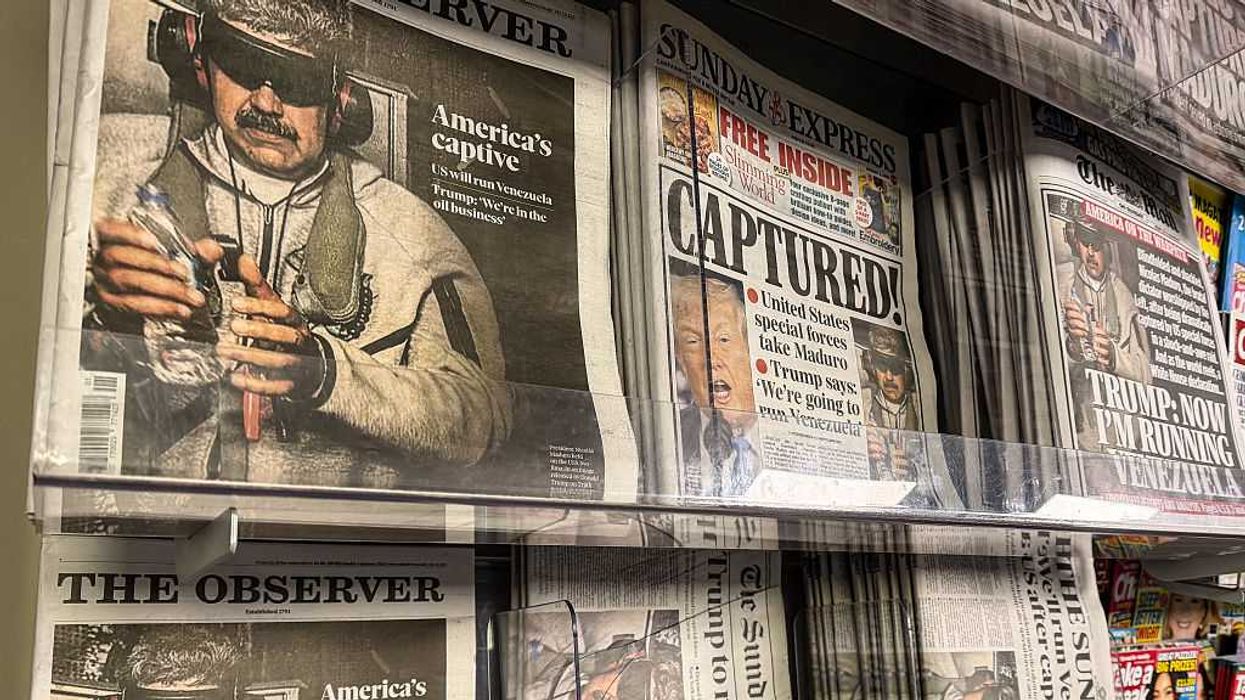
The United States' capture and arrest of Venezuelan President Nicholas Maduro is another sign of the demise of the rules-based international order that this country has championed for decades. It moves us one step closer to a “might-makes-right” world, the kind of world that brings smiles to the faces of autocrats in Moscow and Beijing.
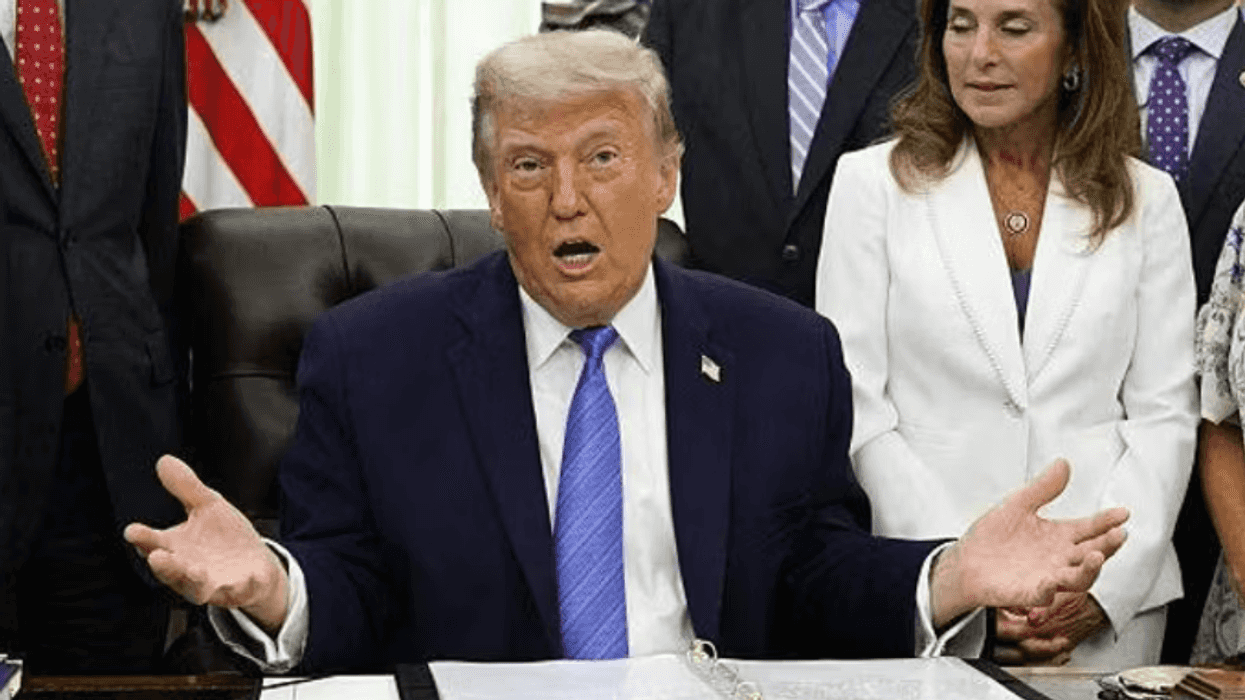
“On the eve of America's 250th anniversary,” Stewart Patrick, who served in the George W. Bush State Department, argues, “Trump has launched a second American Revolution. He's declared independence from the world that the United States created.” Like a character in a Western movie, for the president, this country’s foreign policy seems to be shoot first, ask questions later.
I have no sympathy for Maduro, but bombing Venezuela and violating its national sovereignty just because we can is not the way democratic nations behave. When democracies use force, they do so as a last resort, only when it is necessary and only to protect core democratic principles.
None of those principles justifies what the United States did in Venezuela. As former Secretary of Defense Caspar Weinberger said more than forty years ago, democratic nations “have rejected the unilateral aggressive use of force to invade, conquer, or subjugate other nations.”
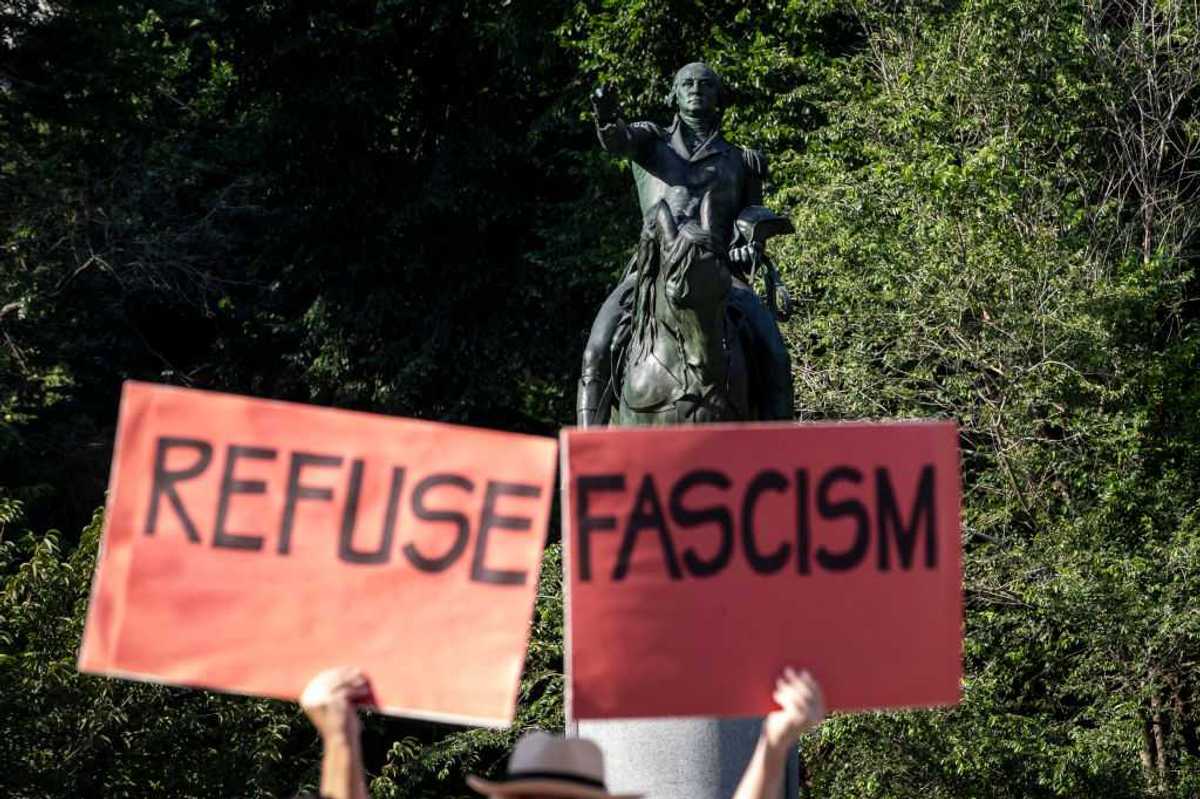
The capture of Maduro fits in with an administration that deploys masked agents on American streets, uses the military in our cities, and whose national security strategy announced our intention to “reassert and enforce the Monroe Doctrine to restore American preeminence in the Western Hemisphere.” Unless and until Congress acts to restrain Trump’s adventurism, we will live in an increasingly dangerous world, and one in which our democracy further deteriorates.
As Democratic Congressman Seth Moulton observed, “Congress did not authorize this war, period. Venezuela posed no imminent threat to the United States. This is reckless, elective regime change risking American lives (Iraq 2.0) was no with no plan for the day after.”
“Wars,” he added, “cost more than trophies.”
Now, the President of the United States says that we will “run” Venezuela and secure its oil. And it seems Cuba is now in the crosshairs.
Of course, Maduro’s capture is not the first time the United States has violated the national sovereignty of Latin and South American countries or skirted the bounds of legality to arrest their leaders. To offer one example, recall the 1989 invasion of Panama and arrest of its leader, Manuel Noriega, on Jan. 3, 1990.
As an article posted by the research firm EBESCO explains, “After enough evidence had been compiled proving that Noriega was, in fact, involved in the trafficking of millions of dollars worth of narcotics, the U.S. government called for his resignation. Noriega fervently refused to comply.”
Then, to provide legal cover, the federal government secured an indictment of Noriega for drug smuggling in Miami. A year later, President George HW Bush said he had ordered military forces to Panama to "protect the lives of American citizens" and bring Noriega "to justice."
After the invasion, Noriega, the BBC reports, “Sought refuge in the Vatican's diplomatic mission. Troops stayed outside over the Christmas period and played deafening rock music to get him to leave in an act of psychological warfare. Noriega surrendered on Jan. 3, 1990, after spending 11 days at the embassy.”
He was brought to the United States to stand trial, accused of trafficking and racketeering. Sound familiar? He was convicted and sentenced to forty years in prison in 1992.
This was a watershed moment. Noriega was the first ever former head of a foreign government to face criminal charges in an American court. But his conviction did not end the drug trade or stop the flow of drugs into this country.
As Professor C E Hickey argued at the time, “The indictment was a political decision and a diplomatic failure in that it represented a unilateral act that was perceived as inappropriate meddling in a nation's internal affairs. A more appropriate approach to such cases would be a multilateral, international effort to exert diplomatic and political pressure.”
International law prohibits the arrest of leaders of foreign nations, such as Noriega and Maduro, by another nation. “A serving Head of State,” the journalist Abhinav Yadav notes, “enjoys absolute immunity (ratione personae) from foreign criminal jurisdiction. According to the International Court of Justice (ICJ) in the Arrest Warrant Case (2002), foreign courts cannot prosecute a sitting leader, even for war crimes, to ensure they can perform their diplomatic duties without fear of arrest.”
However, the United States has its own perspective on such matters.
Maduro, like Noriega before him, was indicted during the first Trump Administration. At the time, the Justice Department said, “The scope and magnitude of the drug trafficking alleged was made possible only because Maduro and others corrupted the institutions of Venezuela and provided political and military protection for the rampant narco-terrorism crimes described in our charges. As alleged, Maduro and the other defendants expressly intended to flood the United States with cocaine in order to undermine the health and wellbeing of our nation.”
“While Maduro and other cartel members held lofty titles in Venezuela’s political and military leadership,” the department explained, “the conduct described in the Indictment wasn’t statecraft or service to the Venezuelan people. As alleged, the defendants betrayed the Venezuelan people and corrupted Venezuelan institutions to line their pockets with drug money.”
Attorney General Pam Bondi says that a new indictment charges Maduro with narco-terrorism conspiracy, cocaine importation conspiracy, and weapons offenses involving machine guns and destructive devices. If convicted, Maduro may face life imprisonment.
That means that the United States has not regarded him as a head of state, entitled to immunity recognized by international law, but rather as a common criminal. Vice President Vance put it this way, “You don’t get to avoid justice for drug trafficking in the United States because you live in a palace in Caracas.”
And under the so-called Ker-Frisbie doctrine, our courts will try a defendant no matter how they are brought within their jurisdiction. That means if we can bring a foreign leader here in violation of international law, as we did with Noriega, our courts will look the other way.
Of course, there was another way to deal with Maduro.
The United States could have requested that the International Criminal Court authorize his arrest. The law under which the ICC operates “explicitly states that 'official capacity as a Head of State' does not exempt a person from criminal responsibility. This means a leader can be legally seized if the ICC issues the warrant, provided member states cooperate.”
However, the United States, although it helped draft that statute, does not recognize or accept the ICC’s jurisdiction.
And what was said at the time Noriega was arrested also applies to Maduro’s case. The legal basis for seizing them was and is “weak.”
What Professor Harold Berman said when Noriega was captured, remains true in the wake of what the Trump Administration has done to Maduro: ''’I can't think of anything we've ever done quite like this.' Professor Berman said it was reminiscent of feudal times or earlier, when wars were more personal.”
Of course, for our current president, everything is personal. And that’s why American democracy is in trouble.
In Trump’s world, the rules, norms, and principles that are supposed to guide democratic decision-making get put aside. The arrest of Maduro is just the latest example of the fact that in the world he would like to create, his will is all that matters.
Austin Sarat is the William Nelson Cromwell professor of jurisprudence and political science at Amherst College.