Pumpkin spice lattes, autumn colors and pop-up Halloween stores remind us that the traditional holiday season is just around the corner. Drawing far less fanfare, but far more important for democracy, is the civic holiday season – which kicks off Thursday.
Beginning with the International Day of Democracy and continuing through Election Day, the fall is full of opportunities to celebrate, engage in and defend the American political system.
Within the democracy reform movement, National Voter Registration Day is the biggest of the newer holidays, and with good reason: Through NVRD’s efforts, 4.7 million people have registered to vote over the past decade. And like the other recent additions to the calendar, it's supported by a network of partners that have lent their names to these election efforts. For example, the partner list for NVRD includes the Creative Artists Agency, Comedy Central, Democracy Fund, LinkedIn, MTV, the NFL, Uber and dozens more.
While NVRD isn’t the first democracy-oriented event of the fall, it is the first that’s directly tied to U.S. elections and helps build momentum for the others.
“We’re hoping that National Voter Registration Day on [Sept.] 20th is a good jumping off point for people to find the information they need to be successful in casting a ballot,” said Debi Lombardi, program director for NVRD.
One of the more recent additions to the reform movement is hoping to piggyback on the first democracy holiday.
International Day of Democracy (Sept. 15)
While the first holiday of the season is not U.S. specific, it remains an important point for measuring America’s place in the world. Established by the United Nations in 2007, the world is now celebrating IDD for the 15th time, even as democracy is on the decline around the globe and here in the United States.
“Civic space is shrinking. Distrust and disinformation are growing. And polarization is undermining democratic institutions,” U.N. Secretary-General António Guterres said in his IDD message. “Now is the time to raise the alarm.”
This year, the United Nations is focused on promoting free, independent media on the International Day of Democracy. “Without a free press, democracy cannot survive. Without freedom of expression, there is no freedom,” Guterres said.
While American journalists are not subjected to the surveillance and legal harassment faced by their brethren overseas, there are other issues with the media that have dragged down democracy in the United States.
In the latest edition of its annual report on democracy around the world, the Economist Intelligence Unit found “political culture” (manifesting as polarization over such issues as election outcomes and Covid-19 vaccines) to be the biggest reason the United States is dropping in the rankings.
“A highly politicised media, including the main network TV channels, continue to foment and amplify these divides,” the report states.
Team Democracy, formed in the aftermath of the Jan. 6, 2021, riot at the Capitol, is launching its “safe and fair elections” campaign on Thursday. With the Partnership for American Democracy, Team Democracy is asking candidates for office to pledge their support for a peaceful transfer of power and to accept election results after the courts issue any rulings. But they also want members of the public to sign their nonpartisan pledge as well.
“It's been said that the greatest threat to democracy is not those who would undermine it, or do it harm. The greatest threat is the complacency and disengagement of the millions of Americans, on both sides of the aisle, who dearly love our country, and the freedoms we enjoy as Americans,” said CEO Ken Powley. “But shaking off that complacency requires that we (Team Democracy and our partners) provide average Americans the right tool and an easy pathway to effective civic participation, because the reality is that citizen engagement needs to be smart, impactful and relatively easy.”
The pledge includes a commitment to four principles:
- Elections are conducted lawfully and without partisan bias.
- All citizens can participate in a safe and secure process.
- Everyone accepts the final results of elections.
- The process, from voting to the transfer of power, is conducted peacefully.
Powley is optimistic about Team Democracy’s success because most Americans already agree with those concepts.
“Rather than needing to convince Americans to believe what the great majority of us already believe, we simply need to give voice to that still-too-quiet majority whose allegiance to democracy is being drowned out by the ever-present noise from an increasingly radicalized minority,” Powley said.
Constitution Day (Sept. 17)
Much of the country takes off July Fourth to celebrate the signing of the Declaration of Independence, but few Americans celebrate the signing of the document that actually formed our government. In fact, few are likely even aware that such a holiday exists.
In fact, most of the people who do mark the occasion may be students, since all educational institutions that receive federal funding are required to provide relevant programming each year. In addition, the National Archives is hosting a series of Constitution-related webinars through September for students.
Anyone in the Philadelphia area can check out the National Constitution Center, which is offering free museum admission Sept. 16-17. In addition, the NCC is hosting a naturalization ceremony before Constitution Day also happens to be Citizenship Day.
Find other events in your area.
National Voter Registration Day (Sept. 20)
The people and organizations behind National Voter Registration Day have set some lofty goals for the holiday’s 10th year. They aim to register 800,000 people this year, bringing the campaign’s lifetime total to 5.5 million new registrants.
“This year we’re really focused on making sure that we reach young people and communities of color that are more marginalized by some of the voting laws that have changed, as well as just generally reaching over 800,000 people hopefully to help them register to vote,” said Lombardi.
To meet its goals, NVRD is building partnerships that can help target college students, like Students Learn Students Vote, as well as Levi’s and Pizza to the Polls. They are particularly targeting young people at community colleges in Miami and Austin, Texas but will be recruiting across the country. And at every engagement, teams will also work with registered voters to help them confirm their status prior to the start of voting.
Sept. 20 is more of a kickoff than a one-day event, because National Voter Registration Day actually continues through the fall, right up to Election Day. On the day itself, more than 4,000-plus community partners will be running local events, while larger partners run national engagements, including an AMA on Reddit.
As the season progresses, the work will continue and evolve under the bipartisan leadership of Kentucky Secretary of State Michael Adams (a Republican) and Minnesota Secretary of State Steve Simon (a Democrat.)
“After National Voter Registration Day, up until the last voter registration deadline, we will be encouraging people to get registered to vote but will also be thinking about some of the other civic holidays and voter education material in general,” said Lombardi.
Which leads to the next three events, which are all part of the #VoteReady campaign.
National Voter Education Week (Oct. 3-7)
While the NVRD campaign continues throughout the election season, National Voter Education Week focuses on a five-day effort to connect voter registration to actually casting ballots.
- Monday: Register to vote or check registration status.
- Tuesday: Request a mail-in ballot, if that is the voter’s preferred method of casting a ballot.
- Wednesday: Make a plan to vote (decide whether to vote by mail, early in person, on Election Day; check where to vote; review ID requirements; etc.)
- Thursday: Study the ballot.
- Friday: “Level up” one’s engagement by helping others prepare or by volunteering in an official capacity.
NVED is led by the Students Learn Students Vote Coalition and has more than 500 organizations sign for up as partners in 2022, including Meta, Rock the Vote, Twitter, Ballotpedia and Business for America.
Vote Early Day (Oct. 28)
This one is pretty self-explanatory. Founded by MTV, Vote Early Day focused exclusively on helping voters who don’t want to wait until Election Day to cast their ballots. Despite being a new civic holiday, one created during the Covid-19 pandemic, Voter Early Day has enlisted nearly 3,000 partners across the country and claims that more than 3 million people have voted on Vote Early Day.
The organizers produced a handy map to help voters find the rules in their state.
Election Hero Day (Nov. 7)
A program of the Civic Responsibility Project, Election Hero Day is designed to honor both the workers and volunteers who make elections possible. They include: local election officials, election office staff and poll workers.
https://twitter.com/electionheroday/status/1567201060086861824
Election Day (Nov. 8)
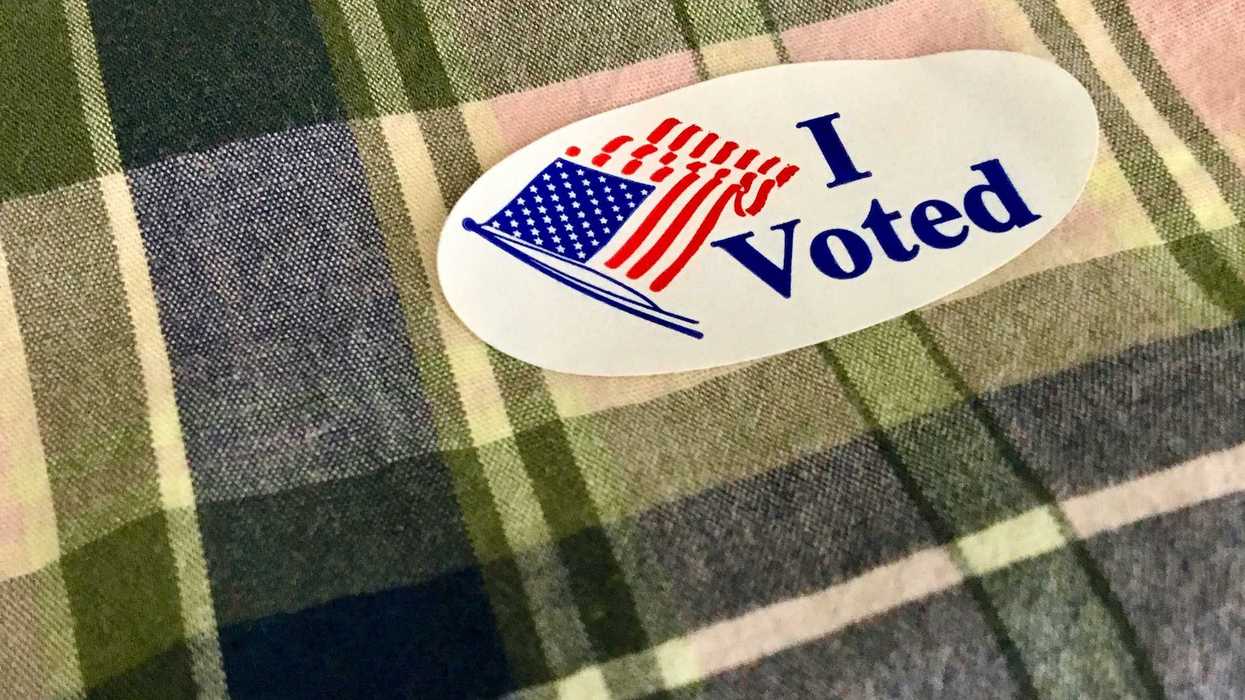
Finally, the first Tuesday after the first Monday in November will arrive, and everyone who has not voted early, whether in person, by mail or through a drop box, should head to their local polling location and fill out a ballot. While not a national holiday, it is a holiday in 19 states.
And the civic holidays will conclude just in time for turkey and apple pie. And maybe a pumpkin spiced latte to wash it all down.