

The post-9/11 “forever wars” — in Afghanistan, Iraq and elsewhere — claimed a million lives and cost the United States $8 trillion over two decades. But what about the costs you can’t count?
Podcast: The terrible war
The post-9/11 “forever wars” — in Afghanistan, Iraq and elsewhere — claimed a million lives and cost the United States $8 trillion over two decades. But what about the costs you can’t count?

Many Americans wrongly associate poverty primarily with Black and Hispanic communities. Explore how this misconception influences public opinion, politics, and anti-poverty policy.
From observing people and politicians over the years—I can find no data on this—I have the impression that liberals as well as conservatives think that the typical person living in poverty is Black or Hispanic. The image most Whites have of people of color is someone who is poor—except for celebrities—with little education; they are not aware of many people of color who are middle class. On the other hand, they are not aware of many Whites who are poor and so they think their number is low.
Why is the perception of poverty important? The perception of who is poor has significant impact on the support for government programs that aid the poor. Given the extent of racism in this country, whether subtle or violent, (see my post, “Whether the Issue is Gun Violence or Inequality, It Always Comes Back to Race/Racism”), it’s not surprising that support for anti-poverty programs is non-existent among MAGA Republicans and for that matter has always been weak among Republicans; 45% of Republicans would even cut food stamp support. Their attitude is "it's your fault;" so government has no responsibility to help. They feel the causes of poverty are personal: bad life choices, drugs, lack of work ethic, and the breakdown of families—all negative perceptions of Black culture.
Liberals of course support such programs as an expression of economic justice, of fighting the systemic causes of poverty—discrimination, an unfair economic system, and the lack of educational opportunities. Although often one feels support is given somewhat begrudgingly; there is a little bit of racism in most of us.
But this perception of poverty is in fact fundamentally wrong. While Blacks and Hispanics do have much higher poverty rates, there were more White people living in poverty (19.6 million) in 2014 than either Blacks (10.2 million) or Hispanics (13.4 million). Even when combined, Blacks and Hispanics, according to Census data from 2024, accounted for just 52% of people living in poverty. Minorities have also historically accounted for no more of the welfare caseload than White families.
Why does this misperception of poverty persist? The main cause is the biases and perceptions we are raised with. But there is also much fault with the media. When it presents images of poverty, they are almost always that of Blacks or Hispanics. The images from the depression—think of the photographs of Walker Evans and Dorothea Lange—showing white Americans living in poverty, have very few equivalents in contemporary media.
Both government and the media must address this misconception. Especially in this polarized age, having an understanding of the oneness of all people is very important.
But it is also important that poor White Americans become more vocal in arguing for government support in bettering their lives and the futures of their children. There is no shame in being poor; it is not, as Republicans often say, "your fault." Asking for support is not asking for charity. Whether you are White or a person of color, most people are poor because of the circumstances of their birth and the resulting milieu the grew up in; getting beyond that barrier is very challenging regardless of race.
But this will be difficult. Although poor Whites benefit from anti-poverty programs, poor Whites seem to have the same perception as most that anti-poverty programs are geared to help people of color because that is how Democrats usually phrase their support; Democrats rarely speak about poor Whites—a big mistake. And this fits in with their racial biases; they do not want to think of themselves as comparable to Blacks. This is in part a result of history: in the antebellum South, planters feared the combined strength of poor Whites and slaves and so they used racism and force to keep poor Whites and poor Blacks separated.
Helping all poor people should be the goal of existing anti-poverty organizations; they should advocate for both people of color and Whites, which would only make their case more compelling. But when I googled to find organizations advocating for poor Whites, I found none.
This is what is fueling part of the Trump base. Poor Whites and poor people of color have been separated by the forces of racism—not just their own but of society's. Poor Whites are supporting Trump because no one else listens to them and no one else says he advocates for them. Even though he really doesn’t.
Poverty should never be seen as primarily a Black issue because it is not in fact. If we seek to end the grip of poverty on people and enable them to lift themselves up, programs and their marketing must be designed with Hispanics and Whites in mind as well. This is not a hand-out. This is about government fulfilling its responsibility under the Declaration of Independence to secure the right to life, liberty, and the pursuit of happiness for all Americans. It is supporting all Americans—including the poor, regardless of color—in the pursuit of their dreams.
The poverty of Whites must be brought visibly and audibly into the public consciousness in a positive way so as to increase public support for programs to fight poverty. If poor Whites, Blacks, and Hispanics aligned themselves in this common cause, they would present a very potent political force.
Ronald L. Hirsch is a teacher, legal aid lawyer, survey researcher, nonprofit executive, consultant, composer, author, and volunteer. He is a graduate of Brown University and the University of Chicago Law School and the author of We Still Hold These Truths. Read more of his writing at www.PreservingAmericanValues.com


San Antonio, TX, has been working to reduce teen pregnancy for over two decades, making considerable progress through collaborations among the city, county, nonprofit organizations, and the University of Texas. A nine-time All-America City, one of San Antonio’s key community collaborations, SA 2020, harnessed civic muscle to create and achieve dozens of measurable goals, including a significant reduction in teen pregnancy.
The San Antonio Teen Pregnancy Collaborative (SATPPC) was formed in 2010 in response to news that Bexar County had one of the highest rates of teen births in the United States. The SATPPC brought together an impressive list of cross-sector organizations, including public entities, community-based organizations, and faith-based and secular institutions. The group’s overall goal was to reduce the Bexar County teen birth rate among females ages 15 to 19 by 15% by 2020, and it exceeded this goal even before that date.
At about the same time, in 2010, former Mayor Julian Castro launched SA2020, a community-wide visioning process. Through a series of public meetings, online chat sessions, and surveys, San Antonians shaped a shared vision for their community by the year 2020. Nearly 6,000 residents, representing a diverse cross-section of San Antonio, were tasked with developing a framework, defining community results, and identifying measures of success. The first SA2020 report, released in 2011, identified eleven community results tracked by 59 indicators, including the goal of reducing teen pregnancy.
In tackling the teen pregnancy goal, the SATPPC pulled together an impressive list of cross-sector organizations, including public entities, community-based organizations, and faith-based institutions.
Prior to the community goal of reducing teen pregnancy, Bexar County Birth Rates for teens aged 15-19 had remained stagnant. Following the SA 2020 goal, the county reached the 2020 target of reducing the teen birth rate by 15% in 2012. Afterward, SATPPC set a bolder 2020 goal—a 25% reduction—and achieved it by 2014.
More specifically, because of the targeted approach of holding each program and organization responsible for its own outcomes, birth rate by race illustrates progress. Between 2010 and 2015, the teen birth rate for Latino teens, aged 15-19, went from 65.4 per 1,000 to 39.0, and the teen birth rate for African American teens, aged 15-19, also nearly cut in half from 45.6 per 1,000 in 2010 to 25.3 in 2015.
One of the stronger partners in this work was UT Teen Health, based at the University of Texas-San Antonio, which partners with community youth-serving organizations to implement adolescent wellness and healthy relationship programs in South Texas. Partners in this initiative implement programs in middle schools, high schools, after-school programs, faith-based organizations, and in community settings with especially vulnerable youth, including expectant and parenting teens.
UT Teen Health provides capacity-building assistance to organizations that implement programs for youth on a variety of topics, including training on the effects of adverse childhood experiences, trauma-informed practices, and its community resilience initiative.
The city’s SA2020 community-wide visioning process also included other goals related to health and fitness, with an overall vision as follows:
“In 2020, San Antonio residents are among the healthiest in the country. San Antonio promotes well-being by providing healthy and affordable food choices, convenient access to green spaces and recreational facilities, and a robust network of physical and mental healthcare designed to eliminate existing health disparities in the community.”
To guide its strategies toward implementation, SA2020 became an independent, non-profit organization in 2012 and was a major feature of the city’s All-America City application. As of 2016, SA2020 was a collaboration of the city, 133 non-profits, 7 major corporations, the San Antonio Area Foundation, and the United Way of San Antonio and Bexar County, SA2020. 10 years after the project’s indicators were set, 70% of the goals were trending positively.
While the nonprofit organization tracking the SA2020 goals has since ceased operation, the City of San Antonio continues to set and track measurable goals through its quarterly San Antonio 24/7 Performance Report and continues to collaborate with nonprofit groups and the whole community in achieving these goals.
As for teen pregnancy, Bexar County continues to track goals and outcomes, showing in its latest report that as of 2022, teen pregnancy was only one-third of its level in 2007. Thanks to the continued collaboration of UT Teen Health and its nonprofit partners, progress continues to be made.
The National Civic League (NCL) is a nonpartisan organization dedicated to advancing inclusive civic engagement and strengthening democracy by helping communities build more equitable, participatory, and effective local governance.
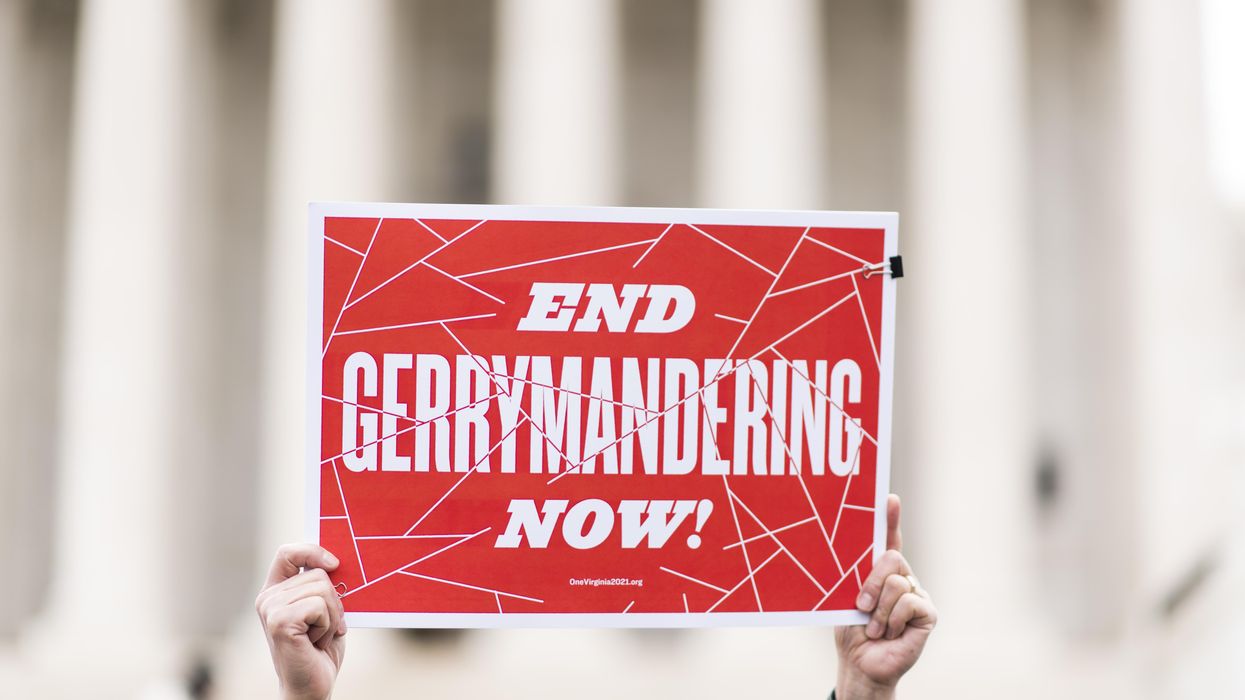
Anti-gerrymandering sign
2018, a nonprofit worker in Michigan named Katie Fahey posted a message online asking if anyone else was tired of politicians drawing their own districts. She had no campaign experience and no political base.
Within two years, the ballot initiative she built, called Voters Not Politicians, had written an independent redistricting commission into the Michigan constitution. Hollywood eventually made a documentary about it, Slay the Dragon, which is a fairly accurate description of what she had actually done.
- YouTube www.youtube.com
California voters had already done something similar a decade earlier. The Independent Voter Project supported both Proposition 11 in 2008 and Proposition 20 in 2010, handing the state's congressional map to an independent citizens commission instead of the legislature.
Neither reform came from Congress, a caucus, a task force, a political consultant, or a framework; both came from voters who grew tired of waiting and took matters into their own hands.
This brings us to the Congressional Problem Solvers Caucus, which unveiled a Gerrymandering Reform Framework on July 1 calling for national standards and an end to mid-decade map redraws. (The particulars are covered by Independent Voter News here.)
Their big plan landed a few months before a midterm election in which independent and No Party Preference voters have grown loud about their disgust with gerrymandering. That disdain is not exactly irrational, especially since 94% of House seats are considered safe for one party or the other, according to the Cook Political Report.
One of the framework's earliest fans is a California political consultant who reposted the caucus's press release, calling it important and necessary and adding that the country needed to enter 2031 with real, standardized reform.
He did not mention, in that post, that he has spent years drawing California's congressional districts for Democrats, or that he is paid each time those districts get redrawn. It is possible to cheer for the end of a war you are paid to help wage, though it is not obvious why anyone should mistake the cheering for sincerity.
The caucus's own math is not encouraging at all. Every single one of these representatives knows full well that nothing becomes law without a majority. No majority is attainable in the current House unless Republican Speaker Mike Johnson and Democrat Minority Leader Hakeem Jeffries agree on something—an event with no recent precedent.
The immediate mess we find ourselves did not start with Congress either. President Donald Trump pushed Texas to redraw its map outside the normal 10-year cycle, and Texas obliged him.
Governor Gavin Newsom then asked California voters for permission to respond, temporarily setting aside the state's own independent commission to draw a map of the legislature's choosing.
Voters agreed, wiping California's gold standard of independent redistricting off the books.
As of May 2026, 10 states—Alabama, California, Florida, Louisiana, Missouri, North Carolina, Ohio, Tennessee, Texas, and Utah—had new congressional maps. Before 2025, according to Ballotpedia, only two states had conducted voluntary mid-decade redistricting since 1970.
So here is one truth about partisan gerrymandering: the people in Congress or the political consultants currently getting any credit for wanting to fix it are not the people with the power to do so, and the people who do have that power were never in Washington to begin with.
Katie Fahey did not need Congress, and neither did the voters of California, thanks to the power of direct democracy.
Congress can keep issuing frameworks for as long as it likes; a framework requires no votes and changes nothing. A ballot initiative requires signatures, patience, and nobody's permission, not in Sacramento and not in Washington, which is presumably why it remains the only version of reform that has ever actually worked.
Cara Brown McCormick is the principal at Smart Campaigns and advises on strategy and research.
Don't Hold Your Breath Waiting for Politicians or Their Consultants to Fix Gerrymandering is republished as part of The Fulcrum’s partnership with IVN and the Latino News Network to expand voter‑first journalism and strengthen public‑centered coverage of democracy.
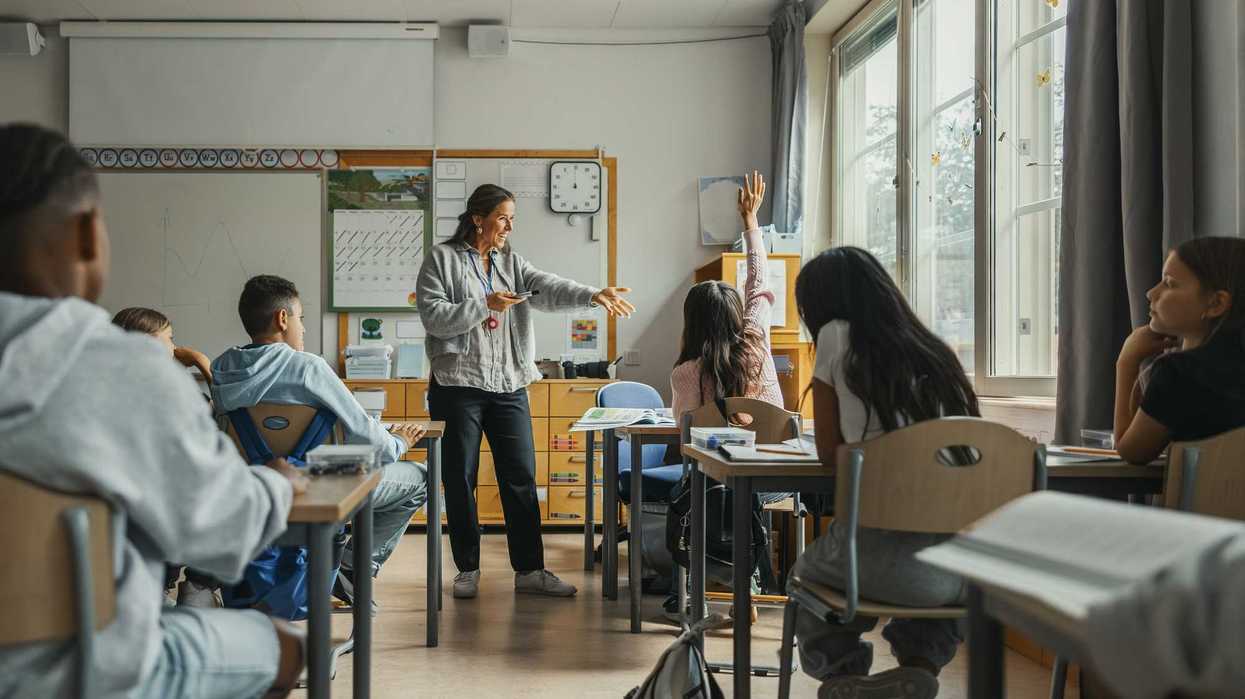
The 250th anniversary of the Declaration of Independence is a call to defend public education, strengthen democracy, and reject school privatization in New Hampshire.
July 4th, 2026, will be the 250th anniversary of the Declaration. One of the foundational documents of the United States, the Declaration has been taught in many ways: as America’s breakup letter, as a rallying cry for freedom, and as an example of the legal assertion of a right to rebellion—derived from common law and biblical teaching. Influenced by the Protestant reformation, the Great Awakening and enlightenment thinking, the Declaration is an example of the complexity of our founding and a reminder of the important work of educating for democracy.
Yet, many teachers feel like it’s getting more difficult to teach today, on the eve of the 250th. Just like in the era that gave us the “Spirit of ‘76”, teachers, who are striving to keep the spirit alive, must both stay rooted in local life and draw inspiration from Europe.
In 1776, local life in the rebellious colonies was much more defined by geographic dispersion. It took time for word to travel between the population hubs. Reading was essential to revolutionary activity and democratic participation as the written word could travel with greater reliability to all corners of the colonies, including the backwoods of the likes of New Hampshire, my home state.
It was a sign of the times when far off places like New Hampshire joined the struggle for independence, just as it is a sign today that teachers in the Granite State feel the string of modern issues that for so long have been more acutely felt closer to urban population centers. Consequently, it bears reporting that New Hampshire was recently hit by a series of newly proposed legislation aimed at destroying the bedrock of our democracy, our public school system. These new developments trace their way back to 2021 when the state saw the start of a transfer of public resources to private and religious schools with the enactment of a voucher program. That program then expanded over several years, quickly eliminating a cap that limited participation based on income, becoming a universal and unregulated giveaway.
Those celebrating the special anniversary year of our state and country would be remiss to not also honor the legacy that binds education to our experiment in self-governance. This can be found in the written text of New Hampshire’s constitution as a call to provide for the general diffusion of knowledge among the citizenry (the link above from the Education Law Center identifies similar constitutional clauses in states across the country).
It is this constitutional text that the state Supreme Court relied on as it issued important rulings clarifying the state's obligation to provide adequate funding to all public school students—something the state had historically resisted. New Hampshire is consistently at the bottom of the list in terms of state contribution to public schools, forcing an overreliance on local property tax.
Determined to subvert the court's ruling, the legislature has opted instead to launch a full-on assault on the public school system. One proposed bill would push a rapid consolidation of local school districts—something that would cut against the very local control that New Hampshire has lauded since it created its own state government in 1776.
Another bill tried to replace the power of locally elected school boards by shifting decision-making away to publicly unaccountable boards by converting local public schools to charter schools. Diminishing local democratic decision-making through conversions also opens the door to Charter Management Organizations (CMOs), which are privately held, profit-motivated companies that have been notorious actors in other places, including New Orleans. The fast pace of the potential law has many concerned that the measure is truly meant to seed confusion and destabilize the existing school system.
Here, I should note that according to most measures, New Hampshire's schools rank in the top quintile in the nation despite the destructive policies of several extreme legislatures.
Yet, the pressure has been especially palpable on schools that historically are already stretched thin. Administrators in these districts have tried to navigate rushed new regulations and the ensuing confusion, as well as changes to the already limited state funding formula. One district was forced to take out a $4 million private loan to cover its operating budget rather than face mass staff layoffs. The state has offered what some call predatory lending to financially distressed districts—all while threatening state takeovers of the very places that they have refused to provide adequate funding, despite the ruling of multiple courts over decades.
Most of this will sound familiar to those who have followed the broader privatization movement. Efforts to privatize the schools of New Hampshire are a collection of ideas recycled from failed “experiments” in defunding educational opportunities for students across the country from Chicago to Los Angeles (and many in between). Similar policies have been pursued nationwide, sadly. These policies, based on a neoliberal theory, propose to slash taxes and reduce services, commodifying education to a good, another product to be bought and sold.
The thing is, education is more than a good; it's for the common good. By this, I mean, we all benefit when young people become better learners, and it is fundamental to our continued self-governance to have the next generation experienced in the arts of democratic life. We need students to develop discernment, practice reasoning and decision-making, and learn to collaborate with peers from a wide variety of backgrounds and experiences.
Communities want quality public schools—and it’s time to rally around our community schools. Just as the founders of the country drew inspiration from European enlightenment thinkers, we too must now renew our own democracy by demanding our students and schools be supported.
To do so, we should redouble our investment in early childhood education, resource all schools to provide early interventions (a proven way to help students and a wise use of public funds over the long term, as studies have shown the students who receive personalized support early in life are less likely to require intensive needs later in their educational lives). We must raise the status of the teaching profession; a career as a kindergarten teacher should be seen as equally important as a doctor or lawyer. The professional status of teachers can vest us with classroom autonomy and respect for professional judgement. This contributes to school cultures of collective respect and responsibility and wellbeing.
Celebrating the 250th is about uplifting our democratic institutions—especially schools. While the private interests of a few have used dark money to fuel campaigns to defund our shared schools and shrink schools as common gathering places, too many well-meaning folks have missed the point that the big money backers of school privatization grasp: providing proven policy examples at a small scale initially can be enough to grow the momentum needed to scale up and grow policy.
That’s why we need to be in touch with local educators, to support them, and to find ways to share what’s working at scale. It is that kind of resolve that makes democracy actionable and not just a wish. Don’t close your eyes to make a wish on the 250th anniversary of the Declaration, recommit to protecting our schools, the cradles of our democracy, with policies inspired to help all flourish.
Jacob Goodwin is a 6th grade teacher and the author of the book Teach Like a Community Organizer: Practical Tools for Community-Building, Civic Engagement, and Progressive Change (Routledge, 2026).