

Early Monday morning of March 23, financial markets surged when President Donald Trump claimed there had been productive talks with Iran about ending the war. Therefore he backed off a vow to bomb Iranian power plants if the Strait of Hormuz wasn’t reopened by Monday evening. Iran denies any such talks actually took place.
This is a rare moment in which reasonable people can be torn about which government is more believable.
Regardless, markets were buoyed by the hope that this might be another TACO moment — Trump Always Chickens Out — and the belief that he was looking for an off-ramp.
I have no idea whether this partial pause will last, whether Iran will grab Trump’s lifeline, or whether markets will stay upbeat. And neither does anyone else. But whichever way things go in the days and weeks ahead, we’ve already (re)learned some useful lessons.
For starters, overall success is dependent on more than military success. Critics and supporters of the war have been talking past each other since it started because it has been extremely impressive militarily, but politically, geo-strategically and economically, it’s been far murkier.
That’s because Iran has an asymmetric advantage. It can disrupt the Strait of Hormuz, through which roughly 20% of the world’s oil and numerous other vital resources from fertilizer to natural gas are shipped. It can also strike its neighbors’ oil and gas facilities.
It’s like Iran is a beaten weakling holding a vial of nitroglycerin in the engine room of the global economy. You can take him out, but only at great peril.
As the Economist recently put it, “Although President Donald Trump says he has ‘destroyed 100% of Iran’s Military Capability’, the 0% that remains is playing havoc with the global economy.”
Economic vulnerability is nearly synonymous with political vulnerability and political vulnerability is strategic vulnerability. It’s great that the Iranians haven’t blocked the strait with thousands of mines as military textbooks foresaw, but if it’s impassable because ships are uninsurable, the results are largely the same.
That’s why I have some sympathy for the administration’s effort to deal with the economic challenge it didn’t adequately prepare for.
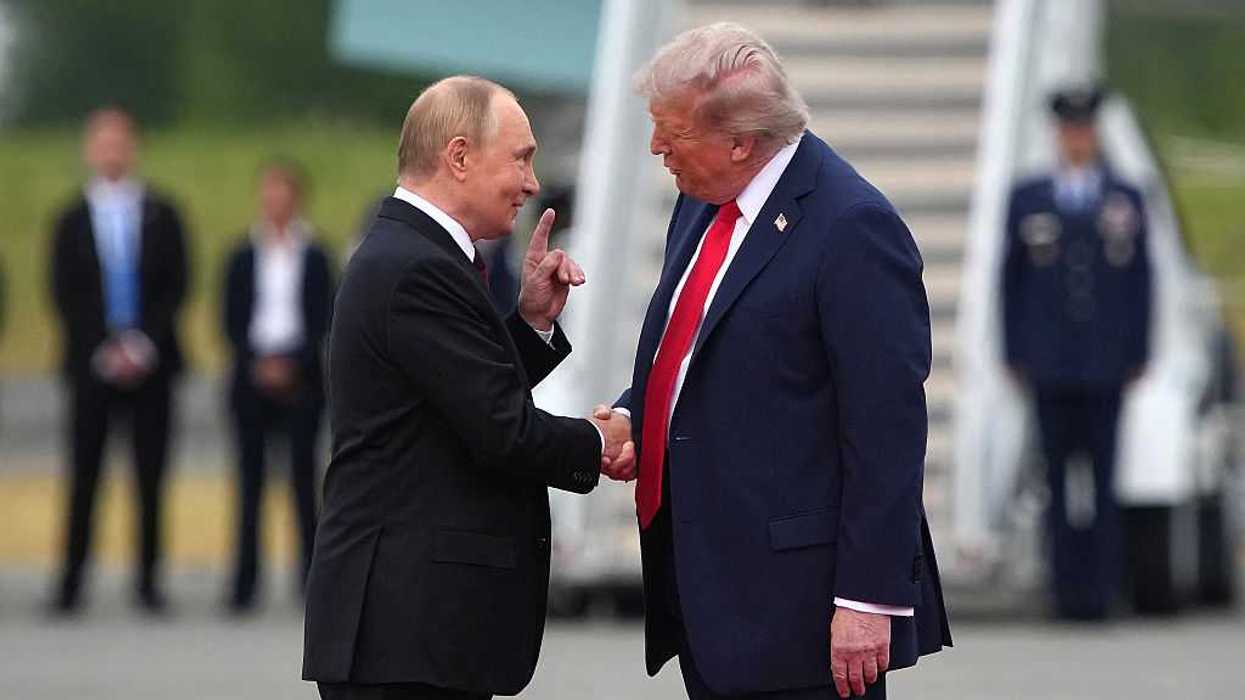
That effort includes releasing oil from the Strategic Petroleum Reserve, waiving Jones Act rules that require American-flagged and built ships to transport oil for American markets, and lifting some sanctions on Russian oil (a boon to President Vladimir Putin).
And, most remarkably, Treasury Secretary Scott Bessent announced a temporary suspension on Iranian oil sanctions for already oil-laden ships parked in the strait.
This is exceedingly unusual. Normally, one intensifies economic blockades on enemies in wartime. But that doesn’t mean it’s necessarily a bad idea if it works to lower prices. (Although the fact that this could potentially give Iran 10 times more money than President Barack Obama did when he infamously sent them pallets of cash to secure the Joint Comprehensive Plan of Action is pretty wild.).
I’m skeptical that Trump’s effort to single-handedly manage the price of oil will work. For whatever momentary relief it provides markets, it also demonstrates that Iran’s has got leverage.
But here’s what I find fascinating. The Trump administration has been obsessed with maximizing the president’s war powers to justify his agenda on such things as industrial policy, immigration, domestic deployment of the National Guard and, most glaringly, trade. But now, when we’re actually at war, they’re reversing their economic philosophy in service to Trump’s seat-of-the-pants decision-making.
Trump’s trade policies are exactly what the great 19th century economist Henry George had in mind when he warned, “What protectionism teaches us, is to do to ourselves in time of peace what enemies seek to do to us in time of war.”
What’s so strange is Trump’s turning George on his head, by easing economic pressure on our wartime enemy. But he’s also reversing his own biases by liberating our domestic economy.
Of course, sanctions are more coercive than tariffs, but economically they operate on the same logic: Sanctions restrict exchange, reduce supply and raise costs. The administration is effectively conceding that supply restrictions — i.e., tariffs — raise prices and that relaxing them lowers prices. It usually scoffs at such market logic when defending tariffs or domestic shipping restrictions.
The Jones Act, an egregious economic albatross conceived in the wake of World War I that makes all manner of goods more expensive in peacetime, is being waived during wartime, even though the point of the Jones Act is to leave us better prepared to fight wars.
I wish I could believe that the Trump administration was actually learning any of these lessons and that might endure after this war eventually ends. But at this point, that lesson is beyond his ability to learn. Trump believes he’s not just the master of his fate, but everyone else’s as well.
Jonah Goldberg is editor-in-chief of The Dispatch and the host of The Remnant podcast. His Twitter handle is @JonahDispatch.