
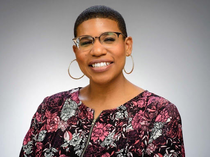
As a first-generation, low-income college student, I took every opportunity to learn more, improve myself, build leadership and research skills, and graduate from college. I greatly benefited from the federally funded U.S. Department of Education TRIO Programs.
TRIO Programs include Student Support Services, coordinated through the Office of Supportive Services (OSS) and the McNair Post-Baccalaureate Achievement Program (McNair Scholars Program). This was named in honor of Ronald E. McNair, a NASA astronaut and physicist who lost his life during the 1986 Space Shuttle Challenger mission.
The 2025 defunding efforts of TRIO Programs hurt millions of students, who are the country’s future leaders, thinkers, and changemakers, who need support resources and opportunities to thrive in a society dominated by structural inequities. President Donald Trump’s funding bill cut 120 TRIO programs across the country, up to $660 million in funding.
Only a very few lucky TRIO programs are funded, such as a recent Eastern Oregon University grant of more than $1 million, while most other programs have been cut or severely limited in funding.
Today, the Department of Education website, under its Federal Student Aid programs, lists only Military Families and International Study as possibilities. This is devastating for low-income students who are considering their college careers now and applying for student aid for the 2026-2027 school year.
Meanwhile, millions of student loan borrowers face penalties and taxation on their outstanding student loan balances. The Consumer Financial Protection Bureau recently released a report stating that thousands of borrower complaints cannot be ignored.
The reductions in federal funding impact TRIO Programs nationwide, including Upward Bound, Talent Search, and Education Opportunity Centers, causing major disruptions, downsizing, and freezes that limit the impact and effectiveness of these vital programs.
The loss of TRIO Programs would be devastating to millions of students. The Council for Opportunity in Education (COE) TRIO Fact Sheet reports that more than 6 million Americans have benefited from TRIO since its founding.
TRIO Programs empowered me with the self-determination and self-efficacy to pursue my aspirations and dreams. I believed anything was possible and still do. These programs vastly helped me succeed as an undergraduate student at Michigan State University in the late 1990s-early 2000s.
As an undergraduate TRIO program participant, the OSS provided me with mentors, tutoring, and student opportunities that helped me develop essential leadership skills. I served as a Student Assistant, a leadership position that taught me to organize and plan programs to help first-year OSS students succeed and to serve as a liaison between students and professional staff.
While holding this position, I carried a caseload of nearly 20 students, an exceptional task for a college sophomore balancing full-time classes. This program opened opportunities to other leadership positions on campus.
I was soon accepted into the McNair Scholars Program, designed to increase access for underrepresented students to pursue graduate study, serving 151 universities nationwide. The COE TRIO Fact Sheet asserts that diverse faculty mentorship is a key element in bridging the equity gap for students from disadvantaged backgrounds.
Though the total number of students the McNair Scholars Program has served since its inception in the late 1980s is not available, the Department of Education Fast Facts 2019-2020 Report states that McNair grantees supported 5,242 participants that year.
The program offered research support, mentorship, research methods courses, and free test preparation for examinations such as the GRE for graduate school, the MCAT for medical school, and the LSAT for law school.
Faculty mentorship had the capacity to powerfully influence students’ cognitive skills in their research field. For example, some students learned how to run a research lab, secure multi-year grants, and collect longitudinal data — all practical career skills. Students cultivated lifelong relationships with their research faculty.
The McNair Scholars Program provided opportunities for students to network in academic settings, enhance oral and poster presentation skills, and take etiquette classes on place setting for formal dinners. Community service was an essential component that ensured students understood the linkages between their research work and community empowerment.
Through the development of study abroad programs, global outreach became an added aspect of the McNair Scholars Program. These services equipped students with the social and cultural capital necessary for graduate education, careers in higher education, and an understanding of the local and international impact of their research.
As a McNair student, I was paired with a faculty member, a leading epidemiologist in my research area of women’s health, to work on a project analyzing cortisol levels and self-reported stress in pregnant women. The program enabled me to present my research at a professional academic conference and connect with other McNair students from universities across the country.
The program covered the cost of my GRE test-prep course and exam. I also received support with my graduate school applications and did not have to stress about the cost of the application fees.
I participated in community work with Habitat for Humanity in Jamaica. Without a doubt, I would not have been prepared for graduate study if it were not for this program.
I graduated with a Bachelor of Science in Interdisciplinary Studies in Social Science-Health Studies and went on to complete my Master of Arts in African American and African Studies at The Ohio State University and my Doctor of Philosophy in African American and African Studies at Michigan State University.
TRIO Programs address equity and inclusion gaps across the nation’s education system and provide students with the resources and opportunities to succeed. Now in 2026, they are under assault, as well as other attacks on higher education, such as the rollback and dismantling of Diversity, Equity, and Inclusion programs, the end of affirmative action in higher education, and other actions that harm minoritized higher education students, faculty, and staff.
A 2020 study conducted by Rachel Renbarger, an educational psychology scholar at FHI 360, and Alexander Beaujean, a psychology professor at Baylor University, analyzed graduate school enrollment among McNair students and disproved the claim made by Mick Mulvaney, the Director of Management and Budget, during a 2017 White House press briefing. He asserted that the McNair Scholars’ achievement was “6 percent effective,” despite the 2020 research study indicating that the program “is more effective than is being represented.”
His outright lie to the public is a gross misrepresentation of a life-changing program that serves minoritized and underserved students. The assault on TRIO Programs is about race and class. It’s structural racism in action, and it needs to make everyone furious.
It is urgent for policymakers, students, parents, faculty, administrators, and all citizens to get involved by contacting local elected officials, writing letters, and sharing personal stories.
These TRIO programs matter not just for some students, but for the future of this country.
Mary Frances Phillips is an associate professor of African American Studies at the University of Illinois Urbana-Champaign and a Public Voices fellow with The OpEd Project. She is the author of Black Panther Woman: The Political and Spiritual Life of Ericka Huggins.